Are you unsure what to do with burned-out LED bulbs? Tossing them in the trash feels wasteful and potentially harmful, creating a disposal headache for you and your environmentally-conscious customers.
Treat LED bulbs as electronic waste (e-waste). Do not throw them in your standard household trash or recycling bin. Take them to a designated e-waste collection center, a participating hardware store, or your local hazardous waste facility for proper disposal.
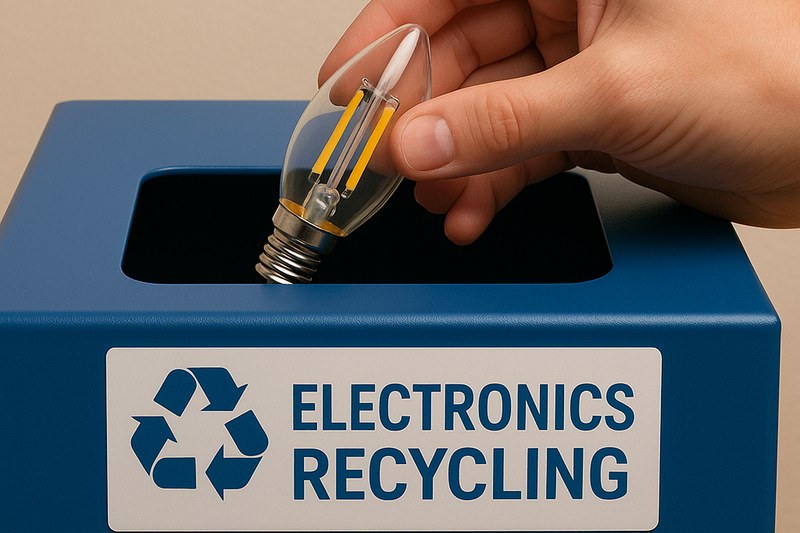
This question comes up more and more in conversations with my clients, especially those like Jacky in the United States who are very attuned to consumer expectations. In the old days, everyone knew incandescent bulbs just went in the trash. Then with CFLs, there was a big public education campaign about the mercury inside them. Now we have LEDs, which are the safest and most efficient technology yet, but there's a lot of confusion about their end-of-life. As a manufacturer, our responsibility doesn't end when the product ships. A quality product is one that is not only effective during its life but can also be dealt with responsibly at the end of its life. Providing clear guidance on this is part of the service that a reliable supplier should offer. It shows we think about the entire product lifecycle, which builds trust and confidence.
What components inside an LED bulb need recycling?
Do you assume LED bulbs are just simple glass and plastic? This misunderstanding leads to improper disposal because the most important components are actually hidden inside the base.
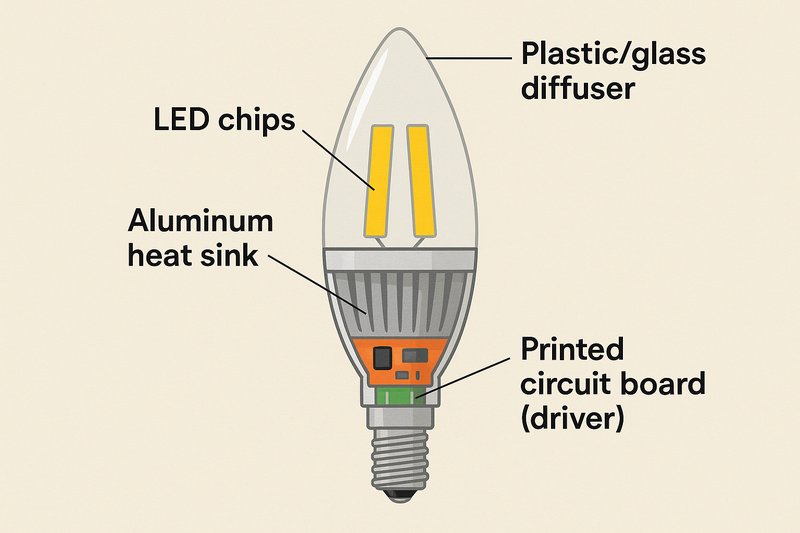
The most critical component is the internal printed circuit board (PCB), which contains small amounts of valuable metals like copper, lead, nickel, and sometimes silver. The aluminum heat sink is also a highly recyclable material that should be recovered.
When you hold an LED bulb, you're holding a sophisticated piece of electronic equipment, not just a simple light source. It's much more like a small computer than an old Edison bulb. The part that creates the light is a semiconductor, and the part that powers it is a complex electronic driver. These components are what give the bulb its incredible efficiency and long life, but they also contain materials that should never end up in a landfill. From our perspective as a manufacturer at Hongyu Bulb, the choice of materials is critical. We build our high-lumen bulbs with aluminum heat sinks not just for performance, but because aluminum is a highly valuable and endlessly recyclable material. Understanding what's inside the bulb helps everyone appreciate why simply throwing it in a landfill is a huge waste of resources and a potential environmental risk.
A Breakdown of an LED Bulb's Anatomy
Let's look at the key parts and why they matter for recycling.
- The Diffuser (Bulb): This is the most visible part, the "bulb" itself. It's typically made of glass or a durable polycarbonate plastic. While these materials are technically recyclable, they are often not accepted in standard curbside recycling programs due to their shape, size, and potential coatings.
- The Heat Sink1: In any well-made, high-performance LED bulb, this is a critical component for dissipating heat. It is usually made of aluminum, a non-ferrous metal that is one of the most valuable materials for recyclers. Recovering the aluminum2 saves a massive amount of energy compared to producing new aluminum from ore.
- The Printed Circuit Board (Driver)3: This is the electronic "brain" of the bulb. The PCB is a small board that holds capacitors, resistors, and integrated circuits. These components contain small but significant amounts of various metals. Improper disposal can lead to these heavy metals leaching into the soil and groundwater.
- The Base: The screw-in base (like an E12 or E26) is typically made of aluminum or nickel-plated brass. Like the heat sink, this is a valuable metal that can be easily recovered and recycled.
Material Content and Recycling Importance
This table summarizes what's inside and why it should be recycled:
| Component | Common Materials | Why It Should Be Recycled |
|---|---|---|
| Circuit Board (Driver) | Copper, lead, nickel, silver, zinc | Highest Priority. Contains valuable resources and potentially hazardous heavy metals. Must be processed by an e-waste facility4. |
| Heat Sink | Aluminum | High Priority. Highly valuable recyclable metal. Saves over 90% of the energy needed to create new aluminum. |
| Base | Aluminum, Nickel-Plated Brass | High Priority. Another valuable metal component that is easily recovered. |
| Diffuser / Housing | Plastic (Polycarbonate), Glass | Medium Priority. While recyclable, it's less valuable and can be problematic for standard recycling streams. E-waste facilities handle it correctly. |
The key takeaway is that an LED bulb is a dense package of valuable and sensitive materials, making specialized e-waste recycling the only responsible option.
Why can't you put LED bulbs in your regular recycling bin?
Have you ever tossed an old LED bulb into your curbside recycling, thinking you were doing the right thing? This common mistake can contaminate the entire recycling stream and damage sorting equipment.
Household recycling systems are designed for simple materials like bottles, cans, and paper. The complex mix of metal, electronics, and plastic in an LED bulb is a contaminant that workers and machines cannot separate, potentially ruining an entire batch of recyclables.
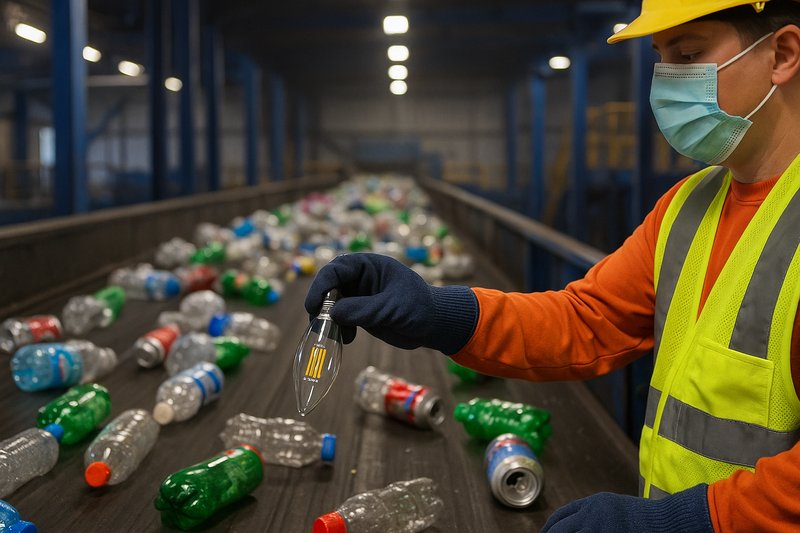
I once toured a massive Material Recovery Facility (MRF), which is where all the curbside recycling goes to be sorted. It was an eye-opening experience. The speed of the conveyor belts and the complexity of the sorting machinery are incredible. The manager explained that their biggest problem is "wish-cycling"—people throwing things in the bin hoping they can be recycled. He specifically mentioned items like LED bulbs and plastic bags. He said a small, hard object like a bulb can get crushed, shattering and spreading tiny bits of metal and glass over all the clean paper and plastic. Or, it can jam the complex optical sorting machines, causing a costly shutdown of the entire line. Your local recycling program has a very specific "recipe" of materials it can handle. An LED bulb is not one of the ingredients. Putting it in the bin actually creates more problems than it solves and is worse than throwing it in the trash.
Understanding the Sorting Process
Here's why an LED bulb is a problem for a standard MRF:
- Designed for Containers: These facilities are set up to sort two-dimensional materials (paper) and three-dimensional containers (bottles, jugs, cans). A bulb fits neither category and can confuse the automated systems.
- Lack of Separation: There is no machine in a standard MRF that can take a small bulb and automatically separate its aluminum base, its plastic diffuser, and its internal circuit board. The item is too complex.
- Contamination Risk: The electronic components inside can contain trace amounts of heavy metals5 like lead. If the bulbs are crushed during collection and transport, these materials can contaminate bales of otherwise clean paper or plastic, downgrading their value or even causing them to be rejected and sent to a landfill.
- Safety Hazard: While less of a risk than with older technologies, broken glass and metal components can still pose a risk to the workers who have to manually sort materials on the line.
The Right Path vs. The Wrong Path
It's crucial to direct these materials to the correct waste stream.
| Disposal Method | Facility Type | How They Handle LEDs | Outcome |
|---|---|---|---|
| Regular Trash | Landfill | The bulb is buried with other waste. | Bad. Resources are wasted. Potential for heavy metals to leach into the environment over time. |
| Curbside Recycling | Material Recovery Facility (MRF)6 | The bulb is treated as a contaminant. | Very Bad. It gets filtered out and sent to a landfill anyway, and can damage equipment or contaminate other recyclables in the process. |
| E-Waste Drop-off7 | Specialized E-Waste Recycler | The bulb is manually disassembled. | Correct. Materials like aluminum, copper, and precious metals are recovered and sold. Hazardous materials are handled safely. |
Sending your old LED bulbs to an e-waste facility is the only method that ensures the materials are actually recovered and that nothing harmful ends up in the environment.
What is the correct process for collecting and recycling LED bulbs?
Do you know the specific, practical steps for getting your old LED bulbs to the right place? The lack of a clear plan often results in a box of dead bulbs sitting in a garage indefinitely.
Establish a dedicated, clearly labeled collection box. Once full, find your local recycling options by checking with large hardware retailers (like Lowe's or Home Depot), using online locators like Earth911, or contacting your municipal waste authority about e-waste collection events.
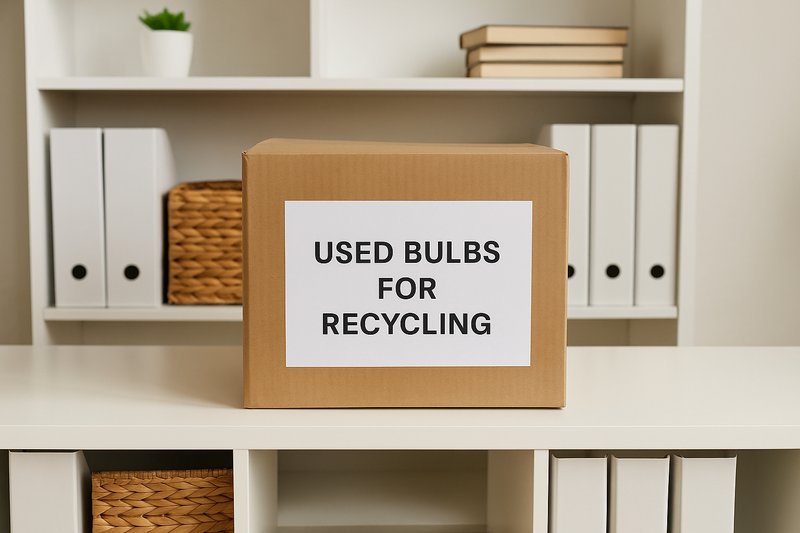
Putting a system in place is the most important step. In our own factory at Hongyu Bulb, we have designated bins all over the facility for any bulbs that fail quality control or are used for testing. Nothing gets thrown in the general waste. This is the same principle that businesses and even households should adopt. A simple, labeled box in a utility room or maintenance closet makes it easy for everyone to do the right thing. The hardest part is often figuring out where that box goes when it's full. For our B2B clients, we often provide them with information and resources they can pass on to their end-customers. It's a value-added service that shows we care about the entire lifecycle of our products, and it helps their customers solve a real problem. The key is making the process simple and clear.
A Step-by-Step Guide to LED Recycling
Follow these steps for a simple and effective recycling program.
- Step 1: Designate a Collection Point: Get a sturdy cardboard box or a small plastic tub. Label it clearly: "Used Light Bulbs for E-Waste Recycling." Place it in a safe, convenient location where people won't mistake it for trash. For businesses, this might be in a maintenance supply closet. For homes, a spot in the garage or basement is perfect.
- Step 2: Collect Safely: As bulbs burn out, place them in the box. If a bulb is made of glass and happens to break, handle it carefully with gloves and seal it in a separate paper bag before placing it in the box to contain any sharp edges.
- Step 3: Find a Local Drop-Off Location8: When the box is full, it's time to find where to take it. There are several excellent options:
- Retail Drop-Offs: Many large home improvement stores (like The Home Depot, Lowe's) and some hardware chains (like Ace Hardware) have recycling collection bins, often near the store entrance or customer service desk. Always call your local store first to confirm they accept LEDs.
- Municipal E-Waste Programs9: Contact your city or county's public works or sanitation department. They will have information on the location of their hazardous waste and e-waste facility, or they may hold special collection events a few times a year.
- Online Recycling Locators10: Websites like Earth911.com or Call2Recycle.org have search tools where you can enter your zip code and the material you want to recycle (in this case, "LED light bulbs") to find the nearest certified drop-off locations.
- Step 4: Mail-In Programs11: For businesses with larger quantities of bulbs, many waste management companies (like Waste Management's "Think Green From Home" program) offer mail-in recycling kits. You buy a pre-paid, certified box, fill it with your bulbs, and ship it directly to their recycling facility.
Comparing Recycling Options
| Option | Best For | Convenience | Cost |
|---|---|---|---|
| Retail Store Drop-Off | Households, Small Businesses | High (if a store is nearby) | Usually Free |
| Municipal Facility | Households, Businesses | Medium (may require a special trip) | Often Free for residents, may be a small fee for businesses |
| Special Collection Event | Households | Low (only happens a few times a year) | Usually Free |
| Mail-In Program | Businesses with large volume | High (comes to you) | Paid service (cost of the box/kit) |
By researching these options in your specific area, you can create a simple and repeatable process to ensure your bulbs are handled correctly.
How does responsible manufacturing affect a bulb's recyclability?
Do you think a bulb's end-of-life responsibility starts when it burns out? The choices made in the factory directly impact how easy or difficult it is to recycle, and choosing the right supplier is the first step.
A responsible manufacturer designs for the entire product lifecycle by using high-quality, easily separable materials, and by adhering to regulations like RoHS, which restricts hazardous substances. This makes the recycling process safer, more efficient, and more effective.
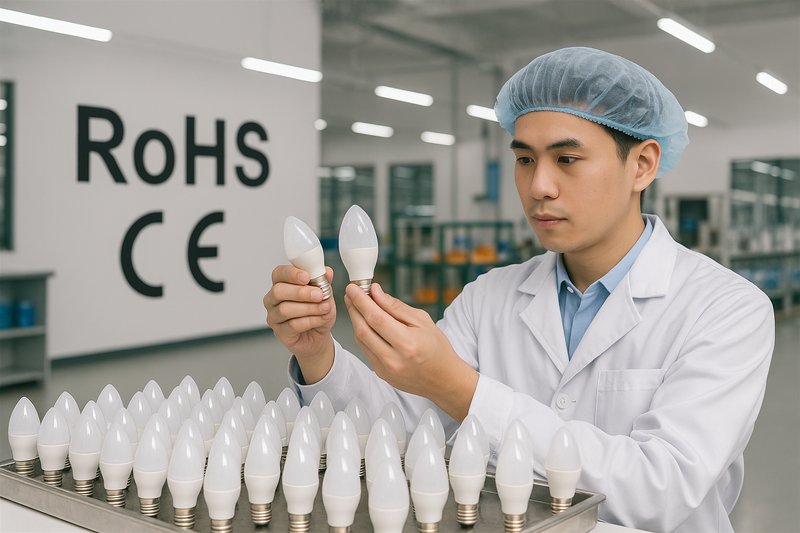
This is a topic I am very passionate about. The conversation around recycling almost always focuses on the consumer, but the real responsibility begins with us, the manufacturer. The decisions we make about which materials to use, how to assemble the product, and which chemicals to avoid have a profound impact downstream. For example, by using a high-grade aluminum heat sink instead of a cheaper, plastic-clad metal, we are providing a component that is much more valuable and easier for a recycler to recover. Furthermore, our commitment to RoHS (Restriction of Hazardous Substances) compliance is not just about meeting legal requirements for export to Europe and the US; it's a promise that our products are free from harmful levels of lead, mercury, cadmium, and other dangerous materials. This makes them fundamentally safer for consumers to use and for recyclers to handle at the end of their life.
The Pillars of Design for Environment (DfE)
When we design a new bulb, we consider these key principles:
- Material Selection: We prioritize materials that are not only effective but also highly recyclable. We choose high-purity aluminum, brass, and polycarbonate plastics that are clearly marked for easier sorting by recyclers.
- Design for Disassembly (DfD): A product that can be taken apart easily is easier to recycle. We try to avoid permanent glues and adhesives where possible, instead using screws or snap-fittings that allow a recycling facility to separate the circuit board from the heat sink and the housing more efficiently.
- Hazardous Substance Reduction: This is where RoHS compliance is critical. By designing and certifying our products to be RoHS compliant, we eliminate the most dangerous substances from the very beginning. An RoHS-compliant bulb is inherently safer and less problematic for the e-waste stream.
- Durability and Longevity: The most sustainable product is one that you don't have to replace often. Our focus on quality components and superior thermal management results in a bulb that lasts for its full rated life of 15,000 to 25,000 hours. A longer lifespan means less frequent replacement, which means less waste is generated in the first place.
How a Supplier's Choices Affect You
The choices your manufacturing partner makes have a direct impact on your business and your customers.
| Manufacturer's Approach | Impact on Recyclability | Impact on Your Business |
|---|---|---|
| Low-Cost / Non-Compliant | Uses mixed, unmarked plastics; may contain hazardous substances (non-RoHS); permanently glued together. | Difficult and potentially hazardous to recycle. Your brand is associated with a product that is environmentally problematic. Potential compliance risks. |
| Responsible / Compliant | Uses marked, recyclable materials (aluminum, PC); designed for disassembly; certified RoHS compliant. | Safer and more efficient to recycle. Your brand is seen as responsible and environmentally conscious. No compliance risks. |
Partnering with a manufacturer who takes end-of-life management seriously is a powerful way to build a brand that is trusted, responsible, and aligned with the values of modern consumers.
Related HongYu product pages
- LED Filament Bulb Product Range → — standard and decorative LED filament bulbs for wholesale and project sourcing.
- Mini LED Filament Bulbs → — small E12/E14 decorative bulbs for chandeliers, sconces and hospitality fixtures.
- Contact HongYu Bulb → — send your target specifications, quantity, market and packaging requirements for quotation.
Conclusion
Properly disposing of LED bulbs means treating them as e-waste, not trash. By collecting them and taking them to a designated facility, you ensure valuable materials are recovered and the environment is protected.
Understanding the heat sink's role can help you appreciate its value in recycling and energy savings. ↩
Discover the recycling process of aluminum and its significant energy savings for the environment. ↩
Learn about the PCB's critical function and its impact on recycling and environmental safety. ↩
Explore how e-waste facilities handle hazardous materials and ensure safe recycling of electronic components. ↩
Discover the risks associated with heavy metals in e-waste and why proper disposal is crucial for environmental safety. ↩
Explore this link to understand how MRFs operate and their role in recycling, especially for complex items like LED bulbs. ↩
Learn about E-Waste Drop-off facilities and their significance in safely recycling electronic waste, including LED bulbs. ↩
Discover nearby drop-off points for LED recycling to ensure your bulbs are disposed of responsibly. ↩
Learn about municipal e-waste programs that can help you recycle your LED bulbs safely and efficiently. ↩
Find out how online recycling locators can simplify your search for LED recycling options in your area. ↩
Explore the convenience of mail-in programs for recycling large quantities of LED bulbs from your business. ↩