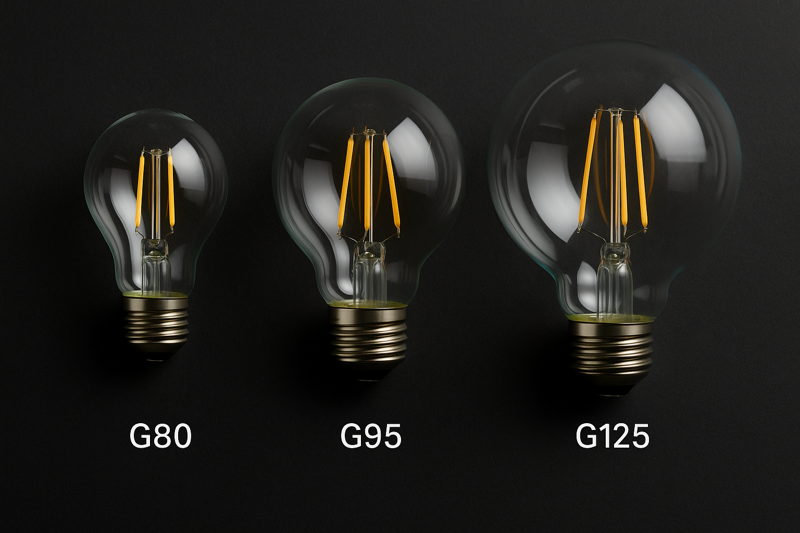
You see various globe bulb sizes like G80, G95, and G125. Stocking the wrong one means slow sales and wasted capital—a professional buyer's inventory nightmare.
The smartest way is to stock based on application: G80 for multi-light fixtures, G95 as the versatile all-rounder for pendants and vanities, and the large G125 for dramatic, single-light statement pieces. This strategy maximizes sales across different design needs.
I'll never forget a call I got from a buyer in the UK. He was excited about a "great deal" he'd found on G125 bulbs from another supplier and had ordered thousands, assuming "bigger is better." The problem was, his main customers were contractors outfitting standard residential bathrooms. The oversized G125 bulbs looked ridiculous in a typical three-light vanity fixture; they were too wide and hung too low. His massive order of statement bulbs was completely wrong for his core market. He was stuck. His story is a perfect example that with globe bulbs, the smartest choice isn't about getting the best price on a single size, but about understanding how each size fits into the real world of interior design.
How Do G80, G95, and G125 Globe Bulbs Differ in Application?
On a spec sheet, the difference is just a few centimeters. But in a real room, that small difference in size completely changes the bulb's function and impact. How do you choose the right size for the right job?
The size dictates the bulb's visual weight. The smaller G80 is for clusters and multi-light fixtures. The mid-size G95 is the versatile standard for pendants and vanities. The oversized G125 is a standalone decorative feature, not just a light source.
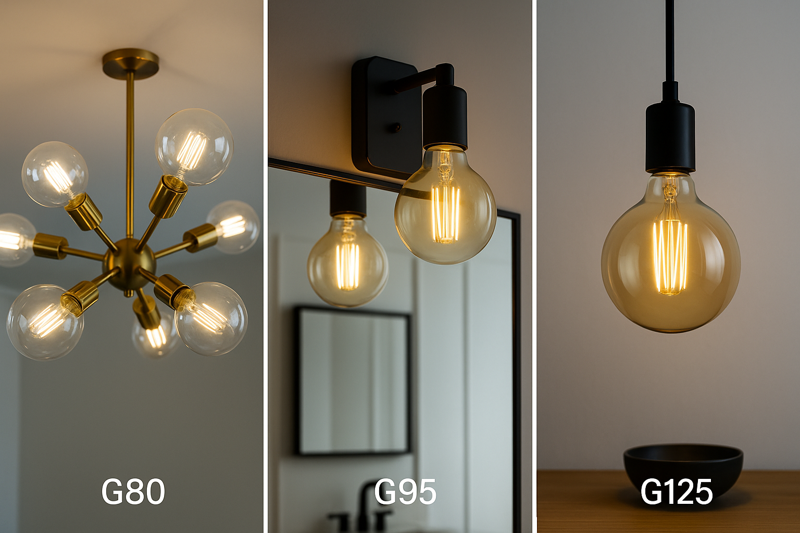
The "G" in the name stands for Globe, and the number represents the bulb's diameter in millimeters. Understanding this simple code is the first step, but the real expertise lies in knowing where each size belongs. Choosing the wrong size is one of the most common mistakes designers and contractors make. A bulb that is too large for a fixture can look comical and overwhelm the design. A bulb that is too small can look lost and insignificant. As a B2B supplier, your role is to guide your customers to the right choice, which builds trust and ensures they succeed with your products. The G95 is the safe bet and should be the core of your inventory, as it fits the widest range of common applications. The G80 and G125 are more specialized; they are for clients who have a specific design vision, either for a multi-light arrangement or for a dramatic focal point. Stocking all three, with an emphasis on the G95, positions you as a knowledgeable supplier who can meet any design requirement.
A Breakdown by Size and Scale
Visualizing the bulb in its intended environment is key to making the right choice.
- The G801 (80mm / 3.15 inches): This is the most subtle of the globe shapes. Its smaller size makes it the perfect choice for fixtures that use multiple bulbs in close proximity, such as sputnik chandeliers, multi-arm ceiling lights, or linear fixtures with several exposed bulbs. Using a larger globe in these fixtures would create a cluttered, crowded look. The G80 provides the beautiful round shape without overwhelming the overall design. It's a supporting actor, not the main star.
- The G952 (95mm / 3.74 inches): This is the workhorse of the globe bulb world. It is the most popular and versatile size. It's large enough to make a visual statement on its own in a single pendant light, but not so large that it looks out of place in a standard bathroom vanity fixture or a wall sconce. If a designer specifies a "globe bulb" without giving a size, they are most likely picturing a G95. This size should represent the largest portion of your globe bulb inventory.
- The G1253 (125mm / 4.92 inches): This is the statement piece. At nearly five inches in diameter, the G125 is a design element in its own right. It is intended to be seen and admired. It is almost exclusively used in single, exposed-socket pendant lights, often hung low over a dining table, kitchen island, or in a stairwell with high ceilings. It is too large for almost any standard multi-light fixture. It's a high-impact bulb for a specific, dramatic application.
| Size Code | Diameter | Primary Application | B2B Stocking Strategy |
|---|---|---|---|
| G80 | 80mm (3.15") | Multi-bulb fixtures, chandeliers | Stock for clients in commercial/hospitality. |
| G95 | 95mm (3.74") | Single pendants, vanity lights | Your core, high-volume globe bulb. |
| G125 | 125mm (4.92") | Large, single statement pendants | Stock as a high-margin, lower-volume item. |
Educating your customers on this "rule of scale4" will prevent design mistakes and position you as an expert.
Does the Glass Finish Determine a Globe Bulb's Atmosphere?
You've got the sizes figured out. But now you see options for clear, amber, and even half-chrome glass. How does this surface treatment change the entire mood of a space?
Absolutely. The glass finish is a powerful tool for controlling the mood. Clear glass is for bright, modern spaces. Amber glass creates a warm, vintage feel. Mirrored-top finishes are a specific design solution to eliminate downward glare.
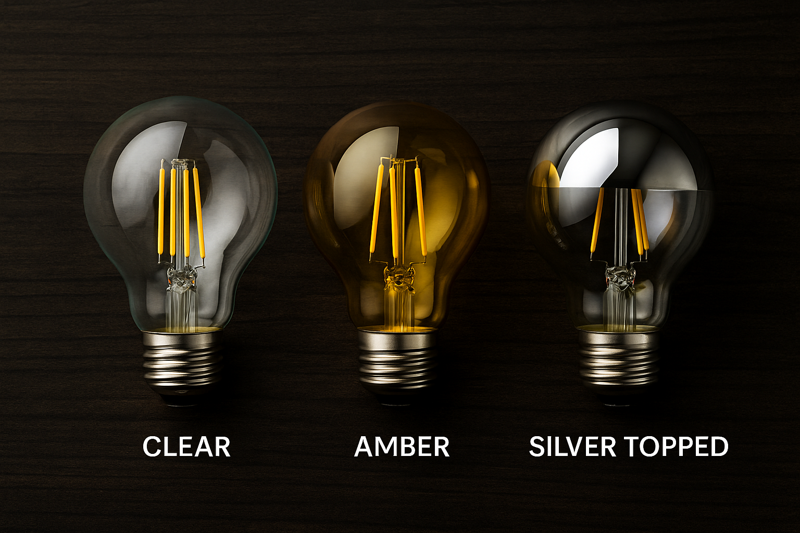
The glass of a globe bulb is a large, visible surface, making its finish even more impactful than on smaller bulbs. This isn't just a minor detail; it's a primary design choice. As the manufacturer, we see clear trends in how these finishes are used. Clear glass is the choice for a clean, minimalist, or modern aesthetic. The light is bright and unaltered, and the internal filament structure is clearly visible, giving it an almost technical look. Amber glass, on the other hand, is the go-to for anything rustic, industrial, or vintage. The warm, golden tint instantly creates a cozy, intimate atmosphere reminiscent of a cafe or a high-end lounge. It's less about brightness and all about the feeling. A more specialized but highly functional option is the mirrored or half-chrome top. This is a brilliant solution for pendants hanging over a dining table or bar where direct downward light can be harsh and create glare. The mirrored coating reflects the light upwards, creating a soft, indirect ambient glow and a beautiful visual effect.
A Deeper Look at Finishes
Each finish serves a distinct purpose and appeals to a different customer segment.
- Clear Glass5: This finish provides the highest lumen output and the most accurate color rendering (CRI). It's the best choice when the globe shape is desired for its form, but maximum brightness and clarity are still needed. It works perfectly in modern kitchens, bathrooms, and retail settings where a clean, energetic feel is important.
- Amber/Gold Glass6: This is the most popular finish for decorative applications. The amber tint acts as a filter, warming the light's color temperature down to a very cozy 2200K. This creates an instant vintage vibe. It is the number one choice for restaurants, bars, and living rooms where creating a relaxing, intimate mood is the primary goal. It sacrifices some brightness for a huge gain in atmosphere.
- Mirrored/Half-Chrome Top: This finish is a problem-solver. It's designed for situations where the bulb is visible at or near eye level. The metallic coating on the top half of the globe blocks the harsh direct light, preventing glare. It forces the light out to the sides and up, resulting in a much softer, more comfortable illumination. This makes it ideal for pendants over seating areas. It can come in silver, gold, or copper finishes to match the fixture's hardware.
| Glass Finish | Visual Effect | Best Use Case | Key Advantage |
|---|---|---|---|
| Clear | Bright, crisp, modern | Kitchens, modern fixtures | Maximum brightness & efficiency. |
| Amber | Warm, golden, vintage | Restaurants, living rooms | Creates atmosphere and mood. |
| Mirrored Top | Soft, indirect, decorative | Pendants over tables/bars | Eliminates downward glare. |
Offering a range of finishes for your most popular size, the G95, allows you to cater to functional, atmospheric, and problem-solving needs all at once.
Should You Choose a Spiral or Straight Filament for Globe Bulbs?
Inside the large glass sphere, the filament is on full display. Does the choice between a clean, straight filament and an intricate spiral really matter to your customers?
Yes, it matters immensely. The large surface area of a globe bulb makes the filament a central design feature. A spiral filament offers a softer, more authentically vintage look, while a straight filament provides a brighter, more industrial and modern aesthetic.
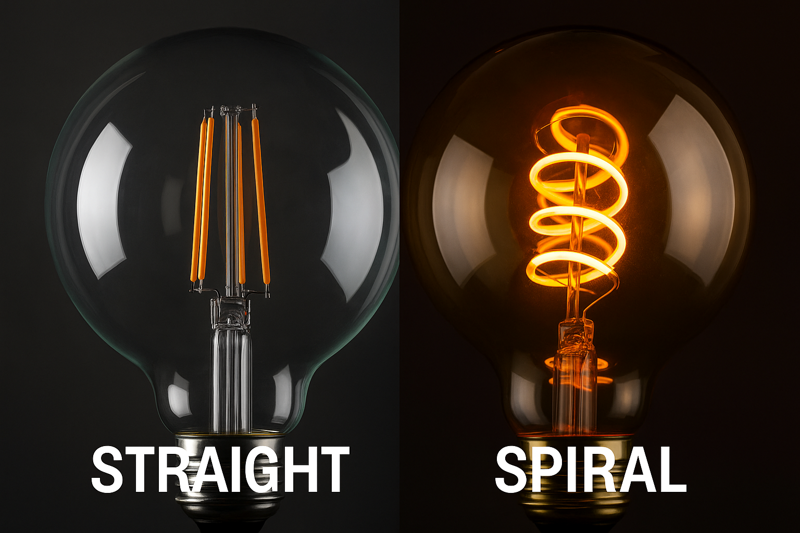
In a globe bulb, the filament is not just a light source; it's a sculpture inside glass. Unlike a standard A19 bulb hidden under a lampshade, a globe bulb is meant to be seen. Therefore, the style of the filament is a critical part of its appeal. The choice between straight and spiral fundamentally changes the character of the bulb. Straight filaments, arranged in a classic "squirrel cage" pattern, look organized and architectural. They produce a bright, clean light and have a distinct steampunk or industrial feel. They are excellent for applications where you want a vintage shape but with a more modern, crisp edge. The spiral filament, however, has become the dominant choice for purely decorative uses. The technology to create these flexible, curved filaments is more recent, and their soft, continuous, swirling glow is captivating. It feels less like a machine and more like a glowing ember. This makes it the perfect match for amber glass and for creating spaces that feel warm, inviting, and truly special. For a buyer like Jacky, offering both is smart, but understanding that the market trend leans heavily toward the aesthetic appeal of the spiral filament is key.
Comparing Filament Aesthetics
The filament choice should complement the overall design vision for the space.
- Straight Filament7: This style features multiple, rigid vertical strands. It's a design that dates back to the first LED filament bulbs and effectively mimics the look of early tungsten "squirrel cage" bulbs.
- Pros: High brightness, very efficient (high lumens per watt), clean and organized look.
- Vibe: Industrial, Steampunk, Modern Vintage.
- Best Paired With: Clear glass, metallic fixtures, modern or minimalist decor.
- Spiral Filament8: This style typically uses one long, flexible filament coiled into a beautiful spiral shape.
- Pros: Softer, less glary light, visually dynamic and captivating, feels more authentic and handmade.
- Vibe: Authentic Vintage, Rustic, Cozy, Farmhouse, Artisanal.
- Best Paired With: Amber glass, rustic materials like wood and rope, decorative exposed-bulb fixtures.
| Filament Style | Key Characteristic | Dominant Aesthetic | Primary Benefit |
|---|---|---|---|
| Straight | Clean, Vertical Lines | Industrial / Modern | Brightness / Efficiency |
| Spiral | Soft, Swirling Glow | Vintage / Atmospheric | Visual Appeal / Mood |
In our experience, while we produce both in high volumes, the demand for spiral filaments in decorative globe bulbs has grown significantly year over year. It's what the design-focused market is actively seeking.
What Technical Specs Define a Professional-Grade Globe Bulb?
A beautiful globe bulb that flickers, buzzes, or fails early is a liability. As a professional, how do you look past the style and verify the quality that ensures performance and protects your reputation?
A professional-grade globe bulb is defined by its internal electronics: it must have a high-quality IC driver for smooth, flicker-free dimming, a high CRI (90+) for accurate color representation, and tight color consistency (under a 5-step MacAdam ellipse) from batch to batch.
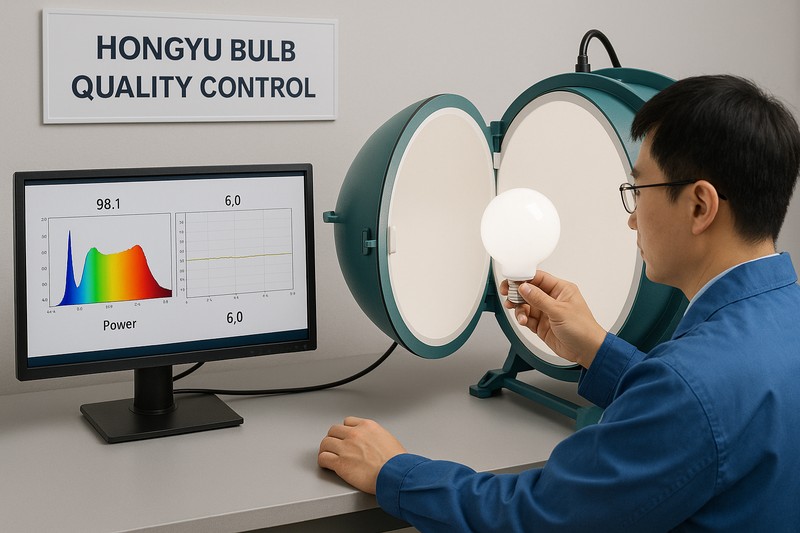
This is the most important conversation for a professional buyer. While your customers will be drawn in by the size and filament style, they will only be satisfied if the bulb performs flawlessly. The large size of globe bulbs makes them particularly susceptible to issues if low-quality components are used. A cheap linear driver in a large G125 bulb is more likely to overheat and fail. Poor quality LED chips will have a low Color Rendering Index (CRI), making a beautifully designed room look flat and dull. This is unacceptable in a high-end restaurant or retail environment. The number one complaint we hear about low-quality competitors is inconsistent dimming—flickering at low levels, buzzing noises, or a limited dimming range. This is purely a result of a poor driver. As a quality manufacturer, we focus obsessively on these invisible components. We use stable IC (Integrated Circuit) drivers that are tested with a wide range of common dimmers in the US and Europe. We source high-CRI LED filaments (90+ is our standard) to ensure colors look vibrant and true. And we maintain strict quality control on color temperature, so the bulbs you order today will perfectly match the ones you order next year. These are the details that build a reputation for reliability.
The Professional's Quality Checklist
When evaluating a supplier for globe bulbs, you must ask these critical questions.
- Driver Quality: "What type of driver do you use? Can you provide a dimmer compatibility list for my market?" An IC driver and a compatibility list are signs of a professional manufacturer.
- Color Rendering (CRI)9: "What is the CRI of your bulbs, especially the amber glass versions?" A CRI of 80 is the bare minimum; a CRI of 90+ is the professional standard.
- Color Consistency: "What is your color consistency tolerance between batches?" Mentioning the "MacAdam ellipse" shows you are a knowledgeable buyer. A 3- to 5-step tolerance is a very good sign.
- Heat Dissipation10: "How do you manage heat in a large, enclosed glass bulb like the G125?" A good manufacturer will talk about using helium or other inert gases to transfer heat from the filaments to the glass surface, extending the bulb's life.
| Technical Feature | Low-Quality Globe Bulb | Hongyu Bulb Professional-Grade Globe |
|---|---|---|
| Driver | Cheap, Linear | Stable, Broadly Compatible IC Driver |
| Dimming | Flickers, Buzzes | Smooth, Silent, Flicker-Free |
| CRI | <80 (Colors look washed out) | 90+ (Colors look rich and accurate) |
| Lifespan | Fails early due to heat | Long life due to excellent thermal management |
Investing in bulbs with superior technical specs costs slightly more upfront but saves an enormous amount in replacement costs, labor, and reputational damage.
Related HongYu product pages
- LED Filament Bulb Product Range → — standard and decorative LED filament bulbs for wholesale and project sourcing.
- Big Decorative Bulbs → — oversized decorative filament bulbs for hospitality, retail and statement fixtures.
- Custom Logo Bulbs → — printed branding and private-label decorative bulb options.
- Contact HongYu Bulb → — send your target specifications, quantity, market and packaging requirements for quotation.
Conclusion
The smartest way to stock globe bulbs is to build a portfolio: the versatile G95 as your core, the G80 for multi-light fixtures, and the G125 for high-margin statement pieces.
Explore the advantages of G80 bulbs to enhance your lighting design and avoid cluttered looks. ↩
Discover why the G95 bulb is a favorite among designers for its versatility and visual appeal. ↩
Learn how the G125 bulb can transform your space into a dramatic focal point. ↩
Understand the importance of the rule of scale in lighting to prevent design mistakes. ↩
Explore how Clear Glass finishes enhance brightness and color accuracy, perfect for modern spaces. ↩
Discover the charm of Amber/Gold Glass in creating cozy atmospheres, ideal for restaurants and living rooms. ↩
Discover why Straight Filament is favored for its brightness and efficiency, making it a top choice for modern designs. ↩
Explore the unique advantages of Spiral Filament, including its visual appeal and mood-enhancing qualities for your space. ↩
Understanding CRI is crucial for selecting quality lighting that enhances color accuracy and visual comfort. ↩
Exploring heat dissipation methods can reveal how to extend bulb life and improve performance. ↩