You walk into a hardware store looking for that vintage charm. You buy a box labeled "Vintage Style." But when you turn it on, it looks like a futuristic laser beam—cold, harsh, and fake.
To buy "Authentic" LED Edison bulbs, you must look beyond general retailers and find specialized lighting suppliers or direct manufacturers who prioritize high CRI, correct color temperature (2200K), and aesthetic filament design over raw efficiency and low cost.
It is a common frustration. I was talking to a hotel owner from Chicago last week. He bought 500 bulbs from a major online marketplace for his lobby renovation. He wanted that warm, speakeasy vibe. What he got was 500 bulbs that flickered and turned the lobby a weird shade of green. He had to return them all. This is the problem with the term "Edison Bulb." It is a marketing term, not a technical specification. Anyone can print "Vintage" on a box. But true authenticity lies in the engineering. As a buyer, you need to know where to look and, more importantly, what to look for to differentiate a toy from a professional lighting instrument.
Does the "Big Box" Store Really Have What Your Project Needs?
You surely know Home Depot, Lowe's, or IKEA. They are convenient. You can walk in and grab a pack of bulbs off the shelf today if you are in a rush.
However, mass-market retailers stock "General Purpose" bulbs designed for maximum brightness and minimum price. They rarely carry "Specification Grade" LED filaments with the deep dimming capabilities, specific glass tints, and long lifespans required for commercial or high-end residential projects.
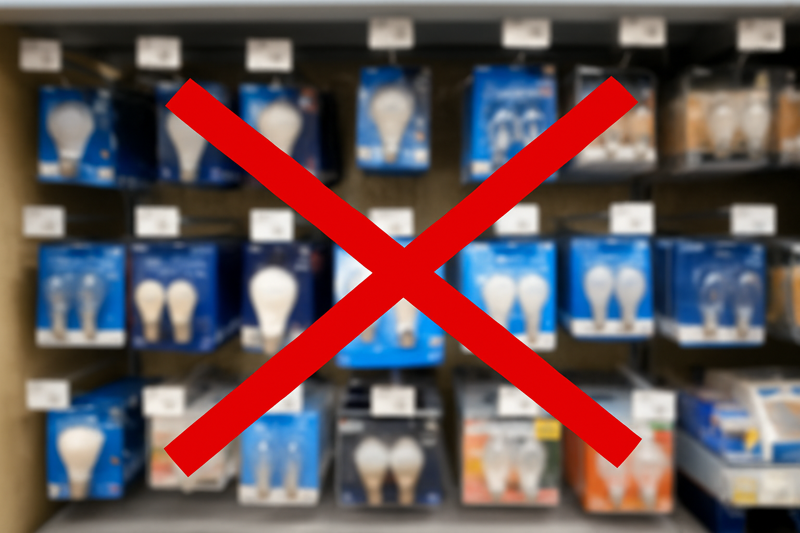
If you are a homeowner replacing one lamp, the big box store is fine. But if you are Jacky, my typical client—a product manager or a business owner—the retail shelf is a trap. The bulbs sold in supermarkets are built for the "average" consumer. The average consumer wants a light that is bright enough to read a book. They do not care about the nuances of color.
When you buy from these places, you are paying for the brand name and the expensive retail packaging, not the quality of the driver inside.
The Consumer vs. Commercial Specification Gap
Let's break down why the "Home Depot" bulb fails in a commercial setting.
First, CRI (Color Rendering Index)1. Most retail bulbs have a CRI of 80. This is acceptable for a garage. But for a restaurant or a high-end home, it makes food look dull and skin look pale. An "Authentic" experience requires a CRI of 90 or higher (Red Enhanced), which most retailers do not stock because it costs 10% more to manufacture.
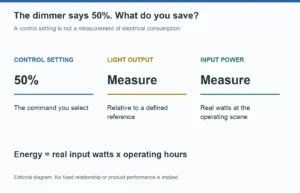
Second, Dimming Range2. Retail bulbs usually use basic "Linear" dimming drivers. They dim down to 20% and then cut off. Or they buzz. An authentic tungsten bulb dims to 0%. To replicate this with LED, you need a specialized IC driver that costs more. Retail buyers for big chains will always cut this cost to keep the shelf price under $5.
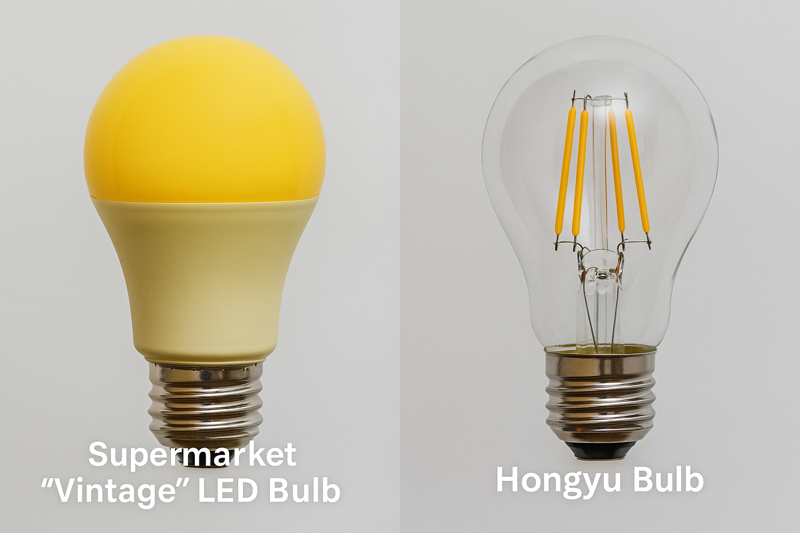
Third, Filament Aesthetics. Look closely at a supermarket LED vintage bulb. The yellow "sticks" (the LED filaments) are often thick, short, and ugly. They look like french fries stuck in a blender. Authentic reproduction bulbs use thinner substrates and arrange them in complex spirals or long vertical cages to mimic the hand-wound carbon of 1910. You simply cannot find this level of detail in the cleaning supplies aisle.
Should You Trust Online Marketplaces Like Amazon or Alibaba?
You type "Vintage LED Bulbs" into a search bar. Thousands of results appear. The prices are incredibly low, sometimes pennies per bulb. It feels like a gold mine for your margins.
Online marketplaces are a mix of factories, trading companies, and resellers. While you can find authentic products, you face significant risks regarding consistency, fake certifications, and lack of accountability if the batch fails after three months.
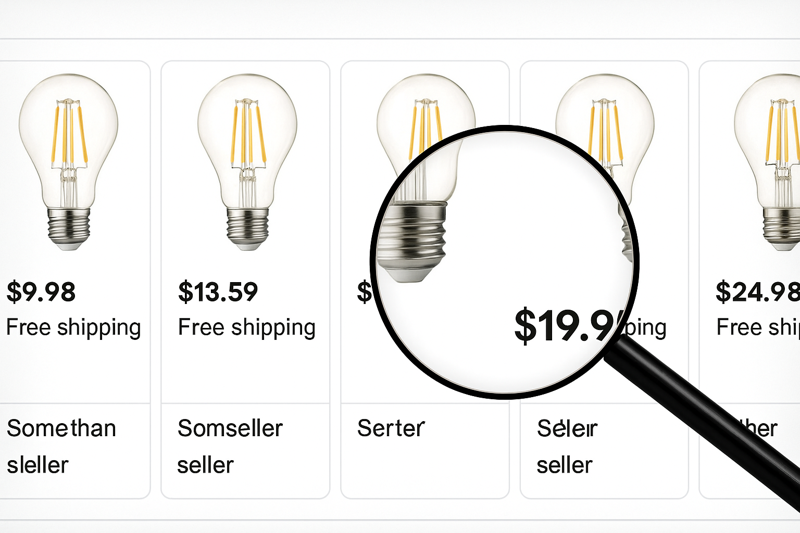
I use Alibaba to buy raw materials sometimes, so I know the game. But for a finished product like a filament bulb, it is dangerous. You see a picture of a beautiful bulb. But the seller might be a "Trading Company" sitting in an office in Shenzhen, not the factory making it. They might buy from Factory A today and Factory B tomorrow. The bulb you get in January might look different from the bulb you get in March.
How to Filter for Authenticity Online
If you must use these platforms to find a supplier, you need to be a detective.
- Check the "Factory" Photos: Do they look real? Or are they stolen from Google? I once saw a competitor use a photo of my warehouse on their profile. If you cannot see a video tour of the production line, be careful.
- Ask Technical Questions: Ask them, "Is the bulb gas-filled?" Authentic LED filament bulbs3 must be filled with Helium (or a mix) to cool the filaments. If the seller doesn't know, or says "No, it's air," do not buy it. It will overheat and die in 500 hours.
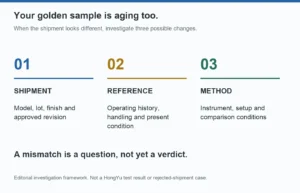
- The "Sample" Trick: Trading companies will send you a "Golden Sample"—a perfect bulb made by a top-tier factory. Then, for the mass order, they ship you a cheaper version to maximize their profit. The only way to fight this is to demand a production sample and have a third-party inspection agent check the goods before they leave China.
- Certification Verification4: They will send you a PDF of a UL or CE certificate. Check the "holder" name on the certificate. Does it match the company name? If not, they are a middleman. For a B2B buyer, working with a middleman adds cost and removes control.
Is Buying Direct from a Specialized Manufacturer the Only Way?
You want full control. You want the glass to be a specific shade of gold. You want your logo etched on the base. You want a warranty you can actually use.
Yes, for businesses sourcing reliable inventory, working directly with a specialized manufacturer like HongYu Bulb is the safest route. It allows you to customize the "Authentic" look (CCT, shape, filament style) and ensures you are paying for the product quality, not the middleman's commission.
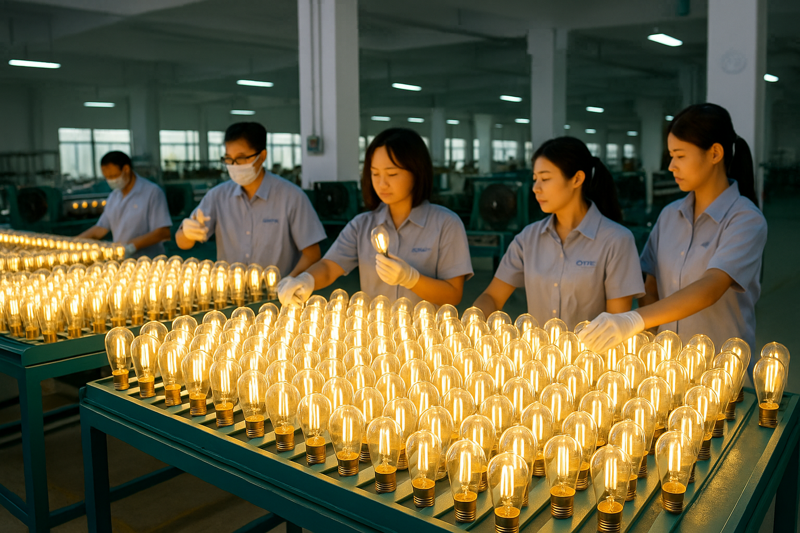
Sourcing direct seems scary to some small business owners. They think, "I don't need a container load." But the industry has changed. We now support "High Mix, Low Volume" orders for growing brands.
When you talk to a manufacturer, you are talking to the engineers. You can say, "I want the filament to look like a 1920s squirrel cage, but I need it to be 4 Watts." We build that for you.
The Customization of "Authentic"
What does "Authentic" mean to your specific customer?
- For the US Market: It usually means the ST64 (Teardrop) shape, E26 base, and a very warm, almost orange glow (2200K).
- For the European Market: It might mean a giant G125 Globe, E27 base, with a spiral filament and a sophisticated Smoky Grey glass.
A generic store cannot offer both. A manufacturer can.
We can verify the Driver Capability5. If you are selling to hotels, you need bulbs that work with Lutron or Leviton dimming systems. We have tested our drivers against these specific brands. We can verify, "Yes, this chip works with that system." A retailer on Amazon has no idea what a "Lutron Diva" dimmer is.
Also, consider Packaging6. If you are selling "Authentic" bulbs, packaging is half the story. We help clients design Kraft paper boxes that look vintage and eco-friendly, boosting the perceived value. You are buying a finished brand product, not just a commodity.
How Can You Spot a Fake "Vintage" Bulb Before You Buy?
You have a sample in your hand. The seller swears it is the best quality. It lights up. But is it actually good, or is it a time bomb?
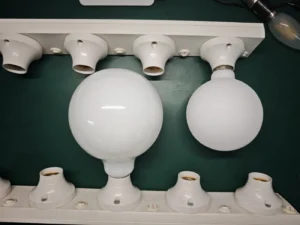
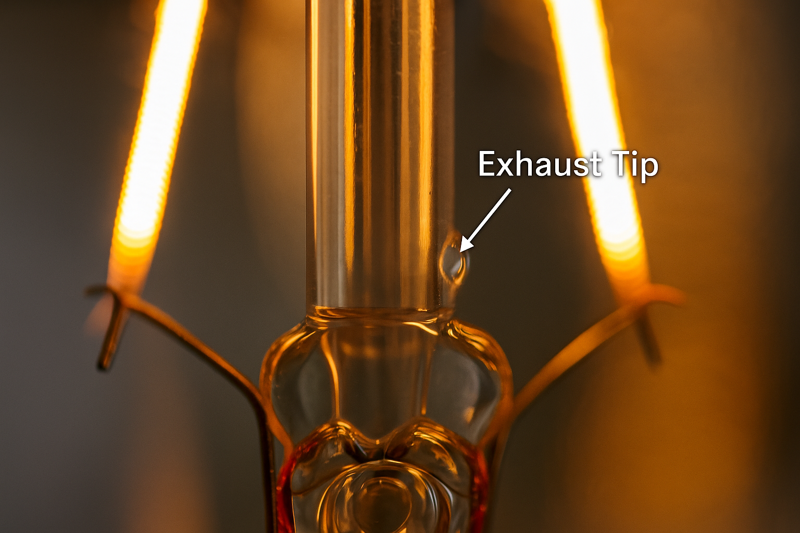
You must perform critical physical checks: look for the presence of a helium gas filling point (a small glass tip on the stem), check the weight of the base (heavier indicates a better thermal driver), and use your phone camera to detect invisible flickering.
I teach all my new clients these three tricks. They make you look like a pro in front of any supplier.
The 3-Step Inspection Guide
- The "Shake and Weigh" Test: Pick up the bulb. Does it feel like a feather? If it is too light, the base is likely thin aluminum or plastic, and the driver inside is tiny. A good bulb needs mass to dissipate heat. Also, shake it gently. If you hear a rattle, the internal wires are loose.
- The "Exhaust Tip" Check: Look inside the glass bulb. At the bottom of the central glass stem, is there a tiny, sharp glass point or a melted seal? This is where the machine injected the Helium gas7. If the stem is completely flat or smooth with no seal point, the bulb might rely on "Air cooling." Air is a terrible insulator for filaments. These bulbs will run hot and burn out fast. Authentic, long-lasting LED filaments must be in a gas-filled environment.
- The "Slow Motion" Camera Test: Turn the bulb on. Open your smartphone camera. Switch to "Slow Motion" video mode. Point it at the light. If you see aggressive flashing bars on your screen, the bulb has high "Stroboscopic Flicker8." This causes eye strain and headaches. A quality "Authentic" bulb will show a steady light on the screen. Your customers won't explicitly know why they hate a certain room, but if the lights flicker, they will feel uncomfortable. Don't sell uncomfortable light.
Why Does the Location of the Supplier Matter for Certification?
You found a supplier with great prices and nice-looking bulbs. But they are based in a region known for lax regulations. You import the bulbs, and customs seizes them.
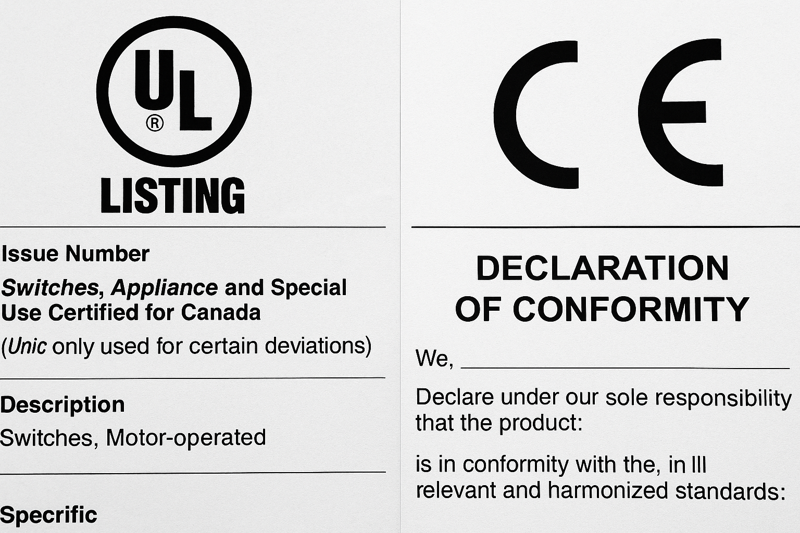
Authentic sourcing means legal sourcing. You must buy from suppliers who hold valid ETL/UL certifications for North America or CE/ERP for Europe. Buying non-certified bulbs from "Gray Market" sellers creates a massive liability risk for your business if a fire occurs.
This is the boring part of business, but it is the part that keeps you out of jail.
I once had a UK client who tried to save money by buying from a small, uncertified workshop. He saved $0.20 per bulb. But when the goods arrived in Southampton, UK Customs asked for the technical file for the new lighting energy regulations (ERP). The supplier didn't have it. The entire container was blocked. He lost $20,000.
The Cost of Safety
Real certification costs money. A UL listing for a filament bulb series costs thousands of dollars and months of testing.
If a supplier offers you a bulb for $0.50, they probably haven't paid for UL.
When you buy "Authentic," you are buying the assurance that the product won't explode.
- North America (USA/Canada): Look for UL or ETL. These are non-negotiable for commercial insurance. If a hotel burns down and the investigator finds non-UL bulbs, the insurance company will not pay.
- Europe: Look for CE, RoHS, and the new ERP (Energy Related Products) rules. The EU is very strict on flicker and energy efficiency now. Old-style "cheap" filament bulbs are now illegal to import into the EU.
- Australia: Look for SAA.
At Hongyu, we maintain all these files. When you ask, "Where do I buy?" the answer should be "From someone who can email me the PDF of the UL report within 5 minutes."
Related HongYu Bulb product pages
- LED Filament Bulb Product Range → — standard and decorative LED filament bulbs for wholesale and project sourcing.
- Contact HongYu Bulb → — send specifications, target market, quantity and packaging requirements for quotation.
Conclusion
Finding "Authentic" LED Edison bulbs is not about finding the nearest store; it is about finding a partner who understands the intersection of vintage aesthetics and modern engineering. Whether you choose a specialized local distributor or go direct to a manufacturer like us, ensure you verify the gas filling, the flicker rate, and the certifications to protect your business and delight your customers.
Understanding CRI is crucial for achieving the right ambiance in commercial spaces, especially in restaurants and retail. ↩
Exploring dimming range can help you choose the right lighting solutions that enhance the atmosphere and functionality of your space. ↩
Understanding authentic LED filament bulbs ensures you make informed purchasing decisions and avoid low-quality products. ↩
Learning about certification verification helps you ensure supplier legitimacy and product safety, protecting your investment. ↩
Understanding Driver Capability is crucial for ensuring compatibility with dimming systems, enhancing your lighting solutions. ↩
Exploring the impact of packaging can help you elevate your brand's value and appeal to eco-conscious consumers. ↩
Understanding Helium's role in LED bulbs can help you choose longer-lasting, efficient lighting solutions. ↩
Learn about Stroboscopic Flicker to ensure your lighting choices promote comfort and well-being. ↩