Retailers spend a fortune on window displays, music curation, and scent marketing. Yet, many high-end boutiques still rely on generic fluorescent tubes that make their expensive merchandise look flat and cheap. Why do customers walk into some stores and immediately feel the urge to buy, while in others, they just browse and leave?
The answer often lies in "Emotional Lighting." LED Edison bulbs are no longer just for hipsters; they are a strategic retail tool used to create warm, inviting "Micro-moments" that slow customers down. By replacing sterile general lighting with focused, amber-tinted filament bulbs in key display areas, store owners can increase dwell time, enhance the perceived value of products, and guide the customer's journey through the store.
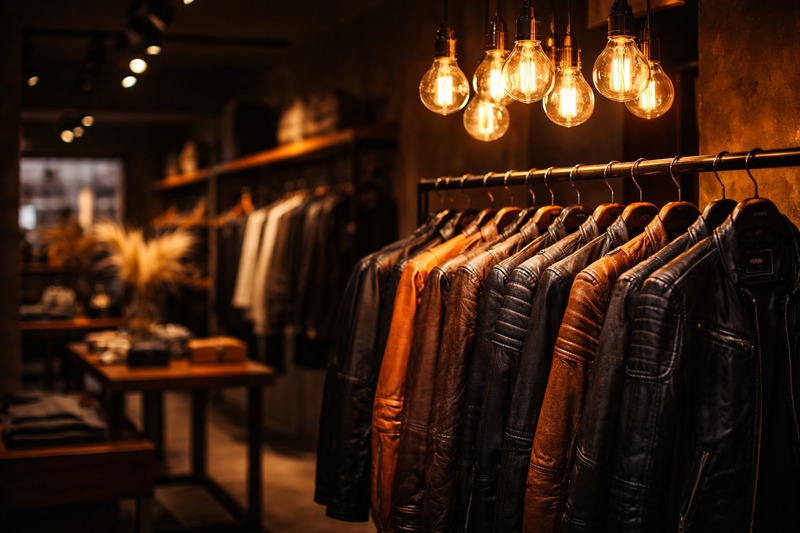
I have a customer named Jacky. He manages a chain of menswear stores in Chicago.
Chicago is competitive.
He told me, "Wallson, my suits are Italian wool, but under the old white panel lights, they looked like polyester."
He was fighting a battle against online shopping.
"Digital stores are convenient," I told him, "but physical stores have one advantage: The Vibe."
We redesigned his accessory section—the ties, the watches, the leather belts.
We installed my ST64 spiral filaments low over the display tables.
The result? Sales of accessories grabbed by customers "on impulse" increased by 15% in the first quarter.
The warm light caught the gold reflection of the watch bezels. It brought out the rich grain in the leather.
It made the product look like a treasure, not just inventory.
Let’s explore how to make your lighting pay your rent.
The Strategy of "Accent Lighting": Highlighting the Heroes
In retail design, we have a rule: "Light strictness leads to wallet tightness." If a store is evenly lit everywhere, the customer's eye doesn't know where to look. It is overwhelming.
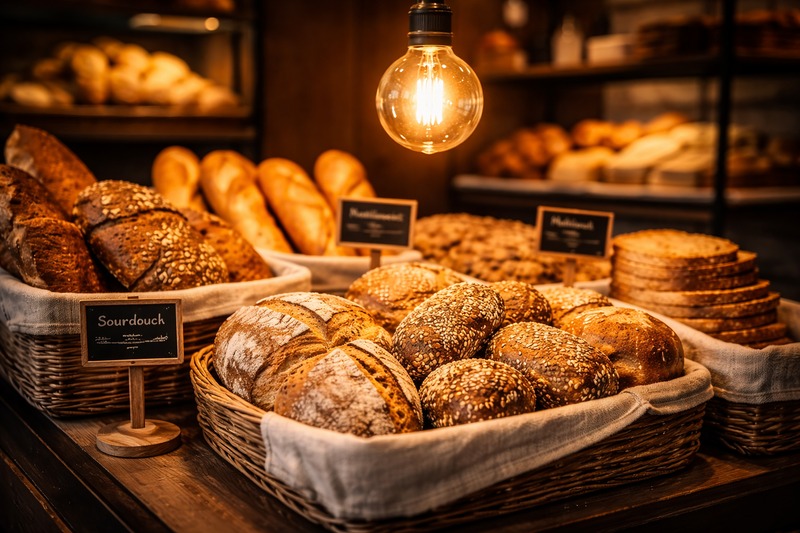
"Accent Lighting" is the technique of making your merchandise significantly brighter or warmer than the surrounding floor space to create visual hierarchy. LED Edison bulbs excel here because their unique filament structures draw the eye instantly, acting as a visual magnet that pulls customers toward specific high-margin items like jewelry, premium denim, or bakery specials.
Jacky asked me, "Should I just hang them everywhere?"
"Absolutely not," I said. "If you make everything bold, nothing is bold."
The Lighthouse Principle:
Think of the Edison bulb as a lighthouse.
It signals safety and interest.
Use them over:
- The New Arrivals Table: This is your prime real estate. A cluster of 3 bulbs here says, "Start Here."
- The Fitting Room Mirror: This is where the sale is actually made.
This is critical.
Most fitting rooms have terrible overhead lighting that casts shadows under the eyes (the "raccoon effect").
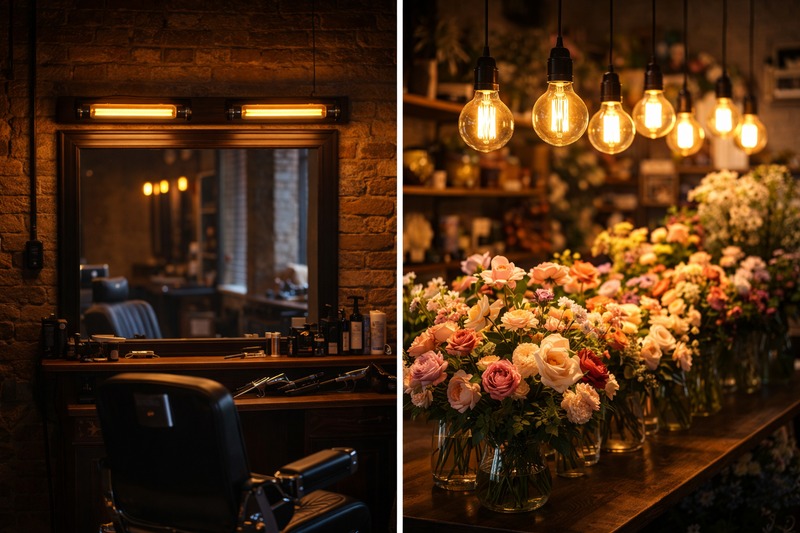
By placing vertical LED filament tubes on either side of the mirror, you create "Vanity Lighting."
It lights the face evenly. It warms the skin tone.
When the customer feels beautiful in the outfit, they buy the outfit.
The CRI Factor (Color Rendering Index):
For retail, color accuracy is life or death.
If a navy blue shirt looks black, the customer returns it later.
Standard vintage bulbs had poor color rendering.
My high-end LED filaments have a CRI of 90+.
This means the reds are truly red, and the blues are deep blue.
It reveals the true quality of the fabric weave.
Handling the Heat (Why LED is Non-Negotiable)
In the old days, halogen display lighting was a nightmare.
It got so hot it would fade the colors of the clothes. It could melt chocolate displays.
I had a client whose vintage incandescent bulbs literally scorched a silk scarf.
LED Filaments emit zero UV and almost zero heat.1
You can place my T30 Tube Bulb2 two inches away from a delicate cashmere sweater, and it will be safe.
This allows you to bring the light closer to the product than ever before.
Closer light means more texture, more sparkle, and more drama.
Creating the "Brand Story" Through Bulb Shape
Not all bulbs say the same thing. The shape of the glass and the design of the filament communicates a subconscious message about your brand identity. You are telling the customer who you are before they even read the price tag.
Selecting the right bulb silhouette is crucial for brand consistency; a "Globe" (G125) bulb suggests modern, clean, and feminine aesthetics, while a "Tube" (T45) or "Squirrel Cage" (ST64) bulb communicates heritage, craftsmanship, and industrial ruggedness. Matching the bulb shape to your store's theme reinforces the narrative that your products are curated and intentional.
Jacky's menswear store was full of dark wood and leather.
The Masculine Choice:
We used the T185 and T300 "Test Tube" bulbs.
They look like scientific instruments or old cigars.
They fit perfectly into the long, narrow shelves of his shoe display.
The vertical lines of the filament matched the vertical stitching on the suits.
The Feminine/Modern Choice:
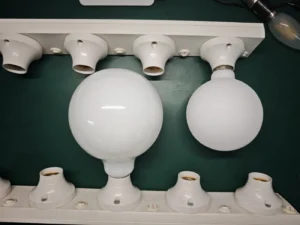
For his wife’s bridal boutique, we used the G125 Giant Globe.
The round shape is soft. It mimics the curves of the body.
We used the "Milky" glass finish instead of clear.
This creates a diffuse, cloud-like light that makes wedding dresses look ethereal and soft.
The "Diamond" Bulb:
For jewelry stores, we have bulbs shaped like cut diamonds.
The glass has facets.
When the LED shines through the faceted glass, it scatters light like a prism.
It makes gold and silver sparkle intensely.
Customization:
I told Jacky, "If you really want to win, let's make a custom mold."
We can now manufacture bulbs where the glass itself is shaped like a letters or logos.
Imagine a sneaker store where the light bulbs are shaped like sneakers.
It becomes an 'Instagrammable moment' that customers share online.
The "Dimmable" Dynamic
Retail is theater. The scene changes.
On a rainy Tuesday morning, you need the store to be bright and cheery to combat the gloom outside.
On a Friday night launch party, you want it moody and sexy.
You must use Dimmable Drivers3.
Do not buy non-dimmable LEDs for a store. You lose all control.
Connect your accent lights to a "Smart Dimmer4" system.
Jacky can now control his store lighting from his phone.
When he hosts a "VIP Night" for loyal customers, he drops the light level to 30%.
This creates intimacy. It makes the customers feel like they are in a private club, not a public shop.
It creates exclusivity.
The Checkout Counter: The Final Impression
The "POS" (Point of Sale) is the last place the customer stands. It is often the most boring part of the store. But this is your final chance to leave an impression—and maybe sell one last item.
Use a cluster of statement "Oversized" Edison bulbs directly above the cash wrap to create a focal point that anchors the space. This heavily designed lighting fixture acts as a visual landmark, signaling "Pay Here" without needing a sign, while the warm light keeps customers patient and calm while they wait in line.
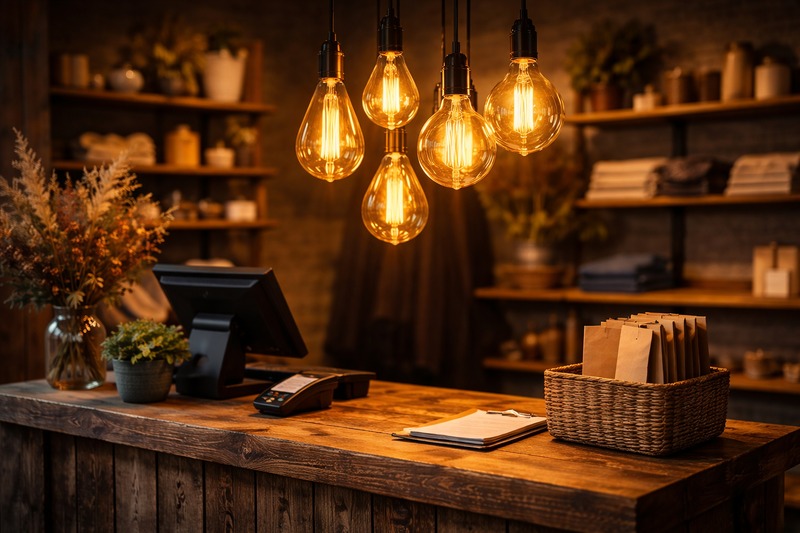
Jacky used to have a problem with line abandonment.
People would see a line, get annoyed, and put the item back.
It wasn't just the wait; the checkout area felt like a hospital desk.
The Psychological Anchor:
We installed a custom chandelier with 5 mixed shapes of my PS52 Giant Bulbs.
These bulbs are huge—the size of a human head.
They are mesmerizing to look at.
Now, when customers wait in line, they look up. They admire the filaments.
"Where did you get these lights?" is the most common question his cashiers hear.
It starts a conversation.
It distracts from the wait time.
Illuminating the "Impulse Buy":
Right next to the register, Jacky sells leather conditioner and socks.
We aimed a small mini-Edison bulb directly at these small items.
The "Spotlight Effect" works.
Customers are staring at the counter while they wait.
If the socks are glowing under a warm light, they look premium.
If they are in the dark, they look like clutter.
Comfort for the Staff:
Your staff stands there for 8 hours.
If the light is too harsh, they get headaches. They get tired.
Restocking the register area with flicker-free, warm LEDs made his staff happier.
A smiling cashier protects the sale.
Related HongYu Bulb product pages
- LED Filament Bulb Product Range → — standard and decorative LED filament bulbs for wholesale and project sourcing.
- Contact HongYu Bulb → — send specifications, target market, quantity and packaging requirements for quotation.
Conclusion
Retail is no longer about just "distributing goods"—Amazon does that. Retail is about "distributing experiences." Your lighting is the conductor of that experience. By swapping out cold, lifeless generic bulbs for strategic, warm, and textural LED Edison bulbs, you are doing more than just illuminating a room. You are highlighting quality, defining your brand identity, and guiding the emotional state of your customer from the moment they enter to the moment they pay. It is a small investment in hardware that yields a massive return in atmosphere and sales. Don't let your products sit in the dark.
Discover how LED Filaments can enhance your display lighting while protecting delicate items from heat damage. ↩
Learn about the T30 Tube Bulb's unique features and how it can improve your lighting setup for showcasing products. ↩
Understanding Dimmable Drivers is crucial for optimizing store lighting and enhancing customer experience. ↩
Exploring Smart Dimmer systems can help you learn how to effectively manage lighting for different retail scenarios. ↩