We live in a world where we spend 90% of our time indoors, separated from the natural rise and set of the sun. This stagnant, artificial light confuses our brains, ruins our sleep, and drains our energy. But what if the vintage-style bulb in your lamp could mimic the sun's cycle to boost your productivity by day and help you relax by night?
Tunable White LED Edison bulbs solve the "static light" problem by allowing users to adjust the color temperature from a crisp, energizing cool white (6000K) for work to a soothing, warm amber (2200K) for relaxation. This technology, known as Human-Centric Lighting, aligns with our body's natural circadian rhythm to improve sleep quality and mental focus without sacrificing the aesthetic appeal of vintage filaments.
I was talking to my regular customer Jacky recently.
He is a smart guy, always looking for the next trend in the American market.
He told me, "Wallson, my interior design clients are complaining. They love the look of the vintage Edison bulbs for their home offices, but they hate working under them."
"Why?" I asked, though I already knew the answer.
"The light is too yellow," Jacky said. "It makes them sleepy at 2 PM. But if they put in a standard white office bulb, it looks ugly and clinical. They want the vintage look, but they need office performance."
"Jacky," I said, "You need Tunable White filaments."
Most people think an Edison bulb can only be amber. That is old news.
We can now put the power of the sun inside a glass bulb that looks like it was made in 1910.
Let's dive into how this bio-hacking technology works.
Why Is Static Lighting Bad for Your Health?
Our bodies are biological machines programmed by thousands of years of evolution to follow the sun. When we sit under the same light color all day, we break that program. Our hormones go haywire.
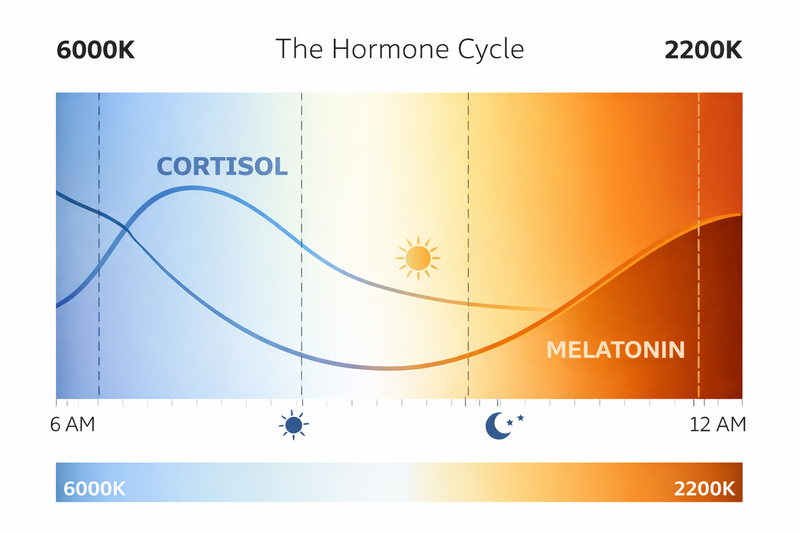
Static lighting disrupts our circadian rhythm because it fails to signal the correct time of day to our brain's master clock. Exposure to bright, cool light in the evening suppresses melatonin production, making it hard to fall asleep, while dim, warm light during the morning fails to trigger the cortisol release needed for alertness and focus.
Jacky asked me, "Is this really a health issue, or just marketing?"
I explained the "Blue Light" paradox to him.
Blue light is not bad. Actually, blue light is necessary.
The Morning Need:
In the morning (8 AM - 12 PM), the sun is very bright and contains a lot of blue spectrum (around 5000K - 6000K).
When this blue light hits your retina, it tells your brain: "Wake up! The hunt is on."
Your body stops making melatonin (the sleep hormone) and releases cortisol (the energy hormone).
If you sit in a room with a warm, cozy 2200K Edison bulb all morning, your body thinks it is still sunset. You feel groggy. You drink too much coffee to compensate.
The Evening Problem:
In the evening, the sun goes down. The light turns red and amber (2000K).
This signals the brain to prepare for sleep.
But, if you have harsh 4000K "Daylight" bulbs in your living room, or if you stare at a phone screen, you are blasting your brain with blue light.
Your brain thinks it is noon. It refuses to let you sleep.
The Solution:
You cannot change the sun. But you can change your bulbs.
We need a light that provides High Kelvin (Cool) in the morning for work, and Low Kelvin (Warm) in the evening for rest.
Until recently, you needed two different lamps to do this.
Now, we do it in one filament.
How Do We Fit Two Suns Inside One Vintage Bulb?
Technically, an LED filament is a stick covered in phosphor.
If you use yellow phosphor, you get warm light.
If you use orange/green phosphor mixes, you get cool light.
But how do we get both?
The Dual-Channel Architecture:
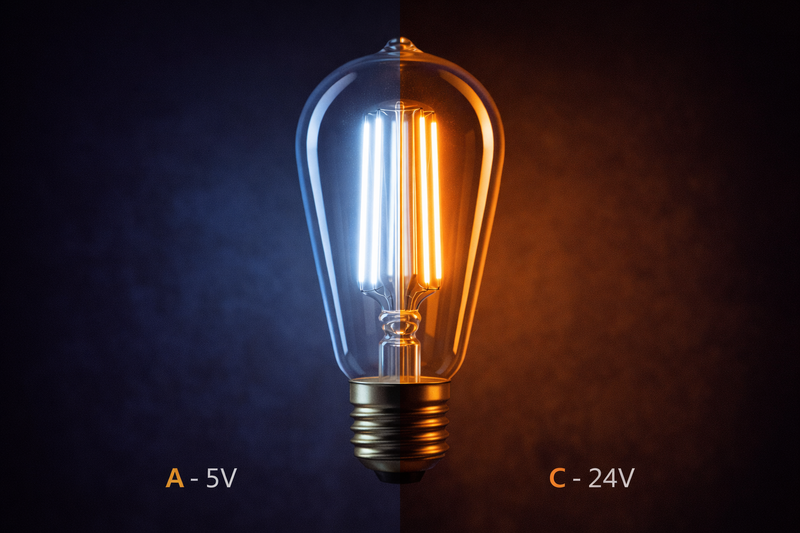
I showed Jacky a sample of our ST64 Tunable Bulb1.
If you look closely at the filament stick, it is not one solid line.
It is actually composed of two microscopic rows of LED chips mounted side-by-side on the substrate.
Row A: 2200K Chips (Warm Gold).
Row B: 6000K Chips (Cool White).
The Control Logic:
These bulbs connect to a Smart Driver2 (Wi-Fi or Zigbee).
When you want "Focus Mode," the driver powers up Row B to 100% and turns Row A off.
When you want "Relax Mode," it powers up Row A.
When you want "Mid-Day Mode" (4000K), it mixes them both at 50%.
The Aesthetics Challenge:
The hardest part of manufacturing this was hiding the technology.
Jacky’s customers don't want a bulb with a big ugly white plastic base.
They want clear glass and a brass base.
We managed to shrink the smart driver chip so it fits inside a standard E26 metal cap.
So, to the naked eye, it looks like a regular vintage bulb. But inside, it is a computer.
Can One Room Be Both an Office and a Lounge?
Since 2020, the boundaries between our workspaces and our living spaces have collapsed. We work at the dining table, and then we eat dinner at the same table. The lighting needs to define the function of the room.
Tunable white lighting transforms a single physical space into multiple psychological zones by altering the atmosphere instantly with a tap on a smartphone. By shifting the color temperature, a dining room can function as a high-focus corporate office during the day and transition seamlessly into a cozy, intimate restaurant setting by night.
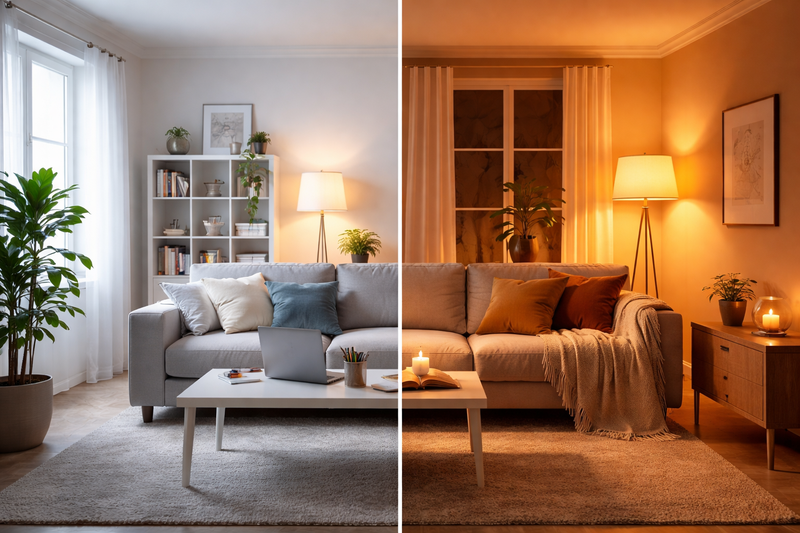
Jacky installed these bulbs in a model home for a developer.
The feedback was incredible.
People loved the idea of "Automation."
The Work-From-Home (WFH) Protocol:
We set up a simple schedule in the app for the homeowners.
- 7:00 AM (Wake Up): The lights fade in slowly at 4000K. It simulates sunrise. It is gentle, not shocking.
- 9:00 AM - 4:00 PM (Deep Work): The lights shift to 5500K-6000K.
This is "Office White." It makes text on paper easy to read. It creates a high-energy vibe.
It helps with concentration during Zoom calls.
(Bonus: High CRI makes you look better on camera than yellow light). - 5:00 PM (The Transition): This is the most key moment.
The lights slowly drift down to 3500K.
It signals the end of the workday. It separates "Job" from "Life." - 8:00 PM (Wind Down): The lights drop to deep 2200K and dim to 40% brightness.
This mimics a campfire or candlelight.
It triggers melatonin. It makes the room feel smaller and safer.
The "Scene" Switch:
We also gave them a physical button.
Click once: "Reading Mode" (Bright Warm).
Click twice: "Movie Mode" (Dim Warm).
Click three times: "Cleaning Mode" (Super Bright Cool White).
Jacky said the "Cleaning Mode" was a hit because people could finally see the dust on the floor!
This flexibility adds massive value to a home.
Commercial ROI: Restaurants and Cafes
Does this logic apply to business?
Absolutely.
Jacky supplies a chain of coffee shops in Seattle.
The "All-Day" Venue Problem:
A coffee shop needs to be energetic in the morning to sell espresso to people rushing to work.
But that same shop wants to sell wine and cheese in the evening.
If the lights are bright white at 8 PM, nobody will order wine. It feels like a cafeteria.
If the lights are dim yellow at 8 AM, nobody will buy coffee. It feels too sleepy.
The Tunable Strategy:
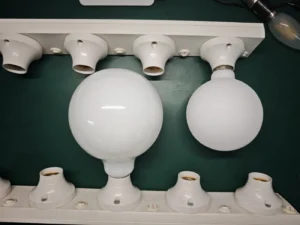
Jacky retrofitted their pendant lights with G125 Tunable Globes3.
- Morning Rush: 5000K. Fast music. High turnover. People drink and leave quickly (which is good for efficient sales).
- Afternoon Lounge: 3500K. Students studying. Softer vibe.
- Evening Bar: 2200K. Very warm. Slow music. Dwell time increases.
The result:
The coffee shop didn't have to install two different lighting circuits.
They didn't have to buy expensive dimming panels.
They just changed the bulbs.
The atmosphere now matches the product they are selling at that specific hour.
Revenue increased in the evening hours by 20%4 because the environment finally felt appropriate for "Happy Hour."
Related HongYu Bulb product pages
- LED Filament Bulb Product Range → — standard and decorative LED filament bulbs for wholesale and project sourcing.
- Contact HongYu Bulb → — send specifications, target market, quantity and packaging requirements for quotation.
Conclusion
We used to think of light bulbs as simple utility items—either on or off. But with Tunable White LED technology, lighting has become a health tool and a productivity hack. By mimicking the sun’s natural progression from cool blue mornings to warm amber evenings, we can fix our sleep schedules, boost our work focus, and reclaim our homes. For suppliers like Jacky and manufacturers like me, offering this technology is not just about selling a bulb; it is about selling a better lifestyle wrapped in a beautiful, vintage glass package.
Explore this link to understand the innovative technology behind the ST64 Tunable Bulb and its unique features. ↩
Learn about Smart Drivers and how they enhance LED lighting functionality, making your lighting experience smarter. ↩
Explore this link to understand how G125 Tunable Globes can enhance ambiance and boost sales in your venue. ↩
Discover strategies that can help your business achieve similar revenue growth during evening hours. ↩
Browse from HongYu Bulb: EU Dim to Warm LED Bulbs → · EU Vintage Flexible Filament Bulbs →