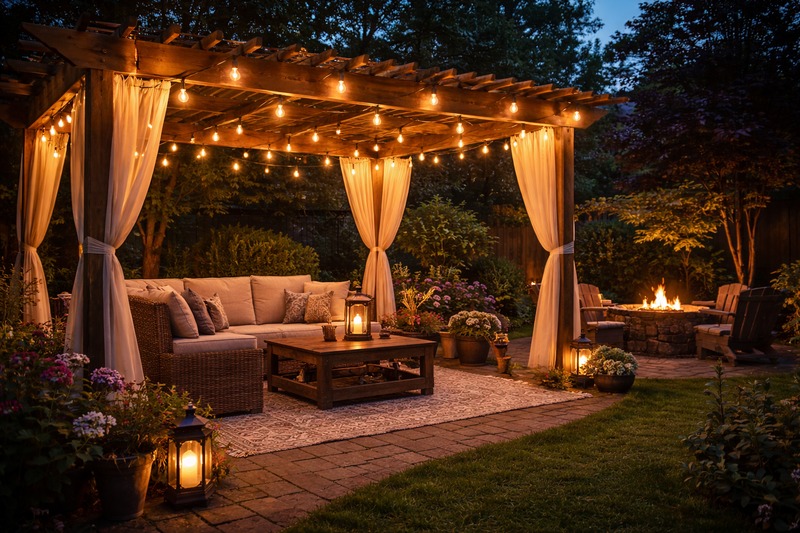
Most people think solar lights are dim, unreliable toys that stop working after two hours, but recent upgrades in battery density and panel efficiency have changed the game completely.
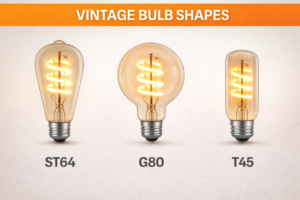
The new generation of Solar LED Edison String Lights utilizes high-efficiency Monocrystalline silicon panels paired with 3.7V Lithium-Ion batteries. This combination drives 1-watt equivalent S14 filament bulbs for up to 10 hours a night, providing the same warm, bright ambit as traditional plug-in bistro lights without the electricity bill.
Ten years ago, buying solar lights was a waste of money. You would put them in your garden. They would glow with a weak, blue light. Then, at 9 PM, they would die. You would throw them in the trash. This gave solar outdoor lighting a very bad reputation. I still hear this from my clients every day. They say, "Wallson, solar is weak." But I tell them to look again. The technology inside the panel and the bulb has advanced rapidly. It is now a serious competitor to high-voltage lighting.
Do Your Solar Lights Die After Two Hours of Darkness?
The biggest complaint about solar lighting is runtime; if the panel cannot convert enough sunlight into stored energy during the day, your lights will leave you in the dark before dinner is over.
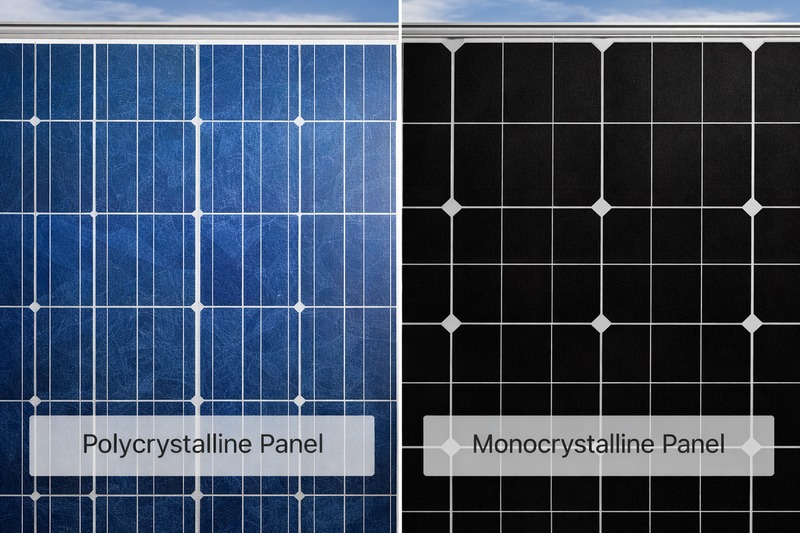
The secret to all-night illumination lies in the panel material. You must avoid cheap "Polycrystalline" panels (which look blue causing low conversion) and choose "Monocrystalline" panels (which look black). Monocrystalline silicon converts sunlight to power at a rate of over 21%, ensuring your battery fills up even on cloudy days.
I have a very good customer named Jacky. He distributes garden products in California.
Last year, he called me very angry.
"Wallson," he said, "My customers are returning the lights. They say they only last two hours."
I asked him to send me a photo of the solar panel he bought from another factory.
The panel was blue. It had a speckled look, like crushed glass.
"Jacky," I said, "You stuck with Polycrystalline."
Polycrystalline silicon is old technology. It is cheap to make. Makers melt many silicon fragments together.
Because there are many crystals, the electrons cannot move freely.
The efficiency is only about 13% to 15%.
This means for every hour of sunlight, you get very little power.
The Monocrystalline Upgrade
We switched Jacky to our Pro-Series Solar Kit.
These use Monocrystalline Silicon1.
We cut these from a single, pure crystal of silicon.
The color is a deep, uniform black.
The electrons flow very fast.
The conversion efficiency2 is 21% to 23%.
This is a huge difference.
On a cloudy day in Seattle or London, a poly panel stops working.
A mono panel keeps charging.
It grabs every photon it can find.
| Feature | Polycrystalline (Old) | Monocrystalline (New) |
|---|---|---|
| Color | Blue / Speckled | Solid Black |
| Purity | Mixed Silicon Fragments | Pure Single Crystal |
| Efficiency | 13% - 15% | 21% - 23% |
| Cloudy Performance | Poor | Excellent |
| Charging Time | 8-10 Hours | 4-6 Hours |
Since Jacky switched to the black panels, his return rate dropped to almost zero. His customers get light until midnight, even in the winter.
Is the Battery Inside Your Solar Panel Actually Replaceable?
The solar panel collects the energy, but the battery is the fuel tank; if the tank is too small or degrades over time, the entire lighting system becomes useless e-waste.
High-quality solar string lights now use 18650 Lithium-Ion rechargeable batteries (the same type found in electric cars) instead of cheap Ni-MH AA batteries. These lithium cells offer higher energy density (usually 2000mAh to 4000mAh) and no "memory effect," allowing them to power bright filament bulbs for years.
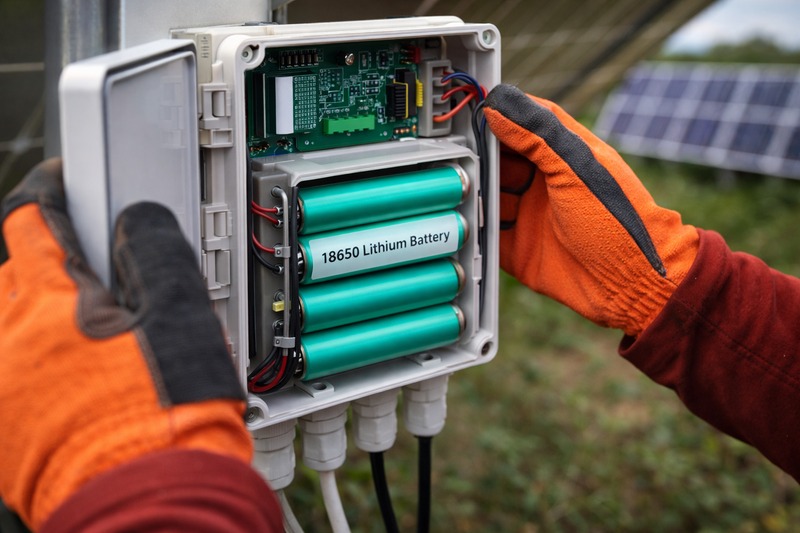
Let's talk about what happens inside the plastic box.
The panel makes the electricity. The wires send it to the battery.
In the cheap lights Jacky used to buy, the battery was a standard Ni-MH (Nickel-Metal Hydride) AA battery.
It looked just like the battery in your TV remote.
These are weak. They hold about 600mAh of power.
That is enough to power a tiny LED dot.
But it is not enough to power a 15-meter string of Edison bulbs.
Also, Ni-MH batteries have a "Memory Effect."
If you don't drain them completely, they lose capacity.
After six months, they are dead.
The EV Technology Shift
We changed the game by using Lithium-Ion 18650 Cells3.
This is a cylinder battery. It is larger than a AA.
It is the exact same cell used in Tesla battery packs and power tools.
It runs at 3.7 Volts, not 1.2 Volts.
This higher voltage allows us to drive brighter filaments.
The capacity is usually 2200mAh per cell. We often put two in parallel for 4400mAh.
That is massive storage.
Also, lithium holds a charge for months without losing it.
| Battery Type | Voltage | Capacity (Typical) | Lifespan |
|---|---|---|---|
| Ni-MH (AA) | 1.2V | 600 - 1000 mAh | 300 Cycles (1 Year) |
| Lithium-Ion (18650) | 3.7V | 2200 - 4400 mAh | 1000 Cycles (3-5 Years) |
| Power Output | Low (Dim Light) | High (Bright Light) | Stable |
I taught Jacky to look for a "Removable Back Plate4."
Good solar panels allow you to unscrew the back and change the Lithium battery after 3 years.
Cheap ones are glued shut. When the battery dies, you throw the whole unit away.
What Happens When the Wind Blows Your Lights Against the Wall?
Solar lights are often hung on fences, pergolas, or trees where wind is a constant threat, and traditional glass bulbs create a significant breakage hazard in your backyard.
For outdoor safety, especially in solar applications where strings are moved often, you must use Shatterproof S14 bulbs made from optical-grade PET plastic. These bulbs mimic the clarity of glass but will bounce off concrete or brick walls during a storm, protecting your family from sharp shards.
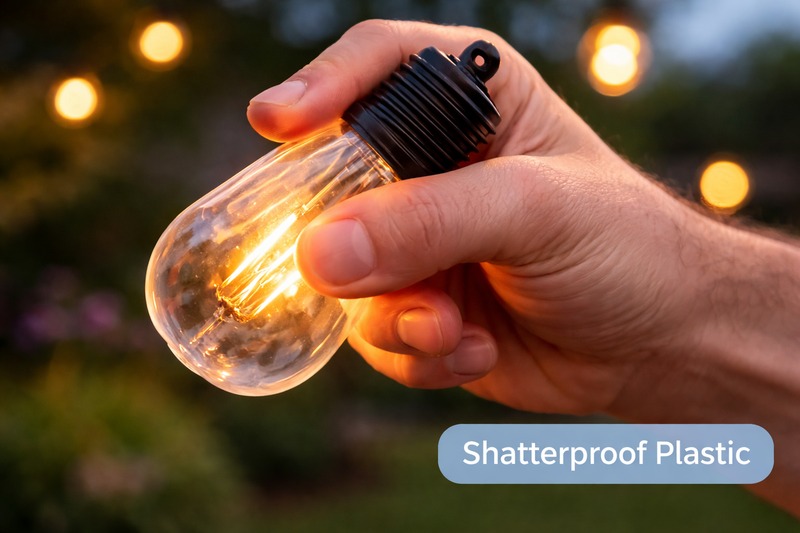
Solar lights are movable. That is their best feature.
You can take them camping. You can hang them in a tree for a party.
Jacky sells to event planners.
One planner had a disaster.
She hung glass solar bulbs for a wedding in a windy valley.
The wind picked up. The string swung into a brick column. Smash.
Glass fell into the wedding cake.
It was a nightmare.
"I can never use glass again," she told Jacky.
The PET Revolution
I manufacture our Solar S14 Bulbs5 using PET (Polyethylene Terephthalate6).
Do not confuse this with cheap acrylic.
Acrylic gets cloudy in the sun. It turns yellow.
PET stays clear. It looks exactly like glass.
When customers touch my bulbs at the lighting fair, they often tap them with their fingernail.
They are surprised. "I thought this was glass!" they say.
The transmittance (how much light gets through) is over 95%.
But the safety factor is the real selling point.
You can drop a string of my lights on a concrete patio from 3 meters high.
They will just bounce.
If a child steps on one, it might crack, but it won't shatter into razors.
| Material | Breakability | Clarity | Weather Aging |
|---|---|---|---|
| Glass | High Danger | 100% | None |
| Cheap Plastic (PC) | Unbreakable | 80% (Hazy) | Yellows quickly |
| Optical PET | Unbreakable | 95% (Clear) | UV Resistant |
For Jacky, switching to PET bulbs reduced his shipping damages to zero.
Before, he lost 5% of his stock just in the mail truck because glass is fragile. Now, he loses nothing.
Why Do Most Solar Lights Look Like a Hospital Operating Room?
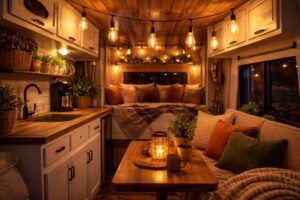
The cheapest LEDs emit a harsh, blue-white light that destroys the cozy atmosphere of a garden, making your patio feel cold and uninviting instead of relaxing.
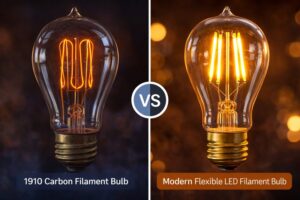
The color temperature of the LED filament is what creates the "mood." You should avoid "Cool White" (6000K) solar lights and insist on "Warm White" (2700K) or "Extra Warm" (2200K). This warmer range mimics the golden glow of vintage incandescent tungsten, creating a romantic and comfortable space.
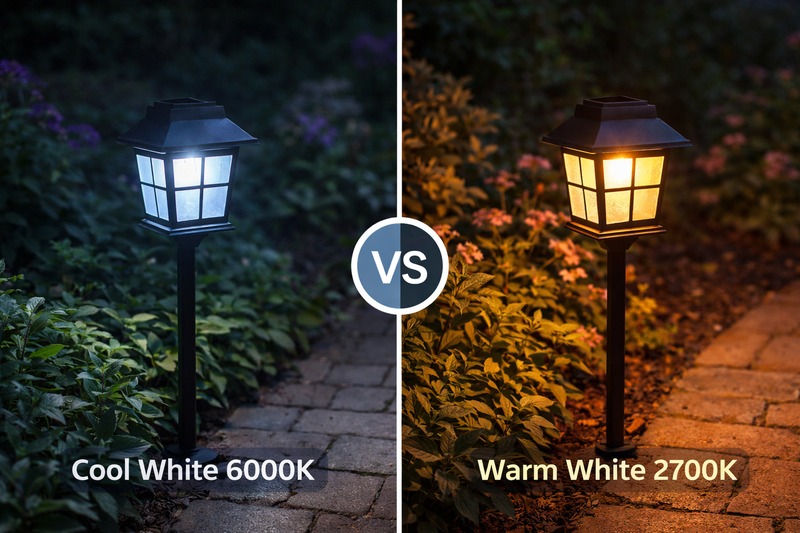
This is the number one reason people hate solar lights.
They buy a box at the discount store.
They install them.
At night, the light turns on and it is "Zombie Blue."
It looks like a prison spotlight. It is usually 6000K to 6500K.
Why do factories do this?
Because blue LEDs are cheaper and appear "brighter" to the human eye for the same amount of power.
It is a trick.
But Jacky's customers don't want bright. They want cozy.
They are drinking wine on the patio. They want to look good.
Blue light makes skin look pale and sick.
Warm light makes skin look healthy.
The Phosphor Mix
To make a solar LED look like a vintage Edison bulb, we have to coat the LED chip with a special Phosphor Powder7.
This powder changes the blue light into gold light.
We aim for 2700 Kelvin8.
This is the color of a standard light bulb you grew up with.
For some high-end clients, we go even lower to 2200 Kelvin.
This looks like candlelight.
It takes a little bit more battery power to push this warm light, but it is worth it.
| Kelvin (K) | Color Description | Emotional Effect | Best Use |
|---|---|---|---|
| 6000K | Cool Daylight (Blue) | Alert, Cold, Sterile | Security, Working |
| 3000K | Soft White | Neutral, Clean | Reading, Cooking |
| 2700K | Warm White | Cozy, Relaxing | Dining, Patios |
| 2200K | Amber / Gold | Romantic, Vintage | Mood Lighting |
I sent Jacky a sample kit of 2700K lights.
He put them next to the 6000K lights.
He said the 6000K looked like a mistake. The 2700K looked like luxury.
He never bought 6000K again.
Will One Rainy Week Destroy Your Solar Investment?
Outdoor electronics have two enemies: rain and humidity, and a poorly sealed solar control box will corrode internally within weeks of installation.
A true outdoor solar system must be IP65 rated, meaning it is dust-tight and protected against water jets from any angle. Pay close attention to the USB charging port on the panel—it must have a thick rubber gasket cover to prevent water from entering the circuit board and causing rust.
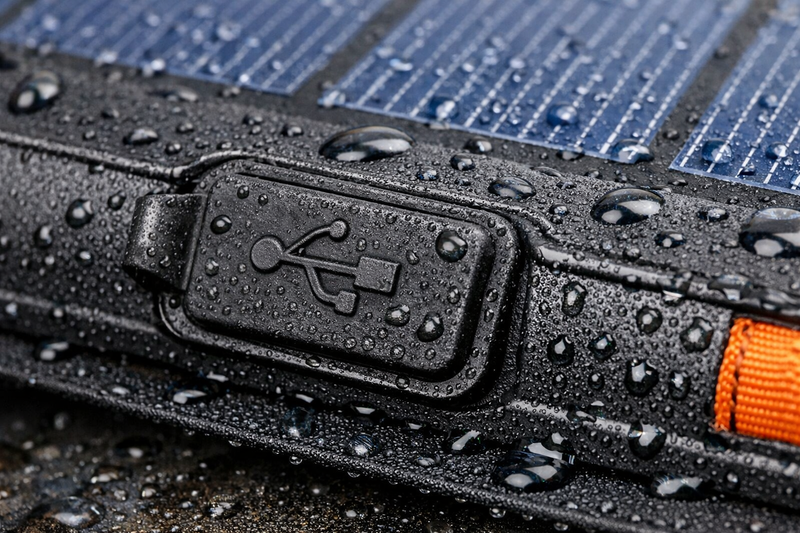
Jacky lives in Portland, Oregon. It rains there constantly.
He had a major issue with a batch of solar lights he bought from a different supplier.
The lights worked fine in the summer.
But in November, the rain started.
Customers called him saying, "The solar panel is full of water."
The problem wasn't the panel glass. It was the Control Box.
The control box sits on the back of the panel. It holds the battery and the buttons (On/Off/Mode).
It also has a Micro-USB or USB-C port.
(We add this port so you can charge the lights inside if it rains for 5 days straight—a great feature).
But the competitor used a cheap, hard plastic cover for the USB port.
It didn't seal tight.
Rain ran down the back of the panel, leaked into the USB port, and shorted out the motherboard.
The Double-Gasket Solution
We redesigned the mold for our IP65 Control Box.
- Silicone Flap: We use a soft, thick silicone rubber flap for the USB port. You have to push it hard to close it. It snaps into place.
- Button Seals: We don't use hard plastic buttons. We use a rubber membrane. There are no cracks for water to enter around the "On" switch.
- Screw Gaskets: Even the screws holding the box together have rubber O-rings.
| Component | Standard Solar Light | IP65 Pro Solar Light |
|---|---|---|
| Rating | IP44 (Splash Proof) | IP65 (Jet Proof) |
| USB Cover | Hard Plastic / Loose | Soft Silicone / Tight |
| Button Type | Click Switch (Gaps) | Membrane (Sealed) |
| Failure Risk | High in Heavy Rain | Low / Zero |
We tested this by spraying a garden hose directly at the back of the panel for 10 minutes.
Inside, it was bone dry.
Jacky sells these in Portland now with a 2-year warranty. He sleeps easy when it rains.
Conclusion
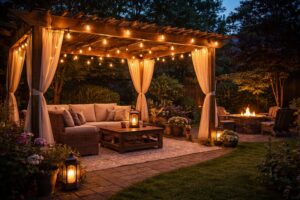
Solar lighting is no longer just a cheap novelty; it is a legitimate alternative to hardwired systems. By choosing kits with Monocrystalline panels, replaceable Lithium-Ion batteries, shatterproof PET bulbs, and warm 2700K output, you get the elegance of a high-end bistro without digging trenches or running extension cords. You get freedom, you get safety, and thanks to modern efficiency, you get light that actually lasts all night.
Explore the advantages of Monocrystalline Silicon to understand why it's a top choice for solar energy efficiency. ↩
Learn about conversion efficiency to see how it affects energy output and overall solar panel effectiveness. ↩
Explore the benefits of Lithium-Ion 18650 Cells, widely used in electric vehicles and power tools, for better performance and longevity. ↩
Learn why a Removable Back Plate is crucial for battery replacement in solar panels, ensuring sustainability and cost-effectiveness. ↩
Explore the advantages of Solar S14 Bulbs, including energy efficiency and durability, to enhance your lighting solutions. ↩
Learn about Polyethylene Terephthalate (PET) and its applications in various industries, showcasing its benefits over traditional materials. ↩
Explore this link to understand how Phosphor Powder enhances LED lighting, making it essential for achieving vintage looks. ↩
Discover the significance of 2700 Kelvin in lighting design and how it creates cozy atmospheres in various settings. ↩