We all know the stereotype of office lighting: flickering fluorescent tubes, cold blue-white glare, and the hum of a headache waiting to happen. It is called "office grey," and it kills creativity. Innovative companies like Google and WeWork figured out years ago that if you want employees to think differently, you have to light their environment differently.
The modern office needs a "Resimercial" design approach—blending residential comfort with commercial durability. By strategically using warm LED Edison bulbs in break rooms, reception areas, and collaborative lounges, you trigger a disruption in the brain's "stress mode," fostering creativity and relaxation without sacrificing the functional brightness needed for desk work.

I have a customer named Jacky. He runs a marketing agency in New York.
New York is fast. His team was burning out.
He told me, "Wallson, my team works late. By 4 PM, they look like zombies under these fluorescent strips."
He wanted to renovate, but he didn't have the budget to rewire the whole building.
"Don't change the wires," I said. "Change the zones."
We kept the bright task lighting over the desks but completely transformed the "Creative Corner" and the kitchen with my G125 Spiral Filaments.
The effect was immediate.
The Creative Corner became the most popular spot in the office. The team started holding brainstorms there.
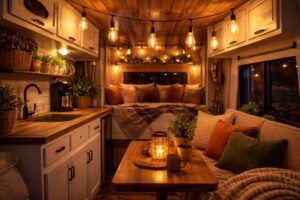
The warm, amber light made them feel less like they were at a workstation and more like they were at a coffee shop.
Ideas started flowing.
Let’s look at how to balance "Work Light" with "Mood Light."
The "Third Space" in the Office: Lighting the Breakout Zones
Nobody creates a breakthrough idea while staring at a spreadsheet under 5000K harsh light. Innovation happens in the "gaps"—the casual conversations on the couch, the coffee breaks, the informal meetings.
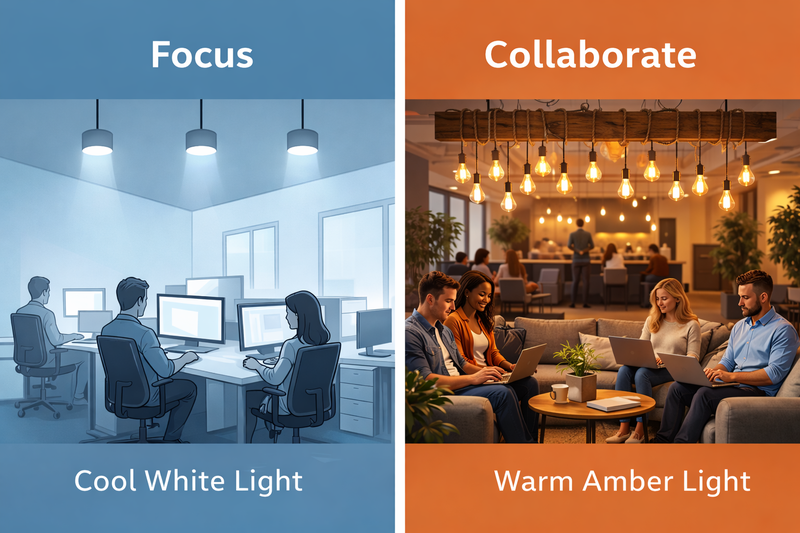
To encourage collaboration, you must visually separate "Focus Zones" from "Social Zones." Use crisp 4000K lighting for desks to maintain alertness, but switch to warmer 2200K-2700K LED Edison bulbs in lounges and pantries to subconsciously signal to employees that it is safe to relax, talk freely, and recharge their mental batteries.
Jacky asked, "But Wallson, won't warm light make them sleepy?"
"Not if you use it in short bursts," I explained.
The Pantry/Kitchen:
This is the heart of the office.
If it is lit like a hospital, people grab water and run back to their desks.
If you hang a row of ST64 Squirrel Cage bulbs over the island, people linger.
They talk about their weekend. They bond.
Team bonding improves retention.
The Reception Area:
This is where your clients judge you.
If your reception looks sterile, clients think you are a boring commodity.
If your reception features a stunning chandelier of Tubular (T30) filaments, clients think you are sophisticated and design-conscious.
It sets the tone for the meeting before you even shake hands.
The "Phone Booth" or Pod:
Many offices now have small soundproof pods for private calls.
These can feel claustrophobic.
A single, small G45 Mini-Globe filament bulb makes the pod feel like a cozy reading nook rather than a confined cell.
The Science of "Color Temperature" and Circadian Rhythm
Corporate burnout is real. Lighting plays a huge role.
Our bodies are programmed by the sun.
Blue light suppresses melatonin (the sleep hormone).
That is good for 9 AM. It is bad for 6 PM.
The "Sunset" Protocol:
I helped Jacky install a smart system.
Over the communal tables, we used Dimmable LED Edison Bulbs1.
In the morning, they are at 100% brightness.
By 5 PM, they automatically dim to 60%.
This subtle shift mimics the setting sun.
It tells the employees' bodies, "The stressful part of the day is ending."
It reduces anxiety.
When employees leave the office, they are less wired and sleep better.
A well-rested employee is a profitable employee the next day.
Design vs. Glare: The "Open Filament" Challenge
In an office, people are staring at screens. The biggest enemy of productivity is glare. You cannot just hang a bare bulb anywhere; if it reflects off a computer screen, it causes eye strain and headaches.
The placement of Edison bulbs in a workspace requires "Line of Sight" planning. Decorative bulbs should never be placed directly behind a monitor or in the direct peripheral vision of a desk worker; instead, they should be used in non-screen areas or utilized within semi-transparent shades that diffuse the light while keeping the filament visible.
Jacky made a mistake early on.
He hung a bare G125 bulb right above his receptionist's monitor.
She got a headache every day at 2 PM.
"Wallson, the light is hurting her eyes," he said.
"Move the light," I said. "Or change the bulb."
The "Half-Chrome" Solution:
We swapped that bulb for a Half-Chrome (Gold Tipped) bulb.
The bottom half is opaque mirror gold.
The light bounces up to the ceiling and reflects down softly.
The receptionist can look straight ahead without a "hot spot" burning her retina.
The Cage Shade:
For the hallways, we used wire cage guards around the bulbs.
This adds an "Industrial Chic" look—very popular in renovated lofts.
The cage breaks up the light slightly and protects the bulb from tall employees carrying boxes.
Amber vs. Clear Glass:
In a workspace, I generally recommend Amber Tint for lounges only.
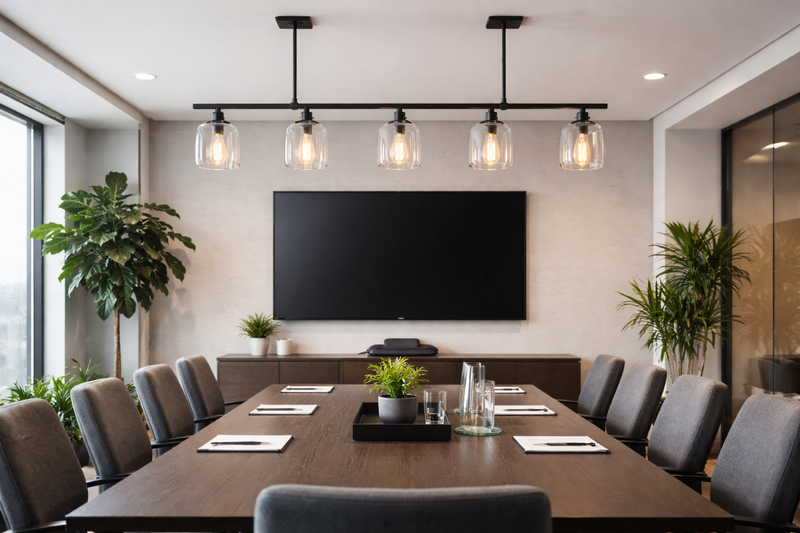
For meeting rooms, use Clear Glass with a 2700K temperature.
Why?
If you are reviewing printed designs or fabric swatches in a meeting, amber glass distorts the colors.
Clear glass keeps the colors honest but still gives you that vintage filament look.
Energy Efficiency: The CFO's Favorite Part
Office lights are on for 10 to 14 hours a day.
That is a massive operational cost.
Old decorative incandescents are energy vampires2.
The ROI Calculation:
Jacky had 40 decorative bulbs in his common areas.
Old Bulbs: 40 bulbs x 60W = 2400W.
2.4kW x 12 hours x 260 days = 7,488 kWh per year.
At a commercial rate of $0.12, that cost him $898/year.
My LED Filaments: 40 bulbs x 6W = 240W.
0.24kW x 12 hours x 260 days = 748 kWh per year.
Cost: $89/year.
Savings: Over $800 annually.
Plus, the heat reduction.
60-watt bulbs are basically small heaters.
In a small conference room, five of them can raise the temperature by 5 degrees.
Your AC has to fight that heat.
Switching to LED reduces the cooling load3, saving even more money.
Brand Identity: What Your Light Says About Your Company
Your office is a physical manifestation of your company culture. Clients walk in, potential hires walk in. What do they see? Do they see a soul-crushing cubicle farm? Or do they see a dynamic, thoughtful environment?
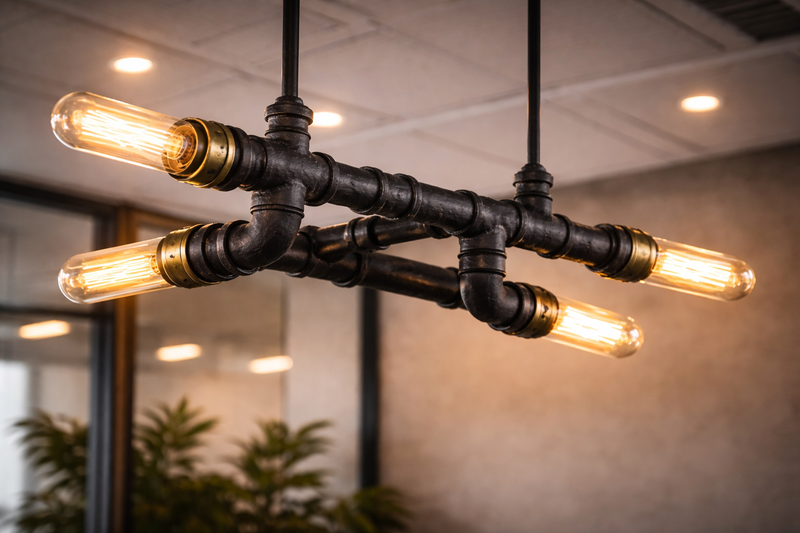
Industrial-style lighting using raw materials like brass, matte black metal, and exposed LED filaments communicates values of transparency, authenticity, and innovation. It signals that your company values craftsmanship and "building things," which is a powerful psychological message for creative agencies, tech startups, and architectural firms.
Jacky's agency pitched to a big tech client.
The client visited the office.
They commented on the lighting in the conference room.
It was a custom fixture made of reclaimed wood and my oversized irregular "Stone" bulbs.
The client said, "This place feels... organic. It feels real."
They signed the contract.
Lighting is part of the "packaging" of your service.
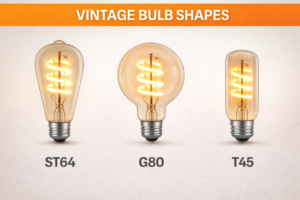
The Variety of Shapes:
- Tech/Modern: Use the T300 Long Tube. It looks like a laser beam or a data stream. Very sleek.
- Creative/Arts: Use the G125 Spiral. It looks like a messy, beautiful idea.
- Legal/Finance: Use the ST64 Pears. It looks classic, established, and trustworthy.
Flexibility:
The best part about the E26/E27 screw base is flexibility.
If Jacky gets bored of the look in two years, he doesn't need an electrician.
He just unscrews the Spiral bulb and screws in a Tube bulb.
The whole room changes for the cost of $50.
That is the cheapest renovation you can do.
Conclusion
The era of the "office grey" is over. The best talent wants to work in spaces that feel human. They want "Third Places"—areas that feel like a home or a cafe—right inside their workplace. By integrating LED Edison bulbs into your social and collaborative zones, you are not just saving money on electricity; you are investing in the mental well-being of your team. You are reducing eye strain, lowering stress, and signaling that your company values creativity and comfort. Turn off the fluorescent tube, screw in a warm filament, and watch the mood of your office transform.