Boat lighting usually means cold, clinical LEDs hidden in plastic fixtures, but many yacht owners are now demanding the warm, classic aesthetic of filament bulbs for their cabins and decks.
Marine-grade LED Edison bulbs are engineered specifically for the harsh nautical environment. Unlike standard household bulbs, they feature 10-30V DC voltage drivers, corrosion-resistant nickel-plated bases, and vibration-proof filament structures to withstand the constant movement and salinity of life at sea.
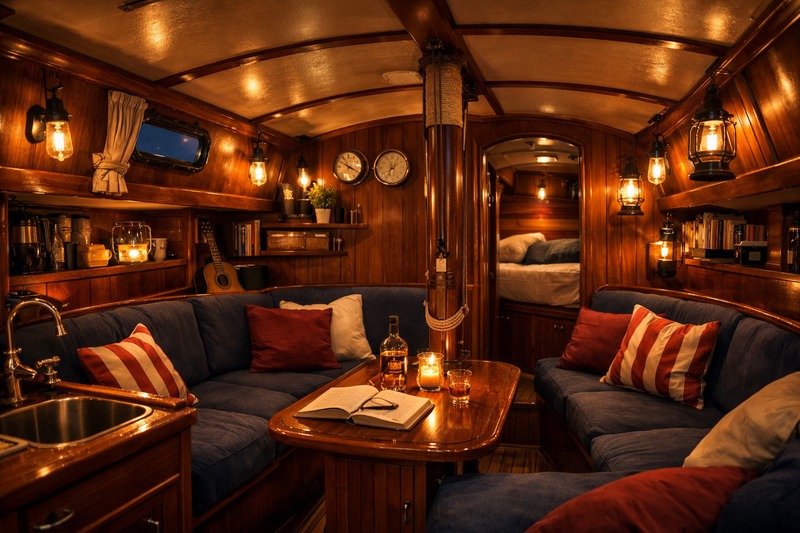
For decades, marine lighting had two phases. First, there were hot, power-hungry halogen bulbs that drained batteries in hours. Then came the early LEDs—bright, blue, and ugly. They saved power, but they made a luxury yacht feel like a hospital operating room. Now, a third wave is here. Boat owners want the "Classic Yacht" look. They want the golden glow of a 1920s lantern. But if you screw a regular Home Depot bulb into a boat socket, you are asking for fire, failure, and darkness in the middle of the ocean.
Why Do Boats Need Special Voltage Drivers?
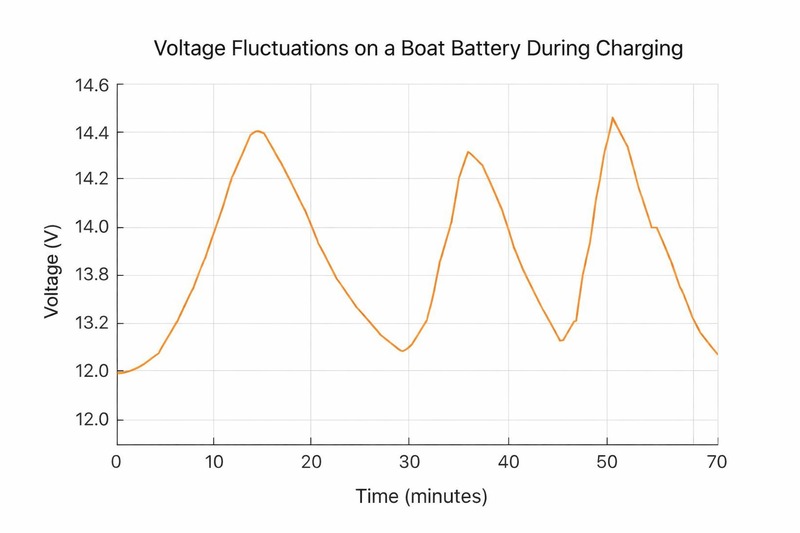
A boat’s electrical system is not stable like a house; the voltage fluctuates constantly depending on whether the engine is running, the batteries are charging, or the generator is active.
Standard 12V LED bulbs are designed for stable power sources and will flicker or burn out when a boat's alternator pushes the voltage up to 14.5V or higher. Genuine marine LEDs must have a "Constant Current" driver with a wide input range (usually 10V-30V DC) to handle these dangerous spikes without failure.
I have a client named Jacky who retrofits vintage sailboats in Seattle.
He learned this lesson the hard way.
He bought 500 "12V LED Bulbs" from a generic supplier for a refit project.
They worked perfectly at the dock when the boat was plugged into shore power.
But the moment the captain started the engines, half the bulbs blew out instantly.
"Wallson, what happened?" he screamed at me.
I asked him one question: "Did you check the input range?"
Most "12V" bulbs are actually "12V Fixed." They have a resistor, not a driver.
If you give them 12.0 Volts, they are happy.
But when a boat engine runs, the alternator charges the batteries at 13.8V to 14.4V.
That extra 2 volts creates a massive surge of current through a simple resistor bulb.
The LED chip overheats in seconds. It smokes. It dies.
The Multi-Volt Solution
I sent Jacky my Marine-Series (10-30V DC) bulbs.
Inside the base of these bulbs, there is a tiny, sophisticated circuit board called a DC-DC Buck Converter1.
It doesn't care if the input is 11V (low battery) or 28V (charging a 24V system).
It regulates the power down to exactly what the LED needs.
| Feature | Standard 12V LED | Marine 10-30V LED2 |
|---|---|---|
| Input Voltage | 12V +/- 5% | 10V to 30V DC |
| Driver Type | Resistor (Cheap) | Constant Current IC (Smart) |
| Surge Protection | None | High (Up to 40V spikes) |
| Result on Boat | Flickers/Burns Out | Steady/Safe |
We tested these on a trawler that went from Alaska to Mexico.
The engines turned on and off a thousand times. The generator kicked in and out.
The lights never flickered once.
That is the difference between a car bulb and a boat bulb.
How Do You prevent Rust in Salty Air?
Salt air is incredibly corrosive and will eat through standard aluminum or steel bulb bases in a matter of months, cementing the bulb into the socket permanently.
The number one failure point for marine lighting is galvanic corrosion at the socket. To prevent this, marine-grade bulbs must use Nickel-Plated Brass bases rather than standard aluminum, as nickel creates a non-reactive barrier against the salt and humidity found in ocean environments.
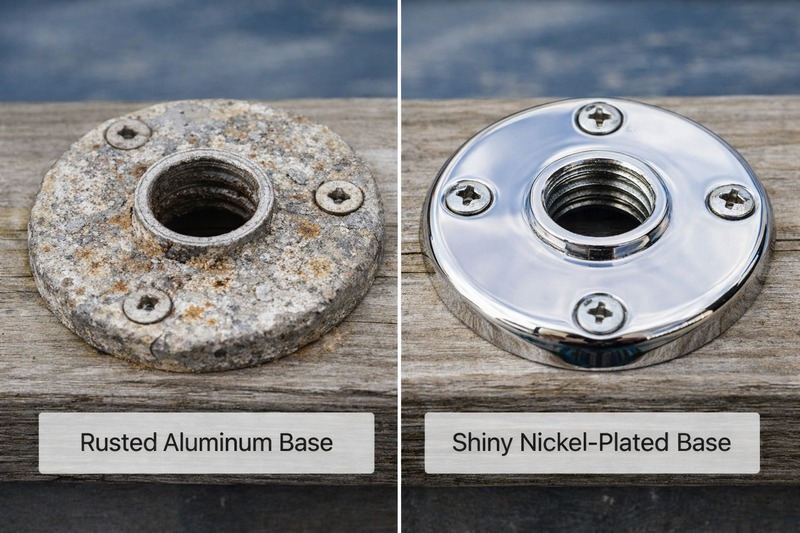
Have you ever tried to unscrew a light bulb on an old boat and the glass broke off in your hand?
The metal base was stuck inside the socket.
This is called Galvanic Corrosion.
It happens when two different metals touch in the presence of an electrolyte (salt water).
Standard household bulbs use Aluminum bases.
Boat sockets are usually Brass.
Aluminum + Brass + Salt Air = A chemical battery that fuses the metals together.
Jacky told me about a yacht owner who had to replace ten expensive brass fixtures because he couldn't get the cheap aluminum bulbs out.
"He saved $5 on bulbs and spent $2000 on new fixtures," Jacky said.
The Material Science of the Base
We treat the base of our marine bulbs like jewelry.
We use solid brass3 for the screw thread structure because brass matches the socket material.
Then, we plate it with Nickel.
Nickel4 is extremely resistant to oxidation. It stays shiny even in high humidity.
We also seal the glass-to-metal joint with a special marine epoxy, not standard glue.
| Component | Standard House Bulb | Marine Grade Bulb |
|---|---|---|
| Screw Base Material | Aluminum | Nickel-Plated Brass |
| Corrosion Risk | High (Seizes in socket) | Low (Remains removable) |
| Sealant | Thermal Glue (Cracks) | Marine Epoxy (Flexible) |
| Salt Spray Rating | 24 Hours | 300+ Hours |
I advise all my marine clients: "Even with nickel bases, apply a little dielectric grease."
But if you skip the grease, my nickel base will still come out next year.
The aluminum one will not.
Can a Filament Bulb Survive Engine Vibration?
Boats vibrate constantly from engine rumble and wave impact, a physical stress that shatters the fragile tungsten filaments of traditional incandescent bulbs.
LED filament technology is inherently vibration-resistant because it replaces the brittle tungsten wire with a series of distinct LED chips mounted on a sapphire or ceramic substrate. This solid-state construction allows the bulb to withstand continuous hull vibration and wave shocks that would destroy an old-fashioned glass bulb.

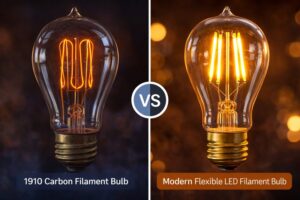
Old-school sailors love the look of carbon filament bulbs.
The problem is physics.
A hot tungsten filament is soft. It is hanging by tiny wires.
When a diesel engine rumbles at 2000 RPM, the whole boat shakes.
The filament shakes. Eventually, it snaps.
Jacky used to replace the navigation station light on his own boat every month.
"I slammed the hull into a wave, and the light went out," he told me.
He was using "Rough Service" incandescent bulbs, but they still failed.
Solid State Durability
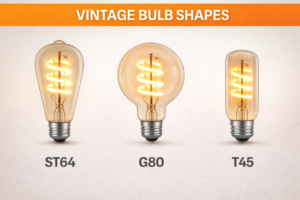
I gave him an LED Filament ST645.
He looked at it skeptically. "It looks just like the old one," he said.
"It looks like it, but it is built like a tank," I replied.
Inside an LED filament, there is no wire.
It is a stick of Sapphire Substrate6.
We mount tiny LED diodes onto this sapphire stick.
Then we coat it in phosphor silicone.
Sapphire is incredibly hard. It is the second hardest material after diamond.
It does not jiggle. It does not soften when hot.
You can shake it. You can drop the boat off a wave.
The sapphire stick remains rigid.
| Type | Filament Material | Failure Mode | Vibration Tolerance |
|---|---|---|---|
| Incandescent | Tungsten Wire | Snaps when hot | Very Low |
| CFL (Curly) | Glass Tube | Mercury glass cracks | Low |
| LED Filament | Sapphire/Ceramic | None (Solid State) | Extremely High |
Jacky installed my LED bulbs in the engine room of a fishing trawler.
That is the worst possible place for vibration.
Two years later, they are still running.
The vibration that destroys glass and wire means nothing to sapphire and silicone.
How Do You Avoid Radio Interference at Sea?
Modern electronics are sensitive, and cheap LED drivers can emit radio frequency (RF) noise that interferes with your VHF radio and AIS navigation systems.
Electromagnetic Compatibility (EMC) is a critical standard for marine lighting. Premium marine LED bulbs incorporate shielding and noise-suppression capacitors within the driver circuitry to ensure they run "quietly" and do not create static on your communication radios.
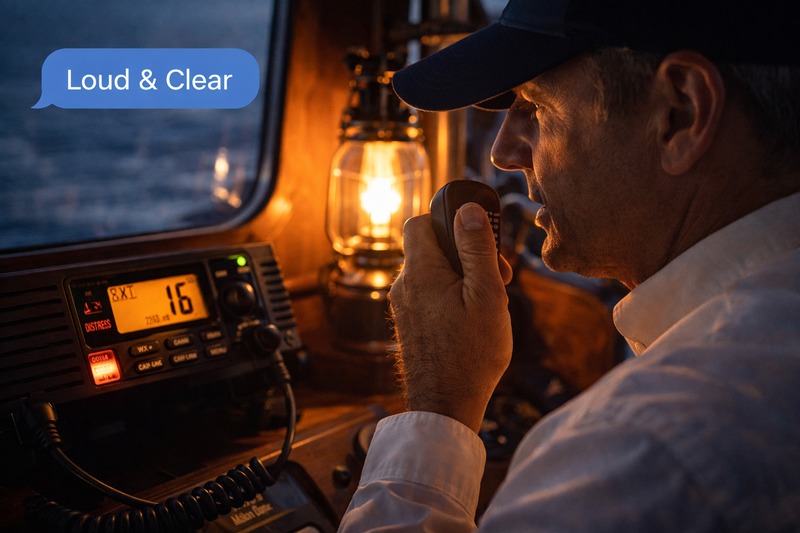
This is a problem many people don't discover until they are 20 miles offshore.
You turn on the lights in the salon to read a chart.
Suddenly, your VHF radio creates a loud SSHHHHHH static noise.
Your AIS (Automatic Identification System) loses the signal of the ship next to you.
Jacky had a client return 50 bulbs because of this.
"Every time I turn on the galley lights, I lose FM radio reception," the client said.
This is caused by EMI (Electromagnetic Interference).
The "switching driver" inside the LED bulb creates a high-frequency pulse.
In a cheap bulb, there is no filter. The power wire acts like an antenna, broadcasting this noise.
In a boat, the radio antenna cables often run right next to the lighting wires.
The interference jumps from one wire to the other.
The Silent Driver
We engineer our Marine-Pro Series7 to meet CISPR 15 Standards8.
We add a shielding component and an extra capacitor to the circuit board.
This "choke" absorbs the electrical noise before it can leave the bulb.
It costs about $0.30 more per bulb to build.
But for a boat owner, it is priceless.
Startling static on a radio can mask a distress call.
Loss of AIS data can cause a collision.
| Issue | Cheap LED Bulb | EMC-Rated Marine Bulb |
|---|---|---|
| Driver Frequency | Unfiltered | Filtered/Shielded |
| Radio Effect | Static/Hiss | Silent |
| AIS/GPS Effect | Signal Loss | No Impact |
| Certification | None | CE/RoHS/EMC |
I told Jacky: "You are not just selling light. You are selling safety."
When we switched his supply to our EMC-filtered bulbs, the complaints stopped.
Cruisers could listen to their music and their weather reports without the annoying buzz of cheap electronics.
.
Conclusion
The ocean is unforgiving, and it demands equipment that is purpose-built, not adapted. By choosing true marine-grade LED Edison bulbs with 10-30V regulation, nickel-plated bases, and EMC shielding, you bring the elegance of the golden age of yachting back to your vessel without sacrificing the reliability of modern technology. You can sail through the night with warm light, clear radios, and zero rusted sockets.
Understanding the DC-DC Buck Converter can enhance your knowledge of efficient power regulation in LED systems. ↩
Exploring the advantages of Marine 10-30V LED lights can help you make informed decisions for your boating needs. ↩
Explore the advantages of solid brass in marine environments, including durability and corrosion resistance. ↩
Learn about nickel's properties that make it ideal for marine bulbs, especially its resistance to oxidation. ↩
Explore the advantages of LED Filament ST64 bulbs, including energy efficiency and durability, to enhance your lighting choices. ↩
Discover the unique properties and applications of Sapphire Substrate in various technologies, showcasing its strength and versatility. ↩
Explore the Marine-Pro Series to understand how it enhances safety and performance for boat owners. ↩
Learn about CISPR 15 Standards to see how they ensure safety and reliability in marine lighting solutions ↩