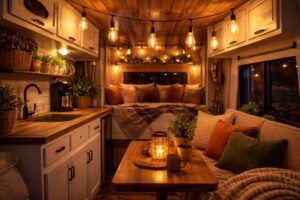
RV lighting has traditionally been functional but ugly, consisting of harsh fluorescent tubes or cold LED puck lights that make your cozy camper feel like a dental clinic.
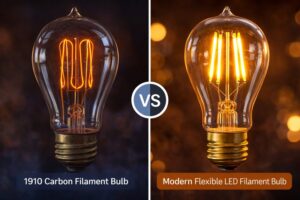
Switching to 12V LED Edison bulbs allows RV owners and campers to bring the warm, nostalgic aesthetic of a cabin into their vehicle without sacrificing power. These bulbs are specifically designed with 10-30V DC drivers to handle battery fluctuations while consuming 90% less energy than the incandescent bulbs they replace.
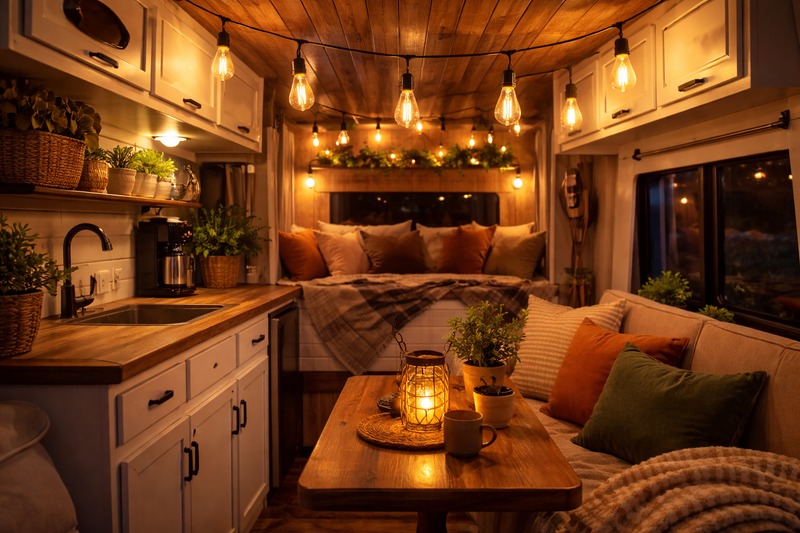
For years, the RV industry focused on one thing: efficiency. Manufacturers installed the cheapest, brightest, whitest lights they could find. They didn't care about "mood." But the new generation of campers—the "Van Life" crowd and the weekend warriors—want their rolling homes to feel like actual homes. They want style. They want to read a book under a warm glow, not cook dinner under a spotlight. However, many people are afraid to upgrade. They worry that "Edison" means high heat and dead batteries. Let me tell you, that fear is outdated.
Will Vintage Bulbs Kill Your House Battery Overnight?
The biggest fear for boondockers (people camping without hookups) is running out of power, and traditional incandescent bulbs are notorious for chewing through battery banks in a matter of hours.
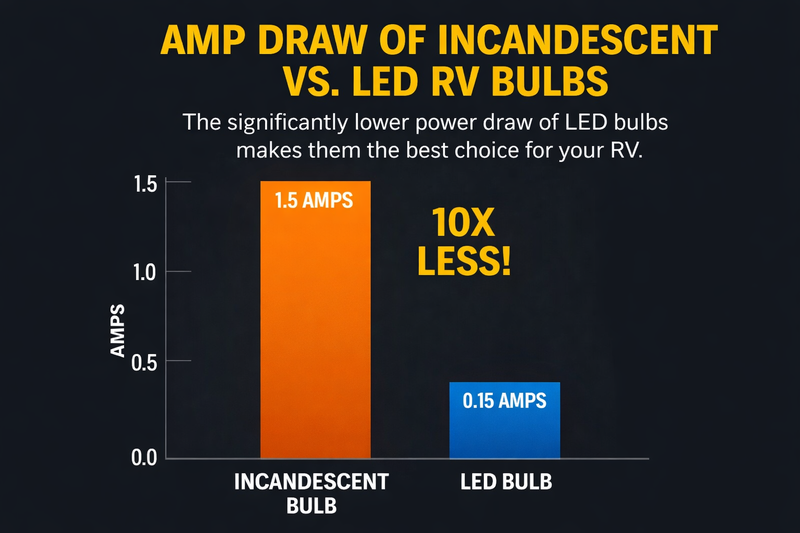
A standard 12V incandescent RV bulb consumes about 1.5 to 2 amps of power, meaning just three lights can drain a standard battery by 50% in one evening. In contrast, a 12V LED Edison bulb draws only 0.1 to 0.3 amps, giving you the same amount of light for 1/10th the power consumption.
I have a customer named Jacky who runs an RV renovation shop in Oregon.
He told me a story about a client who bought a beautiful vintage Airstream trailer.
The client wanted to keep the original 1970s light fixtures.
They looked amazing. They had thick glass lenses.
But inside, they had old automotive-style incandescent bulbs (usually code 1141 or 1156).
The client went camping for the first weekend.
They turned on just four lights to play cards.
Three hours later, their battery monitor started beeping. Low voltage.
The lights dimmed to orange. The water pump wouldn't run.
"Wallson," Jacky said, "They were pulling 7 amps just for light!"
7 amps is huge. A standard Deep Cycle battery only has about 50 usable amp-hours.
That means in 7 hours, you are dead.
The Math of Efficiency
I sent Jacky a box of my S14 12V LED Filament Bulbs1.
They fit the same socket (E26 or Ba15s).
But they only pull 2 Watts. That is 0.16 Amps.
You can run 10 of my bulbs for the same power as 1 of the old bulbs.
| Bulb Type | Watts | Amps (at 12V) | Time to Drain Battery (50Ah usable) |
|---|---|---|---|
| Incandescent 1141 | 18W | 1.5A | ~33 Hours (for 1 bulb) |
| Halogen G4 | 20W | 1.6A | ~31 Hours (for 1 bulb) |
| LED Filament S14 | 2W | 0.16A | ~312 Hours (for 1 bulb) |
Jacky installed them. The client went back out.
They ran the lights all night. The battery meter barely moved.
This is not magic. It is just efficient chip technology2.
Why Do Regular 12V Bulbs Flicker in an RV?
An RV's electrical system is a chaotic environment where voltage jumps up and down depending on whether you are plugged into shore power, driving, or running off solar.
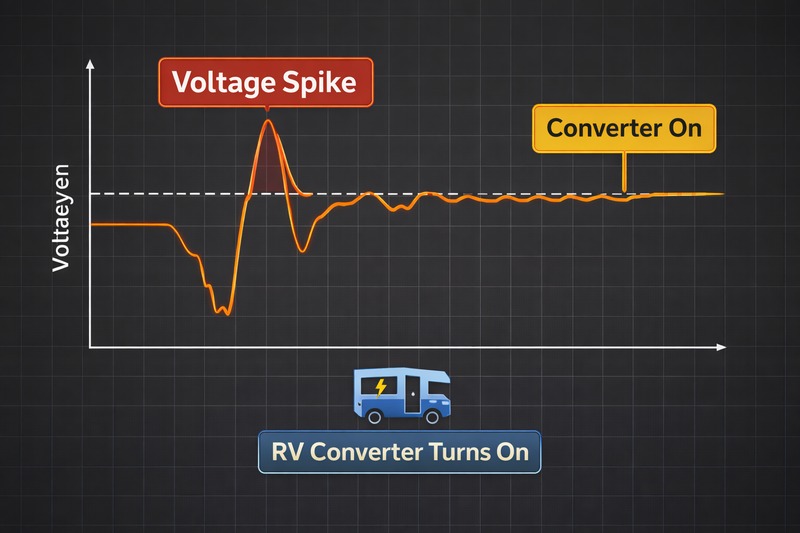
Standard "12V" LEDs are often built with simple resistors designed for a steady 12 volts, but an RV charging system often pushes 13.8V or even 14.5V. To prevent flickering and premature failure, you must use "Multi-Volt" (10-30V DC) bulbs that contain a constant-current driver to regulate these surges.
Many people buy cheap 12V LED bulbs on Amazon.
They install them in their camper.
Then they plug the camper into the campground power post.
Suddenly, the lights start strobing like a disco.
Or worse, they start smoking.
I explained this to Jacky when he had a batch of returned bulbs from a different supplier.
"Jacky," I said, "An RV is not a battery. It is a charging system."
When your RV is plugged in, the Converter/Charger is pushing power into the battery.
It pushes not 12V, but roughly 13.6V to 14.4V.
If you have a cheap bulb designed for exactly 12V, that extra 2.4 volts is a 20% overdrive.
The LED chip gets too hot. It becomes unstable. It flickers.
The Wide-Range Driver
We build our RV-Specialist Series3 differently.
We put a tiny computer chip (IC Driver) inside the base.
This chip accepts any voltage from 10V up to 30V4.
It takes whatever comes in—dirty power, high voltage, low voltage—and converts it to a perfect, steady stream for the filament.
This is crucial for modern RVs with solar panels.
Solar charge controllers pulse voltage to charge batteries.
If you don't have a wide-range driver, your lights will pulse with the sun.
| Scenario | System Voltage | Cheap 12V LED Result | 10-30V RV LED Result |
|---|---|---|---|
| Battery Only | 12.2V - 12.7V | Works Okay | Perfect |
| Shore Power (Charging) | 13.6V - 14.4V | Overheats / Flickers | Perfect |
| Solar Equalization | 15.0V+ | Burns Out Instantly | Perfect |
| Low Battery | 10.5V | Dims badly | Stays Bright |
Jacky switched all his renovation flipping projects to my 10-30V bulbs. No more disco strobing. Just steady light.
Can You Use Glass Bulbs in a Moving Vehicle?
RVs are essentially houses that experience a continuous earthquake while driving down the highway, making fragile glass components a risky choice for interior fixtures.
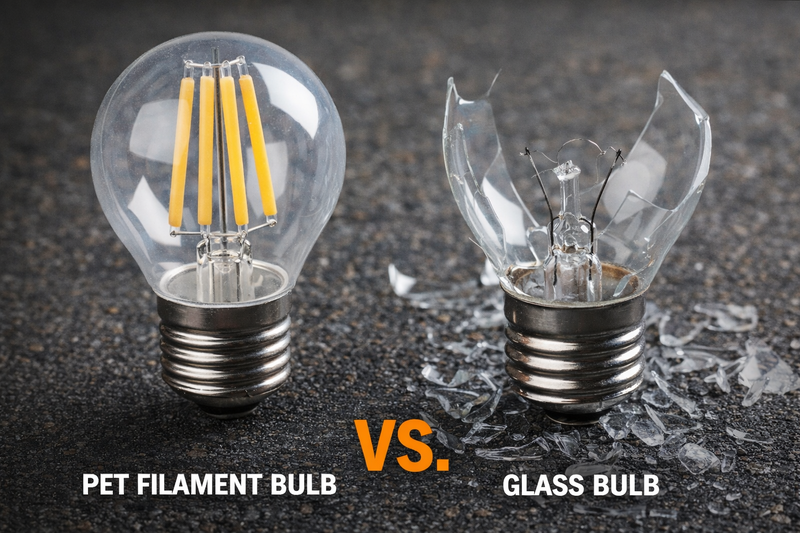
While borosilicate glass is stronger than standard glass, the safest option for RVs and trailers is Shatterproof PET (plastic) bulbs. These optical-grade plastic bulbs look identical to glass but can withstand the vibrations of washboard roads and accidental bumps in tight living quarters without breaking.
Space in an RV is tight. Low ceilings. Narrow hallways.
You are constantly brushing against things.
Jacky told me about a family with two kids and a Golden Retriever in a travel trailer.
The dog wagged its tail and hit a low-hanging pendant light over the dinette.
Crash.
Glass everywhere. On the table. On the floor.
In a house, you get a broom. In a camper, glass shards find their way into sleeping bags and bare feet very easily.
"Wallson, I need something kid-proof," Jacky said.
I introduced him to our High-Clarity PET Series.
Plastic That Looks Like Glass
PET (Polyethylene Terephthalate) is the same plastic used for water bottles, but we use an optical grade that is much thicker and clearer.
It has high transmittance (95%).
You can tap it with a spoon and it sounds dull, not like a ring. That is the only difference.
Visually, you cannot tell.
But physically? It is nearly indestructible.
Also, the filament inside needs protection.
In a glass bulb, the filament stems are glass.
In our RV bulbs, we use a reinforced stem support5.
Vibration from tires on the highway shakes the fixture.
If the filament shakes too much, it breaks.
Our reinforced design holds the LED filament rigid.
| Feature | Standard Glass Edison | Shatterproof PET Edison |
|---|---|---|
| Impact Resistance | Very Low | High |
| Vibration Resistance | Medium | High |
| Safety Danger | Sharp Shards | Safe Bounce |
| Weight | Heavier | Very Light (Good for fixtures) |
Jacky now refuses to install glass bulbs in any fixture below 6 feet high.
It is a liability issue.
The PET bulbs look just as vintage, but you don't have to worry when you hit a pothole.
How Do You Fix the "Blue Light" Problem in Small Spaces?
Small spaces amplify lighting mistakes; if you use a cool white bulb in a tiny camper, the light bounces off every wall and creates a sterile, uncomfortable "interrogation room" vibe.
To make a small RV space feel larger and more inviting, you must use Warm White (2700K) or Warm Amber (2200K) color temperatures. These warmer hues soften the shadows in tight corners and make wood cabinetry look rich rather than washed out.
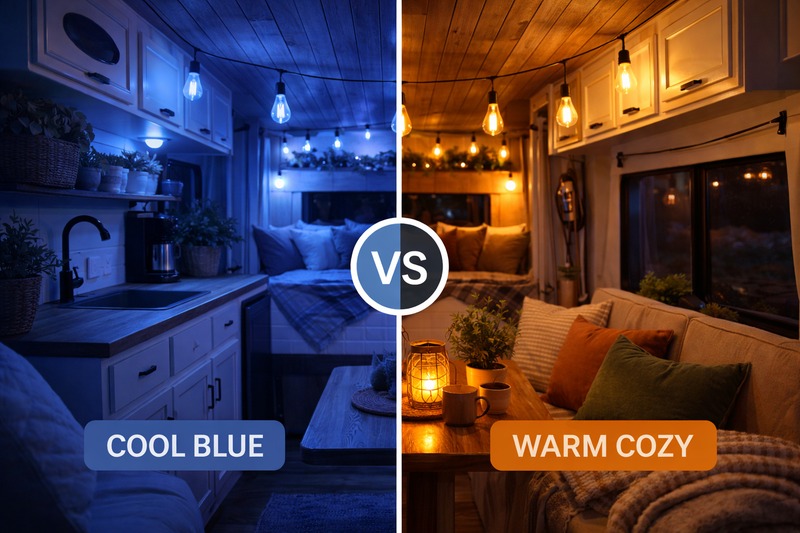
RVs use a lot of laminate and wood tones.
Cherry cabinets. Fake oak floors. Beige walls.
Jacky had a customer complain that their new RV looked "cheap" inside at night.
They had replaced all the lights with "Daylight" LEDs (5000K or 6000K).
I explained the color science to Jacky.
"Blue light makes wood look gray," I said. "It sucks the life out of brown colors."
Also, in a 200-square-foot box, a bright white light is overwhelming.
It bounces off the walls. There is nowhere to hide your eyes.
It suppresses melatonin, so you can't sleep.
The "Cabin" Aesthetic
We recommend 2700K for general overhead lighting in an RV.
This is clean but warm.
For reading lights or over the dining table, we recommend 2200K.
This is the "Edison" gold color.
Jacky did a test.
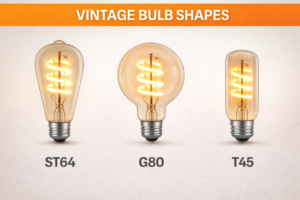
He took that "cheap-looking" RV and swapped all the bulbs to my ST64 Amber 2200K6 bulbs.
The owner walked in and gasped.
"It looks like a high-end cabin now," she said.
The wood looked rich. The space felt relaxed.
Nothing changed except the Kelvin temperature7 of the light.
| Kelvin Temp | Appearance | Effect on Wood/Browns | Recommended RV Area |
|---|---|---|---|
| 6000K | Blue-White | Makes it look gray/dead | Exterior storage bays only |
| 4000K | Cool White | Neutral / Clinical | Bathroom vanity |
| 3000K | Soft White | Crisp | Kitchen counter (cooking) |
| 2700K | Warm White | Cozy / Natural | Main ceiling lights |
| 2200K | Amber | Rich / Golden | Dinette / Bedside Reading |
Lighting is the cheapest renovation you can do to an RV. For $50 in bulbs, you change the entire feeling of the vehicle.
Conclusion
Upgrading your RV to LED Edison bulbs is the perfect upgrade for the modern traveler. It solves the three biggest problems of mobile living: power consumption, durability, and atmosphere. By choosing multi-volt (10-30V) bulbs made of shatterproof PET in a warm 2700K or 2200K color, you can boondock for days without draining your batteries, survive the roughest roads without broken glass, and enjoy your evenings in a space that feels like a home, not a bus.
Explore the advantages of S14 12V LED Filament Bulbs for energy efficiency and longevity. ↩
Learn how efficient chip technology can significantly reduce energy consumption and costs. ↩
Learn about the innovative RV-Specialist Series and its advantages for modern RVs. ↩
Explore how a 10V up to 30V driver can enhance your RV lighting and power efficiency. ↩
Explore this link to understand how reinforced stem support enhances durability and safety in LED bulbs. ↩
Explore the advantages of ST64 Amber 2200K bulbs to enhance your RV's ambiance and aesthetic appeal. ↩
Understanding Kelvin temperature can help you choose the right lighting for your RV, improving comfort and style. ↩