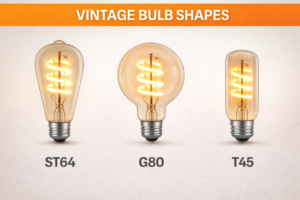
Restaurants, hotels, and retail stores operate on thin margins where every dollar counts, yet they cannot afford to sacrifice the warm, inviting ambiance that keeps customers coming back.
Switching to wholesale LED vintage bulbs allows commercial venues to reduce lighting energy costs by 90% and maintenance labor by 95% compared to incandescent bulbs. By purchasing in bulk from a manufacturer, businesses can access high-reliability "commercial grade" filaments that withstand 15-hour daily burn cycles, offering a return on investment in less than six months.

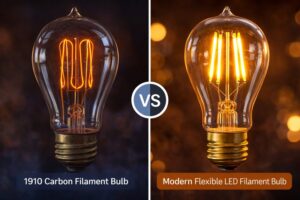
I talk to business owners every day who are afraid to upgrade their lighting. They think "LED" means "ugly office light." They worry that if they take out their beautiful, hot, expensive carbon-filament bulbs, their coffee shop will look like a hospital. This fear costs them thousands of dollars a year. The technology has changed. You do not have to choose between saving money and looking good anymore. But you must be careful. If you buy cheap residential bulbs for a commercial space, you will regret it. Commercial lighting is a different beast.
Why Do Residential Bulbs Die So Fast in Restaurants?
Home users might turn their lights on for three hours a day, but a busy restaurant or hotel lobby requires lights to burn for fifteen to eighteen hours continuously.
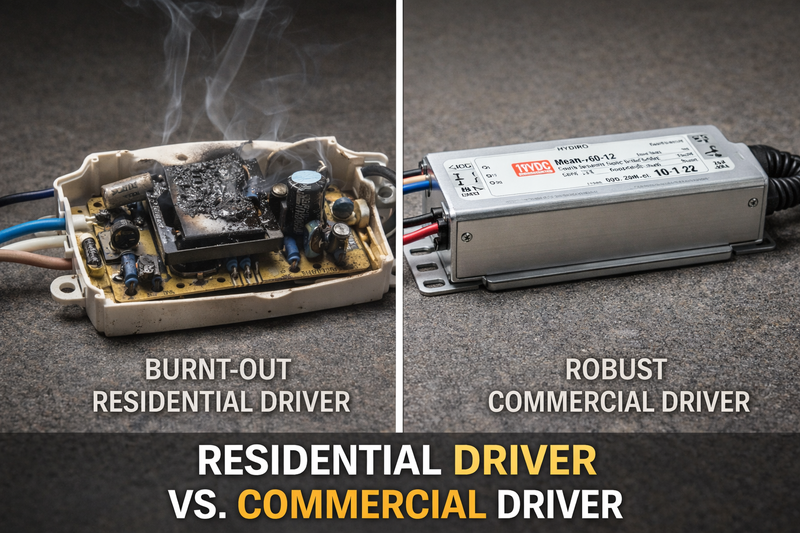
Residential-grade LED bulbs are built with minimal heat sinks and cheaper capacitors designed for short operational cycles. When placed in a hot commercial environment running all day, these components overheat and fail within months. Commercial-grade wholesale bulbs utilize larger LED chips, superior thermal management, and robust IC drivers specifically engineered for 24/7 operation.
I have a long-time customer named Jacky who supplies lighting to a chain of burger restaurants in Texas.
He made a mistake last year.
He bought 5,000 vintage bulbs from a cheap trading company online because they were $0.20 cheaper than mine.
The bulbs looked fine.
The restaurant installed them.
But restaurants are hot. The kitchen heat, the body heat of 200 people, the enclosed glass fixtures.
Six months later, Jacky called me in a panic.
"Wallson," he said, "The bulbs are blinking. Half of them are dead."
The restaurant owner was furious. He had to pay an electrician to come back and climb ladders while customers were eating.
I explained the problem to Jacky.
Those cheap bulbs were Consumer Grade.
They use a simple "Linear Driver" and small chips.
When the temperature inside the bulb hits 80°C, the capacitor dries out. The light dies.
Our Commercial Series is different.
The Thermal Difference
We use Sapphire Substrates1 for the filament. Sapphire conducts heat better than glass or ceramic.
We use Helium Gas2 inside the bulb. Helium helps move heat away from the LED to the glass surface.
We use Rubycon or Aishi capacitors (the same brands used in high-end electronics).
These components can handle the heat of a 16-hour shift.
| Component | Cheap Residential Bulb | Commercial Grade Wholesale Bulb | Result in Restaurant |
|---|---|---|---|
| Filament Base | Ceramic/Glass | Sapphire | Better heat transfer |
| Cooling Gas | Nitrogen/Air | Helium Mix | Chip stays cooler |
| Driver Capacitor | Generic | Premium Brand (105°C rated) | Lives 20,000+ hours |
| Warranty | 1 Year (limited) | 3-5 Years | Peace of mind |
Jacky learned his lesson. He replaced the bad batch with our commercial bulbs.
They have been running for 18 months now without a single failure.
The $0.20 savings cost him thousands in labor and reputation.
How Crucial is Consistency When Buying 1,000 Bulbs?
In a home, if one lamp is slightly brighter than another, nobody notices; in a long row of pendant lights over a bar, a single mismatched bulb looks like a broken tooth.
For commercial applications, "Binning" is the most critical manufacturing step. Manufacturers sort LED chips into tight chromaticity bins (MacAdam Ellipse steps) to ensure that every single bulb in a 1,000-unit order has the exact same color temperature and brightness. Buying wholesale ensures you receive a single-batch production run, avoiding the "rainbow effect" of mixed retail stock.

Imagine a luxury hotel corridor.
There are 50 wall sconces in a straight line.
If bulb #4 is pinkish, and bulb #10 is greenish, the hotel looks cheap.
This is called Binning.
When we manufacture LED chips, they don't all come out identical. It is like baking cookies; some are darker, some are lighter.
Cheap factories mix them all together.
Jacky told me about a nightmare project in a coffee shop.
He bought bulbs from a local hardware store. He cleared the shelf.
He bought 50 boxes.
But those boxes came from three different production batches.
When he turned them on, he had 2700K bulbs mixed with 3000K bulbs.
It was a mess.
The MacAdam Ellipse3 Standard
For our commercial wholesale clients, time is money.
We adhere to a 3-Step MacAdam Ellipse.
This is a standard for color consistency.
It means the human eye cannot see the difference between any two bulbs in the batch.
When Jacky orders 5,000 bulbs from me for a hotel project:
- We produce them all on the same day.
- We use chips from the exact same "Bin."
- We test them side-by-side.
If a bulb burns out two years later, Jacky can order a replacement from me, and I check the Batch Code.
I maintain the recipe.
| Feature | Retail Store Mix | Direct Wholesale Batch | Importance for Business |
|---|---|---|---|
| Batch Control4 | Unknown / Mixed | Strictly Controlled | Identical look |
| Color Tolerance | 7-Step SDCM (Wide) | 3-Step SDCM (Tight) | No mismatch |
| Brightness | +/- 10% Variation | +/- 2% Variation | Uniform lighting |
| Replacement | Hard to match later | Traceable batch numbers | Easy maintenance |
Commercial designers require perfection.
You can only get perfection if you control the supply chain from the factory.
Can You Save Money by Customizing Your Voltage?
Commercial buildings often operate on complex electrical systems that differ from standard residential wiring, sometimes leading to compatibility issues that destroy standard bulbs.
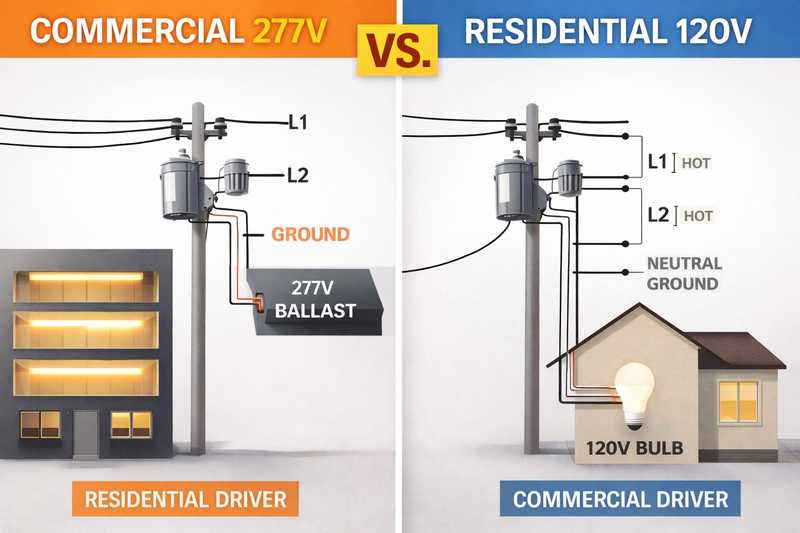
While homes use 120V (US) or 230V (EU), commercial buildings often utilize 277V systems for overhead lighting to increase efficiency. Installing a standard 120V vintage bulb into a commercial 277V socket will cause an immediate explosion. Wholesale ordering allows you to request custom-driver bulbs compatible with high-voltage commercial grids, eliminating the need for expensive step-down transformers.
This is a technical point that saves owners huge money on installation.
Large warehouses, banquet halls, and big restaurants often have 277V wiring.
Why? Because higher voltage means they can run more lights on fewer wires. It saves copper.
But you cannot walk into a shop and buy a 277V Edison bulb.
Standard bulbs are 120V.
Jacky had a client renovating an old warehouse into a brewery.
The electrician said, "We have 277V power here. We need to install transformers to drop it to 120V for these vintage lights."
Transformers are expensive. They generate heat. They hum.
Jacky called me.
"Wallson, do you make a high-voltage Edison bulb?"
"Yes," I said. "Since we are the manufacturer, we just change the driver."
The Direct-Wire Advantage
We produced a custom batch of ST64 Filament Bulbs rated for 100-277V5.
The driver inside handles the entire range.
The brewery owner was thrilled.
He fired the idea of transformers. He just screwed in the bulbs.
He saved roughly $5,000 in electrical labor and hardware.
This is the power of B2B relationships6.
You can't customize a product at a big box store.
But when you buy wholesale, you can ask for technical changes that solve expensive problems.
| Scenario | Standard Retail Bulb | Wholesale Custom Bulb | Financial Impact |
|---|---|---|---|
| Voltage Input | Fixed 120V | Wide Range 100-277V | Flexible |
| Installation | Needs Transformers | Direct Screw-in | Saves Labor |
| Failure Risk | Blown if voltage spikes | Protects itself | Reliable |
| Cost Basis | Retail Price | Factory Price | High Margin |
Jacky now asks every commercial client: "What is your line voltage?"
If it is 277V, he wins the contract immediately because he has the special solution.
How Does "Lumen Maintenance" Affect Your Brand Image?
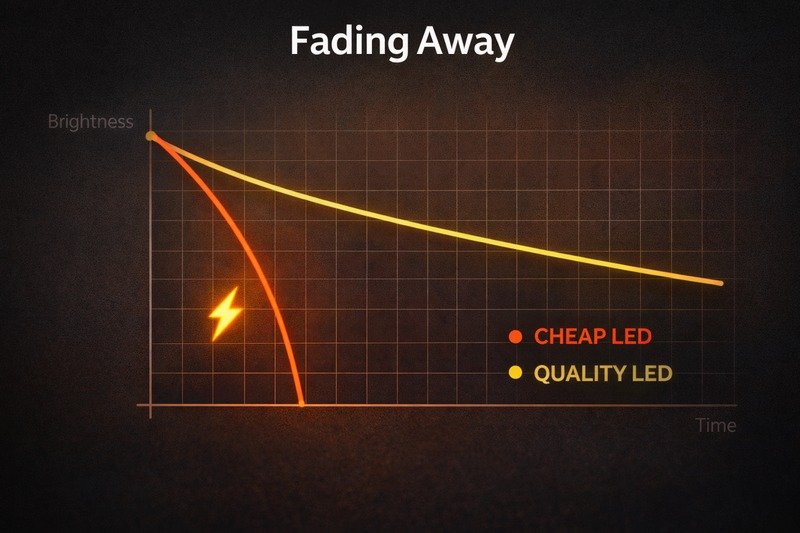
It is not enough for a bulb to simply stay lit; if it loses half its brightness after a few months, your beautifully designed venue will slowly become dark and dingy.
All LEDs fade over time, but cheap bulbs suffer from rapid Lumen Depreciation, losing 30% of their brightness in the first 1,000 hours. Commercial wholesale bulbs are certified to LM-80 standards, guaranteeing "L70" performance—meaning they retain 70% of their original brightness for at least 25,000 hours, keeping your venue looking fresh for years.
A restaurant owner cares about "The Look."
When they first open, the place sparkles.
Using cheap LEDs results in a slow death of the atmosphere.
The chemical coating (phosphor) on the LED chip degrades if it gets hot.
The plastic lens yellows.
After six months, the 400-lumen bulb is now producing 250 lumens.
The restaurant feels gloomy. The food looks dull.
The owner doesn't realize it is happening because it is slow.
They just think, "Why does my restaurant feel old?"
Jacky deals with this by showing customers the LM-80 Report.
The Guarantee of Brightness
The LM-80 is a torture test for LEDs.
We run the chips for 6,000 hours at high heat and measure the fade.
Our commercial bulbs use high-stability phosphors.
We promise L70 @ 25,000 hours7.
This means: If you leave the light on for 5 years, it will still be at least 70% as bright as day one.
Residential bulbs often hit L70 at only 5,000 hours.
Waiters complain they can't see the menu.
Cleaners complain they can't see the floor.
Jacky uses this as a sales tool.
"Mr. Restaurant Owner," he says, "My bulbs save you money because you don't have to replace them when they get dim. They stay bright."
| Metric | Cheap LED | Quality Wholesale LED | Business Impact |
|---|---|---|---|
| Phosphor Quality8 | Low (degrades fast) | High (stable) | Consistent Light |
| Lens Material | Plastic (yellows) | Glass/PET (clear) | Clear Light |
| L70 Lifespan | < 10,000 Hours | > 25,000 Hours | Long-term Value |
| Brand Perception | "Old/Dirty" | "Fresh/Clean" | Customer Satisfaction |
Lighting determines how clean your business looks. Dim lights hide dirt, but they also hide quality.
Conclusion
Transitioning to wholesale LED vintage bulbs is a strategic financial decision for any commercial venue. By moving away from retail-grade products and partnering directly with a manufacturer, businesses gain access to heat-resistant commercial drivers, strict color consistency, custom voltage options, and guaranteed brightness stability. This approach lowers long-term operational costs, eliminates embarrassing lighting failures, and ensures that the curated atmosphere of your space remains perfect for every single customer.
Explore the advantages of Sapphire Substrates for better heat conduction in LED applications. ↩
Learn how Helium Gas enhances heat management in LED bulbs for longer lifespan. ↩
Understanding the MacAdam Ellipse can enhance your knowledge of color consistency in lighting, crucial for design projects. ↩
Exploring batch control will reveal its significance in maintaining product quality and consistency, essential for any business. ↩
Explore this link to understand how ST64 Filament Bulbs can save costs and improve efficiency in various applications. ↩
Discover how B2B relationships can lead to tailored solutions that meet specific business needs and reduce costs. ↩
Understanding L70 can help you choose long-lasting LEDs, ensuring your space remains well-lit and appealing. ↩
Exploring phosphor quality will reveal how it impacts brightness and longevity, crucial for effective lighting solutions. ↩