Are you struggling to light a historic space? The astronomical cost of maintaining lights on high ceilings and the risk of damaging priceless interiors with the wrong light create a constant challenge for caretakers.
The key is a three-part strategy. First, select bulbs with a very warm color temperature (2200K-2400K) to preserve the historic, candle-lit ambiance. Second, demand commercial-grade reliability with a 25,000+ hour lifespan to eliminate difficult maintenance. Finally, ensure a high CRI (90+) to protect and accurately display historic art and materials.
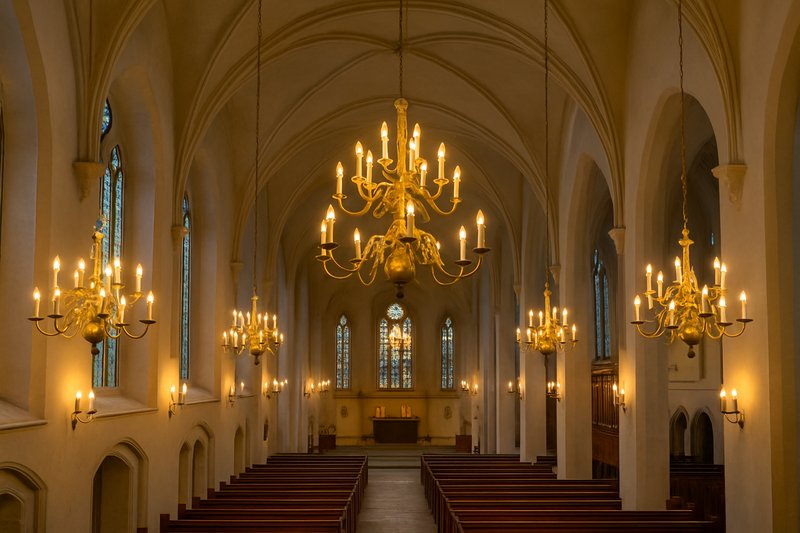
I once had the privilege of working with a preservation committee for a cathedral built in the late 1800s. Their biggest operational expense, after heating, was lighting maintenance. Every six months, they spent over five thousand dollars renting scaffolding just to change the dozens of incandescent bulbs in the main sanctuary's chandeliers, which were nearly sixty feet up. The facilities manager was desperate for a longer-lasting solution, but the committee was terrified that LEDs would make their sacred space feel like a "cold, modern office." They were right to be concerned. The soul of a historic building is tied to its atmosphere, and lighting is the heart of that atmosphere. This challenge is about more than just technology; it's about respecting history. It requires a solution that is both technologically advanced in its reliability and deeply traditional in the quality of light it produces.
How can you replicate the warmth of candlelight while protecting priceless artifacts?
Are you worried that new LEDs will cast a harsh, sterile light that ruins the reverent atmosphere of your historic building? This fear often prevents committees from making crucial, money-saving upgrades.
Choose bulbs with a very warm color temperature, specifically 2200K to 2400K, to perfectly mimic the deep, amber glow of candlelight. Combine this with a high CRI (90+) to ensure the light is color-accurate and free from damaging UV and IR radiation.
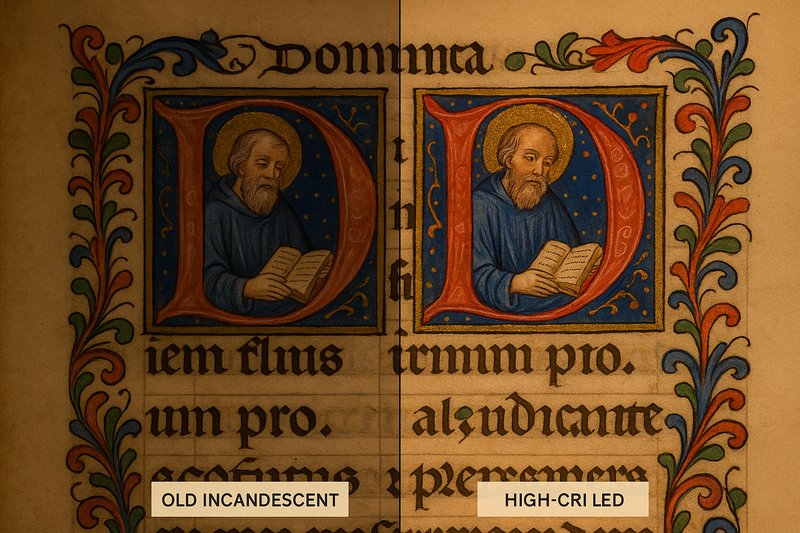
The light in a sacred or historic space is not just for seeing; it's for feeling. For centuries, the primary light source in these buildings was the flame—candles and gas lamps. This produced a very warm, comforting, and deeply amber light. When we use a standard LED bulb (3000K or cooler), the light is technically "whiter" and brighter, but it feels emotionally wrong. It's clinical and flat, and it destroys the sense of history and reverence. This is why the choice of color temperature is the most important aesthetic decision you can make. At Hongyu Bulb, when we work on heritage projects, we always start the conversation at 2200K. This temperature is almost indistinguishable from a candle flame and instantly restores the intended atmosphere. Furthermore, the quality of that light is essential for preservation. Old incandescent and halogen bulbs bombard interiors with invisible UV and Infrared radiation, which fades tapestries, damages oil paintings, and dries out old wood over time. A high-quality LED is a "cold" light source in this respect; it produces almost no UV or IR, making it the only truly responsible choice for lighting priceless interiors.
The Language of Light: CCT and CRI
These two metrics are the foundation of good historic lighting.
- Color Correlated Temperature (CCT)1: Measured in Kelvin (K), this defines the color of the light. For historic spaces, the lower the number, the better.
- 2200K (Candlelight): This is the ideal. It delivers a deep, rich, amber glow that creates a powerful sense of history, intimacy, and reverence.
- 2400K (Extra Warm White): A slightly brighter but still very warm option. It's an excellent choice for spaces that need a bit more visibility while still maintaining a deeply traditional feel.
- 2700K (Traditional Incandescent): This is the color of a standard old light bulb. While acceptable, it can sometimes feel a bit too bright and less atmospheric than the warmer options in a truly historic setting.
- Color Rendering Index (CRI)2: A scale of 0-100 measuring how accurately the light reveals true colors. For historic buildings, this is a matter of preservation and beauty.
- CRI 90+: This is the professional standard. It ensures that the rich reds of a tapestry, the deep blues of stained glass, and the subtle tones of a mural are seen exactly as the artist intended. It presents the art and architecture in its best, most accurate light.
- High R9 (>50): R9 is a specific score within the CRI that measures the ability to render deep red. This is crucial for accurately lighting woodwork, religious vestments, and classical paintings.
The Unseen Guardian: The Absence of UV/IR
This is one of the most compelling reasons for a historic building to switch to LED.
| Light Source | Pros for Historic Sites | Cons for Historic Sites |
|---|---|---|
| Incandescent | Familiar warm glow (2700K). | Short lifespan. High energy use. Emits high levels of UV and IR radiation that cause irreversible fading and damage. |
| Halogen | Bright, good CRI. | Very hot. Even shorter lifespan than incandescent. Very high UV/IR output. |
| LED (High Quality)3 | Extremely long life. Very low energy use. No UV or IR emissions. Precise color temperature control (2200K). | Higher initial cost. Requires careful selection. |
By choosing a very warm, high-CRI LED, you are not only restoring the authentic atmosphere but also actively preserving the building and its contents for future generations.
What makes an LED bulb reliable enough for a fifty-foot cathedral ceiling?
Does the thought of renting scaffolding for thousands of dollars just to change a few light bulbs frustrate you? For historic buildings with inaccessible fixtures, premature bulb failure is a crippling operational expense.
Look for commercial-grade construction. This specifically means superior thermal management, usually a solid aluminum heat sink, and a robust internal driver. These features are essential for achieving the 25,000 to 50,000-hour L70 lifespan required for these difficult-to-reach applications.
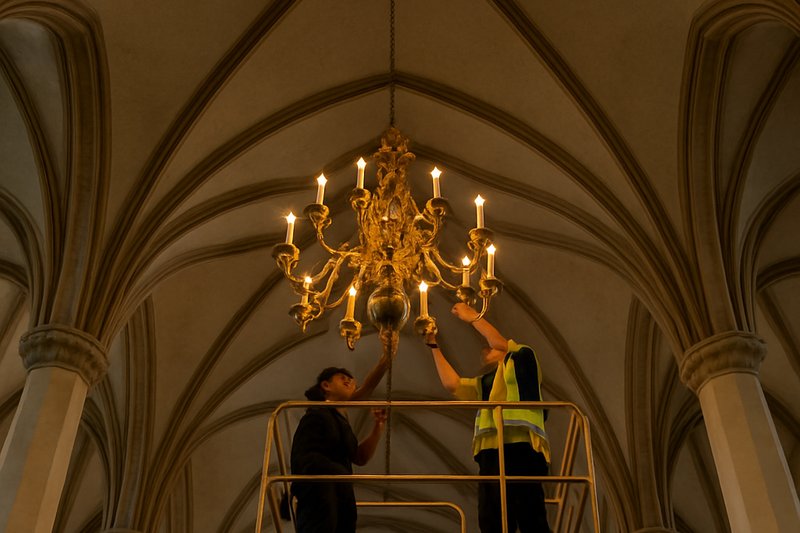
The true cost of a light bulb in a historic building has almost nothing to do with its purchase price. The real cost is in the labor, equipment, and disruption required to replace it. A facility manager for an old university library once told me that his "all-in" cost to replace a single bulb in their main reading hall was over $300 because it required an overnight maintenance call and a specialized lift. When you are dealing with ceilings that are 40, 50, or even 100 feet high, a bulb failure is not an inconvenience; it's a major project. This is why reliability is the most important functional criterion. A standard consumer-grade LED bulb, often built with a plastic body and basic components, is designed for a home where it might run for 4 hours a day. In a church or public building, lights can be on for 10-12 hours straight. This continuous operation generates heat, which is the mortal enemy of all electronics. Without a way to dissipate that heat, the internal components will fail prematurely. A true commercial-grade bulb is engineered for this exact scenario. It uses a heavy aluminum chassis to pull heat away from the sensitive LED chips, and its internal driver is built with high-temperature components designed to withstand the stress of continuous use.
The Anatomy of a Long-Life Bulb
Here is what separates a reliable bulb from one destined to fail.
- The Heat Sink is Everything4: This is the most critical component for longevity.
- Poor: All-plastic bodies that trap heat.
- Good: Plastic-clad aluminum, a thin metal sleeve inside plastic.
- Excellent (Commercial Grade5): A solid, heavy aluminum or ceramic chassis that makes up the bulk of the bulb's body. This component actively draws heat out and away from the core.
- The Driver is the Brain6: This internal power supply is the most common point of failure.
- Consumer Grade: Uses standard electronic components (like capacitors) that are susceptible to failure from heat and voltage fluctuations.
- Commercial Grade: Uses oversized, high-temperature-rated components. The driver is engineered to provide stable, clean power for tens of thousands of hours without degradation.
- Professional Lifespan Metrics (L70)7: The lifespan on a retail box is often misleading. The professional standard is the L70 rating, which is the number of hours it takes for the bulb's brightness to fade to 70% of its initial output. A reliable bulb for a church should have an L70 rating of at least 25,000 hours, which translates to years of maintenance-free operation.
| Feature | Consumer-Grade Bulb | Commercial / Heritage Grade Bulb | Impact on Church Operations | |
|---|---|---|---|---|
| Heat Sink | Plastic | Solid Aluminum | Burns out in 1-2 years of heavy use | Lasts 5-10+ years of heavy use |
| Driver Quality | Basic | Robust, High-Temp Components | Prone to flicker and early failure | Stable, reliable performance |
| Rated Life | 10,000-15,000 hours (optimistic) | 25,000-50,000 hours (L70) | Annual or biennial re-lamping projects | Re-lamping becomes a rare, planned event |
Investing in a bulb engineered for reliability is the single most effective way to reduce the long-term operational budget of a historic building.
How do you ensure new bulbs work with old, unpredictable wiring?
Are you concerned that new, sensitive LED bulbs will flicker or buzz on your building's old, historic electrical system? This is a valid fear, as poor compatibility can make a costly retrofit project look like a failure.
Prioritize bulbs that have high-quality, stable drivers tested for wide dimmer compatibility and voltage ranges. A premium driver will smooth out minor power fluctuations, eliminate flicker, and ensure consistent performance even on aging infrastructure without needing a complete rewiring of the building.
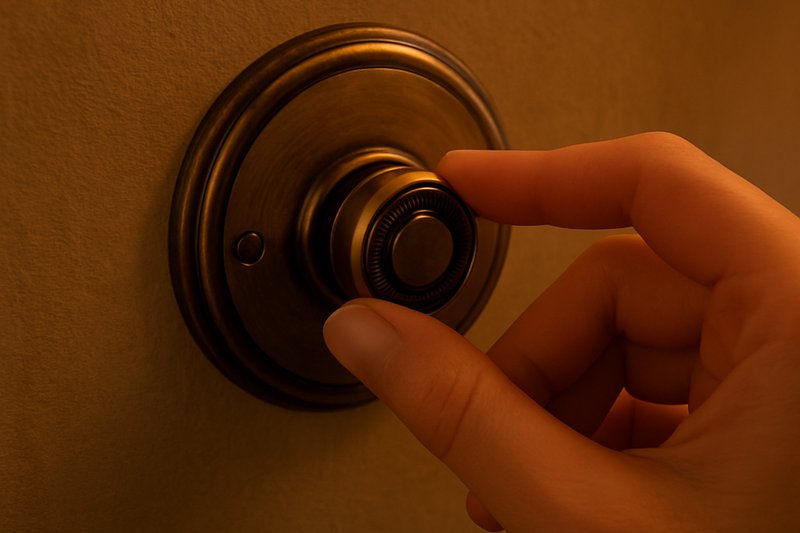
The wiring in historic buildings can be a bit of a mystery. Decades of additions and modifications, combined with older components, mean the electrical current delivered to a socket might not be as perfectly stable as it is in a new build. This "dirty power" can wreak havoc on lower-quality LED drivers. I've seen it happen on projects where a client chose a cheaper bulb. The lights looked fine at full power, but as soon as they tried to dim them for a service, they would start to strobe, flicker, or emit an audible buzz from the fixtures. The problem wasn't the dimmer or the wiring; it was the bulb's inability to interpret the electrical signal correctly. A high-quality, commercial-grade driver is designed with this reality in mind. It acts as a buffer and interpreter. It has more robust circuitry to clean up minor voltage variations and is specifically engineered to be compatible with a huge range of dimming systems, from old leading-edge dimmers to modern digital controls. For a buyer like Jacky, being able to offer a bulb that is "plug-and-play" even in challenging electrical environments is a massive problem-solver for his clients.
The Role of a Superior LED Driver
The driver is the unsung hero of any LED bulb, especially in a retrofit project.
- Flicker Elimination8: Flicker is caused by rapid fluctuations in the power supplied by the driver. Premium drivers use superior capacitors and smoothing circuits to deliver a constant, unwavering current to the LEDs, resulting in a perfectly stable light that is comfortable for the eyes and excellent for video recording of services or events.
- Wide Dimmer Compatibility9: Manufacturers of high-quality bulbs, like us at Hongyu Bulb, invest heavily in testing our products with dozens of different dimmer models from major manufacturers (Lutron, Leviton, etc.). This ensures that when the bulb is installed, it will dim smoothly without issues, regardless of the system in place.
- Broad Voltage Range10: Many commercial-grade bulbs are designed to operate on a range of voltages (e.g., 100-130V) instead of a fixed 120V. This makes them more resilient to the voltage drops and sags that can occur in older buildings with long wiring runs, ensuring consistent brightness from the first fixture to the last.
The Importance of a Pilot Test11
For any large-scale historic project, testing is not optional.
| Action | Why It's Critical | What to Look For |
|---|---|---|
| 1. Request Samples | Every building is unique. You must test the bulb in your actual environment. | Request 3-4 samples of your chosen bulb model. |
| 2. Test on Existing Dimmers | This is the most important test for compatibility. | Install the samples in a fixture. Run the dimmer from 100% down to its lowest level. Watch for any flicker, strobing, or buzzing at all levels. |
| 3. Observe Color Consistency | Ensure all samples produce the exact same color of light. | Place the bulbs next to each other. Do they all look identical? A good manufacturer has tight color "binning" for perfect consistency. |
| 4. Get Committee Approval | The final decision should be based on seeing the light in the actual space. | Leave the test bulbs in for a few days. Let key decision-makers see how the light looks at different times of day and during a mock service. |
By choosing a bulb with a proven, high-quality driver and conducting a thorough on-site test, you can eliminate the risks associated with old wiring and guarantee a smooth, successful, and beautiful lighting upgrade.
Conclusion
Successfully retrofitting historic buildings requires a focus on atmosphere with warm 2200K light, extreme reliability for high ceilings, and high-CRI bulbs with stable drivers to protect artifacts and work with old wiring.
Understanding CCT is essential for achieving the perfect ambiance in historic spaces, enhancing their beauty and authenticity. ↩
Exploring CRI helps you appreciate how light can reveal true colors, crucial for preserving art and architecture. ↩
Discover the advantages of high quality LEDs, including energy efficiency and preservation of historic integrity. ↩
Understanding the heat sink's role can help you choose bulbs that last longer and perform better. ↩
Discover why commercial grade bulbs are a smart investment for long-term use and reliability. ↩
Explore how the driver impacts bulb longevity and performance to make informed purchasing decisions. ↩
Learn about the L70 rating to ensure you select bulbs that maintain brightness over time. ↩
Explore this link to understand how flicker elimination enhances visual comfort and video quality. ↩
Learn why wide dimmer compatibility is crucial for seamless dimming and overall lighting experience. ↩
Discover how a broad voltage range ensures consistent brightness and reliability in various environments. ↩
Find out how conducting a pilot test can prevent costly mistakes and ensure optimal lighting solutions. ↩