You're trying to add trendy vintage bulbs to your catalog, but the sheer number of options is overwhelming. Choose the wrong style, and you're stuck with inventory that won't sell.
The best vintage Edison bulb options are defined by three key choices: the bulb's shape (like ST64 or T45), the filament style (spiral or straight), and the glass finish (amber, clear, or smoky). Matching these to your target market's aesthetic is crucial for success.
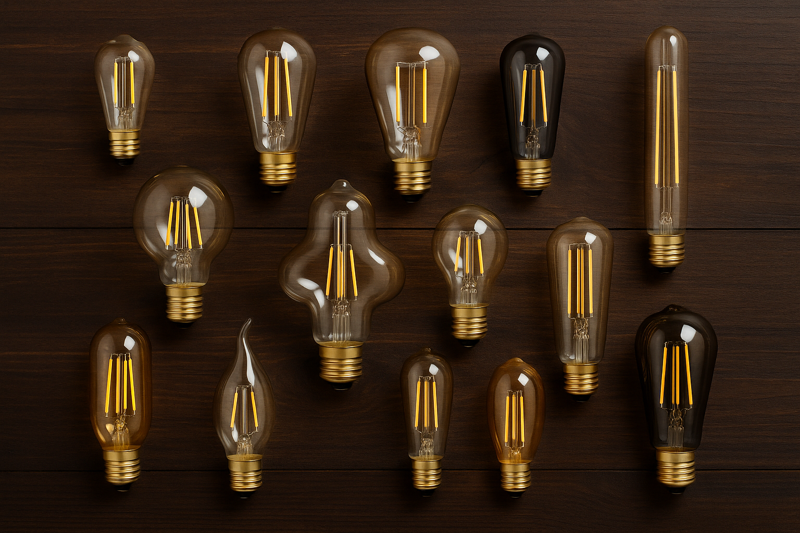
A few months ago, a product manager for a major US hospitality supplier reached out to me. Let's call her "Jackie." Her company was outfitting a new chain of boutique hotels, and the design spec called for "Edison bulbs." She sent me a mood board filled with beautiful images of restaurants and hotel lobbies, but she was completely lost. She asked, "Wallson, do I need the long ones? The round ones? The ones with the squiggly insides? What does 'amber glass' even mean for the light output?" She was staring at a wall of options without a framework to make a decision. I told her to forget about specific part numbers for a moment. We were going to break down the "vintage look" into its core components so she could build the perfect bulb for her client, piece by piece. That process is exactly what separates a successful product line from a warehouse full of mistakes.
Which Bulb Shapes Define the Classic Edison Look?
You see pictures of beautiful installations, but you don't know the names of the bulbs used. How do you identify the most popular and profitable shapes to stock for your customers?
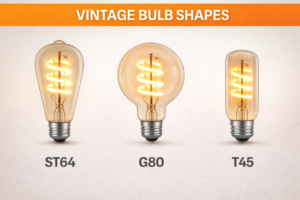
The most iconic and commercially successful Edison shapes are the ST64 "Teardrop," the T45 "Tubular," and the G95 "Globe." These three shapes form the foundation of any strong vintage lighting program, covering the majority of decorative applications.
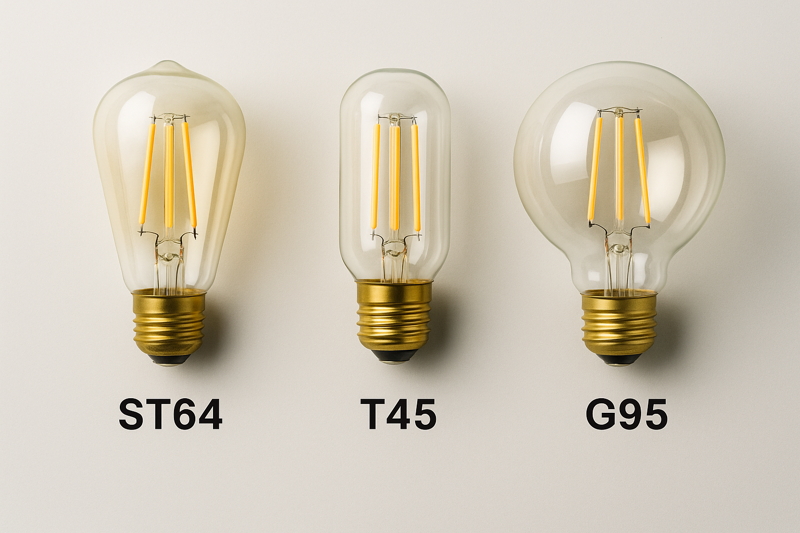
The shape of the glass envelope is the first and most important decision you'll make. It’s what defines the bulb's silhouette and how it will interact with a fixture. While there are dozens of novelty shapes, the market is dominated by a few key players that have become synonymous with the vintage style. Getting these core shapes right is essential. If you are just starting to build your vintage bulb collection, you cannot go wrong by focusing on the "Big Three." They are versatile, instantly recognizable, and consistently in high demand for residential, hospitality, and commercial projects. For example, the ST64 is the go-to choice for single pendant lights over a bar or kitchen island. The T45 is perfect for multi-light fixtures where a narrower profile is needed. And the G95 makes a bold statement in open fixtures or as a standalone bulb in a simple socket. Mastering these shapes allows you to cater to the widest possible audience before you start exploring more niche options.
The Most Commercially Viable Shapes
Understanding the "language" of bulb shapes is key to communicating with designers and customers. The names usually consist of a letter indicating the shape and a number indicating the maximum diameter of the glass in millimeters.
- ST64 (Straight Tubular): This is the quintessential "Edison" bulb. Often called the teardrop or squirrel cage shape, its classic, elongated form is what most people picture when they think of a vintage light. It is incredibly versatile and works well in pendants, sconces, and multi-light chandeliers. It is by far the most popular shape and should be the cornerstone of your vintage collection.
- T45 (Tubular): A more slender and sophisticated option. This cylindrical bulb is ideal for fixtures where space is tight or where a more modern, industrial look is desired. It’s frequently used in linear chandeliers over dining tables or in cage-style wall sconces. Its "T" designation simply stands for Tubular, and the "45" refers to its 45mm diameter.
- G95 (Globe): A large, spherical bulb that makes a decorative statement all on its own. The "G" stands for Globe, and at 95mm in diameter, it's a substantial piece meant to be seen. These are perfect for bathroom vanity fixtures, open-socket pendants, and any application where the bulb itself is the main feature.
| Shape Code | Common Name | Typical Application | B2B Buyer Insight |
|---|---|---|---|
| ST64 | Teardrop / Edison | Pendants, Sconces, Festoon Lights | Your highest volume seller. Must-have. |
| T45 | Tubular / Radio Style | Linear Chandeliers, Cage Lights | Great for industrial and minimalist designs. |
| G95 | Large Globe | Vanity Mirrors, Exposed Pendants | A statement piece. Lower volume but high margin. |
| C35 | Candelabra / Candle | Chandeliers, Decorative Sconces | Essential for classic and traditional fixtures. |
By starting your collection with these core shapes, you ensure that you have a relevant and desirable product for the vast majority of vintage lighting1 projects.
What Filament Styles Create the Most Authentic Vintage Glow?
The bulb's shape is just the beginning. The real magic of a vintage bulb comes from its filament. But with options like "straight," "spiral," and "tree," which one truly delivers the look your customers want?
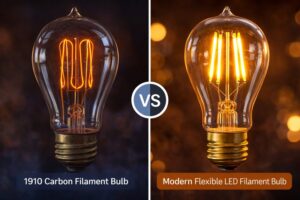
Spiral filaments offer the most popular and authentic vintage aesthetic, providing a warm, intricate glow reminiscent of original carbon filament bulbs. While straight filaments offer higher efficiency, the spiral design is the top choice for purely decorative applications where atmosphere is key.
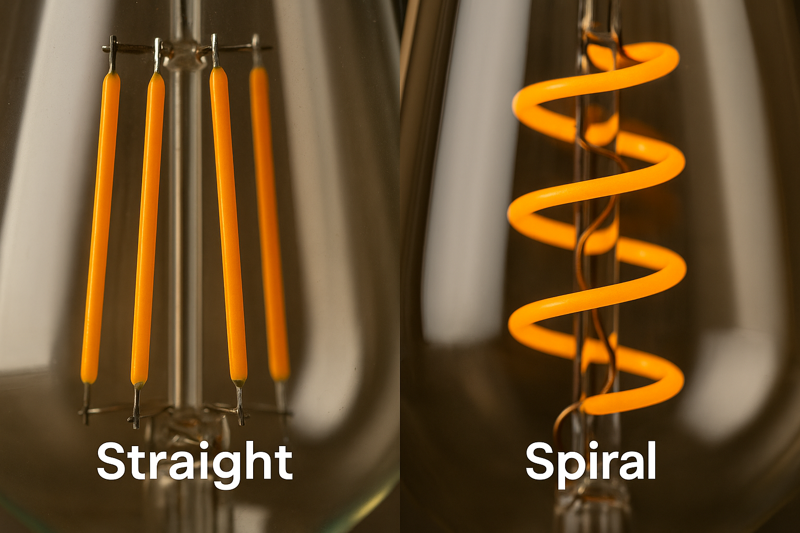
The LED "filament" is the light-emitting heart of the bulb. Its design is a critical choice that dramatically affects the bulb's character. In the early days of LED filament bulbs, most designs used a series of straight, rigid filaments arranged in a "squirrel cage" pattern to mimic the originals. They are bright, efficient, and have a somewhat industrial feel. However, technology has advanced, allowing us to create flexible LED filaments that can be shaped into beautiful, intricate designs. The most popular of these is the spiral filament. This design creates a softer, more dynamic, and visually interesting light source. It more closely resembles the gentle, continuous glow of the very first carbon filament bulbs from the late 19th century. For any application where the bulb is exposed and intended to be a decorative element—like in a clear glass pendant or a bare socket sconce—the spiral filament is almost always the preferred choice. It's less about raw brightness and more about creating a captivating visual effect. As a buyer, you should consider offering both, but know that the market trend has heavily shifted towards the more artistic spiral designs.
A Deeper Dive into Filament Design
The choice of filament is a balance between authenticity, efficiency, and visual appeal.
- Straight Filaments (Squirrel Cage)2: This is the classic, first-generation LED filament look. It consists of multiple rigid, straight filaments arranged vertically around a central glass stem. This design is very efficient at producing light (high lumens per watt) and provides a clean, organized look. It is an excellent choice for applications where both a vintage look and functional brightness are required. It gives off a more "industrial" or "steampunk" vibe.
- Spiral Filaments (Flexible)3: This design uses a single, long, flexible filament that is wound into a beautiful spiral or coil. The result is a much softer and more organic glow. Because the light source is concentrated in a "line" of light, it's less prone to causing glare and creates a more ambient, decorative effect. This is the top choice for creating a warm, inviting, and truly vintage atmosphere in restaurants, bars, and homes.
- Novelty Filaments ("Love," "Tree")4: Technology also allows for filaments to be bent into specific shapes, like words or symbols. While these are eye-catching, they are considered a niche, novelty product. They have a very limited market and are not a wise choice for a core product line unless you are targeting a specific, gift-oriented market.
| Filament Style | Visual Effect | Best Application | Primary Advantage |
|---|---|---|---|
| Straight | Clean, bright, industrial | Functional vintage fixtures | Efficiency (High Lumens/Watt) |
| Spiral | Soft, warm, authentic | Decorative / exposed bulb fixtures | Aesthetic Appeal5 |
| Novelty | Unique, graphic | Special events, specific decor | Niche market appeal |
For a product manager like Jacky, I always recommend a core offering of spiral filaments for decorative shapes like the ST64 and G95, and straight filaments for more functional shapes or when higher brightness is specified.
Does the Glass Finish Dictate the Bulb's Atmosphere?
You've chosen a shape and a filament. Now you see options for clear, amber, or even smoky glass. How does this final layer affect not just the look of the bulb, but the entire feel of a room?
Absolutely. The glass finish is the final filter for the light, with amber glass being the most popular choice for vintage bulbs. It dramatically warms the color temperature, creating an intimate, candle-like glow that is essential for an authentic vintage feel.
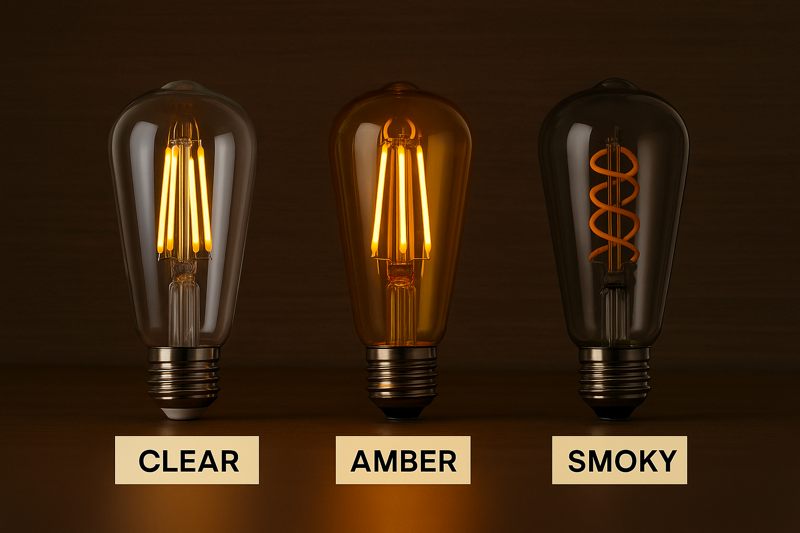
The finish of the glass envelope is not just a stylistic choice; it's a functional one that has a massive impact on the color of the light. Think of it as a built-in color filter. A clear glass bulb will show the "true" color of the light produced by the LED filaments, which is typically a warm white 2700K. An amber or gold-tinted glass, however, acts like a pair of sunglasses for the bulb. It lowers the color temperature of the light that passes through it, often taking a 2700K source and making it appear as a much warmer 2200K or even 2000K. This extra-warm, golden hue is the signature look for vintage restorations and is incredibly popular for creating a cozy, intimate, and relaxing atmosphere in spaces like restaurants, bars, and living rooms. Smoky or black-tinted glass has a similar, but more dramatic effect, significantly dimming the light output and creating a very moody, low-light aesthetic. While clear glass offers the most brightness and light quality (in terms of CRI), amber glass is what sells the "vintage" experience.
Comparing Glass Finishes
Your choice of glass should align with the desired mood of the target environment.
- Clear Glass6: Offers the highest brightness and the most accurate color rendering (CRI). The light is clean and crisp. This is the best choice when the vintage shape is desired but functional light is still a priority, such as in a kitchen or workspace.
- Amber/Gold Glass7: The most popular choice for decorative vintage bulbs. This glass adds a strong golden tint to the light, creating a very warm, cozy, candle-like glow (2000K-2200K). The perceived brightness is lower, but the atmospheric quality is much higher. This is the top choice for hospitality and residential living spaces.
- Smoky/Black Glass: A more niche, high-fashion choice. The dark tint severely reduces the light output, making the bulb almost purely decorative. It provides a moody, dramatic effect that works well in modern-industrial or minimalist designs where the filament's glow is meant to be a subtle accent.
| Glass Finish | Color Temperature Effect | Brightness Level | Best For... |
|---|---|---|---|
| Clear | No change (e.g., remains 2700K) | Highest | Functional spaces needing a vintage look. |
| Amber/Gold | Significantly lowers (to ~2200K) | Medium | Creating a warm, cozy, authentic vintage vibe. |
| Smoky/Black | Lowers color, dims significantly | Lowest | Moody, decorative accent lighting. |
For any B2B buyer entering this market, a strong offering in amber glass is non-negotiable. It is the defining feature of the modern vintage bulb trend.
What Technical Details Separate a Good Vintage Bulb from a Bad One?
You've mastered the aesthetics. But as a professional, you know that looks are meaningless if the bulb flickers, buzzes, or fails. What are the non-negotiable technical specs you must demand from a supplier?
Beyond aesthetics, a high-quality vintage bulb must have a stable IC driver for smooth, flicker-free dimming, a high CRI (90+), and consistent color temperature. These technical details, which are invisible to the eye, are what prevent costly callbacks and protect your reputation.
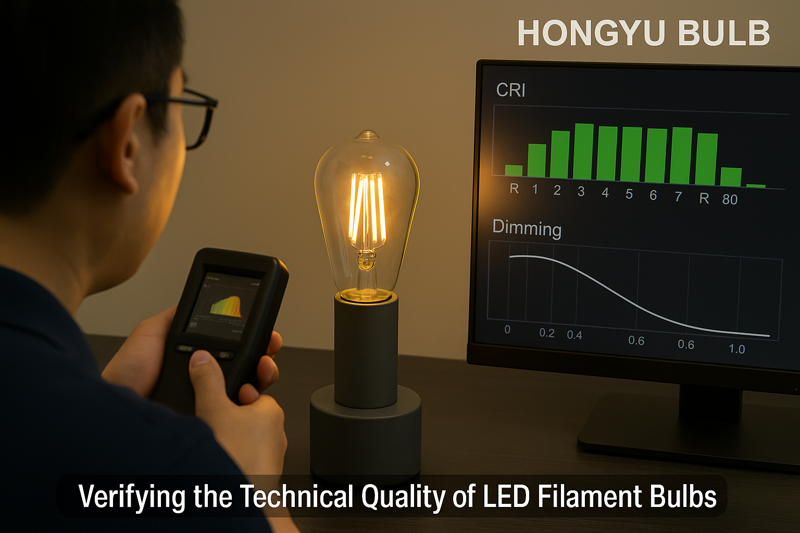
This is the conversation that separates the professional buyer from the retail consumer. The beautiful shape and filament will sell the bulb once, but its technical performance is what will earn you repeat business and protect you from costly failures. The first and most critical component is the driver. Cheap vintage bulbs often use very simple, low-cost "linear" drivers that cause them to flicker visibly (especially on video), buzz when connected to a dimmer, and fail prematurely. A quality bulb must use a more sophisticated "IC" (Integrated Circuit) driver that provides clean, stable power. This is the key to smooth dimming performance across a wide range of dimmer switches. The second critical detail is the Color Rendering Index (CRI). Many vintage bulbs, especially amber ones, have a very poor CRI, making colors look dull and lifeless. A high-quality bulb, even a very warm one, should have a CRI of 90 or more to ensure that the environment it illuminates looks rich and natural. Finally, you must demand color consistency. A good manufacturer like us has tight control over our LED chip supply to ensure that the 2200K bulb you order today will perfectly match the 2200K bulb you order six months from now. These are the details you can't see, but they are the entire foundation of a bulb's quality.
The Professional Buyer's Technical Checklist
When you vet a new supplier for vintage bulbs, ignore the pretty pictures and ask these tough questions.
- Driver Technology: "Do you use a linear driver or a stable IC driver? Can you provide a compatibility report for common US or European dimmers?" A good supplier will have this data ready. A bad one won't know what you're talking about.
- Color Rendering Index (CRI)8: "What is the CRI of your bulbs, particularly the amber glass versions?" Don't accept vague answers. Ask for a test report (called an integrating sphere report). A CRI below 80 is unacceptable for professional use. Demand 90+.
- Color Consistency: "What is your tolerance for color temperature variation between production batches? Do you control it by MacAdam ellipses?" This shows you understand quality control and forces them to prove their consistency. A 5-step ellipse is a good standard.
- Certifications9: "Are your bulbs UL listed for the US market or CE/UKCA marked for Europe?" This is a non-negotiable baseline for safety and quality. A lack of proper certification is a massive red flag.
| Technical Spec | Low-Quality Bulb | High-Quality Professional Bulb |
|---|---|---|
| Driver | Cheap Linear Driver | Stable IC Driver |
| Dimming | Flickers, Buzzes, Limited Range | Smooth, Wide-Range, Flicker-Free |
| CRI | <80 (Dull Colors) | 90+ (Vibrant, Natural Colors) |
| Consistency | Inconsistent Color Batch-to-Batch | Tight Control (e.g., <5-Step MacAdam Ellipse) |
| Safety | No/Fake Certifications | Verified UL, CE, UKCA Certifications |
Focusing on these technical details is how you source a beautiful vintage bulb that is also a reliable, professional-grade product.
Conclusion
Choosing the right Edison bulb means mastering the options: pair a classic shape with an authentic filament and the right glass finish, all backed by professional-grade technical quality.
Stay updated on the latest trends in vintage lighting to better cater to your customers' preferences. ↩
Discover how Straight Filaments enhance brightness and efficiency, perfect for vintage-style lighting. ↩
Explore the unique advantages of Spiral Filaments for creating warm, inviting atmospheres in various settings. ↩
Learn about the niche market for Novelty Filaments and how they can add a unique touch to decor. ↩
Understand the significance of Aesthetic Appeal in creating visually stunning lighting solutions. ↩
Discover why Clear Glass is the top choice for achieving brightness and accurate color rendering in functional areas. ↩
Explore the unique benefits of Amber/Gold Glass to create a warm, inviting atmosphere in your spaces. ↩
Understanding CRI is crucial for selecting high-quality lighting that enhances color accuracy and vibrancy in your space. ↩
Certifications ensure safety and compliance, making them essential for reliable and high-quality lighting solutions. ↩