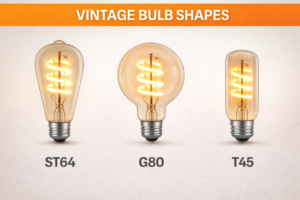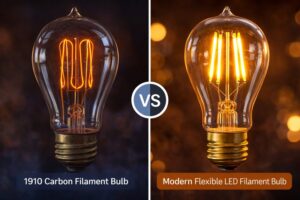
Customers are fatigued by the cold, sterile light of modern offices. They are desperate to bring warmth back into their homes, eateries, and hotels. If your inventory lacks a cohesive vintage range, you are handing high-margin sales directly to your competitors.
A Vintage Style LED Edison Bulb Collection replaces energy-hungry tungsten with efficient LED filaments inside classic glass shapes like ST64, G125, and T30. This collection allows retailers to offer a complete "historic" aesthetic—warm 2200K light and golden tinted glass—while meeting modern energy standards.
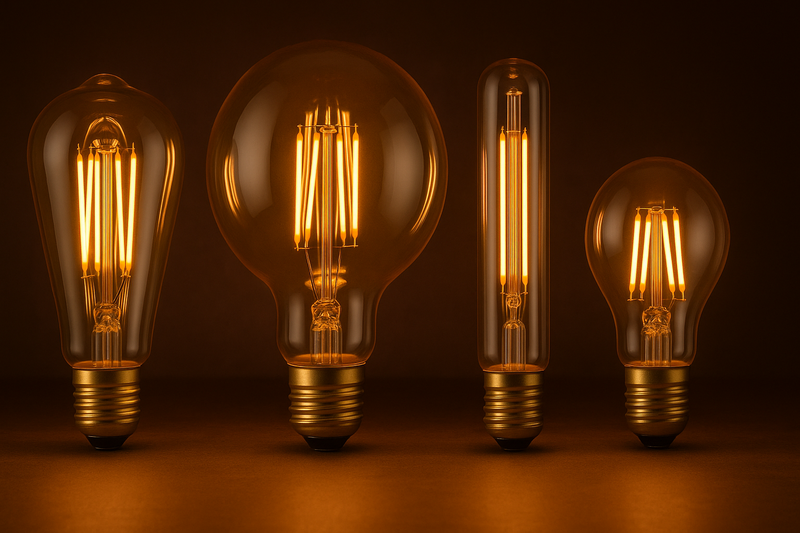
Building a successful lighting collection is not about randomly picking products from a catalogue. It is about curating a family of products that solve different design problems while maintaining a consistent visual language. When a designer walks into a project, they need a "Teardrop" bulb for the main pendants, "Globes" for the statement pieces, and "Tubes" for the wall sconces. If you only sell one shape, you cannot supply the whole project. Let me walk you through the essential members of a profitable vintage collection and the technical details that separate the professional grade from the supermarket grade.
Why Is the ST64 Teardrop the King of Every Vintage Collection?
Every store needs an anchor product. If you do not stock this specific shape, you are virtually ignoring the most recognized and requested symbol of the entire vintage lighting trend.
The ST64 (or ST19 in the US) is the quintessential "Edison" shape. Its elongated, tapered neck lifts the filament out of deep sockets, ensuring the light is visible even in caged fixtures. It accounts for the majority of vintage bulb sales globally and is the standard for industrial pendant lighting.
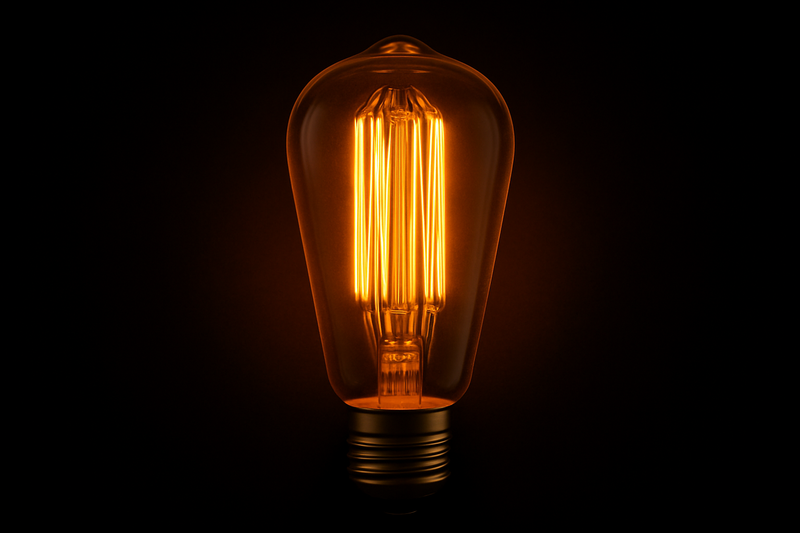
You cannot have a vintage collection without the ST64. It is the bread and butter of the industry. I remember when my client Jacky first started his business in California, he tried to be "different" by only selling round bulbs. He wanted to stand out. After three months, he called me in a panic. "Wallson," he said, " Everyone asks for the teardrop one. I am losing 80% of my customers." We rushed an air shipment of ST64s to him, and his sales stabilized immediately.
The magic of the ST64 (Straight Tubular 64mm diameter) lies in its ergonomics. Vintage fixtures often use heavy brass or Bakelite sockets. These sockets can be quite deep. If you put a standard round bulb (A60) in them, the glass is swallowed by the cup, and you lose half the light. The ST64 features a "neck extension" before the glass bulb widens. This 2-3cm of clear glass pushes the light source down and out, making it perfect for:
- Wire Cages: It fits inside the standard "clam-shell" cages used in barn lights.
- Exposed Pendants: The shape mimics a drop of water, which is naturally pleasing to the human eye.
- Uniformity: It is large enough to look expensive, but small enough to hang in clusters.
From a manufacturing perspective at Hongyu Bulb, we pay special attention to the Filament Arrangement in the ST64. In the old days of tungsten, the carbon filament was wound by hand into a "Squirrel Cage" pattern. To replicate this with LED, we use 4, 6, or 8 straight LED filament sticks.
The "Golden Tint" process: The glass of a true vintage ST64 is not clear. It is Amber or "Tea" colored. We achieve this by spraying a translucent gold coating inside the glass envelope before the stem is sealed. This tint does two things:
- It lowers the Color Temperature (CCT) physically, making the light warmer.
- It hides the yellow orange look of the LED LED filaments when the bulb is turned off, making it look like an antique object.
Comparison: ST64 vs. Standard A60
| Feature | ST64 (Vintage)1 | A60 (Standard)2 | Why it Matters? |
|---|---|---|---|
| Shape | Tapered / Teardrop | Round / Snowman | ST64 fits deep sockets; A60 gets blocked. |
| Glass Color | Amber / Gold | Clear / Frosted | Amber creates "Mood"; Frosted kills the filament look. |
| Filament | Long Vertical Cage | Horizontal Sticks | Vertical lines mimic historic carbon filaments. |
| Typical CCT | 2200K (Candle) | 3000K (Halogen) | 2200K triggers "relaxation" hormones. |
Do You Need Giant Globes to Capture the High-End Market?
Small bulbs get lost in large rooms. Designers and hotel owners demand lighting that acts as furniture, filling space without needing expensive shades or chandeliers.
Large Globe bulbs, such as the G125 or G95, serve as standalone decorative fixtures. Their large surface area allows for complex, artistic filament designs like spirals or "Merry-Go-Rounds," making them the perfect centerpiece for open-concept spaces and high ceilings.
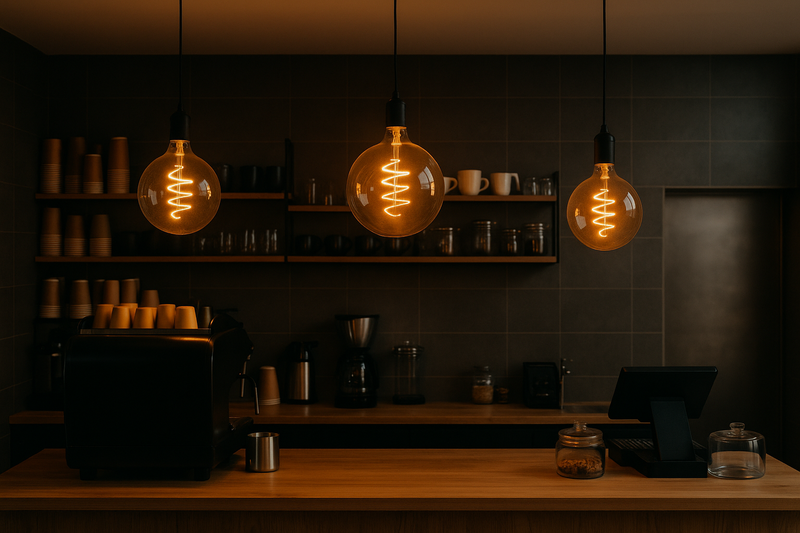
If the ST64 is the "Soldier" of your collection, the G125 is the "General." It commands attention.
The code G125 stands for "Globe 125mm Diameter." This is roughly the size of a cantaloupe melon.
When you sell to interior designers, they are often working with high ceilings—lofts, hotel lobbies, or modern barns. A standard bulb looks like a tiny speck in these spaces. The G125 takes up volume. When you hang three of them, you don't need a lampshade. The bulb is the chandelier.
The Advantage of Volume: Flexible Filaments
Because the glass ball is so big, we have more room inside to play with the LED technology. This is where Soft LED Filament shines. Unlike the rigid sapphire or ceramic sticks used in standard bulbs, soft filament is a polymer chain that can bend.
We can tie it in knots, spirals, or "U" shapes.
- The Spiral: This is the most popular. It looks like a glowing spring. It manages glare very well because the light is spread out over a longer curve.
- The Tree: We can arrange filaments to look like a Christmas tree inside the globe.
- The Text: We can even bend filaments to spell words (like "LOVE" or "HOME"), though this is a niche novelty market.
The Logistics Challenge
I must be honest with you as a B2B partner. G125 bulbs are expensive to ship. You are essentially shipping sealed air. A container fills up fast.
However, the Unit Profit Margin is much higher. You might make $0.50 profit on an ST64. You can make $3.00 to $5.00 profit on a premium G125.
The customer perceives a large object as having high value. Even though the internal driver is the same as the smaller bulb, the sheer amount of glass warrants a premium price tag.
We also offer the G95 (95mm) and G80 (80mm). I usually recommend my clients stock the G125 (for drama) and the G95 (for bathroom vanities).
Globe Size Guide
| Model | Diameter3 | Best Application | Recommended Filament4 |
|---|---|---|---|
| G125 | 125mm (5 inch) | Center of room, high ceilings, solo pendant. | Long Spiral (looks impressive). |
| G95 | 95mm (3.7 inch) | Kitchen islands, smaller clusters. | Vertical Cage (classic look). |
| G80 | 80mm (3.1 inch) | Vanity mirrors (makeup lights). | Standard Linear. |
How Can Tubular Bulbs Solve Your Customers' Most Difficult Design Problems?
Not every lamp is round. Sconces, picture lighting, and narrow geometric fixtures require a light source that fits into tight, linear spaces without touching the sides.
The T-Series (T45, T30, T185) offers a slim, cylindrical profile that fits where round bulbs cannot. These "Radio Valve" style bulbs are essential for wall sconces, piano lamps, and upcycling projects involving bottles, providing a continuous vertical line of light.
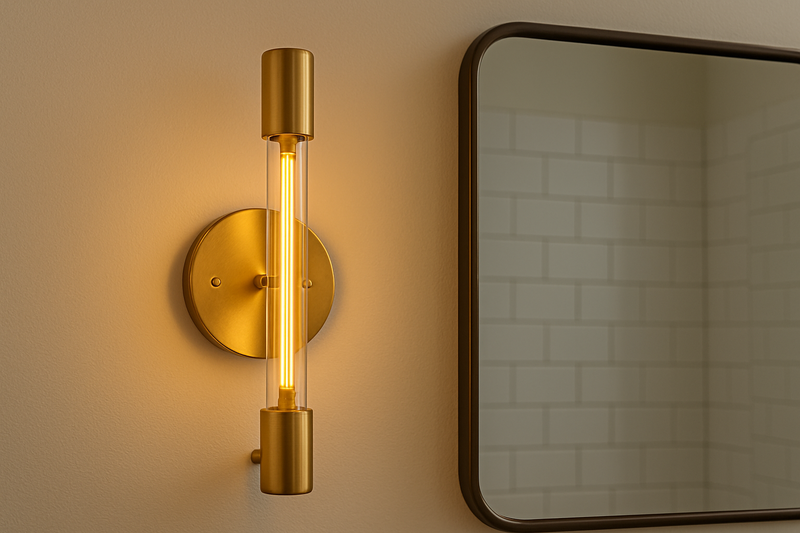
This part of the collection is often overlooked by amateurs, but it is essential for professionals. We call them "Tubulars" or sometimes "Test Tube Bulbs."
The naming convention is simple: T (Tube) + Diameter (mm).
- T45: A chubby tube, similar width to a radio valve. Great for desk lamps.
- T30: A slim tube (1 inch wide). This is the "Spaghetti" bulb.
- T185 / T225 / T300: These numbers refer to the length of the bulb. A T300 is 30 centimeters long!
The "Restoration Hardware" Effect
In the US market, the brand "Restoration Hardware" (RH) popularized many fixtures that use long, vertical glass shades. A round bulb cannot fit in these. You need a T30.
If a customer buys an expensive RH-style wall light and breaks the bulb, they will come to you looking for a replacement. If you don't stock the "Long Tube" series, you lose the sale.
The Continuous Line of Light
The aesthetic goal of a tubular bulb is to create a "rod" of light.
In the old days, we had to use multiple short tungsten filaments connected in a chain. It looked choppy.
Now, using Long-Substrate LED Filaments, we can create a single strip of light that runs from the top to the bottom of the tube.
This is critical for:
- Picture Lights: Lighting up artwork requires even distribution. A spotty bulb creates hot spots on the painting. A long filament tube washes the canvas evenly.
- Bottle Lamps: As mentioned in my other articles, the T30 is the only bulb slim enough to fit inside a wine or whiskey bottle for upcycling projects.
- Steampunk Pipes: The T-shape mirrors the straight lines of iron plumbing pipes, creating a seamless industrial look.
Tubular Sizing Cheat Sheet
| Model | Length | Base | Perfect For...5 |
|---|---|---|---|
| T45 | Short (110mm) | E26/E27 | Desk lamps with glass shades (Banker's Lamp style). |
| T30 Short | Medium (185mm) | E26/E27 | Standard wall sconces. |
| T30 Long6 | Long (300mm) | E26/E27 | Large pendant tubes, vertical dining lights. |
| T25 | Skinny (Variable) | E12/E14 | Chandeliers, small narrow bottles. |
What Makes the Difference Between a "Toy" Bulb and a Professional Component?
Many vintage bulbs look good on the shelf but fail in the home. Poor dimming performance, flickering light, and greenish color tones destroy the user experience immediately.
A professional collection relies on high-quality internal drivers that support smooth, flicker-free dimming from 100% to 0%. Furthermore, achieving a high Color Rendering Index (CRI > 90) ensures that the warm 2200K light does not make the room look muddy or green.
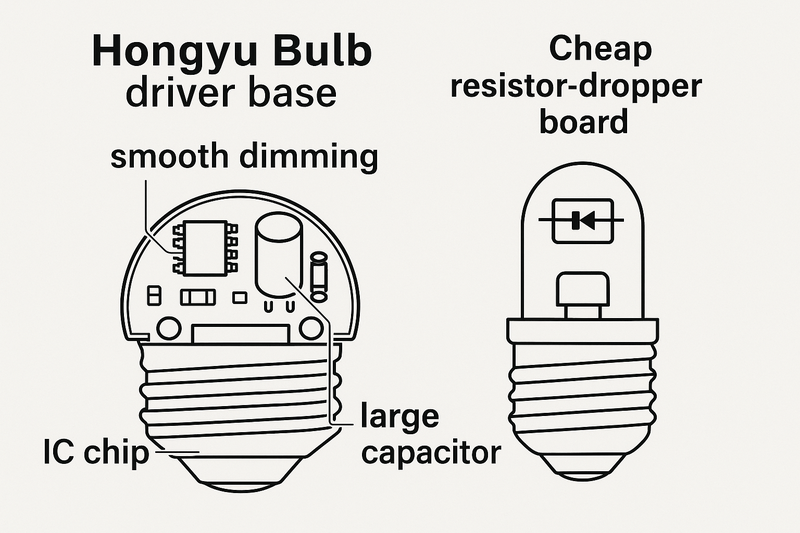
This is the invisible part of the collection, and it is where I spend most of my time as a Marketing Manager explaining value to Jacky and my other clients.
Why is my bulb $1.50 and the competitor's bulb $0.80? They look the same on the outside.
The difference is the Driver and the Phosphor.
The Dimming Nightmare
Vintage bulbs are almost always dimmed. They are mood lighting. Nobody runs an Edison bulb at full brightness for cleaning the house. They dim it down for dinner.
Cheap bulbs use linear drivers. When you dim them, they buzz. Or they drop to 30% brightness and then suddenly switch off.
At Hongyu, we use IC (Integrated Circuit) Constant Current Drivers. We test them with the most popular dimmers in the US (Lutron Diva, Leviton Decora) and Europe (Varilight). We ensure the curve is smooth.
You are selling the experience of "Lowering the lights." If the lights flicker or buzz, you ruin the romantic moment.
The "Red Phosphor" Secret (CRI)
I touched on this before, but for a whole collection, consistency is key.
If your G125 bulb is a rich orange (2200K) but your ST64 is a pale yellow (2700K), your collection looks broken.
We use strictly controlled "Binning" (MacAdam Step 3) to ensure every bulb in the family matches.
Furthermore, we add extra red phosphor to our LED mix. This gives us a CRI of 90+.
Why does this matter?
Under low-quality warm light (CRI 70), wood looks grey and skin looks sickly.
Under high-quality warm light (CRI 90), wood looks rich and mahogany, and skin looks glowing.
For hotels and restaurants, this is non-negotiable. They want their guests to look beautiful.
The Gas Filling
Finally, an authentic collection must be Helium-Filled.
The long filaments inside these bulbs generate heat. In a vacuum, that heat stays in the LED chips, killing them. Helium conducts heat away from the filament to the glass wall.
If you pick up a bulb and it feels incredibly light, and the stem is solid (no exhaust tip), it is likely air-cooled or vacuum-sealed without gas. It will not last the claimed 15,000 hours.
Technical Spec Checklist for Buyers
| Spec | Standard / Cheap | Hongyu Professional | Business Impact |
|---|---|---|---|
| Dimming | 100% - 20% | 100% - 0% (Deep Dimming) | Customer satisfaction, no "popcorning" effect. |
| CRI | 70 - 80 | 90+ (Red Enhanced) | Better visual quality for furniture and people. |
| Flicker | Visible on Camera | Flicker-Free (PstLM < 1) | No eye strain, better for video/photos. |
| Cooling | Air / Vacuum | Nitrogen / Helium Mix | Longer lifespan, fewer warranty claims. |
Conclusion
A successful vintage style LED Edison bulb collection requires diversity in shape and excellence in engineering. By stocking the essential trio—the classic ST64, the dramatic G125, and the versatile T30—and ensuring they are powered by premium dimmable drivers with high color accuracy, you position your brand as a provider of complete, reliable lighting solutions, not just a seller of glass commodities.
Explore the unique advantages of ST64 bulbs, including their aesthetic appeal and mood-enhancing qualities. ↩
Learn about A60 bulbs and how they compare to other types, especially in terms of functionality and design. ↩
Understanding diameter helps in choosing the right globe size for your space, ensuring optimal lighting and aesthetics. ↩
Exploring filament options can enhance your lighting design, providing both functionality and style to your fixtures. ↩
Explore this link to discover how to choose the right tubular lighting for various settings. ↩
Learn more about T30 Long lights to see if they fit your lighting needs and style. ↩