I visit hotels for a living. I check into a room, and the first thing I do isn't jump on the bed; I look at the lamps. Recently, I stayed at a boutique hotel that had spent millions on velvet sofas and marble floors, but they used cheap, flickering cool-white bulbs in their bedside lamps. The room felt cold. It felt like a hospital. I didn't order room service. I left early.
In the hospitality industry, lighting is the subconscious language of luxury. By integrating LED Edison bulbs into your design strategy, you are not just illuminating a space; you are engineering an emotional transition for your guest—from the stress of travel to the comfort of 'home'—using the warm, candle-like spectrum (2200K) that signals safety and relaxation to the human brain.
I have a customer named Jacky, who owns a chain of steakhouse restaurants and a small hotel in Chicago.
He is a detail-oriented guy. He checks the fold of the napkins himself.
He told me, "Wallson, my food is 5-star, but my reviews say the atmosphere is 'a bit stiff.'"
We walked through his dining room.
He had bright, uniform lighting everywhere.
"Jacky," I said, "You are lighting a cafeteria, not a dining experience. Romance needs shadows."
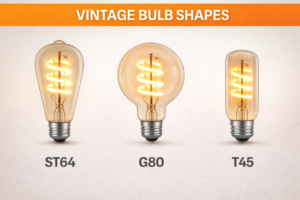
We swapped his general lighting for a layered approach using my dimmable ST64 Amber Filaments.
The reviews changed within a month. People started using words like "intimate," "cozy," and "romantic."
The average check size increased because people stayed for dessert and a second glass of wine.
Let’s dive into how you can replicate this success in your venue.
The Lobby: Creating the "Exhale" Moment
The lobby is not a waiting room. It is the handshake of your brand. It is the moment the guest walks in from the chaotic street, tired from the airport, and decides if they made a good booking decision.
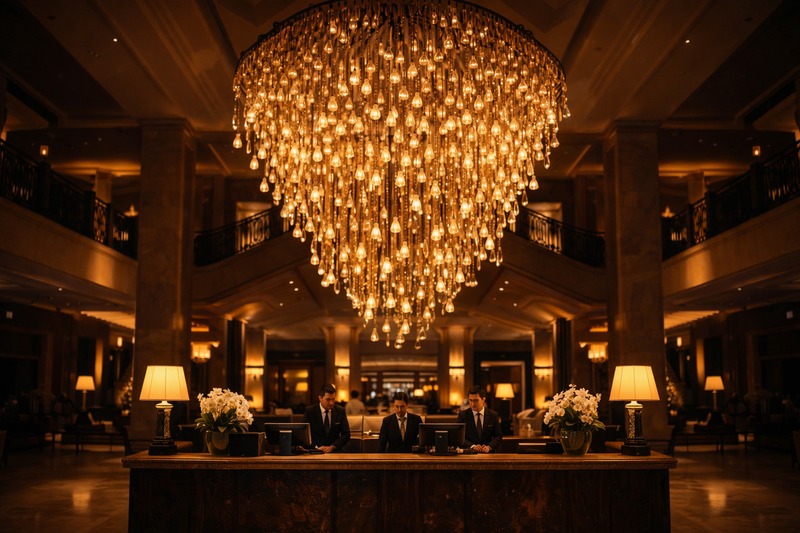
The primary goal of lobby lighting is to lower the guest's heart rate immediately upon entry. By using large-scale, statement LED Edison bulbs (like the G125 or PS52) in a clustered chandelier, you create a warm, amber focal point that visually anchors the space and mimics the welcoming glow of a hearth or fireplace, instantly communicating 'shelter' and 'hospitality'.
Jacky asked, "Do I need enough light to read forms?"
"Yes," I said, "but not from the ceiling."
The Layering Technique:
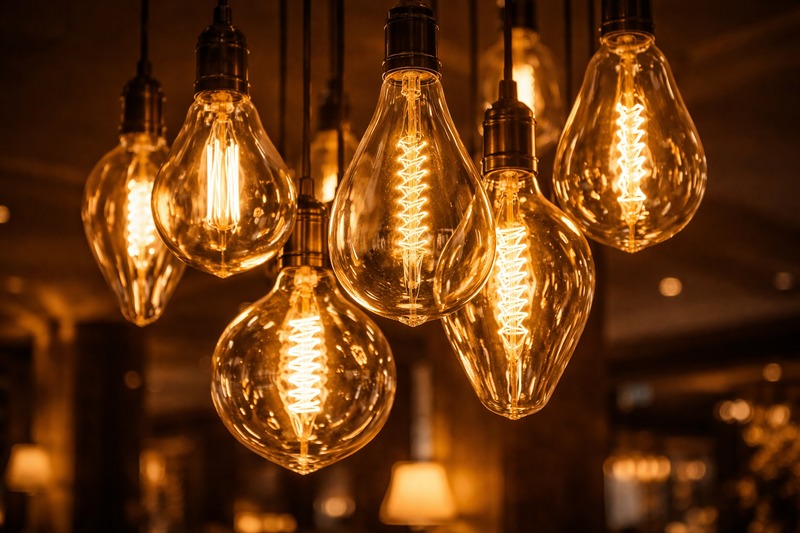
- The Statement Piece (The Vibe): High above the center of the lobby, you hang a cluster of giant vintage bulbs.
These are not for seeing; they are for feeling.
Use my PS52 Giant "Egg" Bulbs. They are huge. They look like art sculptures even when turned off.
Keep them dimmed to 50%. They should glow like embers. - The Task Light (The Function): At the reception desk, where the guest signs the credit card slip, you use a warm (3000K) hidden downlight or a banker's lamp with a directed shade.
This puts light only on the paper, not in the guest's eyes.
The "Golden Hour" All Day Long:
A sterile lobby feels corporate.
A warm lobby feels exclusive.
By using 2200K Amber Glass bulbs, you effectively freeze time at sunset.
This color temperature makes the leather furniture look richer. It makes the wood paneling look deeper.
It makes the guest feel like they have arrived somewhere special.
Motion and Life:
I often recommend the "Spiral" filament for lobbies.
Unlike the rigid vertical filament, the spiral looks fluid.
It suggests movement and life, which balances the static nature of the furniture.
The "Selfie" Spot
In 2024, if a guest doesn't take a photo of your hotel, did they even stay there?
You need to engineer a "Selfie Spot1."
Create a wall installation using a grid of vintage bulbs, or a mirror surrounded by Globe (G80) filaments2.
The soft, front-facing light acts as a beauty filter.
It smooths out skin textures.
Guests will take a photo, look great, and tag your hotel on social media.
It is free advertising powered by a $5 bulb.
The Dining Room: Lighting for Appetite and Intimacy
There is a direct scientific link between light levels and calorie consumption. Bright lights make people eat fast and leave. Dim, warm lights make people relax, talk, and savor.
Restaurateurs must master the art of "Table-Centric" lighting, where the light source—a pendant equipped with a dimmable LED Edison bulb—is lowered to just above eye level. This technique creates a private "pool of light" on the table that illuminates the food beautifully while leaving the rest of the room in semi-darkness, creating a psychological sense of privacy in a crowded room.
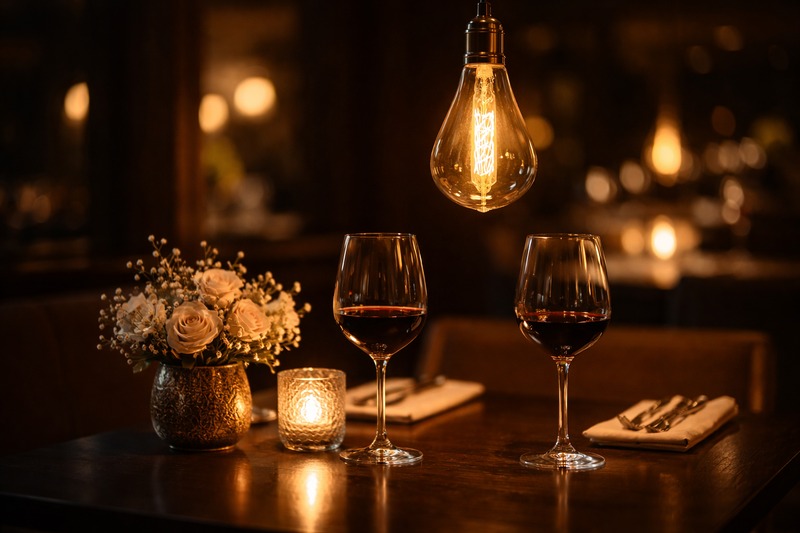
Jacky was worried about reading menus.
"If it's too dark, the grandmas complain," he said.
"That is why you choose the right bulb," I replied.
The Lumen vs. Glare Balance:
You want light on the steak, not in the eyes.
We lowered his pendant lights to 30 inches above the table.
This is the magic number.
At this height, the shade cuts the glare.
We used the ST64 bulb with a "Clear" finish instead of heavily amber-tinted for the dining room.
Why Clear?
Because you want the red of the wine to look true red.
You want the green of the salad to look fresh.
Heavy amber tint can sometimes make food look muddy.
We used a 2700K Clear Filament.
It is warm, but it renders food colors accurately (High CRI).
The "Candle" Replacement:
Real candles are a fire hazard. They smell. They drip wax.
Restaurants spend thousands a year on wax.
I introduced Jacky to the C35 "Candle Tail" LED Filament.
It fits in small sconces or table lamps.
It uses 2 Watts.
It flickers slightly if you use a specific dynamic driver, mimicking a real flame perfectly.
He stopped buying wax candles completely.
He saved $1,200 a year just on candles.
The Bar Area: The Theater of Spirits
The bar is different from the dining room.
The bar is a stage.
The bottles are the actors.
Backlighting:
Use T30 "Test Tube" bulbs hidden behind the bottles on the shelf.
The liquid in the bottles—the whiskey, the vodka, the gin—will glow from within.
It makes the drink selection look enticing.
The Overhead Rack:
Above the bar counter, hang a row of G125 Globes3.
But here is the trick: Use the "Smoke" or "Grey" glass finish.
Why?
Bars are moody.
The grey glass looks sophisticated and cool, not "country rustic" like the amber glass.
When dimmed, the filament inside the smoke glass looks mysterious and sexy.
The Guest Room: Bedside Simplicity and Safety
The biggest complaint in hotel reviews is complicated lighting controls. Guests don't want to learn a computer system just to turn off the lights to sleep. They want warmth, simplicity, and comfort.
For bedside lighting, the LED Edison bulb serves a dual purpose: it provides enough light for reading without the blue-light spike that disrupts sleep cycles (circadian rhythm). By using a touch-dimmable fixture with a 2200K bulb, you allow the guest to transition naturally into sleep, signaling to their body that the day is over.
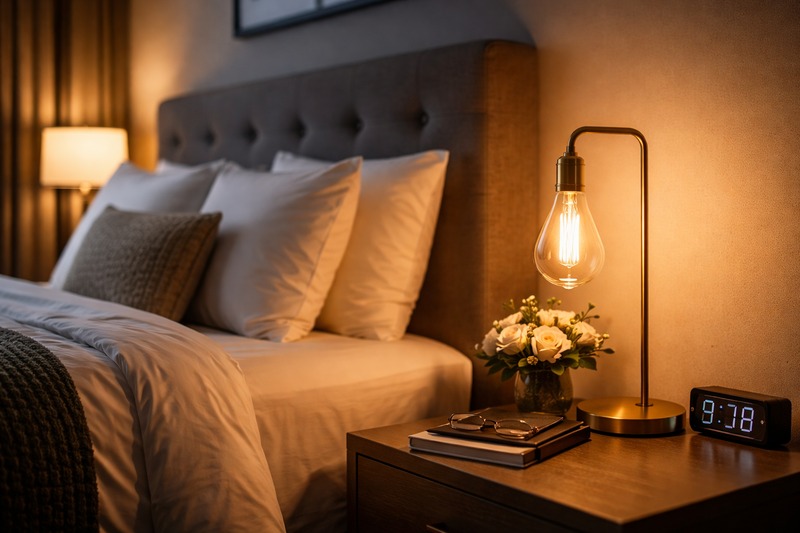
Jacky told me a story about a guest who unplugged a lamp because it was too bright to watch TV with.
"That is a design failure," I told him.
The Bedside Solution:
Most hotels use lampshades that are impossible to clean. Dust magnets.
The modern trend is the "Exposed Bulb" lamp.
Since there is no shade, the bulb is the design.
You must use a Low-Glare bulb.
If you use a clear bulb right next to the bed, it hurts the eyes.
I recommended the "Milky" or "Frosted" Edison bulb for the bedside.
Or, a "Half-Chrome" (Gold Dipped) bulb.
The bottom of the bulb is covered in a reflective gold coating.
The light shoots up and reflects off the wall, creating indirect, soft light.
It protects the guest's eyes from direct glare while they are lying in bed.
The Nightlight Factor:
Guests wake up in a strange room. They need to find the bathroom.
Standard nightlights are ugly plastic things.
We installed a very low-wattage (1W) T45 tubular bulb under the floating nightstand.
It runs on a motion sensor.
When the guest swings their feet out of bed, a soft, warm amber glow appears on the floor.
It is enough to see, but not enough to wake them up fully.
It feels magical. It feels like high-tech luxury.
Durability: The Hidden Cost of Hospitality
In a hotel, housekeeping creates vibrations.
Vacuuming bumps into lamps.
Carts hit walls.
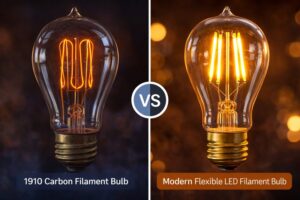
Old incandescent filaments are fragile. One bump, and the tungsten snaps.
You are paying a maintenance guy $25/hour to change a $1 bulb constantly.
LED Robustness4:
My LED filaments are mounted on sapphire or ceramic substrates.
They are tough.
They resist vibration.
Jacky told me his bulb replacement tickets dropped by 95% after switching to LED.
This frees up his maintenance staff to fix real problems, like plumbing or AC.
Heat Safety5:
In a guest room, kids touch things.
Guests throw clothes over lamps.
An incandescent bulb runs at 200°F+. It starts fires.
My LED bulb runs warm to the touch (about 90°F).
It is physically impossible for it to start a fire with a throw pillow.
That is peace of mind for a hotel owner.
Conclusion
Hospitality isn't about renting a bed or selling a steak; it's about selling a feeling. You are selling "The Escape." Lighting is the most powerful, immediate way to manipulate that feeling. Standard, cold, flickering office lighting breaks the spell. It reminds the guest of reality. By curating your space with purposeful LED Edison bulbs—using oversized ambers in the lobby for awe, clear dimmables in the restaurant for appetizing accuracy, and soft, glare-free bulbs in the bedroom for rest—you are guiding your guest through an emotional journey. You are telling them, without words, "You are safe here. You can relax here." And that is the feeling that brings them back.
Discover tips and ideas for designing a captivating Selfie Spot that boosts guest engagement and social media presence. ↩
Explore this link to understand how Globe (G80) filaments enhance lighting aesthetics, perfect for creating stunning selfie spots. ↩
Learn about G125 Globes and their impact on creating a sophisticated and moody bar atmosphere. ↩
Explore how LED Robustness can significantly reduce maintenance costs and improve safety in hotels. ↩
Learn about the importance of Heat Safety in preventing fire hazards and ensuring guest safety in hospitality. ↩