Are bad bulbs ruining your hotel's ambiance and budget? Constant flickering and replacements make luxury spaces look cheap, frustrating guests and costing you a fortune in maintenance.
Focus on creating ambiance with smooth, deep dimming and a warm 2200K-2700K color temperature. Ensure high CRI (90+) so food and décor look vibrant. Finally, demand commercial-grade reliability (25,000+ hour L70 lifespan) and essential UL/ETL safety certifications for operational peace of mind.
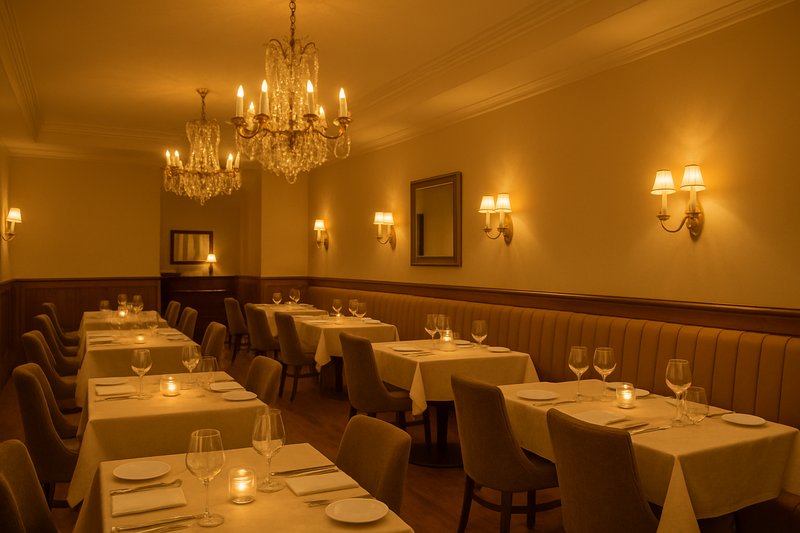
I'll never forget a meeting I had with the general manager of a high-end boutique hotel in Miami. He was incredibly frustrated. They had spent millions on custom furniture, expensive fabrics, and original art, but he felt the hotel "lacked soul" at night. He walked me through the lobby, and I saw the problem immediately. The magnificent chandeliers were filled with LED candelabra bulbs that produced a cold, inconsistent light. Some flickered subtly, and none of them dimmed properly, just snapping off at 30%. The lighting was fighting against the beautiful design, making the space feel sterile instead of welcoming. He thought he needed new fixtures; I knew he just needed the right bulbs. We swapped them for a set of our 2400K, high-CRI, flicker-free dimming bulbs. That evening, the entire personality of the lobby changed. It became warm, intimate, and luxurious. It's a powerful reminder that in hospitality, the light bulb isn't a maintenance item; it's a critical part of the guest experience.
How can you create the perfect dining atmosphere with lighting?
Is the lighting in your client's restaurant too bright and clinical? Harsh, non-dimmable light kills the mood, making an intimate dinner feel like a meal in a cold cafeteria.
The key is using bulbs with a very warm color temperature (2200K-2700K) and, most importantly, a superior driver that allows for smooth, deep, flicker-free dimming. This combination allows you to create a dynamic and intimate atmosphere that feels warm and inviting.
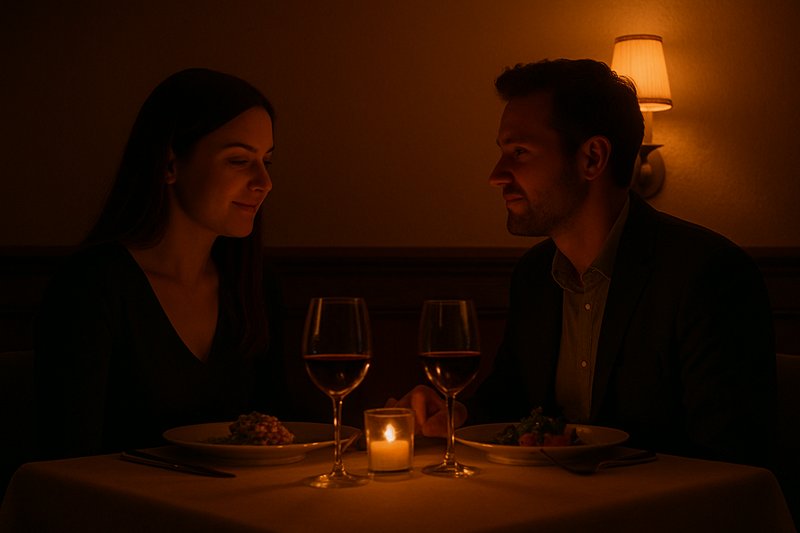
In hospitality, atmosphere is everything. It's the intangible quality that makes guests feel comfortable, encouraging them to stay longer and spend more. The foundation of this atmosphere is lighting, and the two most powerful tools you have are color temperature and dimming. Color temperature sets the base mood. A warm, yellowish light (low Kelvin) triggers a primal feeling of comfort and relaxation, reminiscent of candlelight or a fireplace. This is why a color temperature between 2200K (the color of a candle flame) and 2700K (the color of a classic incandescent bulb) is the undisputed standard for hospitality. But dimming is what brings the space to life. A restaurant manager needs to be able to transition the lighting from a brighter, welcoming level during early service to a much more intimate, moody glow later in the evening. This ability to "tune" the room's energy is impossible without high-performance dimming, which is entirely dependent on the quality of the bulb's internal driver electronics.
Mastering Color Temperature (CCT)
Choosing the right Kelvin temperature is the first step in setting the scene.
- 2200K (Extra Warm White): This produces a deep, amber glow that is very similar to candlelight. It is perfect for creating a very dramatic, intimate, and romantic atmosphere. This is an excellent choice for bars, lounges, and fine dining restaurants aiming for a classic, moody feel.
- 2400K (Warm White): A slightly less amber, but still very warm and cozy light. It offers a great balance between intimate ambiance and good visibility, making it a versatile choice for a wide range of restaurant styles.
- 2700K (Soft White): This is the exact color of a traditional incandescent light bulb. It provides a familiar, comfortable, and inviting warmth. This is the go-to standard for hotel lobbies, guest rooms, and restaurants that want a welcoming but slightly brighter and more functional environment. Temperatures above 2700K are generally too cool and sterile for primary hospitality spaces.
The Non-Negotiable Importance of High-Performance Dimming1
Dimming is where cheap bulbs fail spectacularly.
- Flicker2: Low-quality drivers will often produce an invisible or visible flicker when dimmed, which can cause eye strain and headaches for sensitive guests. Commercial-grade drivers are engineered to provide clean, stable power at all dimming levels.
- Dimming Range3: A cheap bulb might only dim to 30% before it cuts out. A high-quality hospitality bulb must have a deep dimming range, going smoothly down to 10%, 5%, or even 1%. This ability to achieve a very low "glow" is essential for creating true ambiance.
- Compatibility: Commercial spaces often have complex lighting control systems (Lutron, Crestron, etc.). A professional-grade bulb is tested for broad compatibility with these systems to ensure smooth, buzz-free operation.
| Feature | Low-Quality Bulb | Hospitality-Grade Bulb4 | Guest Experience |
|---|---|---|---|
| CCT | Inconsistent, often 3000K+ | Consistent 2200K-2700K | Creates a cold, sterile mood vs. a warm, inviting one. |
| Dimming | Flickers, limited range (30%) | Smooth, deep (1-10%), flicker-free | Jarring and uncomfortable vs. seamless and atmospheric. |
Ultimately, investing in bulbs with superior dimming and the correct warm CCT gives operators precise control over the most powerful element of their interior design: the light itself.
How does the look of the bulb itself affect your design?
Are you using plain, functional-looking bulbs in your decorative chandeliers? This mismatch shatters the antique or luxury illusion, making an expensive fixture look underwhelming and incomplete.
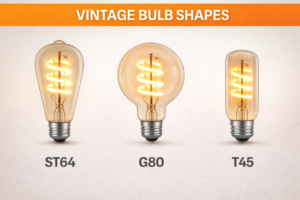
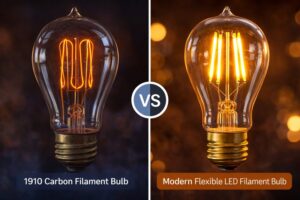
The bulb is part of the décor. For hospitality, choose a classic "bent-tip" or "torpedo" shape with an amber or honey-tinted glass. A beautifully designed, visible filament (like a curved loop) completes the aesthetic, ensuring the bulb enhances the fixture even when off.
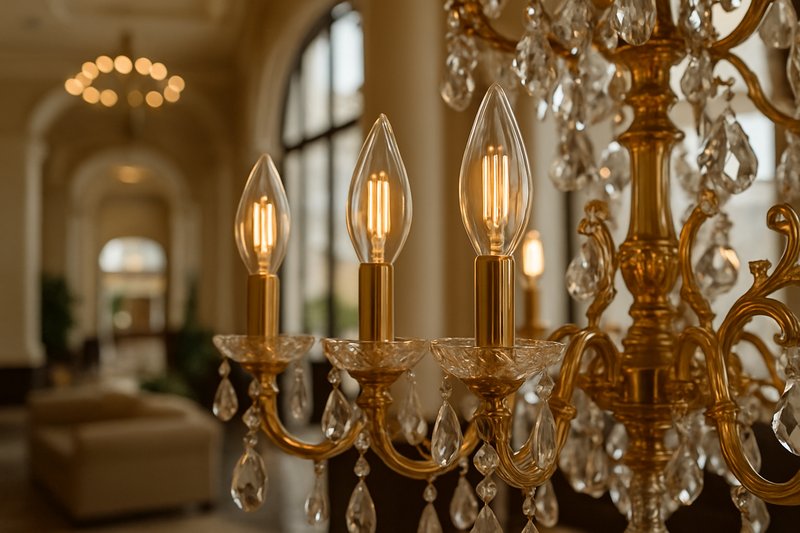
In hotels and restaurants, candelabra bulbs are rarely hidden behind a shade. They are an exposed, visible component of a decorative fixture like a chandelier or a wall sconce. This means the bulb itself must be beautiful. Its shape, color, and internal structure are all part of the overall design aesthetic. A project manager for a historic hotel renovation once told me he spends as much time selecting his candelabra bulbs as he does selecting the sconces themselves. He knows that when a guest looks up at a beautiful, 200-year-old bronze fixture, the bulb sitting in it has to look the part. A modern, plain-white plastic bulb would look jarring and cheap. A carefully chosen vintage-style bulb with an elegant flame tip and a warm amber tint, however, completes the picture. It tells a story of quality and attention to detail, which is the essence of luxury hospitality.
The Importance of Silhouette: Shape and Form
The physical shape of the bulb must complement the fixture's design.
- Bent-Tip / Flame-Tip (CA-Series): This is the quintessential choice for classic and traditional fixtures. The tip is curved to mimic the flickering flame of a real candle, providing a timeless and highly decorative look that is perfect for chandeliers.
- Torpedo / Bullet (B-Series)5: This is a smooth, conical bulb that offers a clean, classic, and versatile silhouette. It works well in a wide range of sconces and chandeliers, from traditional to transitional designs.
- Blunt-Tip: A variation of the torpedo, often with a slightly more decorative, rounded shape. It provides a soft, elegant appearance.
The Impact of Glass: Tint and Clarity
The color of the glass itself plays a huge role in the bulb's character, both on and off.
- Amber/Gold Tint6: This is the most popular choice for creating a warm, vintage feel. The amber coating on the glass gives the bulb a rich, warm appearance even when it's turned off, and it enhances the warmth of the light when it's on, creating an instant feeling of coziness.
- Smoky Tint7: A more dramatic and contemporary choice. A light gray smoke tint gives the bulb a sophisticated, almost industrial-chic look that pairs exceptionally well with dark metals and modern-vintage interiors.
- Clear Glass: Offers a clean, sparkling look that maximizes the visibility of the internal filament. This is an excellent choice for crystal chandeliers where the goal is to create as much sparkle and refraction as possible.
The Soul of the Bulb: The Filament
In vintage-style bulbs, the filament is a key design element.
- Curved Loop / "Squirrel Cage"8: The most common and popular style. A gracefully curved filament provides a soft, elegant, and classic "Edison" look.
- Spiral: A more intricate design where the filament is wound in a coil. It creates a fascinating visual effect and is a statement piece in itself.
- Straight Filament: Offers a cleaner, more minimalist look that mimics very early incandescent bulbs.
| Design Element | Style Impact | Best Hospitality Application |
|---|---|---|
| Bent-Tip Shape | Classic, Traditional, Ornate | Grand chandeliers in hotel ballrooms and lobbies. |
| Amber Glass Tint | Vintage, Rustic, Cozy | Farm-to-table restaurants, lounges, historic hotels. |
| Curved Filament | Elegant, Soft, Timeless | Virtually all decorative fixtures aiming for a classic look. |
The bulb is a finishing touch that can either complete or compromise your design. Choosing one with the right aesthetic details is as important as choosing the right fixture.
How does light quality impact food and interior color perception?
Does the food in your restaurant or the décor in your hotel lobby look flat and unappealing? Low-quality lighting can make a vibrant red sauce look brown and expensive wooden furniture look dull.
Use bulbs with a high Color Rendering Index (CRI) of 90 or above. This ensures that the light accurately represents true colors, making food look fresh and delicious, and making the colors of your interior design appear rich, deep, and exactly as intended.
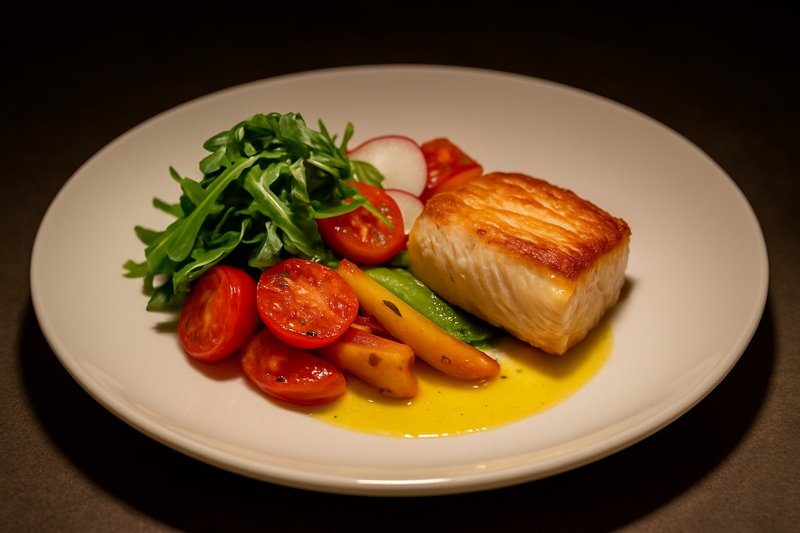
This is where lighting directly translates into revenue. The visual appeal of food is a massive part of the dining experience. A chef can create a masterpiece, but if it's served under poor quality light, its colors will be distorted, and it will look less fresh and appetizing. I once talked to a restaurant consultant who said that improving the lighting quality is one of the fastest and most cost-effective ways to boost food sales and social media engagement. When food looks better, guests perceive it as tasting better, they are more likely to order it, and they are definitely more likely to take a photo of it and post it online. The same principle applies to the entire interior. A high CRI light brings out the rich tones in wood, the deep colors in fabrics, and the subtle hues in artwork. It makes the entire space feel more premium and luxurious. Using a low-CRI bulb is like putting a cheap, faded filter over your entire multi-million dollar interior design.
Understanding the CRI Scale in Hospitality
Color Rendering Index (CRI) is a 0-100 scale measuring how accurately light shows color. For hospitality, the difference between standard and high CRI is night and day.
- CRI 80: This is the legal minimum in many places and is common in consumer-grade bulbs. It's "good enough" for basic illumination, but under this light, colors will lack saturation. Reds, in particular, suffer and can look dull or brownish, which is terrible for food presentation.
- CRI 90+: This is the professional standard for any environment where color is important. At this level, colors are rendered with high fidelity. Reds are vibrant, skin tones look healthy and natural, and the full spectrum of colors in food and décor is accurately represented. Within the 90+ range, an even more specific metric is R9, which measures how well the light renders deep red. A high R9 value (>50) is the secret to making steak, red wine, and vegetables look incredible.
The Importance of Consistency
Beyond CRI, the consistency of the light is crucial in a large space with many bulbs.
- Color Consistency (Binning): As a manufacturer, we sort our LED chips into very tight "bins" based on their exact color specifications. This meticulous process, often measured by "MacAdam Ellipses," ensures that every single 2700K bulb in an order produces the exact same color of light. In a large chandelier with 50 bulbs, this prevents a "patchwork" effect of slightly different shades of white, which looks unprofessional and cheap.
- Lumen Consistency: A quality manufacturer ensures that all bulbs of a certain model have a consistent lumen (brightness) output. This guarantees that the entire space is evenly lit, without distracting bright or dim spots.
| Light Quality Metric | Impact of Low Quality (CRI <80) | Benefit of High Quality (CRI 90+) |
|---|---|---|
| Color Rendering (CRI) | Food looks dull, décor seems faded, skin tones look unnatural. | Food looks fresh and appetizing, interior colors are rich and vibrant. |
| Red Rendering (R9) | Red meat, tomatoes, and sauces look brown and unappealing. | Reds are deep and vibrant, adding to perceived quality and freshness. |
| Color Consistency | "Checkerboard" effect of mismatched whites in large fixtures. | Perfectly uniform light color across the entire installation. |
Investing in high CRI lighting isn't an expense; it's a direct investment in the visual appeal of your client's product, whether that product is a plate of food, a hotel room, or a luxury brand experience.
What makes a bulb reliable enough for a 24/7 commercial operation?
Are your maintenance teams constantly on ladders changing dead bulbs? High labor costs and the disruption caused by replacing lights in public areas are a significant operational drain for any hotel or restaurant.
Commercial reliability comes from superior thermal management (heavy aluminum heat sinks) and robust, commercial-grade internal drivers. These features allow the bulb to withstand long operating hours and result in a long L70 lifespan of 25,000 hours or more, drastically reducing maintenance.

The number one complaint I hear from hotel chief engineers is about the operational cost of lighting. The price of the bulb is almost irrelevant; the real cost is the labor and equipment required to change it. Changing a single bulb in a 30-foot high lobby chandelier can require two staff members, a scissor lift, and a 30-minute shutdown of the area, all of which costs hundreds of dollars. When you multiply that by dozens of premature bulb failures a year, it becomes a massive budget line item. This is why a commercial-grade bulb's value proposition is centered on reliability. It's built like a piece of industrial equipment, not a disposable consumer good. We design our commercial bulbs at Hongyu Bulb to be "set and forget" for years. We use heavy aluminum bodies to draw heat away from the electronics, and we use components rated for high temperatures and continuous operation. This focus on engineering for long life is what separates a professional product from a retail one.
The Science of Longevity
Heat is the enemy of all electronics, including LEDs. A bulb's ability to manage its own heat is the single biggest factor in its lifespan.
- Thermal Management: Consumer bulbs often use plastic housings which trap heat. A commercial-grade bulb uses a substantial aluminum or ceramic heat sink. This acts like a radiator on a car, pulling damaging heat away from the sensitive LED chips and driver, allowing it to survive 12-16 hour daily run times.
- Driver Quality: The internal driver is the most common point of failure. Commercial drivers use higher quality capacitors and electronics that are rated for higher temperatures and have a much longer operational life, protecting the bulb from power fluctuations common in commercial buildings.
Understanding Professional Lifespan Ratings
Don't be fooled by simple "lifespan" hours on a retail box.
- L70 Rating: This is the professional metric for lifespan. It measures the number of operating hours until the bulb's light output has declined to 70% of its initial brightness. A bulb doesn't just suddenly die; it fades. The L70 rating tells you how long it will produce useful light. A typical consumer bulb might have a 15,000-hour rating, while a true commercial bulb should be rated for 25,000 to 50,000 hours.
- Warranty: A manufacturer's confidence in its product is reflected in its warranty. A consumer bulb might have a 1- or 2-year warranty. A robust commercial bulb should have a 3- to 5-year warranty, giving you peace of mind and protection for your investment.
| Feature | Consumer-Grade Bulb | Commercial-Grade Bulb | Operational Impact |
|---|---|---|---|
| Heat Sink | Plastic or minimal metal | Solid Aluminum / Ceramic | Fails quickly vs. Survives long hours. |
| Driver | Basic components | Robust, high-temp components | Prone to failure vs. Stable and reliable. |
| L70 Lifespan | ~15,000 hours | 25,000 - 50,000 hours | Re-lamping every 2-3 years vs. every 5-10 years. |
| Warranty | 1-2 years | 3-5 years | High risk vs. Protected investment. |
Choosing a bulb with proven commercial reliability transforms lighting from a constant maintenance headache into a long-term, stable asset.
What safety certifications are absolutely mandatory for hospitality?
Are you specifying non-certified bulbs for your hotel project? Using products without a UL or ETL mark can lead to failed inspections, voided insurance, and create a catastrophic fire or electrical safety liability.
For any commercial installation in North America, a UL or ETL listing is non-negotiable. These marks certify that the product has been independently tested for fire and electrical safety, a critical requirement for code compliance, insurance, and the safety of your guests.
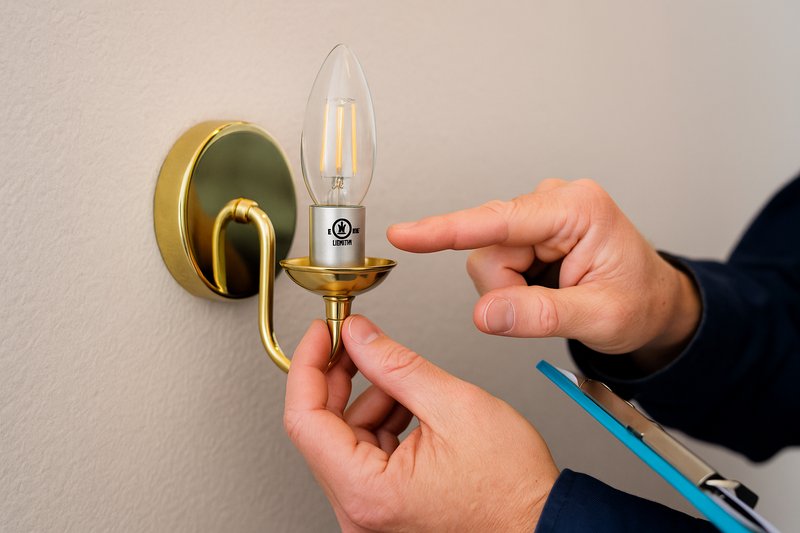
There is no gray area here. Safety is the one criterion that trumps all others in a public space like a hotel or restaurant. I have spoken with countless electrical contractors and project managers, and they all say the same thing: the first thing a city electrical inspector looks for on a lighting fixture or a bulb is the mark from a Nationally Recognized Testing Laboratory (NRTL). If that mark isn't there, the inspection fails on the spot. It doesn't matter how good the bulb looks or how well it performs. Using non-certified products is a massive risk. In the event of an electrical fire, the insurance company's investigation will pinpoint the source. If that source is a non-listed product, they will almost certainly deny the claim, and the legal liability could fall on the hotel owner, the contractor, or the product supplier. As a manufacturer, investing in UL and ETL certification is a significant expense, but we see it as an absolute necessity. It is the fundamental proof that our products are safe and built to the highest professional standards.
Understanding the Key Safety Marks
These certifications prove a product has met rigorous third-party testing.
- UL (Underwriter Laboratories)9: One of the most recognized safety certification bodies in the world. The UL mark means the product has been tested to meet established standards for safety against fire, electric shock, and other hazards.
- ETL (Intertek)10: A competing laboratory to UL, the ETL mark signifies that the product has been tested to the very same UL safety standards. For code compliance and inspection purposes in the US and Canada, ETL and UL are considered equivalent.
- CE Mark11: This is a self-declaration by the manufacturer that the product meets the health, safety, and environmental standards for the European Economic Area (EEA). While important for Europe, it is not a substitute for UL or ETL in North America.
- RoHS (Restriction of Hazardous Substances)12: This directive restricts the use of specific hazardous materials like lead and mercury. While not a direct electrical safety certification, it is a key indicator of a responsible manufacturer and is often required for import and specification in large projects.
Why You Can't Afford to Ignore Certification
The consequences of skipping this step are severe.
| Consequence | Description | Who is at Risk? |
|---|---|---|
| Failed Inspections | Electrical inspectors will not approve the installation, delaying project completion and opening. | Contractor, Building Owner |
| Voided Insurance | In case of a fire, the insurance carrier can deny the claim if non-listed products were used. | Building Owner, Operator |
| Legal Liability | If an incident harms a guest, the legal liability can be immense for all parties involved in specifying and installing the faulty product. | Everyone in the supply chain |
| Brand Damage | A safety incident linked to cutting corners on product certification can cause irreparable damage to a hotel or restaurant's brand. | Operator, Brand |
For any project manager or buyer like Jacky, the process should be simple: when requesting a quote for a commercial project, the first technical question must be "Can you provide the UL or ETL certification file for this product?" If the answer is no, the conversation should end.
Conclusion
For hospitality, choose bulbs with warm, deeply dimmable light, high CRI for vibrant colors, a beautiful design, commercial-grade reliability, and mandatory UL/ETL safety certifications. These criteria ensure an exceptional and safe guest experience.
Explore this link to understand how high-performance dimming enhances guest comfort and ambiance in hospitality settings. ↩
Learn about the impact of flicker on health and comfort, and why quality lighting is crucial for sensitive individuals. ↩
Discover the importance of a deep dimming range for creating the perfect atmosphere in commercial spaces. ↩
Find out what features define hospitality-grade bulbs and how they improve the overall guest experience. ↩
Discover the versatility of Torpedo/Bullet bulbs and how they fit into various design styles. ↩
Explore how Amber/Gold Tint enhances warmth and coziness in lighting, perfect for creating inviting atmospheres. ↩
Find out how Smoky Tint creates a sophisticated look and complements modern interiors. ↩
Learn about the classic elegance of the Curved Loop filament and its impact on vintage-style lighting. ↩
Understanding UL certification is crucial for ensuring product safety and compliance in various industries. ↩
Explore the ETL certification to learn about its equivalence to UL and its importance in safety standards. ↩
Discover the implications of the CE Mark for product compliance and safety in Europe. ↩
Learn about RoHS to understand its role in promoting responsible manufacturing and environmental safety. ↩