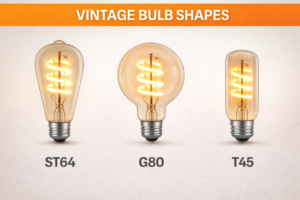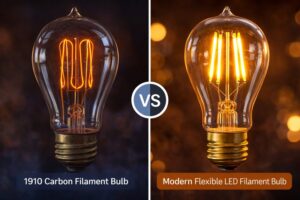
You see clear and amber bulbs and must choose for your inventory. Guessing wrong means tying up capital in slow-moving stock, a costly mistake for any professional buyer.
Choose clear glass for functional brightness and accurate color rendering, ideal for kitchens, retail, and workspaces. Choose amber glass to create a warm, atmospheric, vintage glow for restaurants, bars, and living rooms. The decision is a strategic choice between task-oriented performance and mood-setting ambiance.
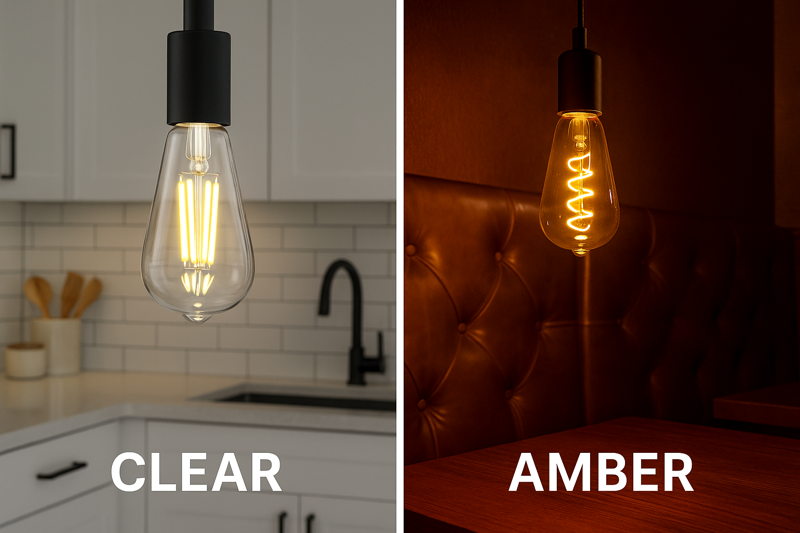
I was working with a client, a restaurant designer from the United States, who initially specified clear filament bulbs for a new bistro project. The architectural design was beautiful, with exposed brick and dark wood, but when the lights were turned on, the space felt cold, almost clinical. The light was harsh. He called me, frustrated, saying, "Wallson, something is wrong, it feels like a cafeteria in here." We overnighted him a case of the exact same bulbs, but with an amber glass finish. He swapped them out, and the entire atmosphere changed instantly. The warm, golden light made the wood tones richer and the space feel intimate and welcoming. That experience taught me a vital lesson: the glass is not just a component; it is the final and most important tool for setting the mood. Understanding how to use that tool is the key to making the right choice for your customers.
How Does Glass Color Fundamentally Change a Bulb's Light?
You understand that clear is bright and amber is warm, but what is the actual technical difference? How does a simple glass coating create such a dramatically different experience for the end-user?
The glass acts as a color filter. Amber glass physically lowers the color temperature (Kelvin) of the light passing through it, shifting a standard 2700K warm white to an extra-warm 2200K or even 2000K, mimicking the glow of a candle or fire.
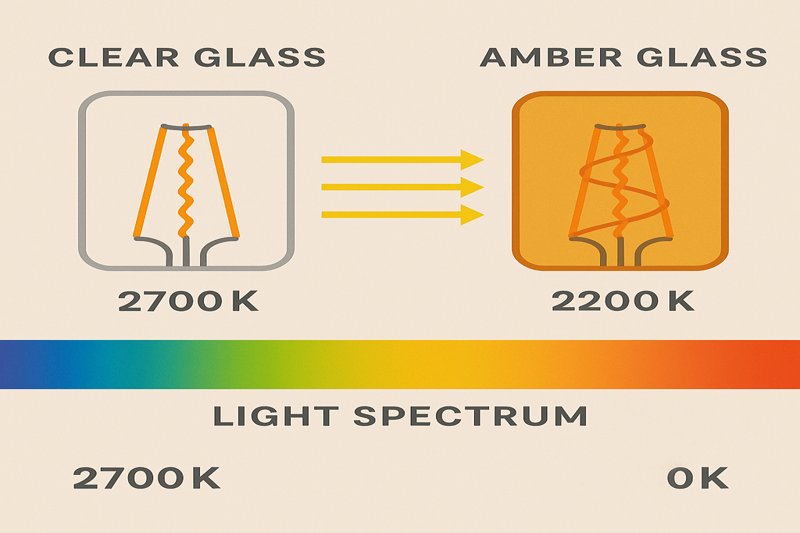
The key to understanding the difference is the concept of color temperature, measured in Kelvin (K). The LED filaments inside both a clear and an amber bulb are often identical, producing a standard "warm white" light at around 2700K. This is similar to a traditional incandescent bulb. When this light shines through clear glass, it is virtually unchanged. You get the pure, unaltered 2700K light, which is bright, pleasant, and good for general illumination. Amber glass, however, is not just colored glass; it's a carefully designed optical filter. The amber tint is specifically formulated to block the cooler, bluer wavelengths of light and allow only the warmer, yellower, and redder wavelengths to pass through. This process effectively subtracts the blue light, dramatically lowering the perceived color temperature. The result is a light that feels much warmer, closer to 2200K, which is the color temperature of a flame. This shift is not just a subtle tint; it's a fundamental transformation of the light's character from functional illumination to atmospheric effect. It is the defining feature that creates the highly sought-after "vintage" or "Edison" ambiance.
A Breakdown of the Color Temperature Shift
Understanding the Kelvin scale1 is crucial for any lighting professional. Lower numbers are warmer (more yellow/orange), and higher numbers are cooler (more blue/white).
- LED Filament Source: The tiny light emitters inside the bulb typically produce light at a base color temperature, most commonly 2700K for filament-style bulbs.
- Clear Glass Effect: Clear glass is optically neutral. It has no significant impact on the color temperature. Therefore, a 2700K filament in a clear bulb produces 2700K light. This is an excellent, versatile warm white suitable for many applications.
- Amber Glass Effect2: The amber tint acts as a filter, shifting the light towards the red end of the spectrum. It effectively reduces the Kelvin temperature by 400K to 700K. A 2700K filament in an amber bulb will produce a much warmer light, typically in the 2000K to 2200K range. This extra-warm light is less about seeing clearly and more about feeling comfortable and relaxed.
| Glass Type | Base Filament Temp | Resulting Light Color | Visual Analogy |
|---|---|---|---|
| Clear | 2700K | 2700K (Warm White) | Traditional Incandescent Bulb |
| Amber/Gold | 2700K | 2000K-2200K (Extra-Warm White) | Candlelight / Firelight |
For a B2B buyer like Jacky, explaining this simple technical shift to his clients can help them make much more informed decisions for their projects.
Which Glass Type is Best for Commercial vs. Residential Spaces?
You need to advise your clients—be they homeowners or business owners—on the right choice. How do you tailor your recommendation based on where the bulb will actually be used?
For commercial spaces focused on tasks or sales, like offices and retail stores, clear glass is superior. For commercial spaces focused on ambiance, like restaurants and bars, amber glass is essential. In residential settings, this same logic applies: clear for kitchens, amber for living rooms.
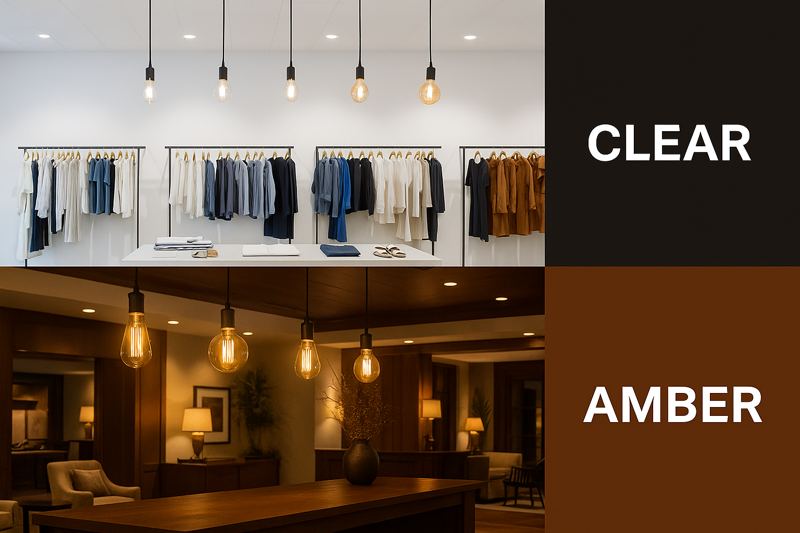
The decision between clear and amber glass is entirely dependent on the purpose of the space. You must first ask: "What do people do in this room?" If the primary activities involve tasks that require visual acuity—like reading, chopping vegetables, applying makeup, or inspecting merchandise—then clear glass is the only correct choice. The bright, crisp 2700K light and high color rendering of a clear bulb ensure that people can see clearly and colors appear natural. Using amber bulbs in these environments would make everything appear yellow and dim, hindering functionality. Conversely, if the purpose of the space is relaxation, conversation, and creating a mood—like in a bar, a fine dining restaurant, a hotel lounge, or a residential living room—then amber glass is the far superior choice. The extra-warm, candle-like glow signals the brain to relax. It creates an intimate, cozy, and high-end atmosphere that encourages customers to linger and feel comfortable. To a business owner, this is not just a design choice; it's a commercial one. A relaxed customer is more likely to stay longer and spend more. The same logic holds true for a home: you want bright, functional light in the kitchen and bathroom, but warm, relaxing light in the bedroom and living room.
Application-Based Recommendations
Guide your customers by focusing on the function of each room. This approach positions you as an expert advisor, not just a seller of light bulbs.
- Offices & Workspaces: Function is paramount. Visual tasks require clear, bright light. Amber would cause eye strain and reduce productivity. Recommendation: Clear Glass3.
- Retail Stores: The goal is to make products look appealing and accurately represented. High brightness and excellent color rendering are critical. Recommendation: Clear Glass.
- Restaurants, Bars, & Lounges: The primary goal is to create a comfortable and inviting atmosphere that encourages guests to stay. Mood is more important than brightness. Recommendation: Amber Glass4.
- Hotel Lobbies & Rooms: These spaces need to feel like a relaxing escape. The warm glow of amber glass creates a sense of luxury and comfort. Recommendation: Amber Glass.
- Residential Kitchens & Bathrooms: These are task-oriented rooms. Food preparation and personal grooming require bright, clear light. Recommendation: Clear Glass.
- Residential Living Rooms & Bedrooms: These are spaces for relaxation. The goal is to create a cozy and peaceful retreat from the day. Recommendation: Amber Glass.
| Space Type | Primary Goal | Recommended Glass | Reasoning |
|---|---|---|---|
| Task-Oriented | Clarity, Productivity, Sales | Clear | Bright light, accurate colors. |
| Ambiance-Oriented | Relaxation, Comfort, Mood | Amber | Warm, intimate, cozy glow. |
By categorizing the recommendation this way, you provide clear, actionable advice that solves a real problem for your customer.
Does Glass Tint Affect a Bulb's Technical Performance?
Beyond the visible difference in color, you need to know if choosing amber glass involves a trade-off. Does it negatively impact critical performance metrics like energy efficiency or color rendering?
Yes, there is a direct trade-off. Amber glass significantly lowers the lumen output (measured brightness) and reduces the Color Rendering Index (CRI). A clear bulb is always more efficient and color-accurate than its identical amber counterpart.
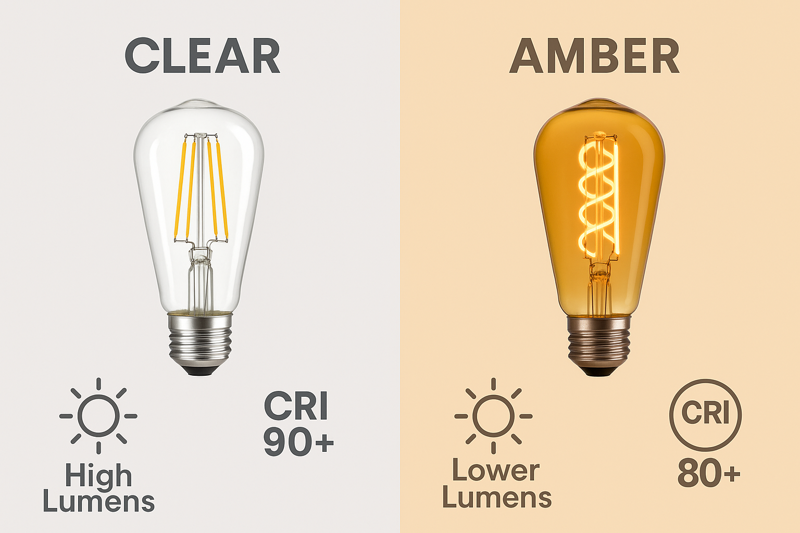
This is where a professional buyer must look beyond the aesthetics and understand the data. The amber tint, by its very nature as a filter, blocks a portion of the light generated by the LED filaments. This means an amber bulb will always be dimmer—have a lower lumen output—than a clear glass bulb with the exact same filament and power consumption. The energy is still being used, but some of the light energy is absorbed by the glass tint itself. This makes clear bulbs more energy-efficient in terms of "lumens per watt." More importantly for many applications, the amber tint also impacts the Color Rendering Index (CRI). CRI is a measure of how accurately a light source reveals the true colors of objects. A clear filament bulb can have a very high CRI of 90 or more, making reds look red and blues look blue. Because the amber glass adds a strong yellow/orange "cast" to everything it illuminates, it inherently distorts colors, typically lowering the CRI to around 80. For a restaurant, this might be a desirable effect, making food and wood tones look warmer. For a retail store selling clothes, this would be a disaster, as a blue shirt might look green. This technical trade-off is the core of the decision: you must sacrifice brightness and color accuracy to gain atmosphere.
Quantifying the Performance Difference
When sourcing from a manufacturer like us, you can and should ask for the specific technical data for both clear and amber versions of a bulb.
- Lumens (Brightness)5: The amber glass can reduce total lumen output by as much as 20-30% compared to its clear equivalent. A clear 4W filament bulb might produce 400 lumens, while the amber version might only produce 300-320 lumens.
- Lumens per Watt (Efficacy): Because the wattage is the same but the lumens are lower, the efficacy of an amber bulb is always lower. This is the price paid for the atmospheric effect.
- Color Rendering Index (CRI)6: A high-quality clear bulb should have a CRI of 90+. The amber tint will almost always lower this to the 80-85 range. While 80 CRI is still considered "good," it is a noticeable step down in color accuracy.
- Dimming Performance: The glass type has no direct impact on the electronic performance. A well-made bulb with a quality IC driver will dim smoothly regardless of whether the glass is clear or amber.
| Performance Metric | Clear Glass Bulb | Amber Glass Bulb | Key B2B Insight |
|---|---|---|---|
| Lumen Output | Higher (e.g., 400 lm) | Lower (e.g., 320 lm) | You need more amber bulbs to achieve the same brightness. |
| Efficacy | Higher (e.g., 100 lm/W) | Lower (e.g., 80 lm/W) | Clear is the more energy-efficient choice for pure light. |
| CRI | Excellent (90+) | Good (80-85) | Do not use amber where color accuracy is critical. |
| Dimming | Depends on driver | Depends on driver | No difference if the internal electronics are high quality. |
Understanding these trade-offs allows you to manage your clients' expectations and specify the right product for the job without any surprises.
Which Option Has Higher Market Demand and Profit Potential?
As a business owner, you need to make smart inventory decisions. Which glass type is more popular, are there regional differences, and where is the best opportunity for a healthy profit margin for your business?
Amber glass bulbs currently have a higher perceived value and often command a better profit margin due to their strong association with the popular "vintage" and "industrial" design trends. While clear bulbs may sell in higher absolute volume, amber bulbs are a key decorative category.
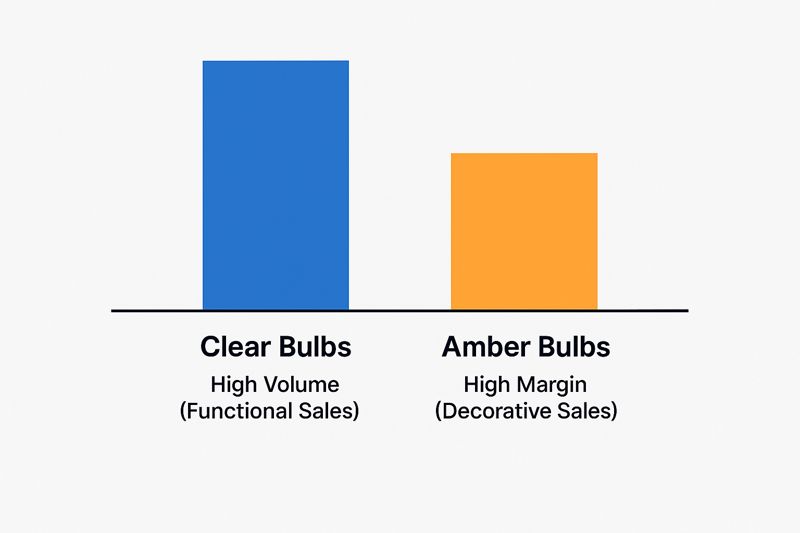
This is the ultimate question for any product manager or buyer. The answer depends on your customer base. Clear bulbs are a utility item. Every home, office, and shop needs functional lighting, so the total addressable market is enormous. However, this also means it is a highly competitive space, often driven by price. Amber bulbs, on the other hand, are a design choice. They are part of the decor. Customers buying amber bulbs are typically less sensitive to the price of the bulb itself and more focused on achieving a specific look. This allows for a healthier profit margin. The demand is heavily influenced by interior design trends. Currently, the farmhouse, industrial, and mid-century modern aesthetics are incredibly popular in North America and Europe, and all of them rely heavily on the warm glow of amber Edison-style bulbs. Therefore, while you may sell more total units of clear A60 or G45 bulbs, your ST64 and G95 vintage bulbs in amber glass will likely be a more profitable category. For a B2B distributor, the smartest strategy is not to choose one over the other, but to offer a curated selection of both: a strong core of high-volume clear bulbs for functional needs, and a stylish, high-margin collection of amber bulbs to cater to the lucrative decorative market.
Strategic Inventory Planning
Don't think of it as an "either/or" choice. Think of it as building a product portfolio that serves different customer needs and maximizes overall profitability.
- The Foundational Product: Clear glass bulbs in standard shapes (like A60 and C35 Candle) are your high-volume, everyday sellers. You need to be competitive on price and quality here. These are the bread and butter of your business.
- The High-Margin Product: Amber glass bulbs in decorative shapes (like ST64 and G95) are your design-focused, high-margin items. These are what make your catalog look current and appealing to designers and style-conscious homeowners.
- Regional Preferences7: Be aware of your specific market. While the vintage trend is global, its intensity can vary. In some minimalist European markets, for example, clear decorative bulbs might be more popular than in the more rustic-focused American market. Watch the local design magazines and blogs to stay ahead.
| Product Category | Sales Volume | Profit Margin8 | Target Customer |
|---|---|---|---|
| Clear Functional Bulbs | Very High | Lower | Everyone (Contractors, Offices, Homeowners) |
| Amber Decorative Bulbs | Medium | Higher | Designers, Restaurants, Style-conscious Homeowners |
A balanced inventory, with a solid offering in both categories, provides the best combination of stable revenue from core products and high profitability from trend-driven items.
Conclusion
The choice between clear and amber glass is a strategic decision. Clear bulbs deliver functional performance, while amber bulbs create a valuable atmosphere. Offering both is key to serving the entire market effectively.
Understanding the Kelvin scale is essential for lighting professionals to choose the right color temperature for their projects. ↩
Exploring the amber glass effect can help you understand how it alters light quality, enhancing comfort and ambiance in spaces. ↩
Explore this link to understand how Clear Glass enhances productivity and clarity in work environments. ↩
Discover how Amber Glass can transform the atmosphere in dining and social spaces, making them more inviting. ↩
Explore this link to understand how lumens affect bulb performance and brightness, helping you make informed choices. ↩
Learn about CRI and its impact on color accuracy in lighting, crucial for selecting the right bulbs for your needs. ↩
Exploring regional preferences can help tailor your inventory to meet local demands, enhancing customer satisfaction and sales. ↩
Understanding profit margin is crucial for optimizing pricing strategies and maximizing profitability in your inventory. ↩