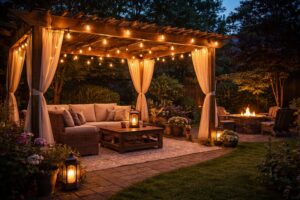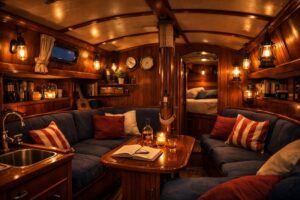
You walk into a Starbucks, and then you walk into a local independent roaster. The coffee might be the same bean, but the experience feels totally different. The big chain feels like a brightly lit office; the local spot feels like a cozy living room. You stay longer in the local spot. You order a second pastry. Why?
The secret weapon of profitable coffee shops is not just the espresso machine, but the color temperature of the lighting. By using LED Edison bulbs with a warm 2200K amber glow, shop owners trigger a psychological "relaxation response" in customers, encouraging them to linger, socialize, and spend more money, all while saving 90% on electricity compared to traditional incandescent lighting.
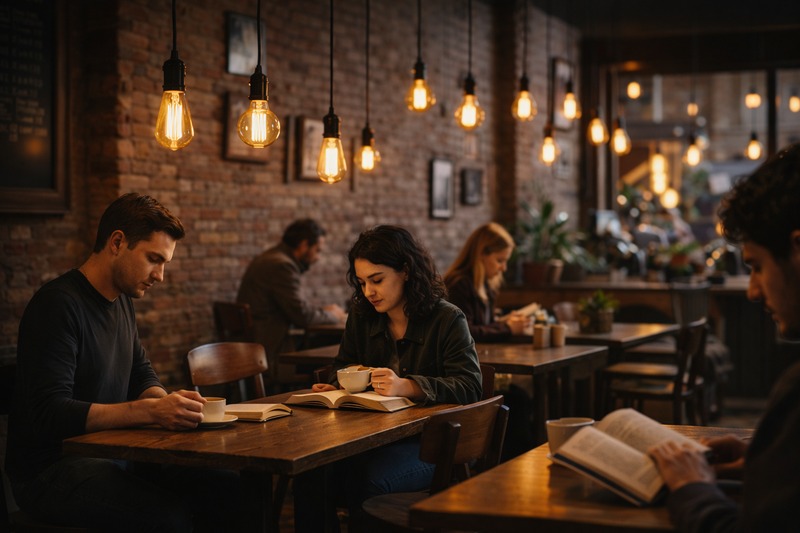
I have a customer named Jacky. He owns three cafes in Seattle.
Seattle is grey and rainy for nine months of the year.
He told me, "Wallson, my customers aren't just buying caffeine. They are buying warmth. They want to escape the grey rain."
He used to use standard white LED bulbs because they were cheap.
His shop felt sterile. People grabbed their latte and left immediately.
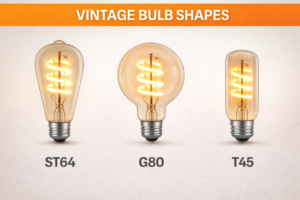
We replaced his lighting plan with my ST64 Gold Tint filaments.
The difference was overnight.
People started taking off their coats. They opened their laptops. They stayed for 40 minutes instead of 5.
When people stay longer, they get hungry. His pastry sales went up 20%.
Lighting is not just utility; it is marketing.
Let's break down exactly how to design a lighting plan that keeps seats full.
The Science of 2200K: Why "Amber" Equals "Relaxation"?
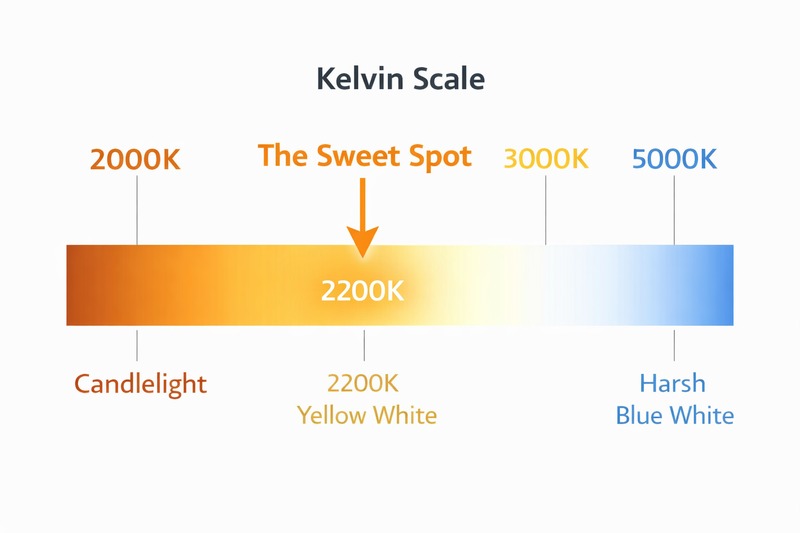
In the lighting industry, we talk about Kelvin (K). This is the number that tells you the color of the light. Most offices use 4000K or 5000K (Blue-White). This mimics the midday sun. It tells your brain: "Wake up! Work fast! Be alert!"
Coffee shops need the opposite signal. By using bulbs in the 2200K to 2700K range (Warm Amber), you are mimicking the color of sunset or firelight. This spectrum suppresses the body's blue-light receptors, lowering cortisol (stress) levels and making customers feel comfortable, safe, and ready to enjoy a slow sensory experience.
Jacky asked, "But Wallson, if the light is too dim, people can't read their books."
This is a common fear.
There is a difference between Color and Brightness.
You can have a bright light that is still warm in color.
The "Campfire Effect":
Think about sitting around a fire.
Why do people tell deep stories at a campfire?
Because the orange light makes faces look softer.
It hides blemishes and dark circles under the eyes.
When your customers look good in the mirror (or in a selfie), they feel happy.
If you light your cafe with harsh blue light (CRI 70), your customers will look sick and pale.
They won't post photos on Instagram.
The Instagram Factor:
Free marketing is the best marketing.
If your lighting makes a cappuccino look golden and delicious, customers will tag you in photos.
Edison bulbs act as "eye candy" in the background of these photos.
The filament itself is photogenic.
The Problem with 2700K1 vs. 2200K2
Most standard "Warm White" bulbs at the supermarket are 2700K.
This is okay for a kitchen. It is "yellow-white."
But for a moody, high-end coffee shop, 2700K is still too "energetic."
You want 2200K.
This is the "Extra Warm" or "Vintage Glow."
It has a rich, golden tone that feels expensive.
Always check the box. If it says "Soft White," put it back. You want "Amber" or "Vintage."
Zoning the Shop: Where Should the Bulbs Go?
You should not plaster the whole ceiling with Edison bulbs. That is a rookie mistake. If everything is special, nothing is special.
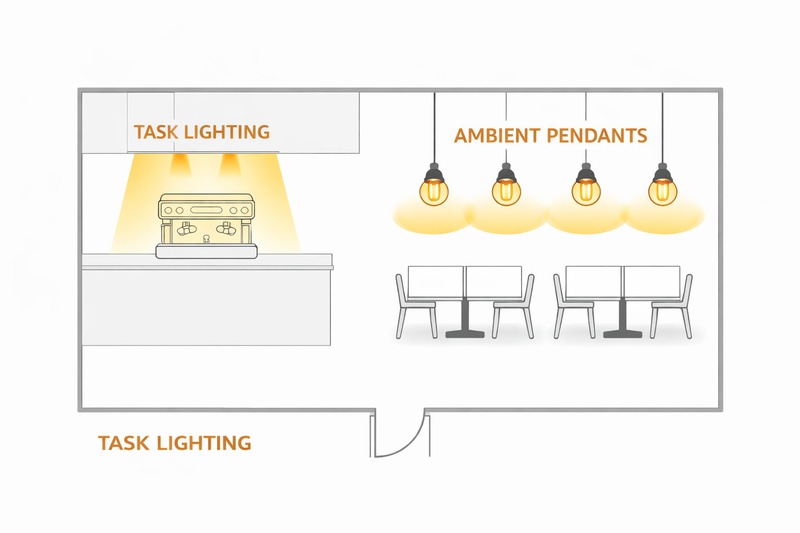
A successful lighting plan uses "Zoning," where Edison bulbs are used exclusively as low-hanging pendants over tables and counters to create intimate pockets of light, while hidden architectural lighting (like track lights or recessed cans) handles the general brightness needed for safety and cleaning.
Jacky originally wanted to hang 50 Edison bulbs in a grid.
I told him, "No. That will look like a Christmas tree farm."
You need contrast.
Zone 1: The "Instagram" Zone (The Tables)
Hang one pendant light low over each table.
Ideally, the bulb should be just above eye level when sitting.
This creates a "cone of privacy."
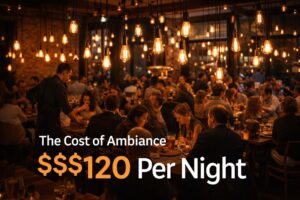
Even in a crowded shop, the light makes the customer feel like they are in their own little bubble.
Use the ST64 Pear Shape or G80 Globe here.
Zone 2: The "Work" Zone (The Barista Station)
Do not use amber Edison bulbs here!
Your barista needs to see the color of the espresso crema. They need to read labels on milk cartons.
Use hidden 3000K high-CRI spotlights pointing at the machines.
Keep the decorative bulbs above the bar for style, but don't rely on them for working light.
Zone 3: The "Flow" Zone (Walkways)
The paths to the bathroom or the door don't need fancy bulbs.
Keep these areas slightly darker than the tables.
Humans are like moths; we move toward the brightest spots.
By lighting the tables brightly and the floor dimly, you subconsciously guide people where to sit.
The "Filament" Choice
Since the bulbs are hanging low, customers will stare directly at them.
The filament shape3 matters.
The Spiral (Curved): This is the most popular. It looks soft and organic. It represents "flow." Great for indie cafes.
The Squirrel Cage (Vertical Lines): This looks industrial and rigid. It represents "structure." Great for modern, minimalist espresso bars.
The "Hello" (Text Filament): We now make bulbs where the filament spells words like "COFFEE" or "LOVE."
Hang one of these over the cash register.
It is a conversation starter4. Jacky put a "COFFEE" bulb at the pickup counter, and everyone smiles when they see it.
Energy Costs: The Invisible Profit Killer
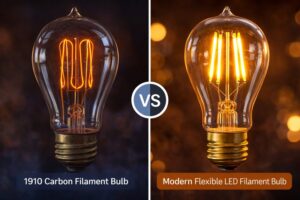
Old-school coffee shops used real incandescent carbon filament bulbs. They looked amazing, but they were heaters.
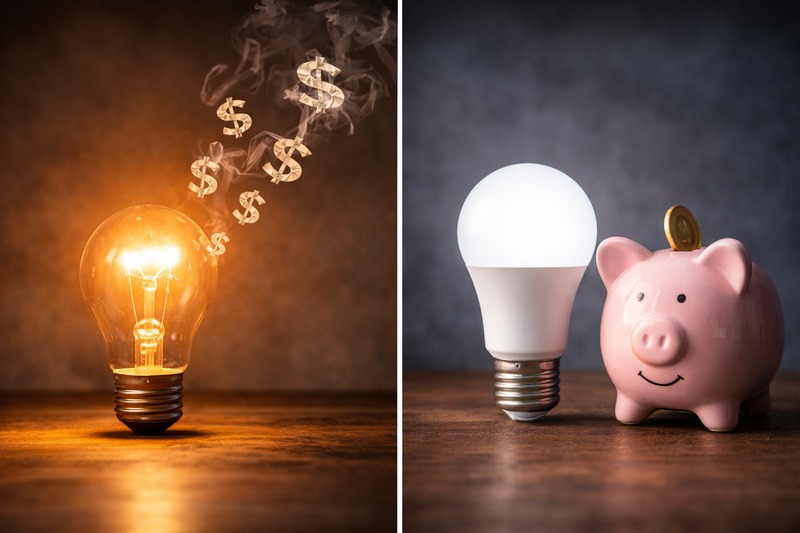
A traditional 60W incandescent Edison bulb runs hot and drives up air conditioning costs, whereas an equivalent 6-Watt LED filament bulb produces the same aesthetic with zero heat and 90% less energy consumption. For a shop running 50 bulbs for 12 hours a day, switching to LED saves roughly thousands of dollars a year in direct electricity costs.
Let's do the math for Jacky.
He has 50 bulbs. His shop is open 14 hours a day, 365 days a year.
Old Incandescent Way:
50 bulbs x 60 Watts = 3,000 Watts (3 kW).
3 kW x 14 hours = 42 kWh per day.
At $0.15 per kWh, that is $6.30 per day.
$2,299 per year.
Plus, in the summer, his AC has to work harder to fight that heat.
The LED Way:
50 bulbs x 6 Watts = 300 Watts (0.3 kW).
0.3 kW x 14 hours = 4.2 kWh per day.
That is $0.63 per day.
$229 per year.
Total Savings: Over $2,000 per year.
That is pure profit. That pays for a new espresso grinder every year.
Maintenance Savings:
Old bulbs burn out every 1,000 hours (about 3 months).
My LEDs last 15,000+ hours (about 3 years).
Jacky doesn't have to drag a ladder out into the middle of a busy cafe to change a bulb every month.
He saves on labor and distraction.
The "Dimming" Flexibility
In the morning, people want energy.
In the evening, people want romance.
Your lighting needs to change.
LEDs must be compatible with your dimmer switches.5
Morning (7 AM - 11 AM): Run the bulbs at 100%. The morning rush needs to feel active.
Afternoon (1 PM - 4 PM): Dim to 80%. The "after-lunch slump." People are reading or working.
Evening (5 PM - Close): Dim to 50%. This signals the transition to "evening vibe."
If you serve wine or beer at night, this is crucial.
Nobody drinks wine under bright lights.
Our LED drivers are designed to dim smoothly without flickering6, so you can control the mood with a slider on the wall.
Conclusion
Your coffee shop is selling an atmosphere, not just a clear liquid. The lighting you choose tells the customer how to feel. By abandoning the harsh glare of standard office lighting and embracing the warm, golden hug of LED Edison bulbs, you create a space that feels like a refuge. You make your customers look better, feel calmer, and stay longer. And thanks to modern LED efficiency, you do all of this while adding thousands of dollars back to your bottom line through energy savings. It is the smartest renovation you can make for under $500.
Understanding the difference can help you choose the right lighting for your space, enhancing ambiance and mood. ↩
Exploring this can reveal how 2200K lighting creates a cozy atmosphere, perfect for high-end coffee shops. ↩
Understanding filament shape can enhance your lighting choices, making your space more inviting and stylish. ↩
Discover creative ways to use light bulbs to spark conversations and enhance the atmosphere in your space. ↩
Understanding compatibility ensures optimal performance and mood control in your lighting setup. ↩
Explore this to learn about technology that enhances your lighting experience without distractions. ↩