You love the vintage aesthetic, but your clients complain that the rooms are too dark. You try to install amber bulbs in a kitchen, but the homeowners say they cannot see the food they are cooking.
Clear Glass LED Edison bulbs offer the perfect compromise: they display the beautiful "filament" aesthetic of antique lighting but provide the high lumen output (800lm+) and cleaner color temperatures (2700K-3000K) required for functional tasks in kitchens, bathrooms, and modern workspaces.
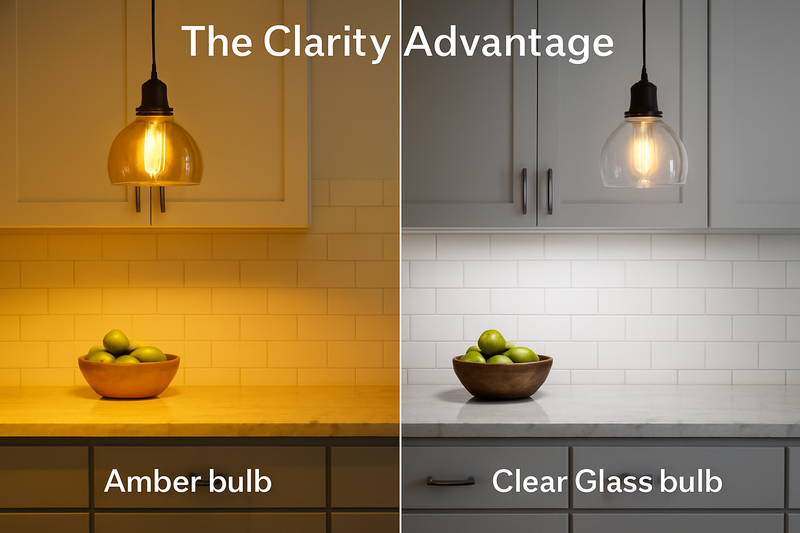
I often have to correct a misconception with my clients. They think "Edison" implies "Orange." This is not true. Edison style refers to the visibility of the light source geometry—the filament.
While Amber bulbs are fantastic for mood (as I discussed in my previous article), Clear Glass bulbs are the "Workhorses" of the vintage lighting world.
My US client, Jacky, once told me, "Wallson, the amber bulbs sell for the dining room, but the clear bulbs sell for the whole house."
This is the key. Clear glass allows the LED filament bulb to function as a primary light source, not just a decoration. It bridges the gap between the nostalgic design of 1910 and the efficiency standards of 2024. If you are only stocking amber, you are missing out on the sales for bathrooms, entryways, and open-plan offices where visibility is paramount.
Does Clear Glass Expose the Ugly Truth or the Beauty of Engineering?
When you remove the amber tint, you remove the filter. Every detail inside the bulb is visible. If the manufacturing is cheap, it looks terrible.
Because the glass is completely transparent, the internal LED filament structure becomes the primary design element. High-quality clear bulbs use "Sapphire" substrate filaments arranged in precise geometric vertical columns or "Long-Run" designs to mimic tungsten, whereas cheap versions use short, messy, thick yellow sticks.
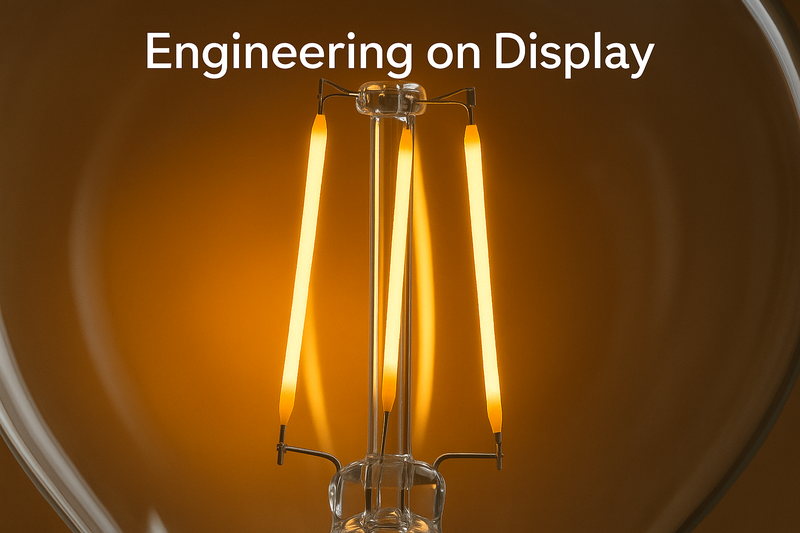
When you strip away the golden paint, you have nowhere to hide.
In a Dark Amber bulb, I could technically use a slightly crooked stem or a messy solder joint, and the customer might never notice because the glass obscures the view. In a Clear Glass bulb, the internal construction is the product.
This makes sourcing clear bulbs surprisingly difficult. You need to look for "Aesthetic Engineering."
The "Egg Yolk" Problem:
The biggest aesthetic challenge with clear glass LED bulbs is the appearance when the bulb is OFF.
LED filaments are coated in yellow phosphor. inside a clear glass ball, they look like bright yellow french fries. Some designers hate this.
To combat this, at Hongyu Bulb, we focus on Filament Thinness.
- Cheap Bulbs: Use thick ceramic substrates (2mm wide). They look very yellow and clunky.
- Premium Bulbs: Use Sapphire substrates (<1mm wide). They are so thin that you barely notice the yellow color when the light is off.
Furthermore, we pay attention to the Structure.
In clear glass, the specific arrangement of the filaments matters. - The Vertical Cage (Columns): This is the most traditional. It mimics the early Tungsten vacuum lamps. It looks very neat and architectural.
- The Cross (X-Shape): This helps distribute light sideways, preventing dark spots on the wall.
- The Spiral: In clear glass, a spiral filament looks incredibly modern and high-tech. It is less "Vintage" and more "Contemporary Industrial."
Sapphire vs. Ceramic Substrate:
Why do we use Sapphire for clear bulbs? Because it is transparent.
If you look closely at a cheap filament, the backing strip is white ceramic. It blocks the light, creating a shadow behind the filament. Sapphire is clear. Light shines through the filament strip, giving a true 360-degree sparkle that looks identical to a glowing wire.
Filament Style Comparison
| Filament Type | Visual Impact (Clear Glass)1 | Best Use Case2 | Cost Level |
|---|---|---|---|
| Short Linear (2-4 sticks) | Basic, looks a bit "techy." | Desk lamps, basic fixtures. | Low |
| Long Cage (Squirrel Cage) | Elegant, looks like an antique. | Pendant lights, exposed sockets. | Medium |
| Spiral (Flexible) | Artistic, high-end "neon" look. | Feature chandeliers, art pieces. | High |
Can a "Vintage" Bulb Actually Light Up a Whole Room?
Designers often fear that using Edison bulbs means the room will be dim. This was true for carbon filaments, but it is not true for clear LED versions.
Clear glass allows for 100% light transmission, making these bulbs significantly brighter than their amber counterparts. With outputs reaching up to 1000 lumens (equivalent to a 75W incandescent), clear filament bulbs are the only "vintage" option capable of serving as the primary light source for a large space.
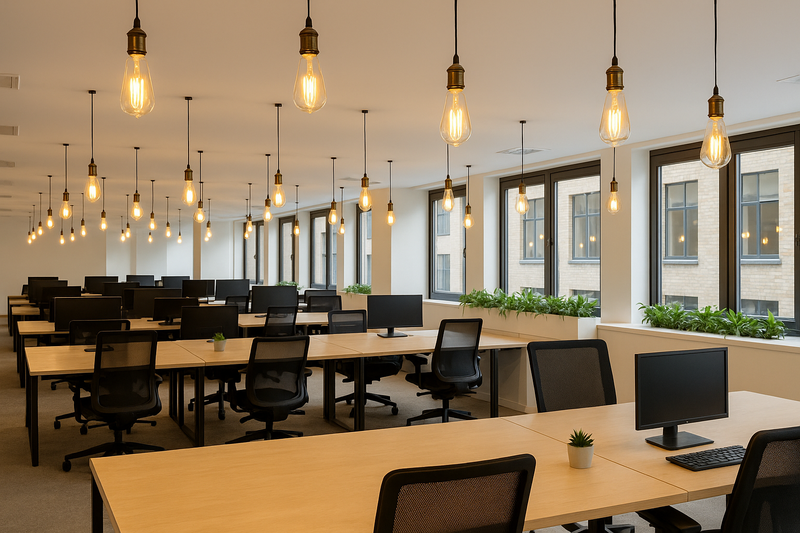
This is the main selling point for your "Commercial" clients (restaurants, offices, retail stores).
Let's look at the math that drives the business.
- Amber Coating Loss: The gold spray on a vintage bulb absorbs about 20% to 30% of the light.
- Clear Glass Gain: Zero absorption.
This means for the same electricity usage (say, 8 Watts), a Clear bulb is much brighter. - 8W Amber ST64: ~650 Lumens.
- 8W Clear ST64: ~850 to 900 Lumens.
The "Lumen-Per-Watt" (LPW) Battle:
In Europe, the ERP regulations are getting stricter every year. They demand high efficiency. Amber bulbs are struggling to meet Class D or E ratings because the glass kills the efficiency.
Clear glass bulbs easily hit 120 Lumens Per Watt.
This makes them "Green Energy" compliant. If you are selling to a project that needs LEED certification or has strict energy codes, you must use clear glass.
The Application Shift:
I advised a hotel chain recently. They wanted ST64 bulbs in the bathroom vanity units.
I told them, "If you use Amber, the guests won't be able to apply makeup. The light is too low and the color is wrong."
We switched to Clear Glass ST64 / 8W / 2700K.
The result? The fixture looked vintage and cool, but the light was bright and functional.
Clear bulbs allow the "Vintage Look" to penetrate rooms that were previously off-limits, like:
- Bathrooms: Where high lumens are needed for hygiene and grooming.
- Kitchen Islands: Where you need safety for chopping and cooking.
- Retail Displays: Where you need bright light to make the merchandise pop, but you still want the cool looking bulb.
What Color Temperature Should You Choose to Avoid the "Hospital" Look?
There is a fear that "Clear" means "Cold." Customers worry that if they don't buy the amber bulb, they will end up with a harsh, blueish light that feels clinical.
Clear glass bulbs give you control over the color. Unlike amber bulbs which force a 2200K orange glow, clear versions typically use 2700K (Soft White) or 3000K (Warm White), providing a crisp, clean light that keeps colors accurate (High CRI) while still feeling welcoming and residential.
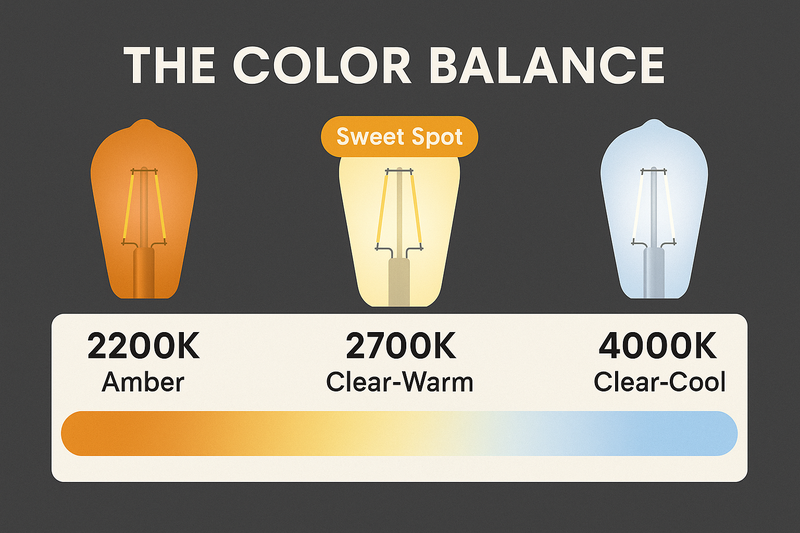
This is where the confusion happens.
- Glass Color = The filter.
- CCT (Correlated Color Temperature) = The actual light color produced by the chip.
In an Amber bulb, even if I put a white chip inside, the glass turns it orange.
In a Clear bulb, what you buy is exactly what you get.
We typically manufacture clear filament bulbs in two main "flavors" for the Western market:
1. The Incandescent Standard (2700K):
This is the magic number. It is the exact color of a standard 60W tungsten light bulb that everyone grew up with.
It is warm, but not orange. It is white, but not blue.
It interprets colors faithfully.
In a clear bulb, 2700K feels "Clean." It makes white walls look white (not yellow).
This is the default choice for 90% of residential applications.
2. The Halogen Standard (3000K):
This is slightly whiter. It feels a bit more modern.
We see a lot of demand for this in Art Galleries or modern clothing stores. They want the bulb shape to look retro, but the light to look crisp.
3000K brings out the blues and greens in furniture better than 2700K.
Why avoid the "Blue Spike"?
Cheap clear LEDs often have a "Blue Spike" in their spectrum. Even if they claim to be warm, they feel harsh.
At Hongyu, we use a specific phosphor mix to smooth out the spectrum.
Because clear glass doesn't hide anything, CRI (Color Rendering Index) is critical.
If you use a low CRI chip (CRI 70) in a clear bulb, the room feels flat and grey.
We insist on CRI 90 for clear bulbs. Because transparency equals honesty. You want the roses on the table to look red, not brown.
Is Your "Glass" Bulb Actually Just Cheap Plastic?
You pick up a sample bulb from a new supplier. It feels impossibly light. You tap it, and it makes a dull thud instead of a confident ping. You have been sold plastic.
Authentic clear Edison bulbs must be made from high-transmittance glass, not plastic. Real glass conducts heat better, doesn't yellow over time, and provides that signature "sparkle" reflection that creates the premium aesthetic your commercial clients demand.
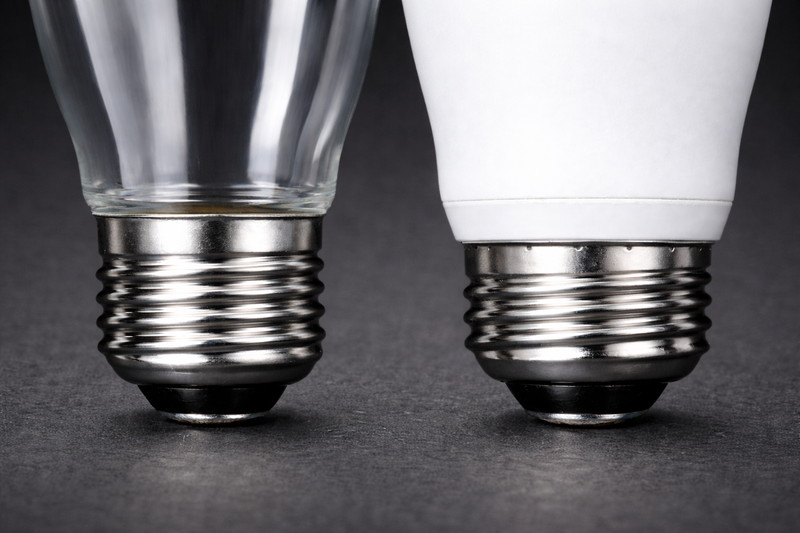
In the race to the bottom on price, many manufacturers have switched to PET (Plastic) outer shells.
They invoke "Safety" as the reason (it doesn't shatter), but the real reason is cost. Plastic is cheaper to make and cheaper to ship.
But for a B2B buyer targeting the mid-to-high-end market, Plastic is a brand killer.
The "Sparkle" Factor:
Glass has a high refractive index. When the filament lights up, the light hits the inside curve of the glass and bounces. It creates little stars and sparkles. It looks alive.
Plastic is often slightly milky or dull. It diffuses the light. It looks "flat."
Put a plastic bulb in a crystal chandelier, and you kill the chandelier.
Put a glass bulb in it, and it sings.
Thermal Management (The Helium Issue):
As I mentioned in other posts, we fill our bulbs with Helium gas to cool the LED filaments.
Helium atoms are incredibly small. They escape through plastic.
You cannot make a gas-filled plastic bulb. It will leak, the air will get in, the filament will overheat, and it will die.
Therefore, plastic filament bulbs are almost always "Air Cooled."
To survive in air, the LEDs must be run at very low power, or they will burn out.
So, a plastic bulb is usually:
- Dimmer.
- Shorter lifespan.
- Uglier.
The Aging Process:
Plastic reacts with UV light and heat. Over 2 years, a clear plastic bulb will turn slightly yellow and brittle.
Glass is inert. A glass bulb installed today will have the exact same clarity 10 years from now.
When you are supplying a hotel that renovates every 7 years, you need materials that last.
Shipping Glass:
Yes, glass breaks. This is the one downside.
However, we have solved this with modern packaging. We use "Air Column" bags or reinforced blisters. Our breakage rate on shipping containers to the US is less than 0.3%.
Don't let the fear of breakage drive you to buy an inferior plastic product.
Conclusion
Clear Glass LED Edison bulbs are the versatile backbone of any lighting collection. They strip away the nostalgic filter of amber glass to reveal the raw engineering of the filament, offering higher brightness, better color rendering, and broader application suitability. By choosing high-quality, helium-filled glass options with 2700K sapphire filaments, you provide your customers with a product that honors the past while fully embracing the functionality of the future.