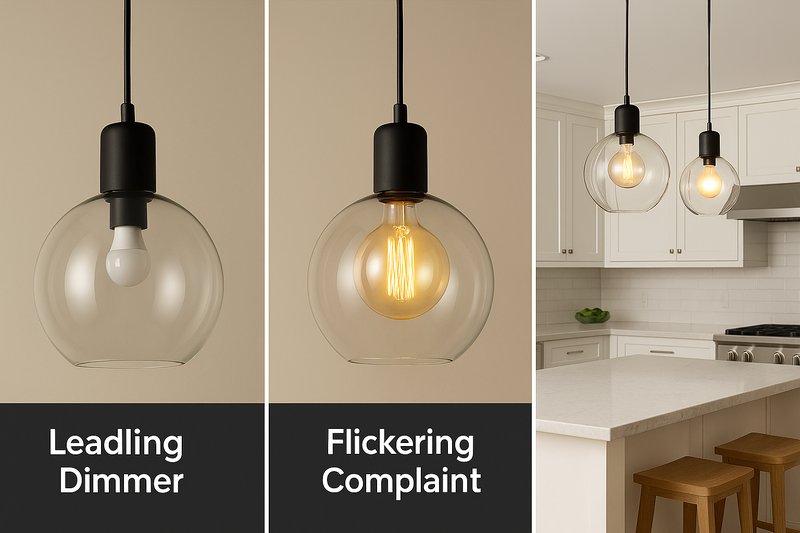
You've sourced beautiful pendant fixtures for a project, but the final look is a disaster. The bulbs are visually lost, create harsh glare, or cast a cold, uninviting light, completely undermining the design and disappointing your client.
To achieve a perfect result, you must match the bulb's shape, size, glass finish, color temperature, and brightness to the specific pendant fixture and the intended mood of the space. A successful pairing creates visual harmony and perfect illumination.
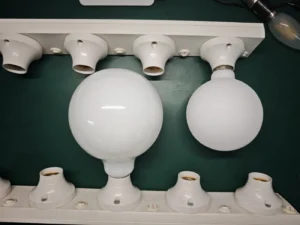
I'll never forget a conversation with a trusted US-based client, a product manager I'll call Jacky. He had just won a contract to supply lighting for a new chain of trendy cafes. He sourced some absolutely stunning large, clear glass dome pendants for the spaces over the main counters. He then ordered thousands of our standard A19 filament bulbs to go in them. When he sent me the installation photos, my heart sank for him. The pendants were gorgeous, but the A19 bulbs looked like tiny, forgotten specks of light swimming inside a giant fishbowl. They were completely out of scale. The look wasn't premium; it was an afterthought. "Wallson," he said, "the designer is saying it looks 'unfinished.' What did we do wrong?" The problem wasn't the quality of the bulb or the pendant; it was the failed relationship between the two. We worked together to replace them with our much larger G125 globe-shaped filament bulbs, which filled the glass domes perfectly. The aesthetic was instantly transformed from awkward to intentional. That experience taught me that our job isn't just to sell bulbs, but to ensure our clients understand the art of pairing them correctly.
How Do You Match the Bulb's Shape and Size to the Pendant?
Your client has chosen a pendant, but they are paralyzed by the dozens of different bulb shapes and sizes available. Choosing incorrectly can make a high-end fixture look cheap or disproportional, reflecting poorly on your product recommendation.
The key is scale and visibility. For open or clear glass pendants, the bulb is a co-star and must be large enough to look intentional. For shaded pendants, the bulb must fit without touching the sides and direct light appropriately.
This is the most important aesthetic decision you will guide your client through. The relationship between the bulb and the fixture is a partnership. One should not overpower or underwhelm the other. For the most common types of pendants, the choice is driven by the fixture's design. If the pendant has a large, clear glass shade—like a globe, bell jar, or vase—the bulb is fully exposed and becomes a primary design element. Choosing a bulb that is too small for the glass enclosure, like the A19 in the giant globe, creates negative space that looks awkward and unintentional. The goal is to select a bulb that has a presence and fills the space proportionally. Conversely, a bulb that is too large can look comical or, worse, won't fit at all. For pendants with opaque shades (metal domes, fabric drums), the bulb's appearance is less important than its function. The primary concern here is ensuring the bulb is the right size to fit comfortably within the shade without the glass touching the shade material, which can create hotspots or damage. The shape can also influence how light is cast from the shade, directing it down and out. This is about ensuring harmony and balance.

A Practical Guide to Bulb and Pendant Pairing
| Pendant Fixture Style | Recommended Bulb Shape(s) | Design Principle |
|---|---|---|
| Large Clear Globe/Sphere | G-Series (G95, G125)1 | Scale. The large, round bulb mirrors and fills the shape of the fixture, creating a cohesive and intentional look. |
| Industrial / Open Cage | ST-Series (ST64, ST58)2, G-Series | Visibility. The bulb is the hero. The intricate filament designs of these classic shapes are fully displayed. |
| Narrow Cylinder / Tube | T-Series (T9, T10, T30) | Proportion. The long, slender bulb fits the narrow vertical space perfectly, creating a clean, modern line. |
| Classic Bell or Cone | A-Series (A19, A21), ST-Series (ST64) | Fit & Function. The teardrop shape of the ST64 or the classic A19 complements the conical shade and directs light downwards. |
| Fabric or Opaque Drum | A-Series (A19, A21), G-Series (G80, G95) | Illumination. The goal is an even glow. A G-series bulb provides a broader light source to illuminate the entire shade surface uniformly. |

Is Your Lighting Too Bright, Too Dim, or the Wrong Color?
Your lighting installation is complete, but the client complains the space feels "like an office" or "like a cave." The mood is completely wrong, even though you used high-quality dimmable bulbs. This is a common and costly mistake.
This is a mismatch of lumens (brightness) and color temperature (Kelvin). You must select the right combination for the specific function of the space. Pendants over a kitchen island need different light than pendants by a bedside.
After shape and size, lumens and Kelvin are the most critical specifications. They have a direct and powerful impact on the feel and function of a room. Most buyers, and even some professionals, make the mistake of choosing a bulb based only on its looks, ignoring these two vital metrics. Lumens (lm) measure the total amount of light output—the brightness. A decorative pendant in the corner of a living room might only need 300-400 lumens for a gentle, ambient glow. However, a series of pendants over a kitchen island where you'll be chopping vegetables requires bright, functional task lighting, often 800 lumens or more per pendant. Color Temperature, measured in Kelvin (K), describes the color of the light itself. This is what creates the "mood". Lower Kelvin values produce a warm, amber, fire-like glow that feels cozy and relaxing. Higher Kelvin values produce a cooler, whiter, or even blue-toned light that feels clean, alert, and modern. Our most popular vintage-style bulbs are around 2200K-2700K for that classic, warm incandescent look. For a kitchen or bathroom where you want clean, accurate color rendering, a more neutral 3000K might be better. Using a 4000K bulb in a cozy bedroom will make it feel sterile and cold.

Application-Based Lighting Guide
| Pendant Location / Use | Recommended Lumens (per pendant)3 | Recommended Kelvin (K)4 | Reasoning for the Choice |
|---|---|---|---|
| Kitchen Island / Task Area | 800 - 1100 lm | 3000K - 4000K | Bright, neutral light is needed for safety and visibility during tasks like cooking. Color rendering is important. |
| Dining Room Table | 400 - 800 lm (dimmable) | 2200K - 2700K | Creates a warm, intimate, and flattering light over diners. Dimmability allows for adjustment from dinner to conversation. |
| Living Room / Ambient | 300 - 500 lm | 2200K - 2700K | The goal is a relaxed, background glow. The lighting should be comfortable and unobtrusive. |
| Bedroom (Bedside Pendants) | 200 - 400 lm (dimmable) | 2200K - 2500K | A very warm and dimmable light promotes relaxation and is not jarring before sleep. |
| Retail / Cafe Counter | 600 - 1000 lm | 2500K - 3000K | Balances a welcoming, stylish atmosphere with enough brightness for transactions and product visibility. |

Will Your Enclosed Glass Pendant Cook and Kill Your LED Bulb?
Your customer is reporting that the beautiful filament bulbs you sold them for their new glass globe pendants are failing in just a few months. They are angry, and you are facing a large warranty claim that is eating your profit.
Yes, it absolutely can. A fully enclosed, unventilated glass pendant acts like a greenhouse, trapping heat from the bulb's electronic driver. This extreme heat rapidly degrades the components and leads to premature failure, voiding the bulb's long lifespan.
This is the silent killer of LED bulbs and a major point of failure that many buyers overlook. While LEDs are efficient, their drivers still generate heat at the base of the bulb. In an open-air fixture, or a well-ventilated one, this heat dissipates naturally through convection. However, when you seal that bulb inside a glass sphere or jar with no ventilation holes, the heat has nowhere to go. The air inside the globe heats up, and the temperature around the bulb's base can quickly exceed the safe operating limits of its electronic components. This is why you will sometimes see bulbs advertised as "Enclosed Fixture Rated." This certification means the manufacturer has used higher-temperature-rated components and a more robust thermal management design in the bulb's driver. It is crucial to understand that not all filament bulbs have this rating. A cheap, standard bulb placed in an enclosed pendant is on a fast track to failure. As a manufacturer focused on quality, our enclosed-rated bulbs at Hongyu Bulb use superior drivers with higher-grade capacitors and thermal potting compounds that can withstand this punishing environment. Always, always check if the fixture is enclosed and specify an enclosed-rated bulb if it is. It is a small upfront cost that prevents a massive backend headache of returns and angry customers.
How to Select Bulbs for Enclosed Fixtures
- Check the Pendant's Design: Look for ventilation. Does it have an open top/bottom? Are there discreet vents near the socket? If it is completely sealed, you have an enclosed fixture.
- Verify the Bulb's Rating: Look for "Enclosed Fixture Rated5" or a similar statement on the bulb's packaging or specification sheet. If it does not say it is rated for enclosed fixtures, assume it is not.
- Prioritize Quality Drivers: This is where a trusted supplier is key. A higher-quality bulb will use components that can handle heat better, even within the enclosed rating. This is the difference between a bulb that lasts 15,000 hours and one that fails after 1,500.
Should You Choose Clear, Amber, or Frosted Glass?
Your client is trying to decide on the glass finish for their filament bulbs, but they are unsure how it will affect the light quality and overall aesthetic. They are worried clear glass will be too harsh, but that amber glass will be too yellow.
The glass finish is a powerful tool to control both glare and mood. Clear glass offers crisp light and showcases the filament, amber glass provides a deep vintage warmth, and frosted glass gives a soft, diffuse glow.
The choice of glass on the bulb itself is the final layer of customization for a pendant fixture. It has a dramatic effect on both the visual appearance of the bulb when it's off and the quality of the light when it's on. This decision should link back to the desired Kelvin and the overall design intent.
Clear Glass: This is the default and most popular choice. It provides the highest lumen output and the most "honest" light, rendering colors according to its Kelvin rating. Its main purpose is to showcase the intricate beauty of the LED filaments themselves. However, in a pendant with no shade, a bright, clear bulb can produce significant glare, which can be uncomfortable if it's in a person's direct line of sight. It's best for pendants that are hung high or have some form of shade.
Amber/Gold Tinted Glass: This glass has a vintage gold or amber color mixed in. It's a powerful tool for creating an extra-warm, cozy atmosphere. The amber tint acts as a filter, lowering the color temperature of the light that passes through it. A 2700K bulb with amber glass might produce light closer to 2200K. This creates an instant vintage, almost candle-lit feel. It's perfect for restaurants, bars, and living rooms aiming for a deeply relaxing mood. The downside is reduced brightness and a strong color cast on surfaces.
Frosted/Matte Glass: This glass is acid-etched or coated to be translucent rather than transparent. Its primary job is to diffuse light. It completely hides the filament and instead turns the entire bulb into a soft, even ball or shape of light. This is the absolute best choice for eliminating glare. A frosted bulb can be looked at directly without discomfort. It's an excellent choice for bare-bulb pendants, clusters of pendants at eye level, or in bathrooms and bedrooms where soft, gentle light is preferred.
Glass Finish Decision Matrix
| Glass Finish | Primary Advantage | Primary Disadvantage | Best For... |
|---|---|---|---|
| Clear | Maximum brightness, showcases filament design. | Can create harsh glare if unshaded. | Pendants where the bulb's internal structure is part of the aesthetic; high-hung fixtures. |
| Amber/Gold Tint6 | Creates an instant, deep vintage warmth. | Reduces brightness and casts a strong yellow/orange hue on objects. | Restaurants, bars, and spaces seeking an intimate, candle-lit atmosphere. |
| Frosted/Matte7 | Eliminates glare completely for a soft, even glow. | Hides the filament design; slightly reduced lumen output. | Bare-bulb pendants, bathroom vanities, bedside fixtures, and anywhere glare is a concern. |
Related HongYu product pages
- LED Filament Bulb Product Range → — standard and decorative LED filament bulbs for wholesale and project sourcing.
- Big Decorative Bulbs → — oversized decorative filament bulbs for hospitality, retail and statement fixtures.
- Contact HongYu Bulb → — send your target specifications, quantity, market and packaging requirements for quotation.
Conclusion
Choosing the right LED filament bulb for a pendant is an art. By carefully matching the bulb's scale, light quality, and glass finish to the fixture and space, you transform a simple light into a perfect design statement.
Explore the advantages of G-Series bulbs for pendant lighting to enhance your design and lighting efficiency. ↩
Discover how ST-Series bulbs can elevate your industrial lighting aesthetics with their unique filament designs. ↩
Understanding lumens helps you choose the right brightness for each space, enhancing functionality and ambiance. ↩
Exploring Kelvin values will guide you in selecting the perfect color temperature for your lighting needs, improving comfort and aesthetics. ↩
Understanding this rating is crucial for safety and longevity of your bulbs in enclosed fixtures. ↩
Explore the warmth and ambiance that Amber/Gold Tint can bring to your space, perfect for creating a cozy atmosphere. ↩
Discover how Frosted/Matte finishes can enhance your lighting by eliminating glare and providing a soft glow. ↩
Browse from HongYu Bulb: EU Standard LED Filament Bulbs → · Large Decorative LED Bulbs (G150/G200) →