Is one flickering bulb on stage derailing your entire production? A single faulty light can shatter the audience's immersion during a critical scene, undermining months of hard work and making your crew look unprofessional.
The solution is to specify bulbs engineered for the stage. This means demanding zero-flicker performance safe for cameras, perfectly smooth dimming down to 1%, a consistent and intentional color temperature, and a robust physical construction that can withstand the rigors of theatrical use.
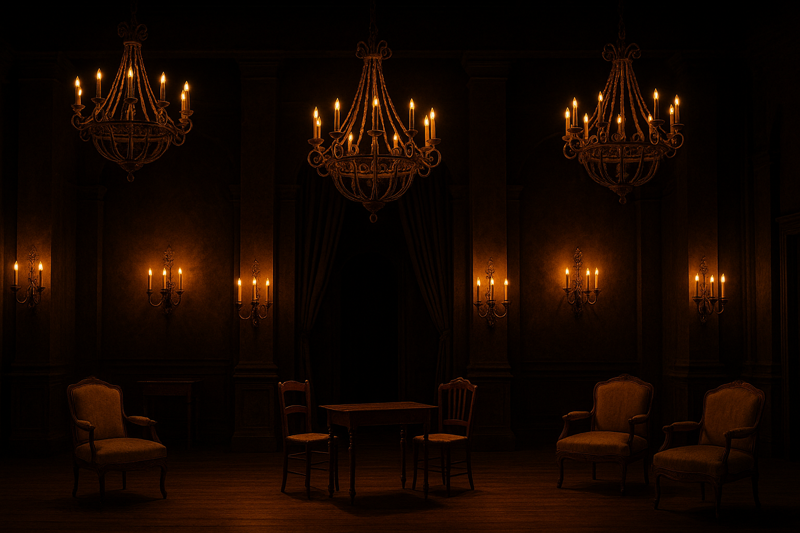
I once had a long talk with the technical director of a regional theatre. They were staging a period play set in a grand ballroom, and the main set piece was a massive chandelier with over eighty candelabra bulbs. For the opening night, they used standard off-the-shelf LEDs. The show looked fine to the naked eye, but when they reviewed the archival video recording, it was a disaster. The camera's shutter speed caught the low-frequency flicker of the bulbs, creating ugly rolling bands across the entire scene. Worse, when they dimmed the lights for a dramatic moment, the bulbs didn't fade smoothly; they stepped down in noticeable chunks. He was beside himself. "The lighting is part of the story," he said, "and right now, it's telling the wrong story." This highlights the crucial difference between a bulb for your home and a bulb for the stage. On stage, under the scrutiny of an audience and a camera lens, there is no room for error. Every single component must be a professional tool.
How do you achieve perfectly smooth, camera-safe dimming on stage?
Are you worried that your stage lighting will have a distracting flicker on video or that it won't dim smoothly for dramatic transitions? These technical failures can instantly ruin a performance for both the live audience and anyone watching a recording.
Demand bulbs with high-frequency Pulse Width Modulation (PWM) drivers (above 20,000 Hz) to eliminate flicker on camera. Combine this with a driver engineered for a logarithmic dimming curve that allows a smooth, stepless fade from 100% down to a 1% glow.
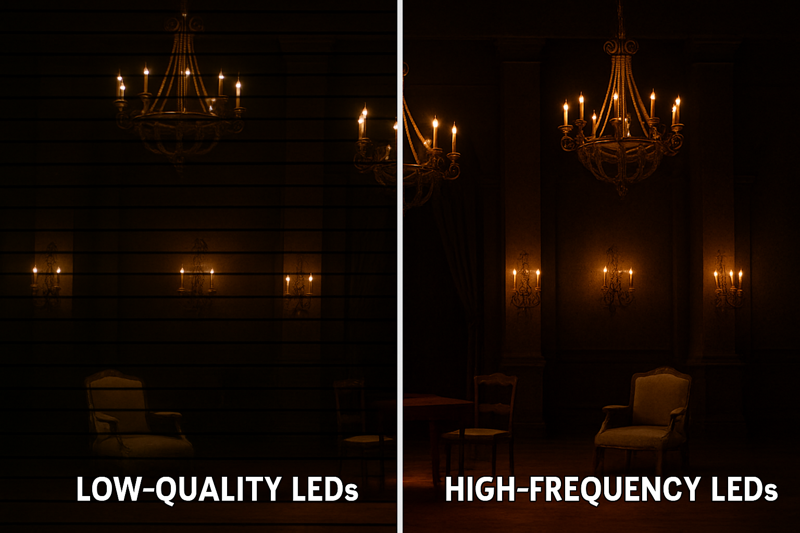
In the world of live performance, "dimming" is an art form. Lighting designers use slow fades to create mood, direct the audience's focus, and transition between scenes. A bulb that cannot execute these fades perfectly is useless. The first enemy is flicker. Most LED bulbs are dimmed using Pulse Width Modulation (PWM), which is essentially turning the light on and off very rapidly. With cheap bulbs, this frequency is low, and while the human eye might not notice it, a camera perceives it as strobing or dark bands. For any modern production that might be live-streamed or recorded, a high-frequency, "flicker-free" driver is an absolute, non-negotiable requirement. The second enemy is a poor dimming curve. A basic driver has a linear curve, meaning a 50% signal results in 50% power. But the human eye perceives brightness logarithmically; we notice changes at low light levels far more than at high levels. A linear curve results in a dimming experience that feels unnatural—it seems to do nothing at the top and then drops off suddenly at the bottom. A professional-grade driver uses a logarithmic curve that matches our perception, resulting in a perfectly smooth, cinematic fade from full brightness to a deep, stable glow.
The Technical Demands of Theatrical Dimming
This is what separates a professional tool from a household product.
- PWM Frequency1: This is the rate at which the LED is switched on and off.
- Consumer Grade: Often below 1,000 Hz. Visibly flickers on most cameras.
- Professional/Stage Grade: Above 20,000 Hz (20 kHz). Well above the threshold of any camera's shutter speed, guaranteeing a clean, stable image.
- Dimming Curve2: This determines the smoothness of the fade.
- Linear Curve: The bulb's power output matches the dimmer's signal level directly. This feels unnatural and "steppy" at low levels.
- Logarithmic (or "Perceptual") Curve: The driver is programmed to respond in a way that matches human eye perception. This is the key to a truly smooth, continuous fade.
- Dimming Range: A professional fade needs to go all the way down.
- Standard Bulbs: Often stop dimming at 10-20% and then turn off.
- Stage-Grade Bulbs: Can dim smoothly down to 1% or even 0.1%, allowing for very subtle "ghost light" effects and dramatic, slow fades to black.
| Feature | Standard Retail LED | Professional Stage-Ready LED | The On-Stage Result |
|---|---|---|---|
| PWM Frequency | Low (<1,000 Hz) | High (>20,000 Hz) | Flickering video / unusable footage vs. Flicker-free for all cameras. |
| Dimming Curve | Linear | Logarithmic | Jerky, unnatural fades vs. Perfectly smooth, natural fades. |
| Dimming Range | 100% to 20% | 100% to 1% (or lower) | Limited creative options vs. Full creative control for dramatic scenes. |
As a manufacturer for these clients, we understand these technical requirements. Our focus at Hongyu Bulb is on engineering the internal drivers to meet these exacting professional standards, because we know the performance depends on it.
How do you make the bulbs themselves a part of the performance?
Is the physical appearance of your bulbs an afterthought? In set design, especially for period pieces or intimate venues, the light bulb itself is part of the scenery and must look authentic and intentional, both on and off.
Treat the bulb as a prop. Deliberately choose its color temperature (CCT), glass finish, and filament style to match the era and mood of the production. For ultimate control, use "Dim-to-Warm" bulbs that automatically get warmer in color as they dim, perfectly mimicking antique incandescent lamps.

On stage, nothing is accidental. Every single object visible to the audience is a deliberate choice made by the director and the set designer. This absolutely includes the light bulbs. If a play is set in the 1920s, a modern-looking, cool-white LED bulb in a chandelier would be a glaring anachronism that could ruin the illusion. The bulb must be a convincing part of the world being created. This is where the aesthetic details of the bulb become critical. The color temperature is the first decision: a very warm 2200K can create an instant "gaslight" or "candlelight" feel, perfect for historical dramas or intimate cabaret shows. A slightly cleaner 2700K might be better for a mid-century play. The glass itself is also a key choice. Amber-tinted glass enhances that vintage warmth, while clear glass provides sparkle for a more glamorous look. The most advanced tool for this illusion is "Dim-to-Warm" technology. This is a special type of LED bulb that doesn't just get dimmer, it also gets warmer in color as it dims—fading from a soft white (e.g., 2700K) at full power down to a deep amber glow (e.g., 1800K) at its lowest level. This perfectly replicates the behavior of a real incandescent filament and is the ultimate tool for creating authentic, dynamic atmospheres on stage.
Crafting the Scene with Light
Here's how designers use these aesthetic tools to tell a story.
- Deliberate Color Temperature (CCT)3: The CCT must be consistent across all visible bulbs to look professional.
- 2200K: Creates a very warm, deep amber, candlelight feel. Ideal for pre-electric eras, intimate spaces, and dramatic moods.
- 2700K: The classic warm incandescent look. A versatile choice for any scene that needs to feel welcoming and familiar.
- The Bulb's Physical Form: The shape and finish sell the illusion.
- Amber Glass + Curved Filament: The go-to choice for a vintage, steampunk, or Edison-era look.
- Clear Glass + Bent-Tip: Perfect for creating a realistic flame shape in classic chandeliers and sconces.
- Dynamic Color with Dim-to-Warm4: This technology provides the most authentic dimming experience. It's a premium feature that high-end lighting designers specifically seek out for its ability to create a natural and convincing warmth.
| Scene / Mood | Recommended CCT | Glass Finish | Key Feature |
|---|---|---|---|
| 19th Century Drama / Ghost Story | 2200K | Amber or Clear | Bent-tip flame shape for realism. |
| Intimate Jazz Club / Cabaret | Dim-to-Warm (2700K-1800K) | Amber | The "Dim-to-Warm" effect creates the perfect cozy atmosphere. |
| Classic 20th Century Play | 2700K | Clear or Frosted | A clean, consistent look that feels authentic but provides good light. |
A lighting designer's toolkit needs variety. That's why offering a wide range of these aesthetic and technological options is essential for any manufacturer who wants to be taken seriously by the performance industry.
What makes a bulb robust enough for the rigors of stage use?
Are you tired of bulbs failing from the vibration of a rock concert, or because of unstable power from a portable generator? A stage environment is harsh, and a bulb that isn't built for it is a liability waiting to happen.
Stage bulbs must feature commercial-grade construction with a durable aluminum chassis for heat dissipation and shock resistance. Furthermore, their drivers must be engineered to handle unstable power and be fully compatible with professional DMX-controlled dimmer packs and control systems.

The life of a stage light bulb is tough. It's not sitting quietly in a table lamp. It's mounted in trusses high above the stage, subjected to vibrations from actors, moving scenery, and subwoofers. In a touring production, it's packed and unpacked in road cases dozens of times. The power it receives might not be perfectly clean, coming from portable dimmer racks or generators. A consumer-grade bulb with a flimsy plastic body and a basic driver will not survive this environment. Reliability in a performance setting is paramount; a failure mid-show is not an option. This is why the physical build quality is so important. A professional-grade bulb uses a solid aluminum body that serves two purposes: it acts as a superior heat sink to keep the electronics cool during long show hours, and it provides a level of physical robustness that plastic cannot match. The internal driver must also be over-engineered. It needs advanced circuitry to smooth out "dirty" power and protect the sensitive LED chips from voltage spikes. Finally, this robust bulb must communicate flawlessly with the lighting desk. Stage lighting is controlled via DMX signals that run to dimmer packs. The bulb's driver has to correctly interpret the chopped-up electrical waveforms from these packs to dim smoothly and reliably every single time.
The Anatomy of a Stage-Worthy Bulb
These are the features that ensure a bulb shows up for work every night.
- Robust Construction5: The physical body must be built to last.
- Heat Sink: Solid aluminum is the only acceptable material. It provides excellent thermal management and durability. Plastic is for home use only.
- Reinforced Base: The connection point (e.g., the E12 candelabra base) should be firmly attached to the body to prevent separation from vibration.
- Resilient Electronics: The driver must be a workhorse.
- Wide Voltage Input6: A driver that can handle a range of voltages is more stable on fluctuating power.
- Overload Protection: Circuitry that protects the bulb from power surges is essential.
- Professional System Compatibility: The bulb must speak the language of the stage.
- Dimmer Pack Tested7: The manufacturer must be able to confirm that their bulbs work with professional theatrical dimmer packs, which can be challenging for many LEDs.
- DMX Integration8: While the bulb isn't directly controlled by DMX, it must respond perfectly to the dimming controllers that are.
| Environmental Challenge | Consumer-Grade Bulb | Professional Stage-Grade Bulb | The Outcome |
|---|---|---|---|
| Vibration & Handling | Flimsy plastic construction. | Solid aluminum chassis, reinforced base. | Prone to damage and failure vs. Built to withstand touring and stage use. |
| Long Hours & Heat | Poor heat dissipation. | Excellent thermal management. | Overheats, leading to short lifespan vs. Maintains performance night after night. |
| Unstable Power | Sensitive, basic driver. | Robust driver with power conditioning. | Can flicker or fail from "dirty" power vs. Consistent, reliable performance. |
A lighting designer has to trust their tools completely. Our job as a manufacturer is to build that trust into every single bulb so they can focus on the show, not on the hardware.
Related HongYu product pages
- LED Filament Bulb Product Range → — standard and decorative LED filament bulbs for wholesale and project sourcing.
- Mini LED Filament Bulbs → — small E12/E14 decorative bulbs for chandeliers, sconces and hospitality fixtures.
- Contact HongYu Bulb → — send your target specifications, quantity, market and packaging requirements for quotation.
Conclusion
For stage and performance, choose bulbs that are camera-safe and dim smoothly, appear authentic on stage, and are built to withstand the tough theatrical environment. This ensures a flawless and immersive show.
Understanding PWM Frequency is crucial for achieving flicker-free lighting in professional settings. ↩
Exploring Dimming Curves helps in selecting the right lighting for smooth and natural fades in performances. ↩
Understanding CCT is crucial for creating the right ambiance in any space. Explore this link to enhance your lighting design knowledge. ↩
This technology is key for achieving authentic lighting effects. Discover more to elevate your design skills. ↩
Understanding robust construction can help you choose durable lighting solutions for professional use. ↩
Learn how wide voltage input enhances stability and performance in fluctuating power conditions. ↩
Discover the significance of dimmer pack testing for reliable performance in theatrical settings. ↩
Explore how DMX integration ensures seamless control and compatibility in professional lighting setups. ↩