Chasing the lowest bulb price seems smart, but hidden costs can wreck your budget. A cheap bulb can lead to expensive failures, damaging your reputation and profits.
The true cost of an LED filament bulb isn't just its sticker price. It includes the purchase price, replacement labor, shipping, and the cost of failures. The best deal comes from a reliable manufacturer who balances quality engineering with an efficient, factory-direct pricing model.
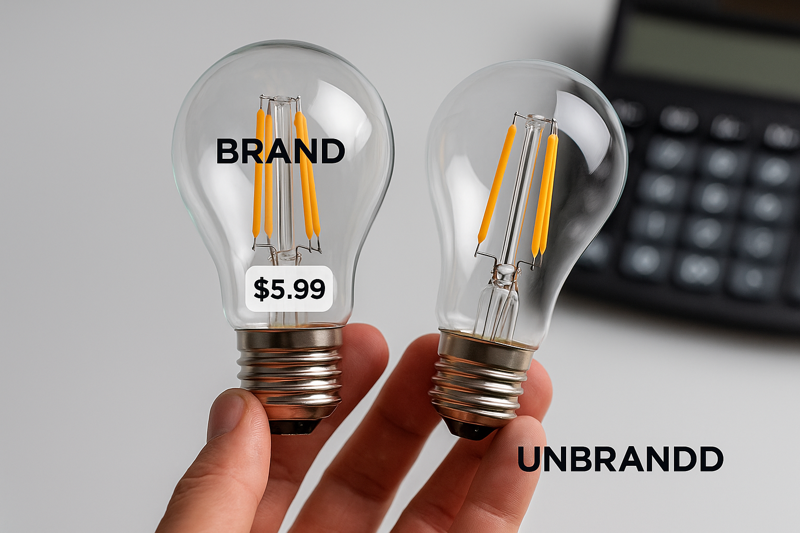
A few years ago, a potential client, a product manager from a mid-sized distributor in the Netherlands, came to me. He was frustrated. He showed me a quote he had from another supplier for a standard A60 bulb that was almost unbelievably low. "How can I compete with this?" he asked. I asked him to send me a sample of that cheap bulb. When we tested it in our lab, the reality became clear. The dimming circuit was terrible, it flickered badly on camera, and the Color Rendering Index (CRI) was far below the advertised 80. The "great deal" was a product destined to fail and generate customer complaints. We then walked him through the cost of our own bulb, component by component, explaining how our superior driver and high-quality LED chips prevented those exact problems. He realized that a slightly higher purchase price would save him a fortune in returns and brand damage. That day, he learned that the most important deals aren't found by comparing price tags, but by understanding value.
Why Do Retail and Distributor Prices Seem So High?
You see a bulb in a retail store for $10 and know the factory cost is a fraction of that. This huge markup feels excessive, but is it just pure profit, or are there other factors at play?
Retail and distributor prices are high because they include multiple layers of cost beyond manufacturing. These include international shipping, import duties, national and local distribution costs, marketing expenses, retail packaging, and the profit margins for every middleman in the chain.
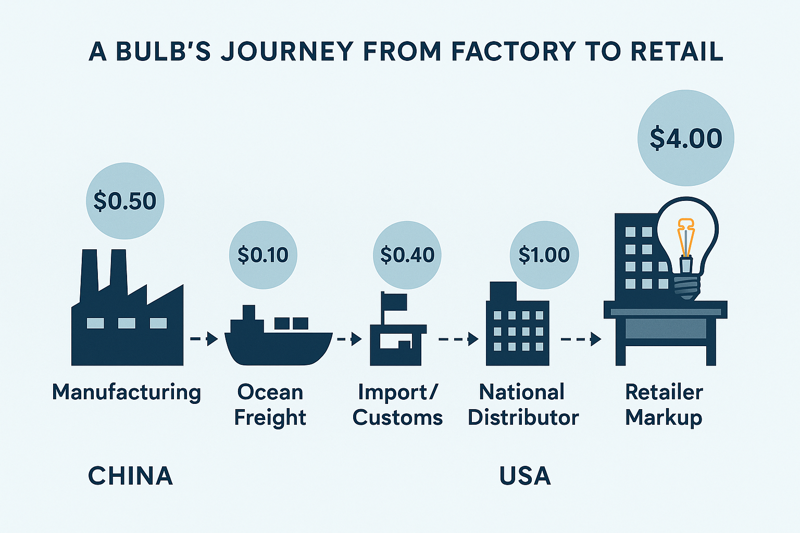
When a professional buyer like Jacky sees a product on a retail shelf, he's looking at the end result of a very long and expensive journey. That bulb didn't magically appear there. First, we, the manufacturer, produce it for a base cost. Then, a brand or importer buys it from us. They have to pay for ocean freight to get it across the world, then import taxes and duties when it lands in the US or UK. After that, it goes to a national distributor's warehouse. That distributor has a sales team, marketing budgets, and their own profit margin to add. They then sell it to a big-box retail chain, who also has massive overhead costs—the store itself, employees, advertising—and their own significant profit margin. Each step adds a percentage to the cost. This multi-layered "price stacking" is a standard part of the consumer supply chain. So, that high price isn't just one company's profit; it's the accumulated cost of getting a single product from the factory floor in China to a shopping cart in America. It’s a model built for consumer convenience, not for B2B efficiency.
Deconstructing the Retail Price Tag
Understanding these layers is key to seeing why the direct-from-factory model is so different.
- The Landed Cost1: This is the cost of the product once it has "landed" in the destination country. It includes the original factory price (our price), the cost of shipping, and any import duties or tariffs. This is the first major cost addition.
- Distribution and Wholesale Markup: The national distributor who buys the container of bulbs adds their markup. This covers their warehousing costs, sales staff, and profit. This can often be a 20-40% increase on the landed cost.
- The Final Retail Markup2: The retail store that buys from the distributor applies the final, and often largest, markup. This can be anywhere from 50% to over 100% (a "keystone" markup). This covers all their operational costs and profit.
| Supply Chain Stage | Who is Involved? | Primary Costs Added |
|---|---|---|
| Manufacturing | Factory (e.g., Hongyu Bulb) | Components, Labor, R&D, Factory Profit |
| Importing | Brand/Importer | Factory Price, Shipping, Tariffs |
| Distribution | National/Regional Wholesaler | Warehousing, Sales Force, Distributor Profit |
| Retail | Big-Box Store, Lighting Showroom | Store Operations, Marketing, Retailer Profit |
This entire structure is why a bulb that costs a few dollars to make can end up costing many times that by the time a consumer buys it.
Are the Rock-Bottom Prices on B2B Marketplaces a Trap?
You're browsing a massive B2B site and find a supplier offering bulbs for a price that seems too good to be true. Is this the amazing deal you've been looking for, or is it a warning sign of a costly mistake?
Often, yes. Exceptionally low prices on B2B marketplaces can be a trap. These prices are typically achieved by sacrificing quality in critical, unseen components like the LED driver, chips, or gas fill, leading to high failure rates, poor performance, and a higher total cost of ownership.
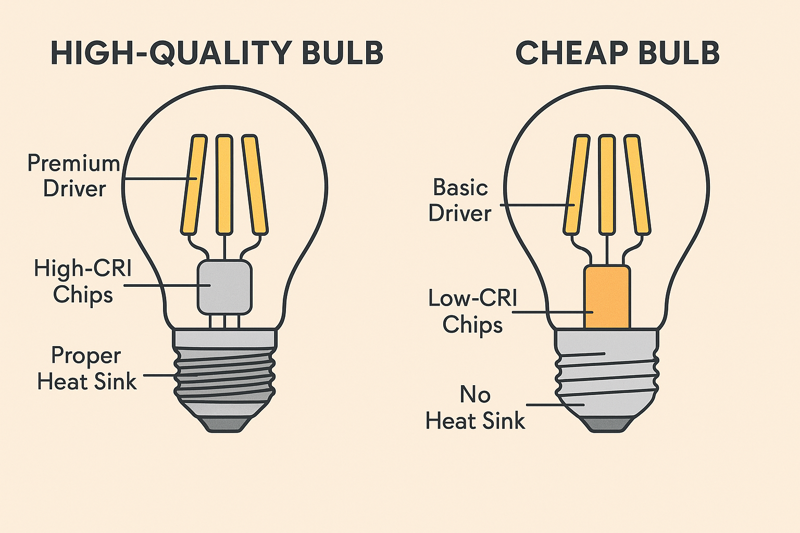
The ruthless price competition on large B2B marketplaces creates a race to the bottom. To offer a headline-grabbing low price, some suppliers have to cut corners, and they do it in ways you can't see just by looking at a photo. The single most expensive component inside a quality LED bulb is the driver—the tiny electronic circuit that converts AC power to the DC power the LEDs need. A cheap supplier will use a very basic, low-quality driver. This results in flickering, an inability to dim smoothly, and a very short lifespan. They will also use cheaper LED chips with a low Color Rendering Index (CRI), making colors look dull and washed out. They might even skip using the proper inert gas mixture inside the bulb, which is crucial for dissipating heat and prolonging the life of the filaments. This focus on hitting a price point, rather than a quality standard, is a huge risk for a professional buyer. You save 30 cents per bulb on your purchase order but end up spending dollars more per bulb on labor for replacements, shipping for returns, and dealing with unhappy clients. This is the definition of a bad deal.
Calculating the Total Cost of Ownership (TCO)
A smart buyer doesn't compare purchase prices; they compare the Total Cost of Ownership3.
- Initial Purchase Price: This is the obvious cost, the price per unit on your invoice.
- Failure & Replacement Cost4: This is the hidden killer. Let's say a cheap bulb has a 5% failure rate in the first year, while a quality one has a 0.5% rate. For an order of 2,000 bulbs, that's 100 failures vs. 10. Each failure requires not just a new bulb, but also the labor cost to replace it, which can be far more than the bulb's cost itself, especially in a commercial setting.
- Reputation Cost: The cost of an angry client who has flickering lights in their new restaurant or hotel is impossible to quantify but is incredibly damaging to your business.
| Cost Factor | "Cheap" Bulb (Example) | Quality Bulb (Example) |
|---|---|---|
| Purchase Price (2,000 units) | $2.00/unit = $4,000 | $2.50/unit = $5,000 |
| Failure Rate (Year 1) | 5% (100 failures) | 0.5% (10 failures) |
| Replacement Cost (Bulb + $15 Labor) | 100 x ($2.00 + $15) = $1,700 | 10 x ($2.50 + $15) = $175 |
| Total Cost (Year 1) | $5,700 | $5,175 |
In this simple example, the "more expensive" quality bulb was actually $525 cheaper in the first year alone. This is the power of TCO analysis.
How Can You Get a Better Deal Without Sacrificing Quality?
Worried that asking for a better price will get you a worse bulb? Negotiating shouldn't be a gamble where quality is the first thing a supplier sacrifices to win the order.
You get a better deal by negotiating from a position of partnership. Discuss long-term volume commitments, blanket orders, or cost-saving adjustments like packaging. This demonstrates your value as a client, encouraging manufacturers to offer their best price without compromising the bulb's essential quality.

Once you've found a manufacturer you trust, the conversation about price should change. It's no longer about haggling over every last cent. Instead, it's about finding mutual value. A good manufacturer, like us, is looking for stable, long-term partners, not quick, one-off sales. When a buyer comes to me and says, "Your price is 20 cents higher than competitor X," my first question is about their sample of competitor X's bulb. But if they come to me and say, "We plan to order 50,000 units over the next year. How can we work together to get the best value?", it starts a completely different and more productive conversation. This approach signals that you are a serious, strategic partner. It allows us to look at our cost structure and find ways to help you. Maybe we can offer a better price based on a guaranteed annual volume, or suggest a minor change to the packaging that saves you five cents per unit without touching the bulb itself. This collaborative approach is the key to getting a genuinely better deal.
Strategies for Value-Based Negotiation
Approach the negotiation with a plan to create a win-win scenario.
- Forecast and Commit: The most powerful tool you have is your purchasing volume. Provide a realistic forecast for your annual needs. A manufacturer can offer a better price on a 50,000-unit annual commitment than on a single 5,000-unit order because it allows for more efficient production planning.
- Discuss Non-Essential Costs: Be open to discussing areas where costs can be reduced without affecting performance. The most common one is packaging. A simple bulk-pack box is much cheaper to produce than an elaborate, print-heavy individual retail box.
- Ask for a "TCO" Breakdown: Ask the supplier to explain the value of their components. A good sales representative should be able to say, "Our driver costs 15 cents more, but it reduces flicker by 90% and has a failure rate that's ten times lower." This helps you justify the price internally and to your own customers.
| Negotiation Tactic | Manufacturer's Perspective | Your Benefit |
|---|---|---|
| Demanding Lowest Price | Forces corner-cutting on quality. Views you as a transactional, low-value client. | Temporary price win, long-term quality loss. |
| Discussing Annual Volume5 | Allows for better planning and lower production costs. Views you as a strategic partner. | Receives a better price based on commitment. |
| Flexibility on Packaging | Easy way to reduce costs without compromising the product itself. | Lowers unit cost without sacrificing quality. |
It's about changing the question from "Can you be cheaper?" to "How can we create a more efficient partnership?"
How Can Working with a Manufacturer Offer the Best Value?
You've seen the inflated prices of retail and the hidden risks of cheap marketplace offers. So where is the sweet spot? How can you get a fair price without ever sacrificing the quality your business depends on?
Working directly with a manufacturer like Hongyu Bulb provides the best overall value. This model eliminates middlemen markups, giving you a transparent, fair price. More importantly, it gives you direct control over quality, ensuring you get a reliable product built with superior components.

The direct-from-manufacturer model is the solution to the B2B buyer's dilemma. It’s about creating a partnership for value, not just a transaction for the lowest price. When you work with us, you are removing all the layers of cost that bloat retail prices. There is no importer, no national distributor, and no retailer adding their markup. You get a price that is a true and fair reflection of the cost of the high-quality materials and skilled labor that go into the product. This transparency allows us to have an honest conversation about cost and quality. We can show you exactly why our bulb might cost slightly more than a competitor's—by pointing to the superior dimming driver we use or the 90+ CRI LED chips we source. You get to make an informed decision based on engineering facts, not just a price list. This is how you find a true "deal." You're not just buying a product; you are investing in a reliable supply chain. You get a partner who is accountable for quality from start to finish, ensuring that the price you pay translates directly into performance, reliability, and peace of mind for you and your clients.
Understanding the Components of a Fair Price
A manufacturer's price is built on the real costs of quality production.
- Component Costs: The biggest factor. This includes the LED driver, the LED filament chips, the glass bulb, the base, and the internal gases. High-quality, long-lasting components cost more than low-grade alternatives. This is the area where quality is either won or lost.
- Labor & Manufacturing Overhead: This includes the wages for our skilled assembly workers and the costs of running a modern, safe, and efficient factory with rigorous quality control processes.
- R&D and Certifications: A portion of the cost goes into research and development to create better, more efficient products. It also covers the significant cost of obtaining and maintaining crucial international certifications like UL and CE.
- Our Margin: Finally, like any healthy business, we include a reasonable profit margin that allows us to reinvest in our factory, our people, and our technology to continue serving you better in the future.
| Price Component | How it Creates Value for You |
|---|---|
| Superior Driver & LED Chips | Ensures smooth dimming, high CRI, and long, reliable lifespan. |
| Skilled Labor & QC | Reduces defect rates, ensuring consistency across your entire order. |
| R&D and Certifications | Provides access to innovative products that are certified safe and effective. |
| Direct Partnership | Eliminates middlemen, offering the best possible price for a high-quality product. |
A fair price isn't the lowest number; it's the most honest number, directly representing the quality you receive.
Related HongYu product pages
- LED Filament Bulb Product Range → — standard and decorative LED filament bulbs for wholesale and project sourcing.
- Contact HongYu Bulb → — send your target specifications, quantity, market and packaging requirements for quotation.
Conclusion
The best deal isn't the lowest price tag. It's the best Total Cost of Ownership achieved through a direct partnership with a quality-focused manufacturer who delivers reliable, high-performance products.
Understanding Landed Cost is crucial for grasping how product pricing is determined, including shipping and tariffs. ↩
Exploring Final Retail Markup helps consumers see the significant markups that retailers apply, impacting their purchase decisions. ↩
Understanding TCO helps buyers make informed decisions, ensuring long-term savings and value. ↩
Exploring this will reveal hidden costs that can significantly impact your overall expenses. ↩
Exploring the impact of annual volume on pricing can help you secure better deals and strengthen supplier relationships. ↩