Tired of the online sourcing gamble, where every click is a risk? A single bad batch of bulbs bought online can lead to project failures, angry clients, and significant financial losses for your business.
For professional buyers, the most reliable online sources are specialized B2B marketplaces like Alibaba and, ideally, the direct websites of vetted manufacturers. These channels offer greater transparency, better quality control, and direct communication, which are crucial for bulk purchasing.
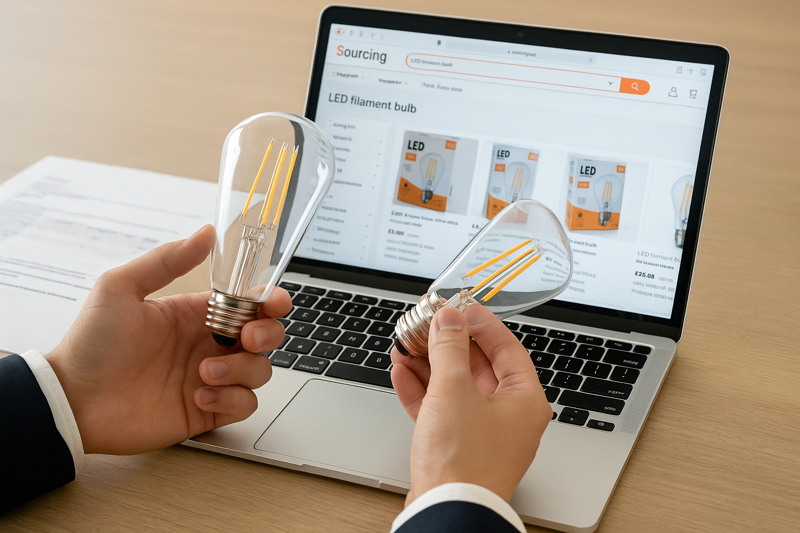
I'll never forget a call I received from a new client, a project manager for a large hotel chain. He was in a state of absolute panic. He had sourced several thousand LED candelabra bulbs for a ballroom renovation from what looked like a legitimate, highly-rated store on a major B2C e-commerce platform. The first few boxes they installed looked great. But as his team continued the installation, they discovered a disaster. The color temperature was wildly inconsistent from one box to the next—some were a warm 2700K, others were a cooler 3000K, and some were a strange, greenish-yellow. The grand ballroom, meant to look uniform and luxurious, looked like a chaotic mess. He had gambled on the convenience of a consumer website for a professional job, and now he was facing massive delays and costs. His story is a powerful reminder that when sourcing online, "where" you look is just as important as "what" you're looking for.
Are Big E-commerce Sites Like Amazon a Safe Bet for Bulk Orders?
You see a great price on a familiar e-commerce site and think it's an easy solution. But will that convenience lead to a quality control nightmare when you order in bulk, with no real support when things go wrong?
No, consumer e-commerce sites like Amazon or HomeDepot.com are generally not safe for professional B2B bulk orders. These platforms are designed for individual retail sales, not commercial supply chains. They lack the necessary vetting, batch consistency, and direct manufacturer support required for professional use.
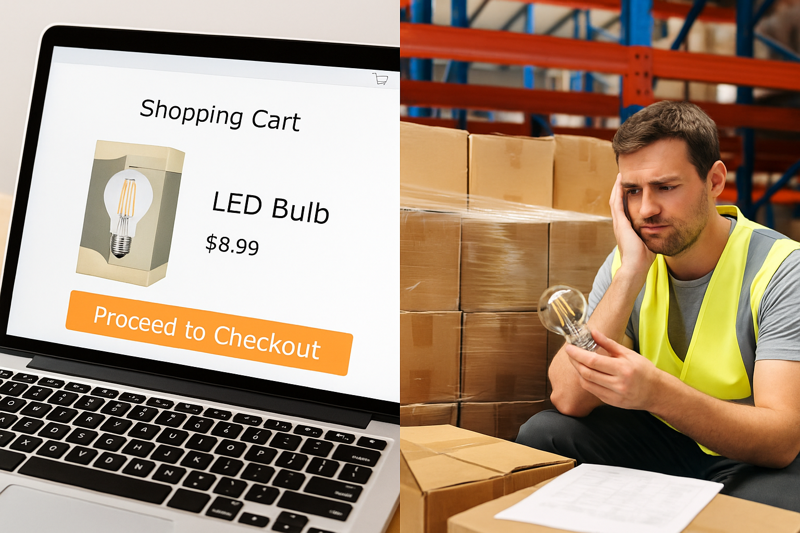
Consumer-facing e-commerce platforms are marvels of logistics for the individual shopper. They offer an incredible variety of products, fast shipping, and an easy-to-use interface. However, these strengths in the B2C (Business-to-Consumer) world become critical weaknesses in the B2B (Business-to-Business) context. The primary issue is the lack of supply chain transparency. A product listing might be sold by dozens of different third-party sellers, all "fulfilled by" the main platform. You have no way of knowing if the 1,000 bulbs you order today are from the same manufacturing batch—or even the same factory—as the 1,000 you ordered last month. This leads directly to the kind of inconsistency my hotel client experienced. Furthermore, these sellers are often just resellers, not manufacturers. When a technical issue arises (e.g., incompatibility with a commercial dimmer system), they lack the engineering knowledge to provide support. Their goal is to move boxes, not to build a long-term supply partnership. You are buying a retail product, with retail-level support, which is simply not robust enough for a business that depends on quality and reliability.
The Pitfalls of Sourcing on Consumer Platforms
For a professional buyer, the risks inherent in these platforms are significant.
- Lack of Batch Consistency: The core of the problem. Products are often commingled in warehouses, meaning an order for 500 units could be fulfilled from five different production runs, resulting in noticeable variations in color, brightness, and performance.
- Questionable Seller Vetting: While platforms have rating systems, these can be manipulated. It's difficult to distinguish between a legitimate brand, a temporary reseller, and a low-quality factory simply trying to offload excess inventory. You have no real insight into the seller's quality control processes.
- No Technical or Engineering Support: If you have a question about PWM flicker frequency for a video installation or need detailed photometric files, a typical third-party reseller on a B2C site will have no idea what you are talking about. You are isolated from the people who actually made the product.
| Sourcing Factor | Consumer E-commerce (e.g., Amazon) | Professional B2B Requirement |
|---|---|---|
| Product Consistency | Very Low (Commingled inventory) | Essential (Guaranteed batch consistency) |
| Seller Identity | Opaque (Many third-party resellers) | Transparent (Directly with factory or vetted agent) |
| Technical Support | Minimal to None | Crucial (Access to engineering specifications) |
| Pricing Model | Retail price + Reseller Margin | Wholesale Price (Direct from source) |
These platforms are perfectly fine for buying a few bulbs for your home. For your business, they represent an unacceptable level of risk.
Can You Trust Giant B2B Marketplaces Like Alibaba?
You've moved on to a B2B marketplace, which seems like the right move, but now you face a new problem. How do you tell a real, high-quality factory from a middleman or a low-quality producer among thousands of listings?
B2B marketplaces like Alibaba are powerful tools for finding suppliers, but they require careful due diligence. You can trust them only after you have thoroughly verified the supplier's credentials, distinguishing true manufacturers from trading companies and assessing their quality control systems through samples and audits.
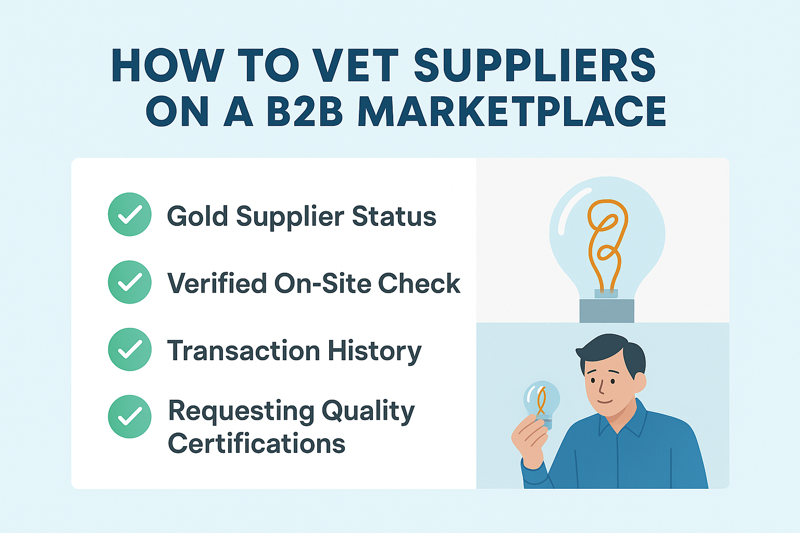
Platforms like Alibaba and Made-in-China.com are the next logical step, and they are a massive improvement over consumer sites. They are designed specifically for global trade and connecting buyers like you with manufacturers. Here, you can find thousands of potential suppliers for LED filament bulbs. However, this vast choice is also the biggest challenge. These platforms are open marketplaces, and the quality of suppliers varies enormously. The key to using them successfully is to approach them not as a "store," but as a database for starting your research. You must learn to distinguish between two main types of sellers: "Trading Companies" and "Factories." A trading company is a middleman; they don't produce the goods themselves but source them from various factories. While some are excellent and provide valuable services, they add a layer of cost and can complicate communication. A true factory, like Hongyu Bulb, controls the entire production process, from raw materials to final assembly. This is where you find the deepest product expertise and the best control over quality. The platform's tools, like "Gold Supplier" status or "Verified" badges, are a good starting point, but they are not a substitute for your own rigorous vetting process.
The Pitfalls of Sourcing on Consumer Platforms
For a professional buyer, the risks inherent in these platforms are significant.
- Lack of Batch Consistency1: The core of the problem. Products are often commingled in warehouses, meaning an order for 500 units could be fulfilled from five different production runs, resulting in noticeable variations in color, brightness, and performance.
- Questionable Seller Vetting2: While platforms have rating systems, these can be manipulated. It's difficult to distinguish between a legitimate brand, a temporary reseller, and a low-quality factory simply trying to offload excess inventory. You have no real insight into the seller's quality control processes.
- No Technical or Engineering Support: If you have a question about PWM flicker frequency for a video installation or need detailed photometric files, a typical third-party reseller on a B2C site will have no idea what you are talking about. You are isolated from the people who actually made the product.
| Sourcing Factor | Consumer E-commerce (e.g., Amazon) | Professional B2B Requirement |
|---|---|---|
| Product Consistency | Very Low (Commingled inventory) | Essential (Guaranteed batch consistency) |
| Seller Identity | Opaque (Many third-party resellers) | Transparent (Directly with factory or vetted agent) |
| Technical Support | Minimal to None | Crucial (Access to engineering specifications) |
| Pricing Model | Retail price + Reseller Margin | Wholesale Price (Direct from source) |
These platforms are perfectly fine for buying a few bulbs for your home. For your business, they represent an unacceptable level of risk.
What is the Most Reliable Way to Source Bulbs Online?
You've done the research and realize you need more than just a product; you need a partner. Where do you find a direct relationship that guarantees quality, clear communication, and a reliable supply chain for the long term?
The most reliable method is to bypass marketplaces and build a direct relationship with a vetted manufacturer through their own professional website. This establishes a direct line of communication with their engineering and sales teams, ensuring maximum transparency, quality control, and potential for customization.
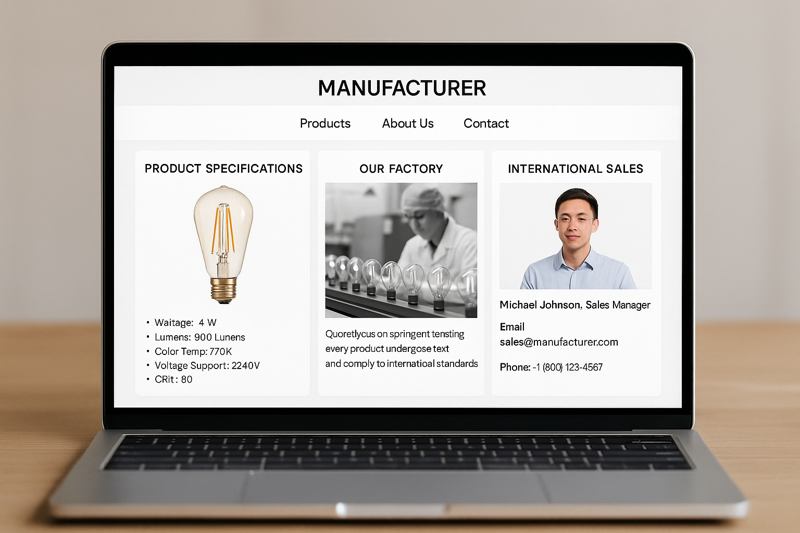
After navigating the risks of consumer sites and the complexities of B2B marketplaces, we arrive at the optimal solution for a serious professional buyer: going direct. A reputable manufacturer's website is more than just a catalog; it's a statement of their capabilities, professionalism, and commitment to quality. This is the online equivalent of walking directly onto the factory floor. Here, you are not dealing with a reseller or an anonymous agent; you are engaging directly with the source. This model is built on partnership, not just transactions. When you contact a manufacturer like Hongyu Bulb through our website, your inquiry is handled by a dedicated account manager, like me, who understands both the product and the needs of international buyers. We can provide you with detailed technical data sheets, photometric files, and comprehensive information about our quality assurance processes. This direct channel removes all the ambiguity and communication barriers that plague other online sourcing methods. It is the single best way to solve the core pain points that buyers like Jacky face: ensuring quality, simplifying communication, and establishing reliable lead times. This is how you build a resilient and predictable supply chain.
The Benefits of a Direct Partnership
Building this direct relationship is a strategic investment in your business.
- Unparalleled Transparency3: You have a direct view into the manufacturer's capabilities. You can discuss their R&D process, their material sourcing, and the specific quality control checkpoints on their production line. There are no middlemen to filter or distort information.
- Customization and Collaboration4: A direct relationship opens the door to collaboration. Need a specific Kelvin temperature for a client? Want to develop a product line with your own branding (OEM)? This level of customization is only possible when you are working directly with the factory's design and production teams.
- Accountability and Long-Term Support: When you partner directly with a manufacturer, they are fully accountable for the quality of their product. They have a vested interest in your success because they want to build a long-term relationship. This means better after-sales support and a partner who is invested in helping you solve problems.
| Sourcing Method | Communication | Quality Control | Customization |
|---|---|---|---|
| Consumer E-commerce | Indirect, via platform | None | Impossible |
| B2B Marketplace | Varies, can be with middlemen | Must be heavily vetted by you | Limited |
| Direct Manufacturer Website | Direct with expert team | Transparent and integrated | Fully possible (OEM) |
Finding a manufacturer's website through a targeted Google search, an industry directory, or a recommendation from a trade fair is the final and most effective step in your online sourcing journey. It's how you move from being a "buyer" to being a "partner."
Related HongYu product pages
- LED Filament Bulb Product Range → — standard and decorative LED filament bulbs for wholesale and project sourcing.
- Contact HongYu Bulb → — send your target specifications, quantity, market and packaging requirements for quotation.
Conclusion
For reliable online sourcing, bypass consumer sites, use B2B marketplaces for initial research, but ultimately aim to build a direct relationship with a quality manufacturer through their professional website for the best results.
Understanding batch consistency is crucial for ensuring product quality and reliability in your sourcing strategy. ↩
Learn how to navigate seller vetting processes to avoid risks and ensure quality in your purchases. ↩
Explore this link to understand how transparency can enhance your business relationships and decision-making. ↩
Discover insights on how collaboration can lead to innovative products and stronger partnerships. ↩