Are you overwhelmed by the countless LED filament bulb brands on the market? Choosing the wrong supplier can lead to quality complaints, project delays, and damaged client relationships, turning a profitable venture into a costly headache.
The "best" brands fall into three categories: global innovators like Philips (Signify) for technology, niche specialists like Tala for boutique design, and expert Original Equipment Manufacturers (OEMs). For most professional buyers, the ideal choice is a direct OEM partner who offers quality, reliability, and customization.

Many years ago, at a major international lighting fair, I watched a potential buyer, someone much like our friend Jacky, walk through the massive exhibition halls. He looked completely lost. He'd go to the giant, flashy booths of the huge household names, pick up their beautifully packaged products, and look at the price with a frown. Then he'd walk over to a tiny, artistic booth with stunningly beautiful designer bulbs and again, shake his head at the price. He was stuck between the mass-market giants who didn't quite fit his business model and the boutique designers who were too expensive to be scalable. He was looking for a third option: the actual source. The place where the quality was engineered, the production was controlled, and a real partnership could be formed. It taught me that for a professional, the "best brand" isn't a name you see in a retail store; it's the reliable partner behind the scenes.
What Defines the Market-Leading Retail Brands?
You see names like Philips and GE everywhere, so they must be a safe bet, right? But their massive scale is built for consumer retail, which might not align with your professional B2B needs for flexibility and direct support.
Global leaders like Philips (now Signify) and GE Lighting are defined by their immense investment in research and development, their powerful brand recognition, and their vast, multi-layered distribution networks. They are masters of the high-volume consumer market and often set the technological benchmarks for the industry.
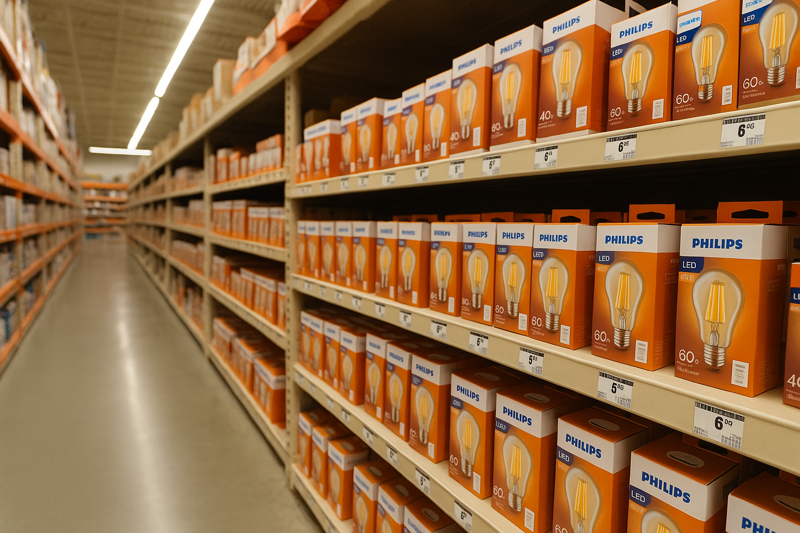
When we talk about the giants of the lighting world, we're talking about companies that have shaped the industry for over a century. Their primary strength lies in their ability to invest millions in fundamental research. They pioneer new technologies in LED efficiency, color science (like high CRI), and smart lighting platforms. This innovation builds incredible brand trust with the end consumer. If someone buys a Philips bulb from a local store, they have a certain expectation of quality, backed by the brand's reputation. Their entire business model is built around this mass-market dominance. They manufacture in enormous quantities, focus on sleek, consumer-friendly packaging, and sell through a complex chain of national distributors and big-box retailers. For a B2B buyer, this means you are often several steps removed from the actual factory. The product is standardized, customization is nearly impossible, and your primary contact is a sales representative for a distributor, not an engineer at the manufacturing plant. They are undoubtedly excellent, but they are playing a different game—the game of conquering the retail shelf space.
The Strengths and Challenges for a B2B Buyer
Understanding their model is key to knowing if they are the right fit.
- The Power of R&D and Patents1: These companies hold foundational patents on LED technology. Their products often feature sophisticated drivers for smooth dimming and high color rendering. They set a high bar for quality that the rest of the industry, including specialized manufacturers like us, must meet or exceed. Their brand name carries weight and can be a selling point in itself.
- The B2C Business Model2: Their focus is on the end consumer (Business-to-Consumer). This means their products are designed for general use cases and packaged for retail appeal. This can lead to a lack of flexibility for professional projects that may require specific CCTs, different base types, or bulk, non-retail packaging. Communication flows through a long chain, which can make getting technical support or resolving issues a slow process.
- Price vs. Value: Because of the brand name, marketing overhead, and multiple layers of distribution, the price-per-unit for their products is often higher than what you could achieve by working directly with a manufacturer. You are paying for the brand as much as the bulb.
| Brand Strengths | Potential B2B Challenges |
|---|---|
| Exceptional Brand Trust & Recognition | Higher Cost per Unit |
| Cutting-Edge R&D and Innovation | Inflexibility & Lack of Customization |
| Wide Availability via Distribution | Indirect Communication & Support |
| Consistent Consumer-Grade Quality | Primary Focus is on Retail, not B2B Partners |
For a buyer who needs a standard, off-the-shelf product and whose customers value a famous brand name above all else, these companies can be a great choice. But for those who need a partner, not just a product, a different approach may be needed.
Why Do Niche and Designer Brands Command Premium Prices?
You've seen stunningly beautiful filament bulbs from boutique brands, but their high cost seems hard to justify. Are you paying for real quality, or just a fancy name and a story?
Niche brands like Tala or Bulbrite justify their premium prices by focusing on aesthetics as the primary product feature. They offer unique, sculptural filament designs, superior materials like mouth-blown glass, and advanced features like perfect Dim-to-Warm technology as standard.
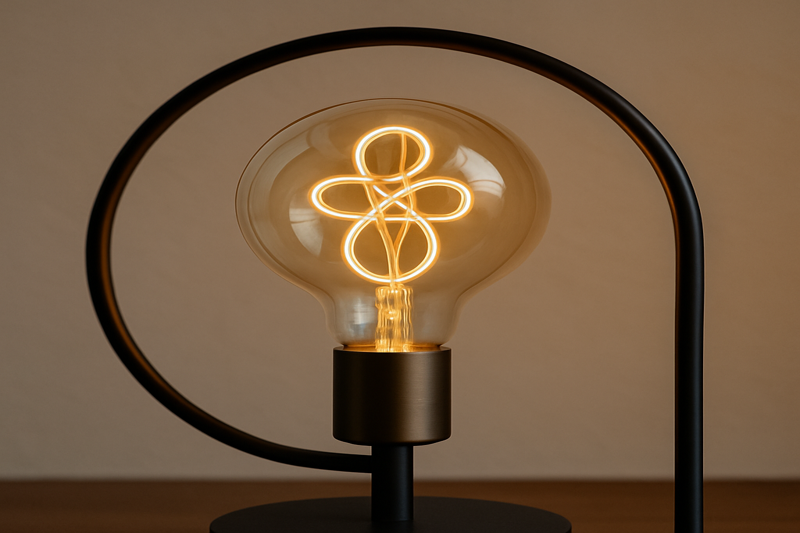
In the high-end decorative lighting market, the bulb is not a disposable commodity; it is a central element of the design. This is the world where niche and designer brands thrive. Their entire philosophy is different from the mass-market giants. They don't compete on volume or price; they compete on beauty and emotion. They treat each bulb as a piece of jewelry for the home. You will see them pioneer intricate filament shapes that go far beyond a simple loop or straight line, creating spirals, diamonds, or flower-like patterns. They use heavier, higher-clarity glass, sometimes even hand-blown, to create a sense of true craftsmanship. These companies understand that their audience—architects, interior designers, and discerning homeowners—is willing to pay a premium for a product that is visually unique and creates a specific, high-end atmosphere. They often lead the market in the adoption of features like ultra-high CRI (95+) and exceptionally smooth Dim-to-Warm technology, because these features are essential to creating the perfect ambiance their clients demand. They are selling an experience, and the bulb is the star of that experience.
The Trade-off: Scale vs. Style
Their focus on design creates a different business model.
- Aesthetics as the Primary Driver3: For these brands, the technical specifications are in service of the design. The goal is to create a bulb that looks as beautiful when it is off as it does when it is on. This involves significant investment in industrial design and material sourcing.
- Sourced from Manufacturing Experts4: It's important to understand that most of these niche brands are not the original manufacturers. They are design and marketing companies. They create the specifications and the beautiful designs, and then they partner with high-quality OEM/ODM factories—like Hongyu Bulb—to bring their vision to life. This is a critical point. The exceptional quality they demand is engineered and produced by a dedicated manufacturing partner. They are experts at branding and curation, while their factory partners are experts at precision manufacturing.
- The Target Market: Their products are aimed at the B2B decorative market (hotels, high-end restaurants) and the B2C luxury consumer market. The scale is smaller, the product runs are more specialized, and the pricing reflects the design investment and marketing costs.
| Features & Strengths | Business Considerations |
|---|---|
| Unique & Exclusive Designs | Significantly Higher Unit Cost |
| Exceptional Light Quality (High CRI, Dim-to-Warm) | Smaller Production Scale |
| Premium Materials and Craftsmanship | Often Sourced from OEM/ODM Partners |
| Strong Appeal in High-End Decorative Markets | Model is Design/Marketing, not Manufacturing |
These brands are an excellent choice for projects where budget is secondary to achieving a specific, unique aesthetic. They prove that there is a strong market for high-quality, beautifully designed bulbs.
How Can a Direct OEM Partner Be Your Best Choice?
Are you tired of being just another customer number to a giant corporation or paying high prices for a designer brand? What if you could get the quality and innovation you need by working directly with the source?
A direct Original Equipment Manufacturer (OEM) partner, like Hongyu Bulb, offers the perfect balance for most professional buyers. We provide the high-quality engineering and reliability of the top brands, but with the flexibility, direct communication, and cost-effectiveness of a true manufacturing partner.

This is the third path, and for many businesses, it is the most strategic one. An OEM partner is a factory that has the expertise, technology, and quality control systems to manufacture products to the highest standards. We are the ones who produce bulbs for other brands. By working directly with a partner like Hongyu Bulb, you are going straight to the source of the engineering and quality control. This fundamentally changes the relationship from a simple transaction to a collaborative partnership. Your biggest pain points—quality, communication, and lead times—are our primary focus. We don't have layers of distributors. When you have a technical question, you speak directly to our engineers. When you need a specific modification—perhaps a unique color temperature, a special base, or branded packaging—we have the flexibility on the production line to make it happen. Because you are eliminating all the middlemen, the cost structure is far more efficient, allowing you to source a premium-quality product at a much more reasonable price. This is how you build a reliable supply chain and a competitive advantage. You get the quality that rivals the best brands in the world because we are obsessed with the same engineering principles: superior driver technology for perfect dimming, high-quality LED chips for excellent CRI, and robust construction for long-term reliability.
The Strategic Advantages of Partnership
This model is built around the needs of the professional buyer.
- Quality Control is Paramount5: In our factory, quality isn't just a final inspection. It's a process that is built into every step, from sourcing the raw materials for our LED chips and glass to the multi-stage testing of every single bulb before it is packaged. This obsession with quality control is how we earn the trust of our partners.
- Flexibility and Customization: Your business is unique. Maybe you need a specific 2400K bulb for a hotel client, or you want to launch your own brand of lighting. A direct manufacturing partner has the agility to accommodate these requests in a way that large, rigid corporations cannot. We can adjust production runs, develop custom solutions, and become an extension of your product development team.
- Direct Communication and Transparency6: The biggest frustration in international sourcing is poor communication. As a direct partner, we prioritize clear, responsive, and expert communication. You have a dedicated point of contact, like myself, who understands your business and can provide transparent updates on production, quality assurance, and shipping logistics. We solve problems together, quickly and efficiently.
| Partnership Benefit | The Result for Your Business |
|---|---|
| Direct-from-Factory Pricing | Improved Margins and Competitiveness |
| Rigorous, End-to-End Quality Control | Reduced Defects and Increased Customer Satisfaction |
| Product Customization Options | Ability to Serve Niche Markets and Build Your Own Brand |
| Direct Access to Engineers & Support | Faster Problem Solving and a More Reliable Supply Chain |
The "best brand" for your business may not be a brand at all. It may be a quiet, reliable, and expert manufacturing partner dedicated to your success.
Related HongYu product pages
- LED Filament Bulb Product Range → — standard and decorative LED filament bulbs for wholesale and project sourcing.
- Contact HongYu Bulb → — send your target specifications, quantity, market and packaging requirements for quotation.
Conclusion
The best LED filament bulb brand depends on your business model. While global brands offer trust and niche brands offer design, a direct OEM partner provides the ultimate combination of quality, flexibility, and value.
Exploring this resource will provide insights into how R&D and patents drive innovation and competitive advantage in tech. ↩
This link will help you understand the implications of a B2C model on product flexibility and customer engagement. ↩
Exploring this link will deepen your understanding of how aesthetics influence consumer choices and brand success. ↩
This resource will provide insights into the crucial partnerships that enhance product quality and innovation. ↩
Explore this link to understand essential quality control practices that can enhance your manufacturing processes and build trust with partners. ↩
Discover how effective communication strategies can strengthen partnerships and lead to better collaboration and problem-solving. ↩