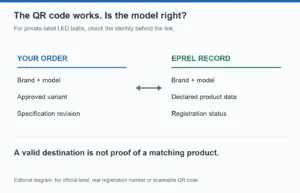
Why T45 Tubular Bulbs Are Not Just Another Decorative Shape
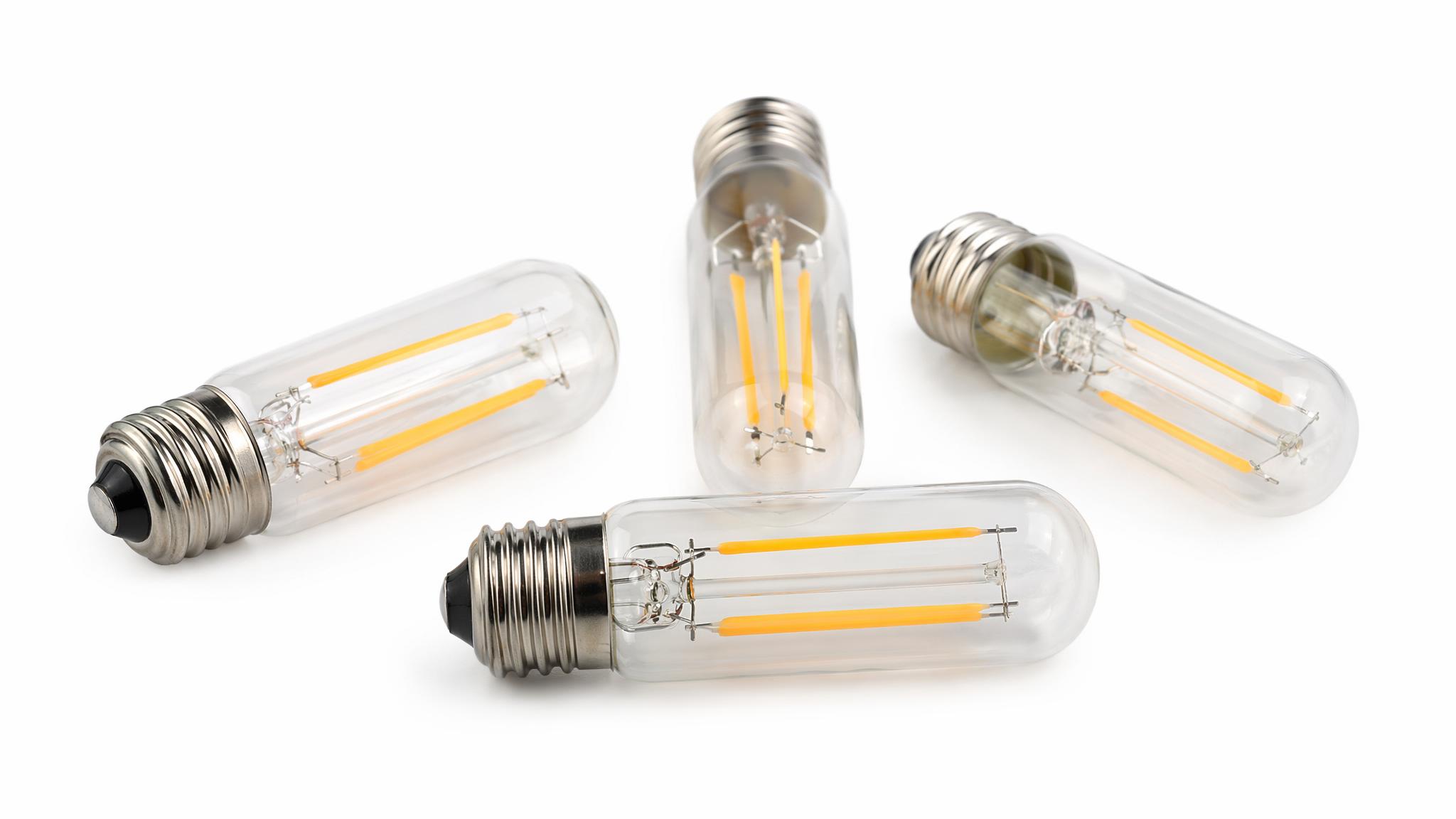
T45 tubular LED filament bulbs are commonly selected for exposed-bulb fixtures in restaurants, bars, cafés, hotels, retail stores, and industrial-style interiors. At first glance, many buyers treat them as a simple alternative to A-shape or ST-style filament bulbs. In practice, the T45 shape creates different optical, thermal, and fixture-compatibility considerations that should be specified before a bulk order is placed.
The “T” in T45 refers to the tubular glass form, while the number typically indicates the approximate diameter in millimeters. In many sourcing discussions, T45 is also compared with T10-style tubular lamps, especially in markets where inch-based and millimeter-based descriptions are both used. The key point for B2B buyers is that a tubular bulb is defined not only by diameter, but also by total glass length, base type, filament layout, driver design, and intended installation position. General light-bulb efficiency guidance from ENERGY STAR lighting resources can help buyers compare performance claims across suppliers.
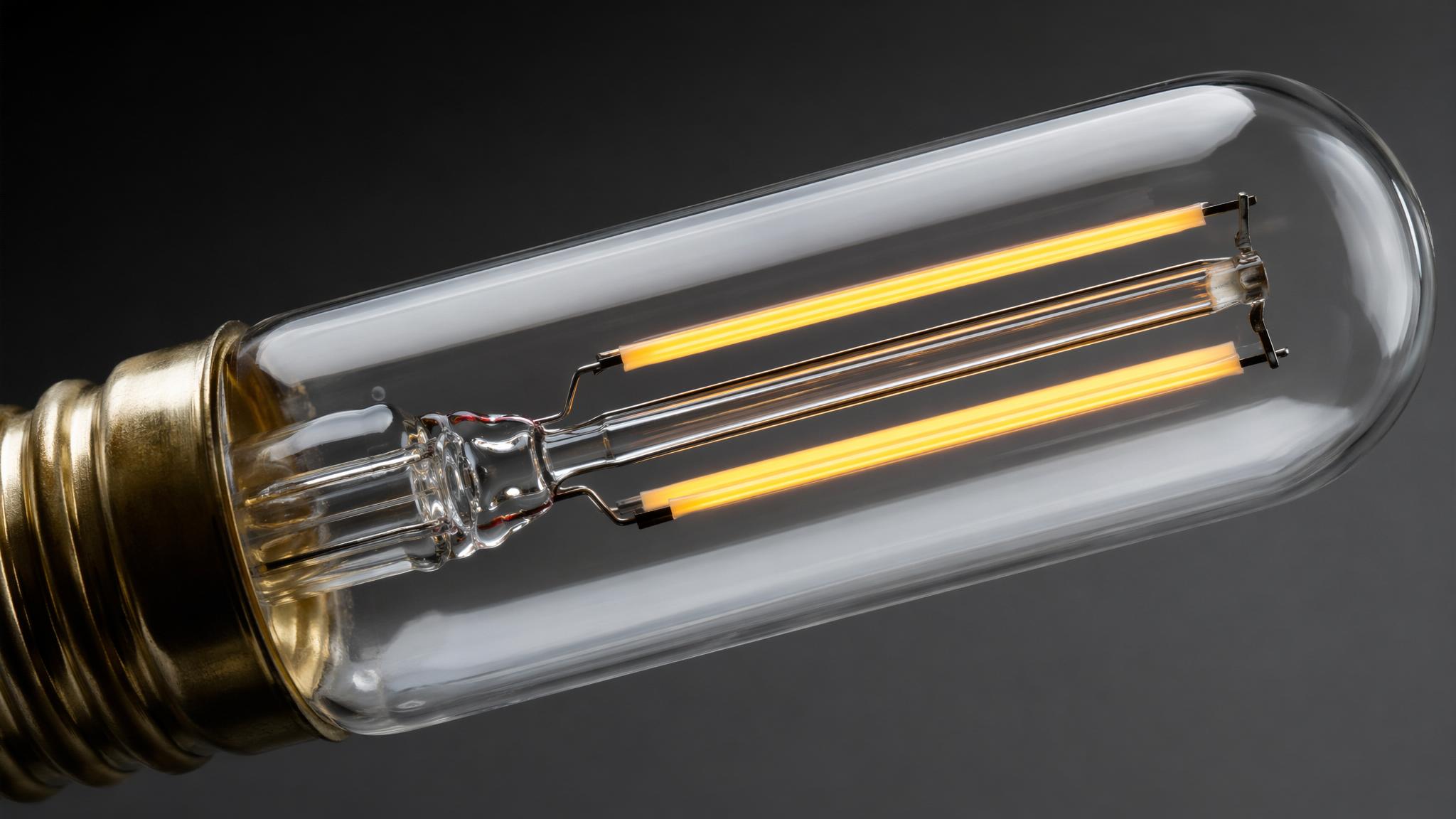
Unlike a standard A60 bulb, a T45 lamp has a long, narrow envelope. This affects how the bulb sits inside cages, sconces, linear pendants, and narrow shades. It also changes how heat is distributed along the glass and how the visible filament appears from the side. For importers and distributors, these details can determine whether a SKU becomes a stable repeat item or creates compatibility complaints after delivery.
Best Application Fit for T45 and T10 Tubular Filament Bulbs
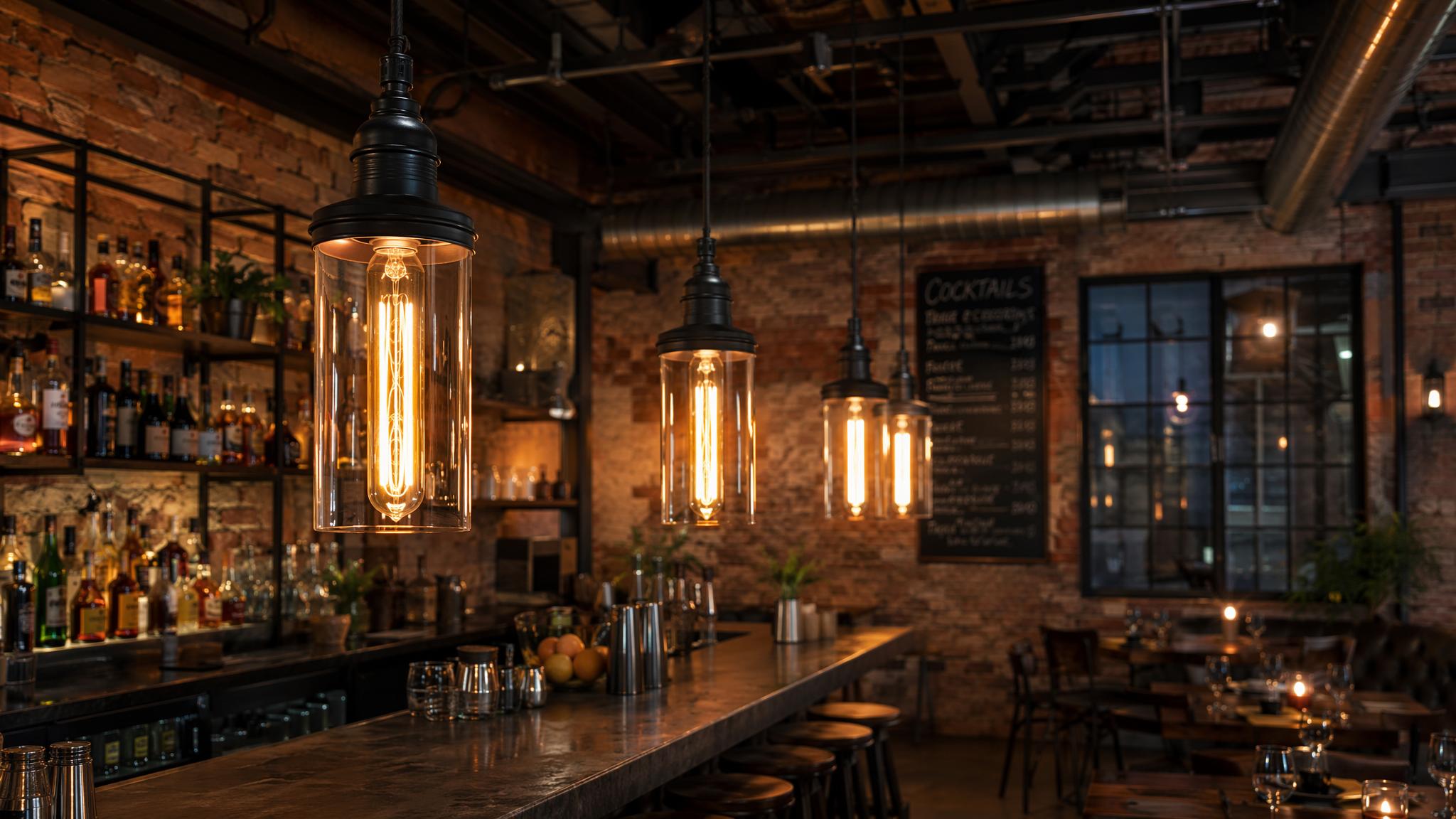
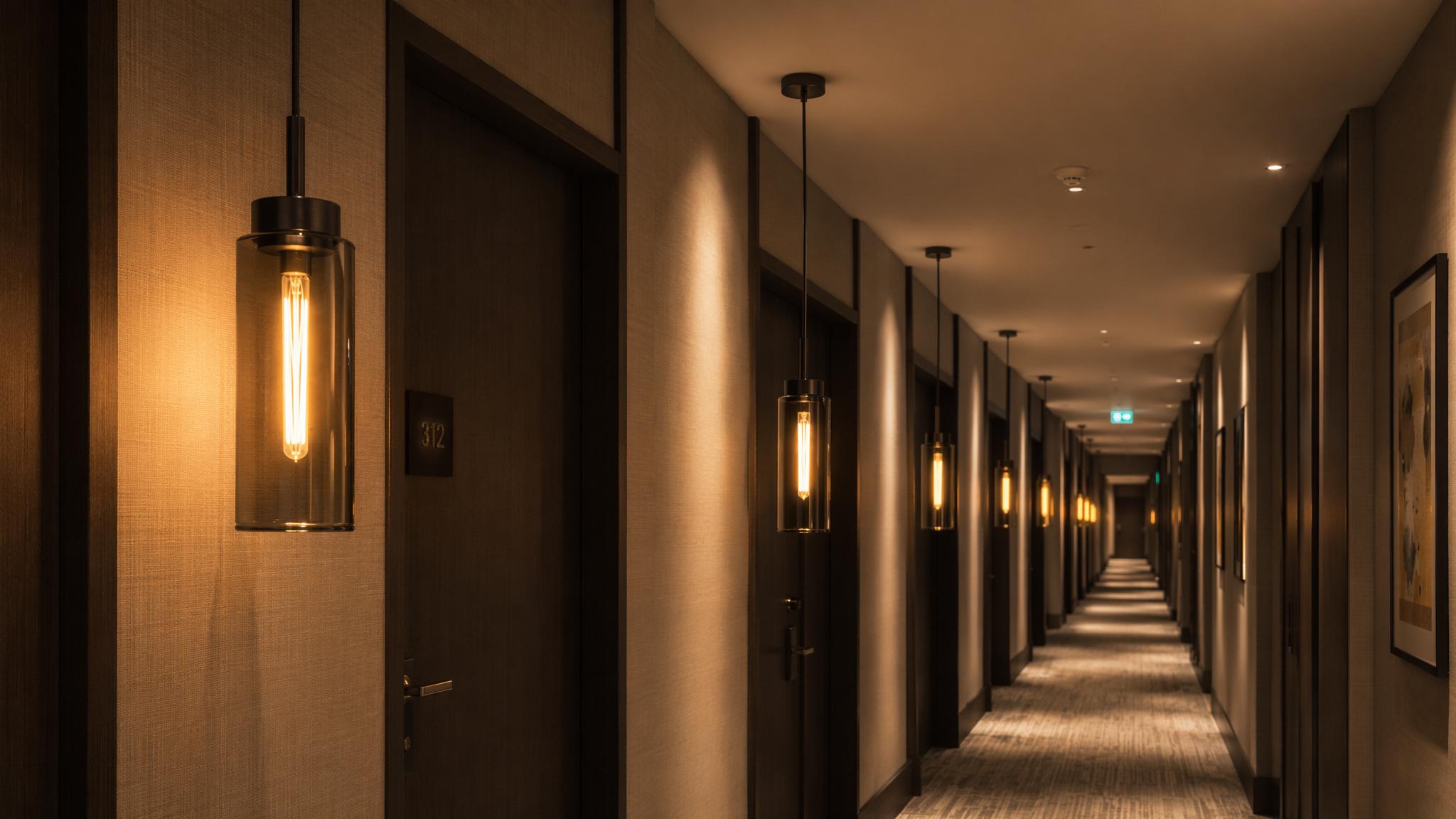
T45 bulbs perform best where the lamp body is meant to be visible. Common commercial applications include exposed pendant lights, wall sconces, cage fixtures, bar counter lighting, shelving displays, and industrial-style decorative luminaires. The straight tubular shape gives a cleaner vertical or horizontal line than round or pear-shaped bulbs, which is why designers often choose it for narrow fixtures.
For hospitality projects, T45 bulbs are often installed in clusters or repeated rows. In those cases, consistency matters more than it might in a single decorative fixture. Buyers should confirm that glass length, tint, filament position, and color temperature → are stable across production batches. A small visual difference may be acceptable for replacement bulbs sold one by one, but it becomes obvious when twenty lamps are installed above one bar counter.
Wall sconces are another strong application. The tubular form fits many narrow glass covers or metal frames where A60 bulbs look too wide. However, the buyer must verify the internal fixture clearance, not just the base. A lamp that fits the socket may still touch a shade, cage, or decorative sleeve if the total length or glass diameter is not controlled.
For outdoor or semi-outdoor commercial use, buyers should be cautious. Most T45 decorative filament bulbs are intended for dry or damp locations depending on construction and certification. If the bulb will be used in patio sconces, covered terraces, or open restaurant façades, the fixture rating and lamp specification should be reviewed together. The bulb alone should not be treated as weatherproof unless it is clearly designed and tested for that use.
Key Specifications Buyers Should Confirm Before Ordering
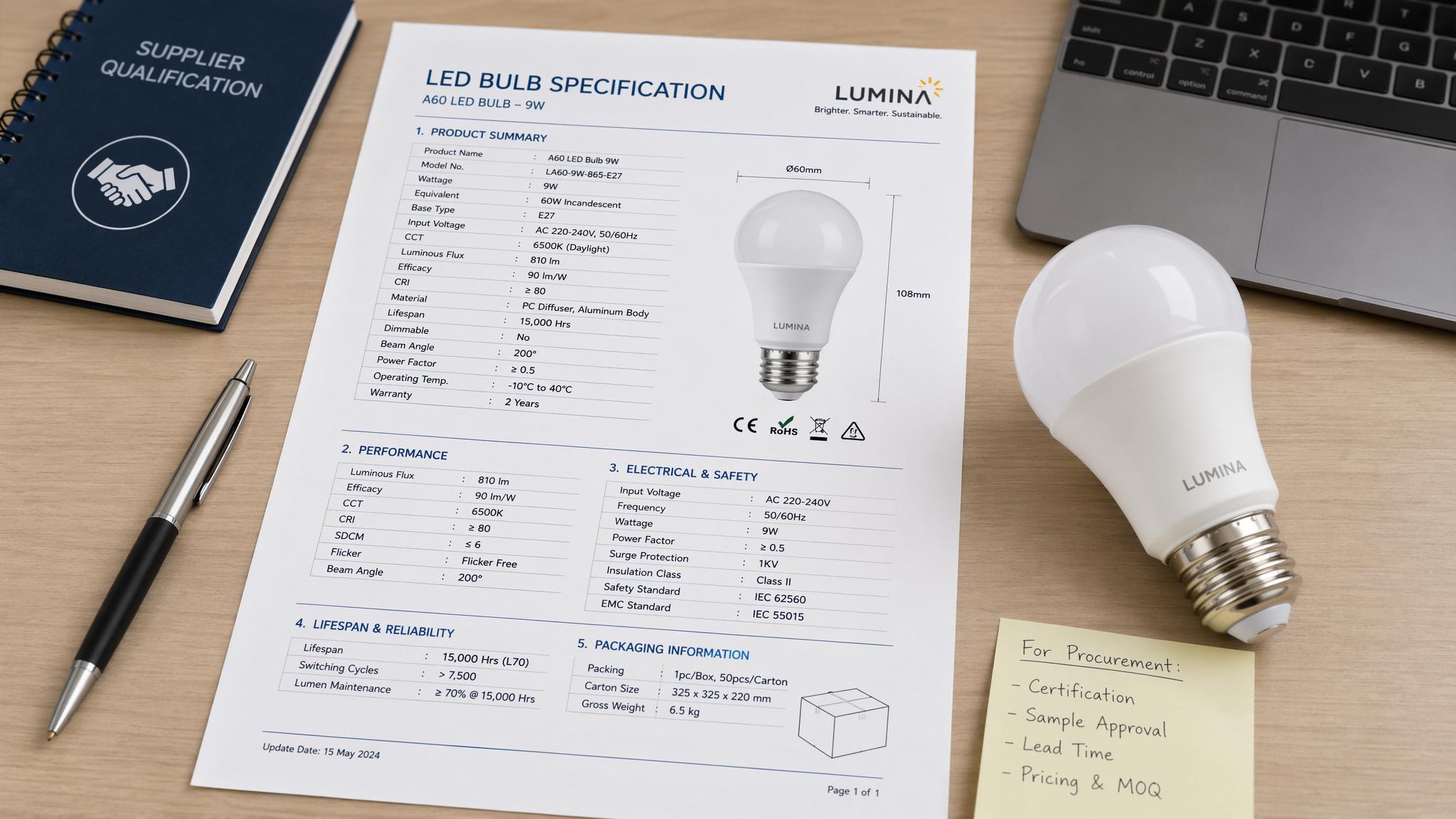
A reliable T45 order starts with a complete technical specification. The most common base types are E26 and E27, but some projects may require E14 or other regional bases. The base must match both the target market and the fixture design. For OEM or private-label orders, base material, plating color, and thread quality should also be confirmed because exposed bulbs often show part of the cap.
Wattage and lumen output should be specified together. Decorative T45 bulbs are often chosen for visible glow rather than maximum brightness, but commercial buyers still need predictable output. A 4W tubular bulb from one supplier may be intended as an ambient lamp, while another 4W version may use a different filament layout and produce noticeably higher or lower lumens. Do not rely on wattage alone as the brightness indicator.
Glass dimensions → are especially important. Buyers should define diameter, total length, visible glass length, and overall length including the base. In our experience, many bulk-order problems come from using only the shape name, such as “T45 E27 4W,” without confirming whether the lamp is short, medium, or long-body. Fixture manufacturers and distributors should keep a dimensional drawing in the purchase file.
Other parameters to confirm include:
- Input voltage: 110–130V, 220–240V, or wide-voltage design depending on market.
- CCT: 2200K, 2700K, 3000K, or another agreed range with tolerance.
- CRI: typically CRI 80+ or CRI 90+ depending on project level.
- Glass finish: clear, amber, smoke, milky, or custom coating.
- Filament style: straight, spiral, vertical, or decorative arrangement.
- Certifications: CE, RoHS, ERP, UKCA, ETL, UL, or other market requirements.
Dimming Compatibility Is More Critical for Tubular Shapes
Dimming is one of the most important sourcing points for T45 bulbs because many commercial applications use mood lighting. Restaurants, bars, boutique hotels, and retail spaces often install dimmers to adjust the atmosphere throughout the day. If the tubular bulb flickers, drops out at low levels, buzzes, or dims unevenly, the complaint usually reaches the distributor quickly.
The challenge is that a narrow tubular bulb leaves limited internal space for the LED driver. Some low-cost versions use simplified driver designs that may work on a basic switch but perform poorly with phase-cut dimmers. Buyers should not assume that any lamp marked “dimmable” will work with the dimmer systems used in their market.
Before placing a large order, ask for the dimming type and test with common dimmer models. For North American markets, compatibility with leading-edge and trailing-edge dimmers may need to be checked. For European hospitality projects, buyers should confirm behavior at low dimming levels and with multiple bulbs connected on one circuit. Minimum load requirements can still create field issues even when each bulb passes a simple bench test.
Good dimming performance → should include stable light output, minimal audible noise, no visible flicker, smooth reduction across the practical range, and reliable restart from low settings. For distributors, keeping a dimmer compatibility list with the SKU can reduce returns and help sales teams answer technical questions more confidently.

Common Bulk Ordering Mistakes with T45 Bulbs
The first common mistake is ordering by photo. T45 bulbs are visual products, so catalog images matter, but they do not replace dimensions and electrical specifications. Two tubular bulbs can look similar in a photo while having different lengths, lumen output, glass tint, or base finish. A buyer should always connect the product image to a written specification and approved sample.
The second mistake is assuming interchangeability with A-shape bulbs. A distributor may already sell A60 or ST64 filament bulbs → and expect the same driver, dimming behavior, and packaging approach to work for T45. The slimmer body changes the internal space available for components. It may also require different protective packaging because long glass envelopes can be more vulnerable to end impact during transport.
The third mistake is ignoring installation orientation. Some tubular bulbs are installed vertically in pendants, while others are installed horizontally in wall lights or linear fixtures. Heat behavior and visual filament alignment can be different in each position. If a project depends on a specific orientation, it is worth testing samples in the actual fixture before confirming the order.
The fourth mistake is under-specifying the glass finish. Amber or smoke glass can vary between batches and suppliers. For decorative lighting brands, this affects product consistency in showrooms and catalog photography. Buyers should agree on a reference sample and define whether the glass finish is part of the approved standard.
Finally, many buyers fail to confirm spare-part strategy. T45 bulbs used in commercial venues may need replacements months after the first installation. If the SKU is highly customized, distributors should consider keeping replacement stock or confirming future production availability with the supplier.
FAQ: T45 Tubular LED Filament Bulbs
Is T45 the same as T10?
Not always. T45 usually refers to an approximate 45 mm tubular diameter, while T10 is often used in inch-based naming systems. The terms may overlap in supplier catalogs, but buyers should confirm exact diameter, total length, base type, and voltage instead of relying on the name alone.
Are T45 bulbs suitable for enclosed fixtures?
Only if the bulb is specifically rated for enclosed use. Tubular LED filament bulbs can be sensitive to heat buildup, especially in narrow or covered fixtures. Buyers should ask for enclosed-rating information and test the lamp inside the intended fixture.
What CCT is most common for decorative T45 bulbs?
Warm white options such as 2200K and 2700K are common for hospitality and decorative lighting. Some retail applications may prefer 3000K for a cleaner appearance. The correct choice depends on the project, but the tolerance should be defined in the specification.
Should distributors stock dimmable or non-dimmable T45 bulbs?
For hospitality and exposed decorative fixtures, dimmable versions are often easier to position as a professional SKU. However, the dimming performance must be tested carefully. Non-dimmable versions may be suitable for price-sensitive projects using simple on/off switching.
Related HongYu Bulb product pages
- LED Filament Bulb Product Range → — standard and decorative LED filament bulbs for wholesale and project sourcing.
- Big Decorative Bulbs → — oversized decorative filament bulbs for hospitality, retail and statement fixtures.
- Contact HongYu Bulb → — send specifications, target market, quantity and packaging requirements for quotation.
Conclusion
T45 tubular LED filament bulbs can be strong B2B products when they are specified correctly. They fit commercial decorative fixtures where standard bulb shapes may look too wide or too ordinary, and they give lighting brands a useful SKU for exposed-bulb collections. The sourcing risk comes from treating the shape name as a complete specification.
Before stocking T45 bulbs, buyers should confirm base type, voltage, wattage, lumen output, glass length, finish, filament style, dimming performance, certification, packaging, and replacement availability. A sample should be tested in representative fixtures, especially when dimming or enclosed installation is involved.
For importers and distributors, the best next step is to turn the T45 shape into a controlled buying specification: confirm the fixture application, approve a dimensional drawing, test dimming in real installations, and lock the glass finish and filament layout before bulk production. If you are comparing T45 or T10-style suppliers, start the sourcing conversation with samples, target fixture photos, dimmer requirements, packaging expectations, and replacement-stock needs so the SKU can become a repeatable commercial product instead of a one-time decorative trial.