If you want to know how good a supplier engineering really is, source their G4 LED lamps.
You will find out within six months.
Standard A60 and ST64 decorative LED bulbs have enough physical space inside the lamp body to absorb a significant amount of mediocre engineering. A driver with marginal thermal management has room to breathe. A capacitor rated slightly below the ideal specification still meets the stated lifetime under normal conditions. In a G4 or G9 LED lamp, none of that forgiveness exists.
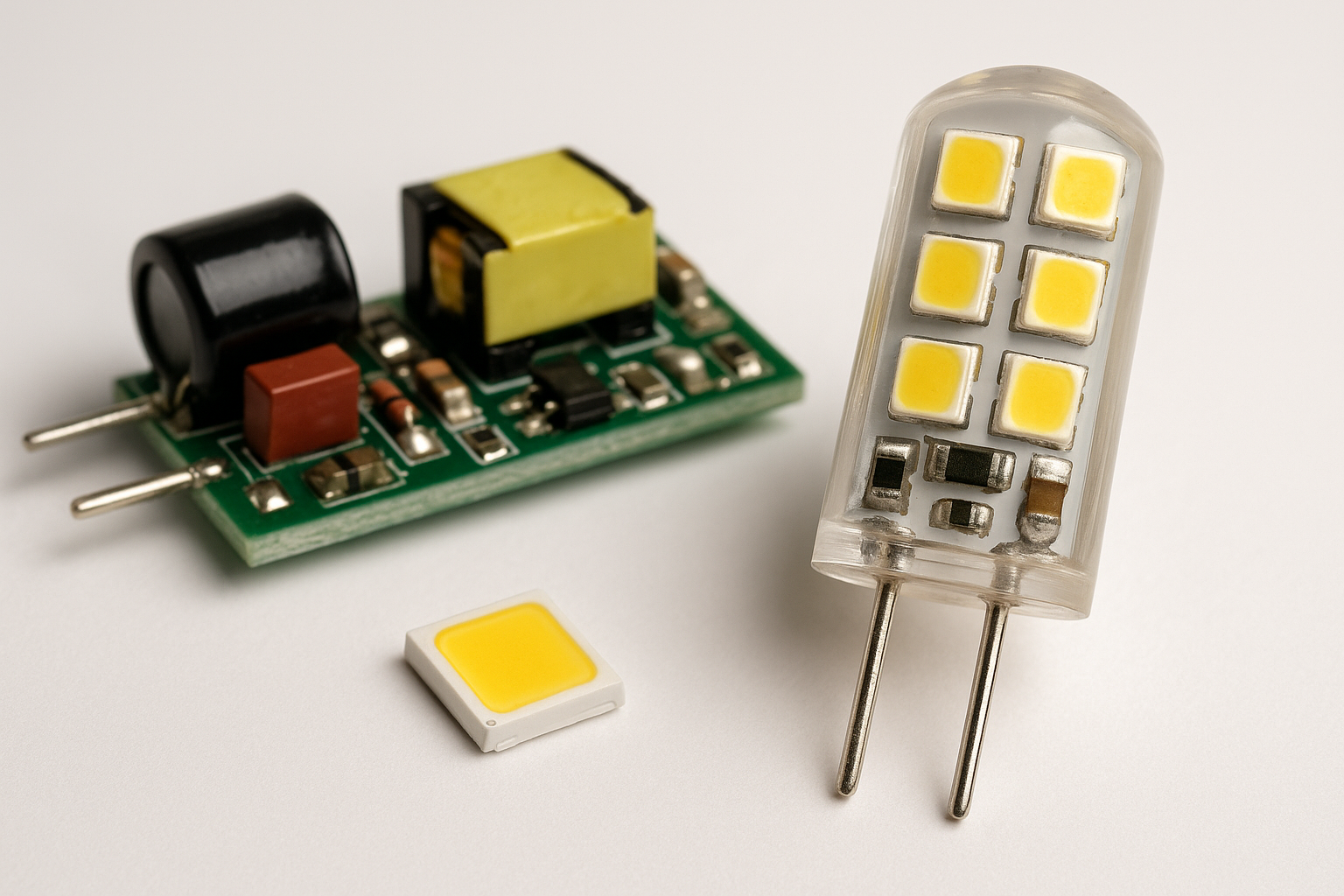
The physical constraints of a compact capsule body remove the engineering margin that hides weak design in larger lamps. Every shortcut in driver design, every marginal component choice, every thermal management compromise that would be invisible in a standard bulb becomes a field failure in a G4 or G9 — often within months of distribution.
This is not a reason to avoid G4 and G9 products. It is a reason to understand that sourcing compact LED lamps is a more demanding evaluation process than sourcing standard bulbs, and that suppliers who perform well at standard bulb quality do not automatically perform well at compact lamp quality.
The Physical Constraints That Expose Engineering Quality
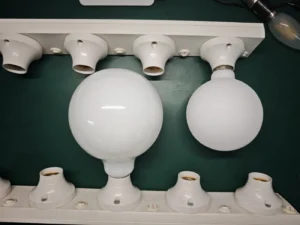
A standard A60 LED bulb body has an internal volume roughly equivalent to a small orange. The driver circuit, LED board, and thermal management components have real space to work with. There is room to include filtering capacitors that improve dimming performance. There is room to use components with appropriate temperature ratings.
A G4 LED lamp body has an internal volume roughly equivalent to a large grape. Everything that needs to fit in an A60 — driver, LED chips, electrical connections, thermal management — must now fit in a capsule roughly one-fifteenth the size. Every component is chosen partly because it is small enough to fit, and the margin for choosing components based on quality alone, without size constraints, is negligible.
Capacitor selection is the most important single indicator of driver quality in a compact LED lamp. In a large lamp body, a manufacturer can use well-rated, generously sized capacitors with good temperature headroom. In a G4 or G9, the capacitor must fit in a very small space, which creates pressure to use smaller, lower-rated components. A capacitor appropriate for a 40°C operating environment but asked to work in a 60°C enclosed fixture becomes a lifespan problem within months, not years. For a full breakdown of how this thermal failure pattern plays out in real distribution programs, see why G4 LED lamps that look fine in samples fail early in enclosed fixtures →.
Thermal pathway design matters more, not less, when the body is small. Heat generated by the driver and LED chip needs a pathway to the outside of the lamp body. In a small capsule, there is less surface area and less material to conduct that heat outward. Suppliers who have designed the thermal pathway carefully produce compact lamps with meaningfully longer field lives than suppliers who simply fitted the components into the available space without thermal planning.
What Passing the Factory Test Does Not Tell You About G4 and G9 Quality
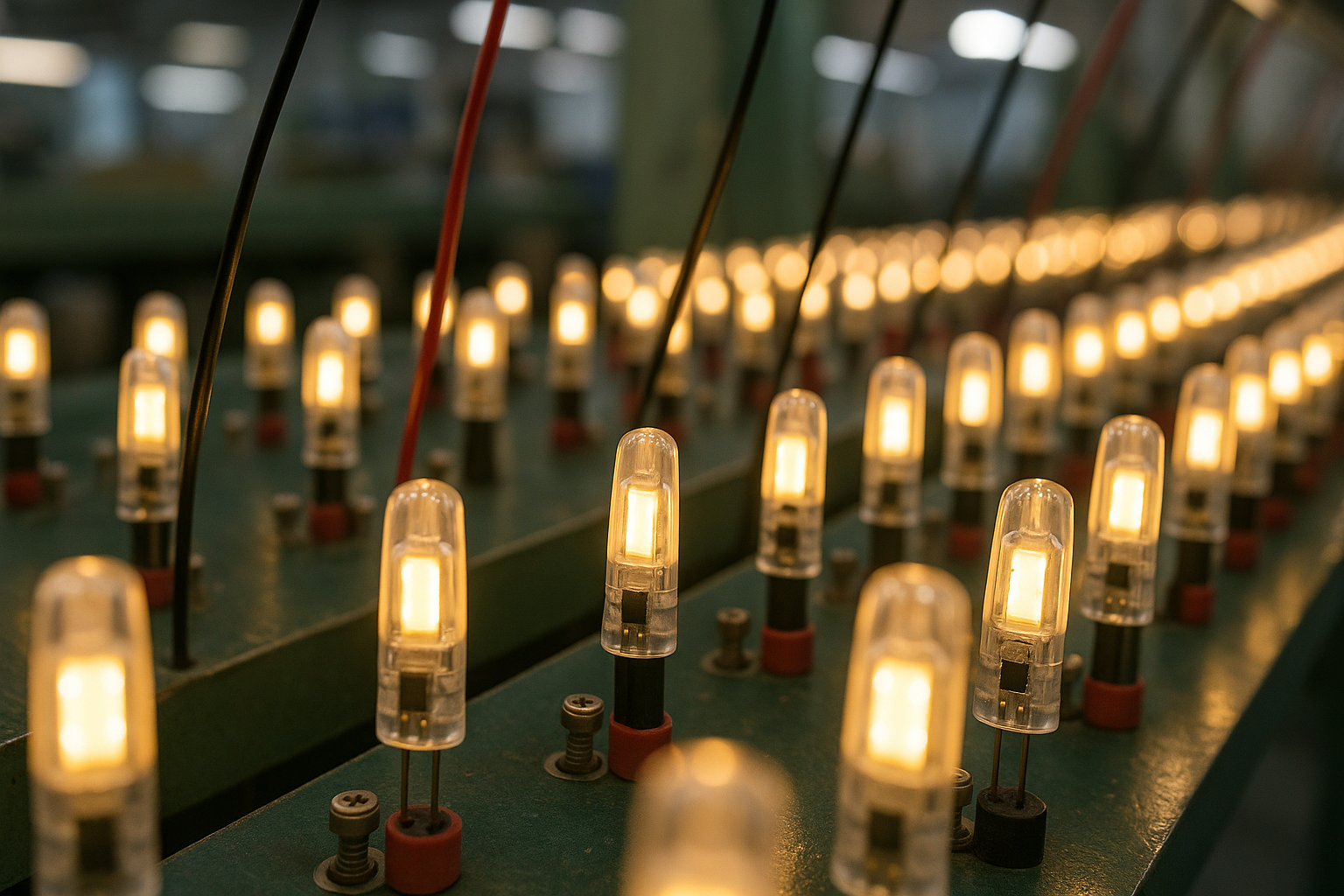
Suppliers test their G4 and G9 lamps before they leave the factory. Standard testing includes photometric measurement, electrical safety checks, and often a basic aging test. These tests are not meaningless. But they do not reveal the failure patterns most likely to affect compact lamps in real field conditions.
Standard photometric testing is done in open-air, temperature-controlled conditions. The results accurately reflect what the lamp does under those specific conditions. They do not reflect what the lamp does after 500 hours in a sealed glass pendant where the internal temperature averages 60°C.
Standard electrical safety testing checks for hazardous conditions, not for borderline reliability. A driver capacitor that is marginally rated for the operating temperature will pass every safety test. It will simply age faster than a properly rated capacitor and fail before the stated product lifetime.
Standard aging tests are typically conducted at controlled temperatures for standardized durations. They verify minimum performance requirements, not worst-case real-world performance. A compact lamp that passes standard aging in an open-air test facility may still show elevated failure rates in field conditions where the thermal environment is more demanding.
The test reports a supplier provides are necessary but not sufficient evidence of quality. They tell you the product was manufactured within specification at the time of testing. They do not tell you how well the product was engineered for the conditions your customers will actually use it in.
The Supplier Signals That Predict G4 and G9 Reliability Before You Place the Order
Reliable compact LED lamps are the product of deliberate engineering decisions during product development. The signals that predict whether a supplier has made those decisions are visible before you place an order.
Signal 1: Can the supplier state the maximum rated operating temperature of their G4 and G9 lamps? A supplier who can immediately provide the Ta rating and explain how it was determined has done the thermal analysis. A supplier who does not have this data — or gives a number without being able to explain what testing supports it — has not.
Signal 2: Can the supplier describe their driver component selection process? Specifically: what are the temperature ratings of the driver capacitors? This is a question a supplier with engineering depth can answer. A supplier who is assembling components from the lowest available bidder cannot. The answer does not need to be highly technical — it needs to demonstrate that deliberate component choices were made based on performance requirements.
Signal 3: Does the supplier have enclosed fixture test data? Ask whether the product has been tested inside a representative enclosed fixture, and whether internal fixture temperature data is available. This check is not standard in most factory testing programs. A supplier who has done it is doing more thermal validation than the minimum.
Signal 4: What is the supplier G4 and G9 return rate in their existing customer base? A confident, capable supplier can answer this with real data. A supplier who deflects, gives an implausibly low number without supporting detail, or does not track this data is not managing compact lamp quality effectively.
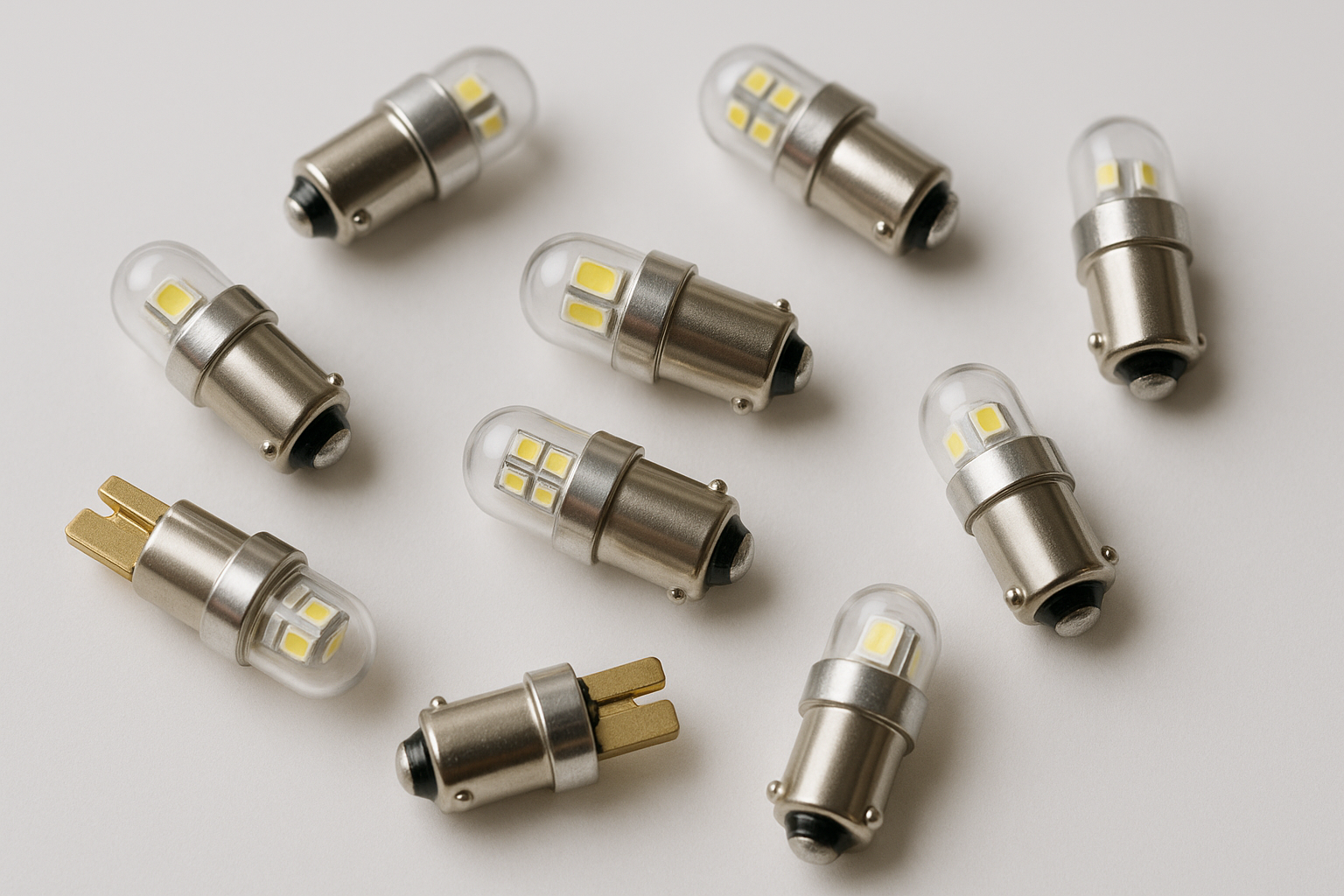
Why Small-Body Lamp Failure Patterns Are Different From Standard Bulb Failures
Understanding how G4 and G9 lamps fail in the field — and why those failures look different from standard LED bulb failures — helps importers interpret quality complaints more accurately.
Standard LED bulb failures in the field are most commonly visible problems: the lamp does not light, it flickers constantly, or output drops noticeably below rated level. When a standard LED bulb fails, it usually fails obviously.
Compact G4 and G9 failures more often appear as premature end-of-life. The lamp may continue to produce light for months after initial performance degradation begins. The first visible symptom in a thermally stressed compact lamp is often lumen depreciation — light output gradually drops over time as the driver capacitors age. The end customer notices the lamps are not as bright as they used to be. Eventually the lamp stops lighting entirely.
This failure pattern creates a difficult quality conversation. The lamp was working for a year or eighteen months. The supplier test report shows a rated life of 15,000 hours. The claim is difficult to process because there is no single moment of obvious failure to point to.
The implication for warranty and claims management: importers who distribute G4 and G9 lamps into enclosed fixture channels should be monitoring return patterns at a distribution level, not just responding to individual complaints. A rising return rate at the 12-18 month mark on a compact lamp program is a specification signal, not a random quality fluctuation.
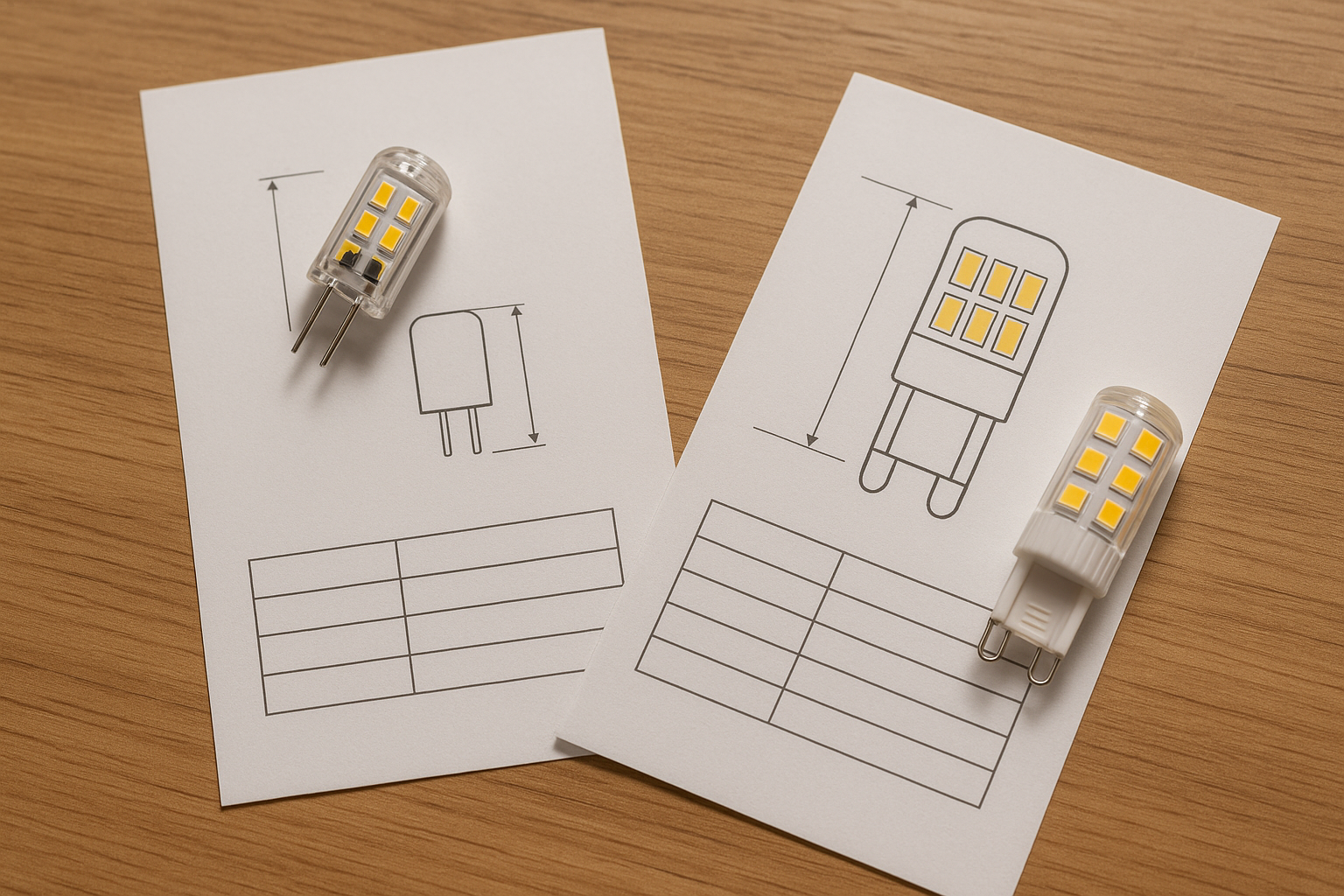
How to Evaluate G4 and G9 Sample Quality Beyond the Test Report
A practical G4 and G9 sample evaluation that goes beyond standard test reports does not require specialized laboratory equipment. It requires a systematic approach to checking the things that factory test reports do not cover.
Step 1: Thermal test in an enclosed fixture. Install the sample lamp in a representative enclosed fixture. Run it for two to four hours. Measure the surface temperature of the lamp body and the internal air temperature of the fixture. Compare against the lamp stated maximum operating temperature. If the fixture regularly exceeds the lamp rated Ta, the product is mismatched to the application.
Step 2: Dimming evaluation on representative dimmer types. If the product is specified as dimmable, test it on the two or three most common dimmer types in your target market. For a complete guide to what a useful dimming compatibility specification looks like for G4 and G9 products, see why ordering dimmable G4 or G9 lamps without a compatibility spec creates complaints later →. Observe the full dimming range, note the minimum stable brightness, listen for audible noise, and check for visible flicker at low brightness settings.
Step 3: Visual inspection for component quality signals. Examine the driver components where visible through the lamp base. Well-rated capacitors from recognized component manufacturers are a positive signal. Very small, generic, or unlabeled components in the driver circuit are a risk signal.
Step 4: Supplier reference check on compact lamp performance. Before approving bulk production on G4 or G9 products, ask the supplier for existing customer contacts who can speak to their compact lamp return rates and field performance.
FAQ
Why do G4 and G9 LED lamps have higher failure rates than standard LED bulbs in some programs?
Because the compact body removes the engineering margin that allows mediocre driver design to survive in standard-sized lamps. In a G4 or G9, the thermal environment is more concentrated and the consequences of marginal design choices become visible faster.
Is it possible to source reliable G4 and G9 LED lamps, or is the category inherently problematic?
The category is not inherently problematic. It requires more careful supplier evaluation and more specific thermal and compatibility testing than standard bulbs. Suppliers who have invested in engineering their compact lamp products properly produce G4 and G9 lamps that perform reliably.
What is the most important single question to ask a G4 or G9 supplier before placing a bulk order?
Ask for the lamp rated maximum ambient operating temperature and whether the product has been tested inside an enclosed fixture. These two questions together tell you more about engineering quality than any other single data point.
How quickly will a thermal design problem become visible in the field?
A lamp installed where the temperature significantly exceeds the rated Ta may show premature failure within three to six months. A lamp where the temperature slightly exceeds the rated Ta may show lumen depreciation after 12-18 months and complete failure at 18-36 months.
Should I qualify G4 and G9 suppliers separately from my standard decorative bulb suppliers?
Yes, if volume justifies it. A supplier track record on standard decorative filament bulbs does not directly predict compact lamp performance. A separate evaluation specifically focused on G4 and G9 thermal design will give you more accurate data.
Conclusion: Compact Lamps Reward Good Suppliers and Punish Weak Ones Faster
The G4 and G9 lamp category is not difficult to source. It is difficult to source casually. The physical constraints that make compact LED lamps commercially appealing — small size, clean look, easy retrofit — are the same constraints that amplify the consequences of weak engineering. What hides in a standard A60 is exposed in a G4.
The sample evaluation process is where you decide what kind of product you are distributing. A thermal test in an enclosed fixture, a driver component conversation with the supplier, and a return rate inquiry are not complicated checks. They are the checks that separate programs with acceptable field performance from programs that generate a rising return rate at month twelve.
If you are sourcing G4 or G9 LED lamps and want to discuss enclosed fixture compatibility, driver specifications, or sample evaluation protocols for your target applications, contact our team →.
References
- IEC 62031 covers LED modules for general lighting and provides context for component performance standards applicable to compact LED lamp design.
- ENERGY STAR test methodology for lamps includes LM-79 photometric testing and LM-80 lumen maintenance procedures. See energystar.gov for current program requirements.
- The Zhaga Book specification for LED modules provides standardized interface and thermal performance references. See zhagastandard.org.
- IES LM-80 standard covers the measurement of lumen maintenance life of LED light sources. See ies.org.
- EU EPREL database requirements for registered lamp products include declared performance parameters. See eprel.ec.europa.eu.
Related HongYu Bulb product pages
- LED Filament Bulb Product Range → — standard and decorative LED filament bulbs for wholesale and project sourcing.
- Contact HongYu Bulb → — send specifications, target market, quantity and packaging requirements for quotation.