In May 2026, LightingEurope published its recommendations on the revision of the EU WEEE Directive — a document that should be on the desk of every importer sourcing LED lighting products from outside the EU. The revision tightens take-back obligations, updates national producer registration requirements, and closes loopholes that have allowed many importers to operate in EU markets without registering as producers under WEEE.
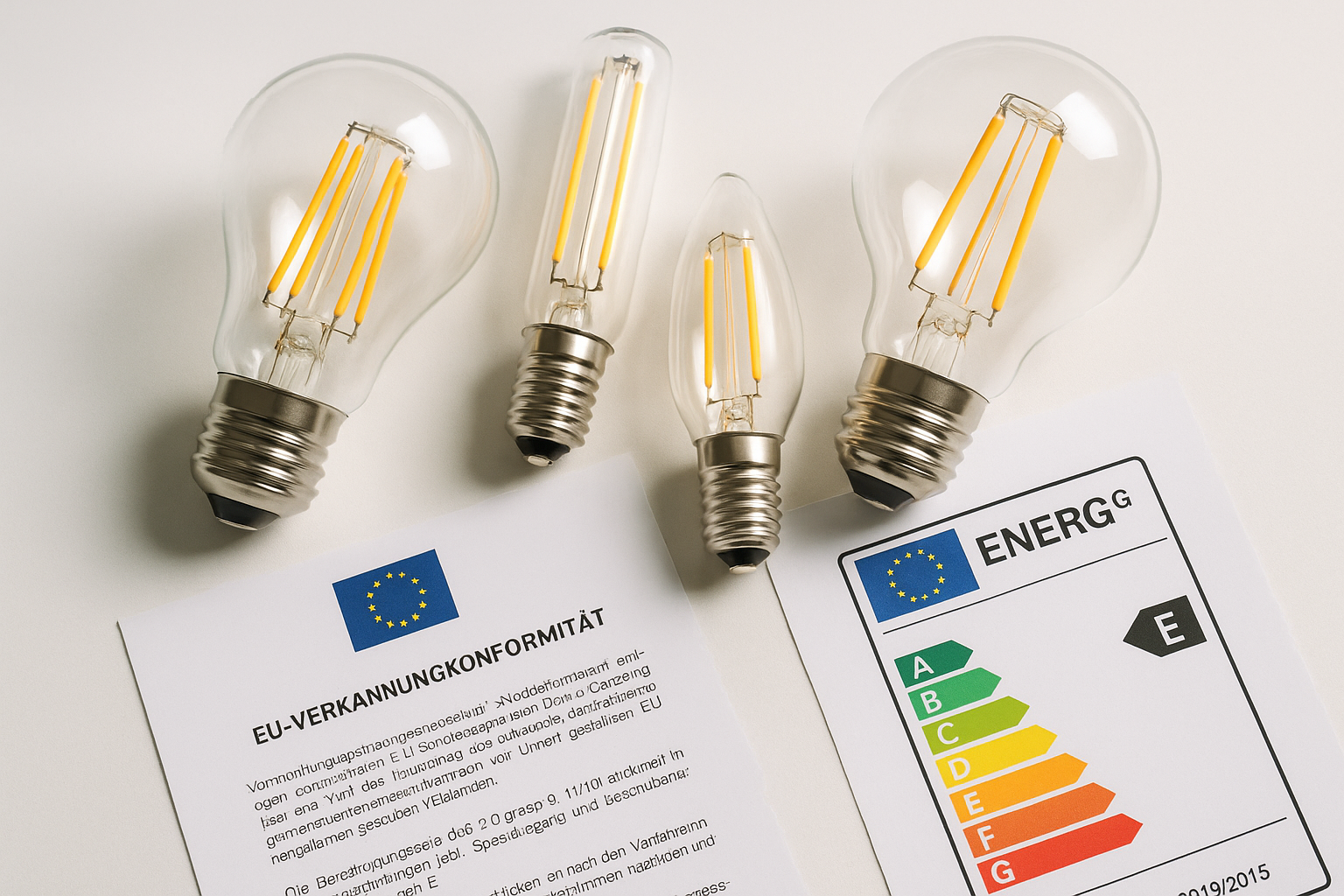
If you source LED filament bulbs from Chinese factories and sell them into Germany, France, the Netherlands, or any other EU member state, you are almost certainly affected. This guide explains what WEEE means for your business, what is changing, and what steps you need to take before your next shipment.
What WEEE Is and Why It Applies to LED Filament Bulbs
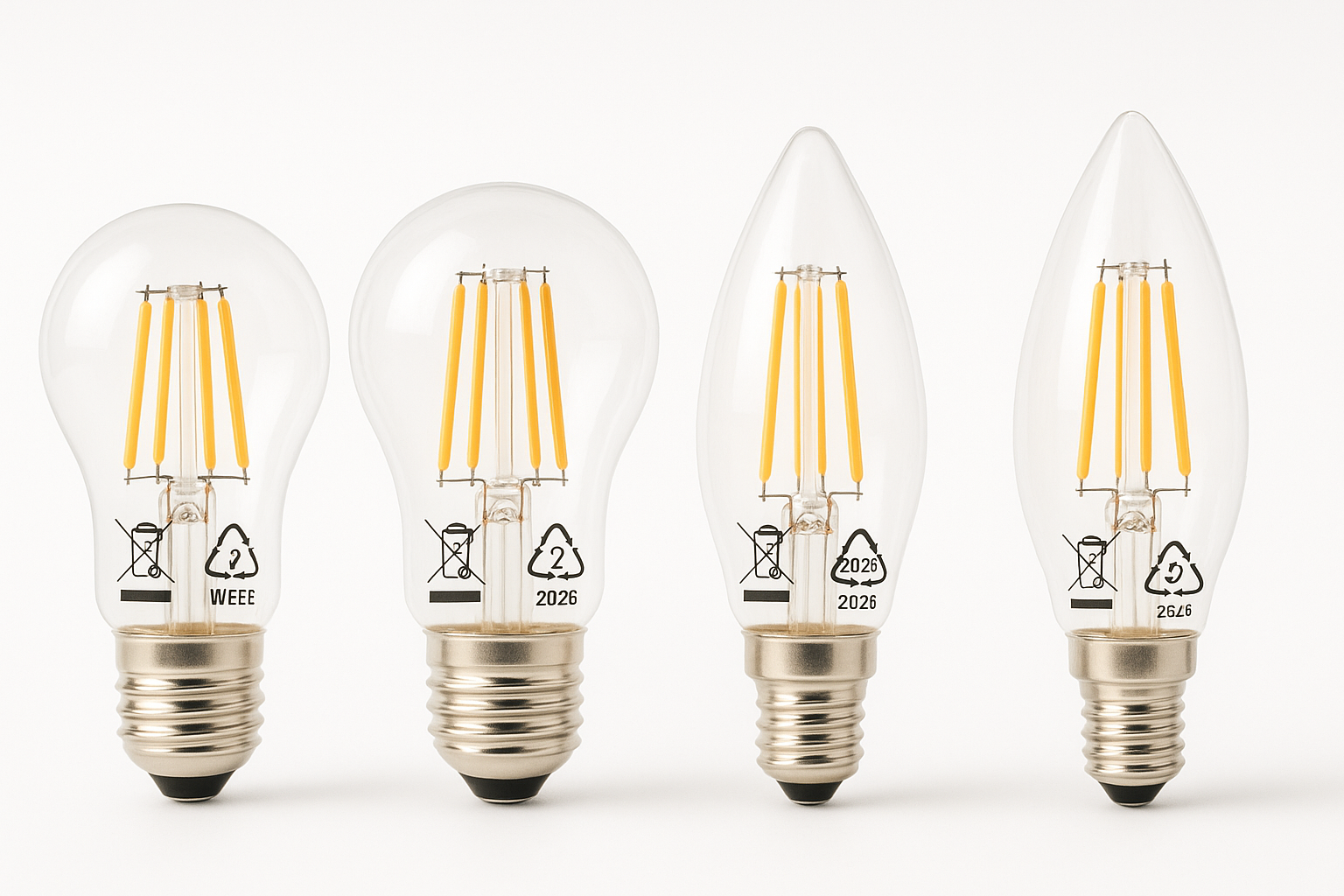
WEEE stands for Waste Electrical and Electronic Equipment. The EU WEEE Directive — currently Directive 2012/19/EU — requires that any company placing electrical or electronic equipment on the EU market takes responsibility for its end-of-life management. That includes LED light bulbs.
LED filament bulbs are classified as Category 5: Lighting Equipment under the WEEE framework. This means any company that imports or manufactures LED filament bulbs and places them on the EU market must register as a "producer" in each member state where they sell, contribute to approved collection and recycling schemes, and meet annual reporting obligations.
The original directive was implemented in 2012 to address the growing volume of e-waste in Europe. LED lighting falls squarely within its scope because bulbs contain electronic components — PCBs, LED chips, driver circuits — that cannot be disposed of in household waste streams. The full text of Directive 2012/19/EU is available on EUR-Lex.
For importers sourcing from Chinese factories, the key point is this: if the manufacturer has no legal presence in the EU, the importer becomes the "producer" under WEEE and assumes all associated obligations. Many importers are unaware of this, particularly those buying smaller volumes or selling through distributors rather than direct retail channels.
This issue is connected to broader product compliance challenges for importers. If you are also navigating base specification questions — for example, whether to stock G4 or G9 variants — understanding the regulatory exposure of each SKU matters. See our guide on G4 vs G9: how the base choice changes your return risk → for context on how product decisions intersect with compliance risk.
What the 2026 Directive Revision Is Changing
The European Commission has been working on revising the WEEE Directive as part of its broader Circular Economy Action Plan. The LightingEurope recommendations published in May 2026 focus on several key areas where the current directive is considered inadequate:
1. Scope and product coverage. The revision is expected to address ambiguities in how certain LED lighting products are categorised, particularly retrofit lamps and smart lighting modules. Importers sourcing a range of filament SKUs — including non-standard formats — need to confirm their entire product range falls within their WEEE registration.
2. Cross-border and online sales. The 2026 recommendations specifically address the gap in enforcement for companies selling into EU member states without physical presence. Under the revised framework, online sales trigger WEEE obligations in the destination country — meaning an importer selling into five EU markets via a single distribution channel may need registration in all five.
3. Producer responsibility organisations (PROs). The revision aims to standardise reporting requirements across member states. Currently, PRO structures and reporting formats vary significantly between Germany (EAR), France (ecosystem), the Netherlands, and others. The 2026 update is intended to reduce this fragmentation — but until standardisation takes effect, importers must still manage country-by-country registration separately.
4. Enforcement and penalties. LightingEurope's recommendations call for stronger cross-border enforcement mechanisms, including coordination between national WEEE authorities. This directly reduces the risk-free period that non-registered importers have relied on when selling into smaller markets.
The European Commission's WEEE policy page provides current status on the revision process and public consultation outcomes.
Who Is Responsible — Importer, Brand, or Manufacturer?
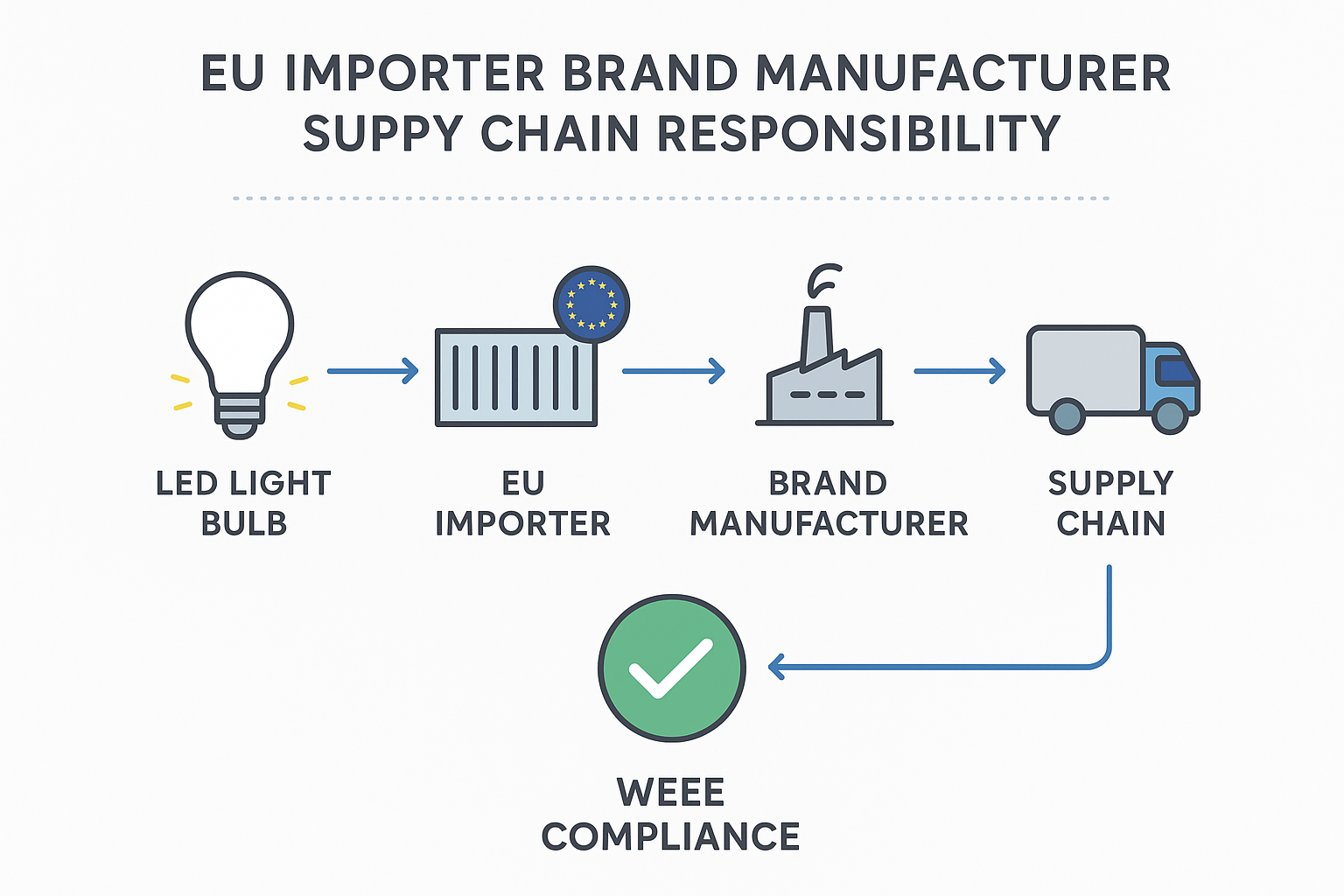
This is the question most importers get wrong. The WEEE Directive defines a "producer" as any company that, irrespective of the selling technique used, places EEE on the market of a member state under its own name or trademark, or resells EEE produced by other suppliers under its own name or trademark.
In practice, this means:
- If you source LED filament bulbs from a Chinese factory and sell them in the EU under your own brand, you are the producer and you are responsible for WEEE registration, take-back, and reporting in every member state where you sell.
- If you import under the Chinese manufacturer's brand, the situation is more complex. If the manufacturer has no EU legal representative, you still become the de facto producer under national implementations of the directive.
- If you sell to a European distributor who then sells to end markets, the distributor may take on producer responsibility — but this must be explicitly agreed in writing. Without a formal transfer of responsibility, you retain liability.
- If you are a lighting brand sourcing from a contract manufacturer, your brand name on the box makes you the producer. The contract manufacturer's WEEE status is irrelevant to your EU obligations.
This allocation of responsibility matters when you are making sourcing decisions. For importers evaluating common SKUs, the compliance burden per product matters — see our analysis of why the A60 LED filament bulb is the most commonly misspecified SKU → to understand how high-volume items compound both compliance volume and risk.
What Happens If You Are Not Registered
Operating without WEEE registration in an EU member state exposes your business to several distinct risks:
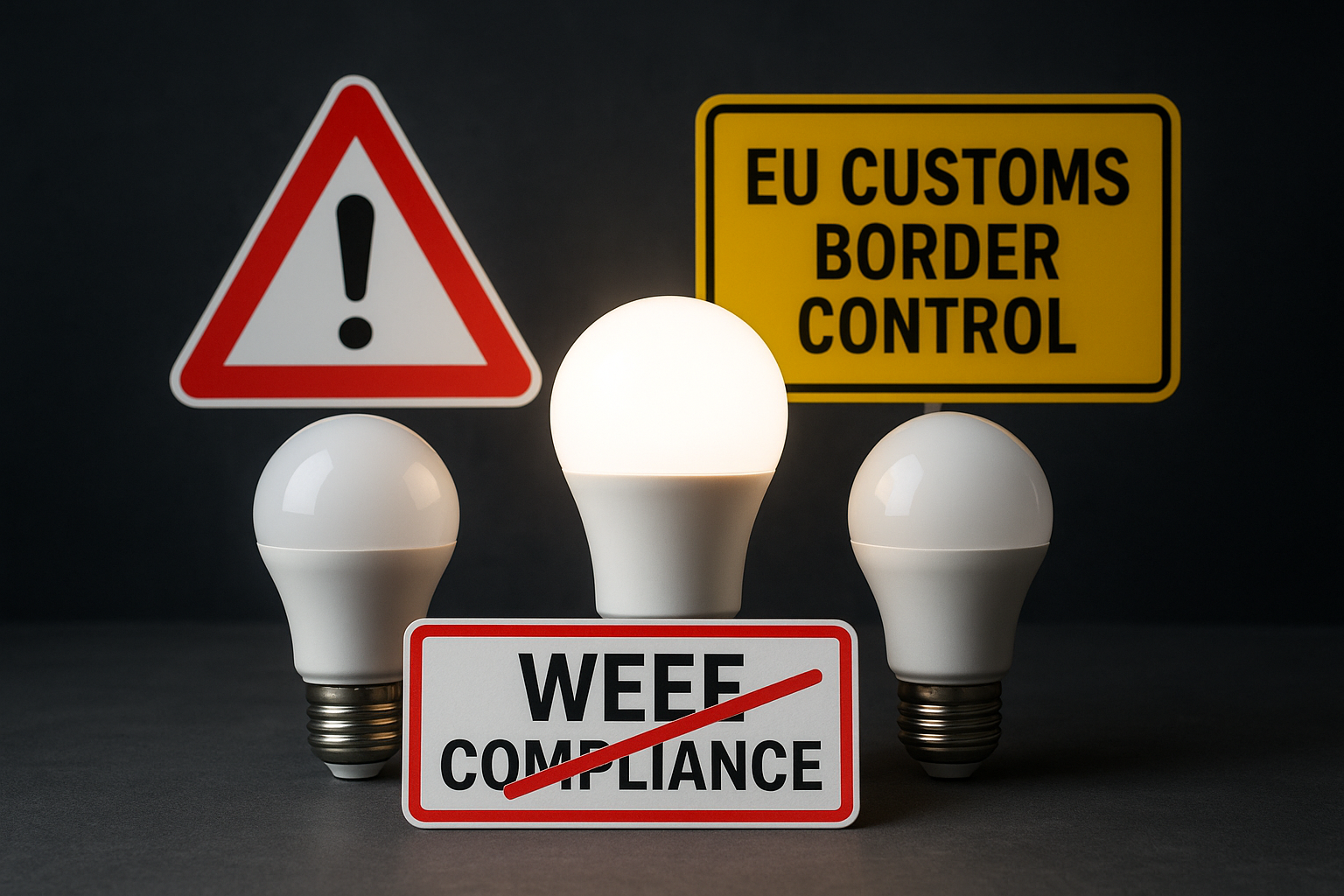
Market access restrictions. In Germany, the EAR (Stiftung Elektro-Altgeräte Register) requires WEEE registration before products can legally be placed on the German market. Retailers and distributors are increasingly checking supplier registration status before placing orders. An unregistered importer cannot legally supply German retailers, regardless of product quality or pricing.
Financial penalties. Member states set their own penalty structures. In Germany, fines for non-registration can reach €100,000 per violation. France and the Netherlands have similar enforcement mechanisms. As cross-border enforcement improves under the revised directive, the ability to avoid penalties by selling into smaller markets will reduce.
Product seizure and market withdrawal. National WEEE authorities can order products to be withdrawn from sale until registration is in place. For importers with stock already in European warehouses, this creates significant financial exposure.
Distributor liability. When an importer is not registered, distributors who knowingly purchased from them can also face penalties in some member states. European distributors and buying groups are increasingly conducting supplier compliance audits, and WEEE registration is a standard checklist item.
Reputational risk. EU market regulators maintain public registers of non-compliant producers. Being listed can affect your ability to win contracts with European lighting brands and retailers who conduct supply chain due diligence.
For importers thinking about color temperature, dimming specifications, and other technical specifications alongside compliance, the compliance obligations apply to every SKU you place on the market. Our guide on why getting color temperature wrong costs more than getting the price wrong → illustrates how specification and compliance decisions share the same risk structure.
Practical Steps: How to Get WEEE-Compliant Before Your Next EU Shipment
Getting WEEE-compliant is a structured process. Here is a practical sequence for importers who are starting from zero or reviewing their current status:
Step 1: Identify where you sell. List every EU member state where your products are placed on the market — not just where your company is headquartered. If you sell to a German wholesaler who redistributes across Europe, you may need registration in multiple countries. Confirm with your distributor exactly which markets they supply.
Step 2: Determine your product categories. Confirm that all your LED filament SKUs are correctly categorised as Category 5 lighting equipment. If you also supply luminaires or smart lighting products, these may require additional category registration. Submit a full product list to your chosen PRO for review.
Step 3: Register with a Producer Responsibility Organisation (PRO) in each required member state. PROs handle registration on your behalf and manage collective take-back and recycling schemes. In Germany, registration must be done through the EAR before a PRO can be appointed. In France, the main PRO for lighting is ecosystem. Each country has its own process and timeline — allow 4–8 weeks for initial registration to complete.
Step 4: Calculate and report your volume. WEEE fees are typically calculated on the weight of electrical and electronic equipment placed on the market. You will need to maintain records of units sold by market and report annually (or quarterly in some member states). Establish an internal tracking process before your first shipment.
Step 5: Add WEEE registration numbers to your product documentation. Once registered, your WEEE registration number must appear on invoices, delivery documentation, and in some cases on packaging. Failure to include it can trigger compliance queries even if registration is in place.
Step 6: Review your supplier contracts. If you are sourcing from Chinese factories, ensure your supply agreements include provision for product weight data, material declarations, and any future changes to WEEE scope. Your PRO will need accurate data — get it from your factory before registration, not after.
The International Electrotechnical Commission (IEC) and LightingEurope's sustainability resources provide additional technical guidance on product classification for lighting equipment under WEEE.
For importers also managing dimming compatibility or fixture-specific technical requirements alongside compliance setup, running both tracks in parallel reduces lead time. Our guide to specifying dimming compatibility for private label LED filament bulbs → covers a parallel specification process that fits the same pre-shipment window.
Related HongYu Bulb product pages
- LED Filament Bulb Product Range → — standard and decorative LED filament bulbs for wholesale and project sourcing.
- ETL, CE & RoHS Certification Guide → — sourcing guidance for certification and import compliance.
- Big Decorative Bulbs → — oversized decorative filament bulbs for hospitality, retail and statement fixtures.
- Contact HongYu Bulb → — send specifications, target market, quantity and packaging requirements for quotation.
Conclusion
WEEE compliance is not optional for importers selling LED filament bulbs into the EU, and the 2026 directive revision is making it harder to operate in grey areas. The core obligation is straightforward: if you place LED lighting products on any EU market under your own brand or as the first importer from a non-EU manufacturer, you are the producer and you are responsible for registration, take-back, and reporting.
The practical window to get compliant is before your next shipment — not after a market access problem or a distributor audit flags the gap. Registration with the relevant PROs in your target markets takes weeks, not months, provided you have your product data in order.
Importers who treat WEEE as a box-ticking exercise after the fact will face increasing friction as enforcement coordination between member states improves. Those who build compliance into their sourcing and logistics workflow from the outset gain a genuine commercial advantage — particularly when selling to European lighting brands and retailers who are tightening their supply chain due diligence.
If you are sourcing LED filament bulbs from Chinese manufacturers and need to understand the full compliance picture before placing a large order, start with the documentation your factory can provide on product weight, materials, and categorisation. That is the foundation everything else is built on.