Walk into any lighting showroom in Europe or North America and you will find an overwhelming variety of LED filament bulbs — different shapes, different base types, different wattages, different colour temperatures. For a buyer placing their first wholesale order, or a designer specifying a large hospitality project, the choices can be genuinely confusing. This guide covers everything you need to know to choose the right LED filament bulb with confidence.
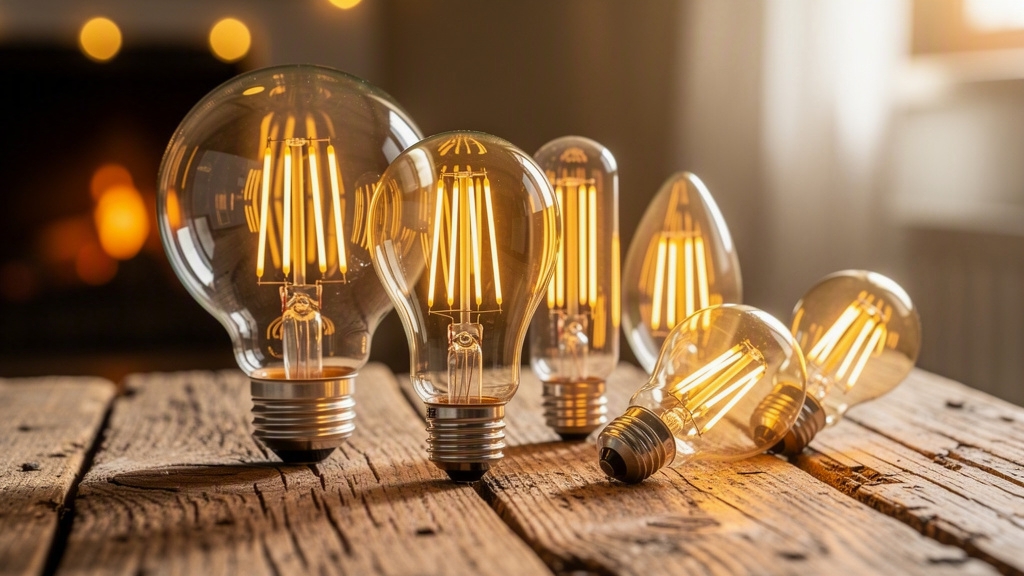
LED filament bulbs combine the warm aesthetic of traditional incandescent lamps with the energy efficiency and longevity of modern LED technology. The "filament" is not a true tungsten wire but a series of LED chips mounted on a substrate and coated with phosphor — producing a warm, omnidirectional glow that closely mimics the look of incandescent lighting. Understanding the shape, base, wattage, colour temperature, and finish options available will help you make the right specification decision every time.
Part 1: Understanding Bulb Shape Codes
Every LED filament bulb carries a shape code. The letter indicates the general form and the number indicates the maximum diameter in millimetres (for European nomenclature) or eighths of an inch (for North American nomenclature). Once you understand the coding system, a bulb's shape becomes instantly readable from its model number.
A-Shape (Arbitrary / Standard)
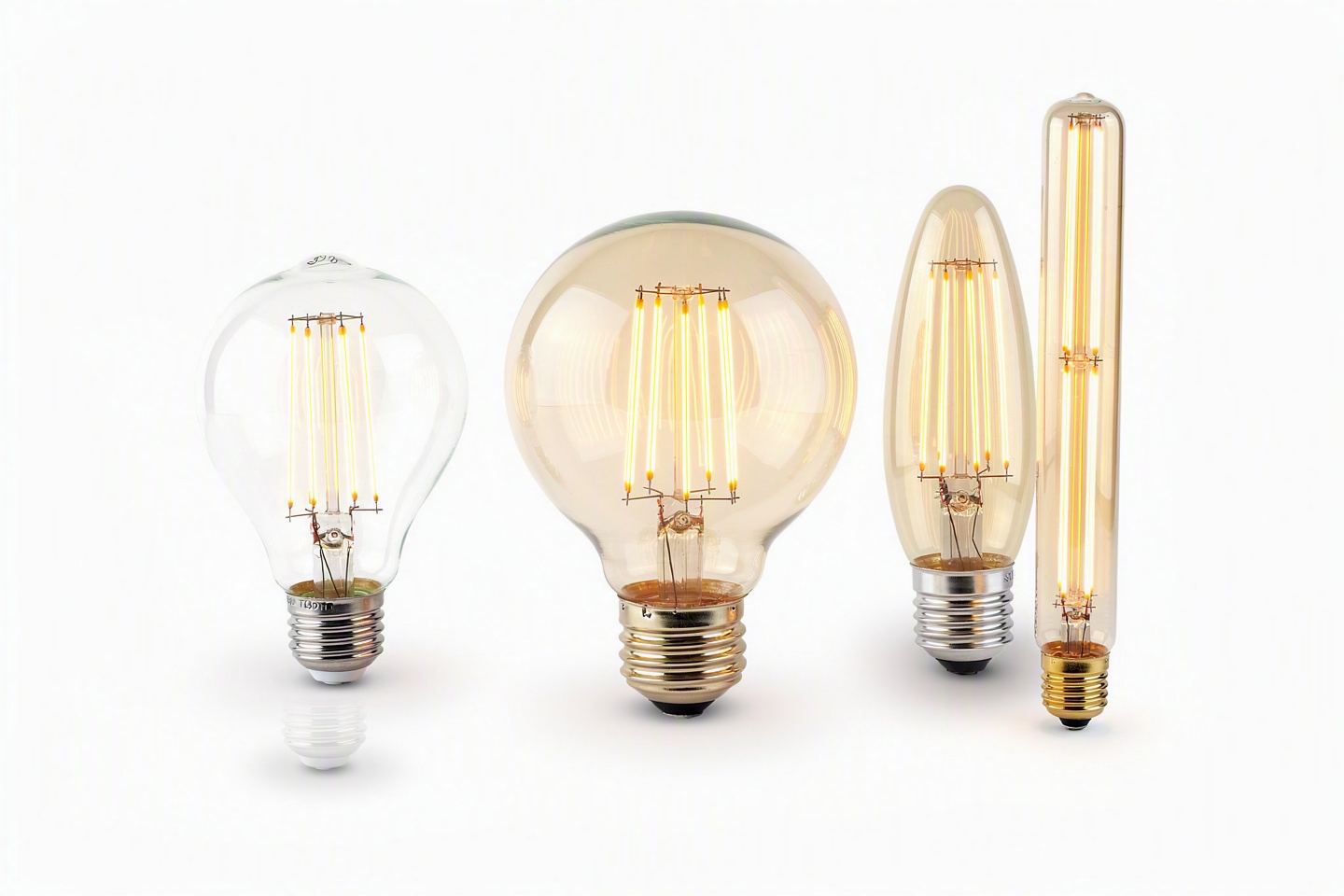
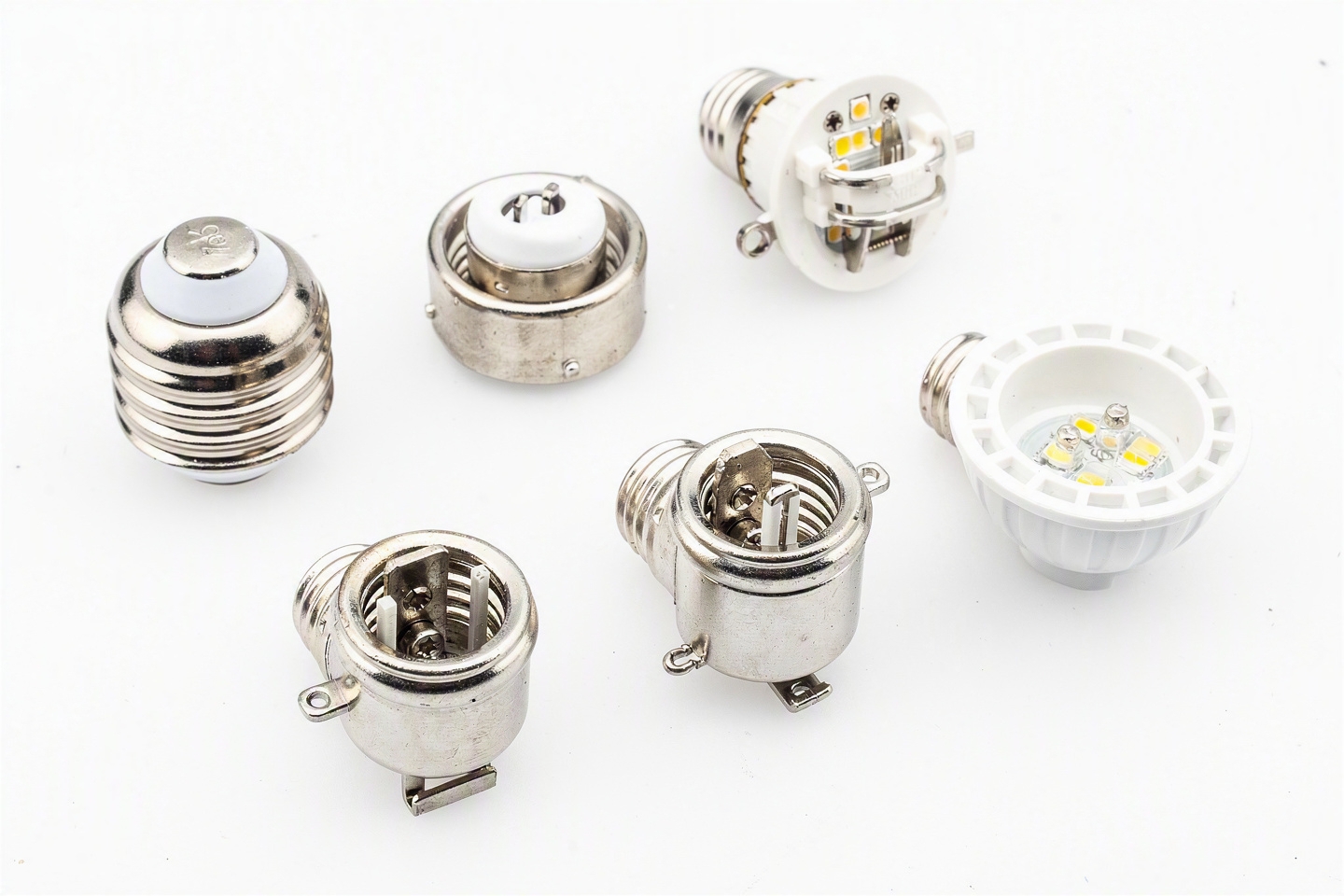
The A-shape is the classic pear-shaped lamp — the silhouette most people picture when they think "light bulb." In the European market, A60 is the dominant standard: 60 mm maximum diameter, approximately 105 mm total height. The equivalent North American standard is A19 (19 eighths of an inch, approximately 60 mm). A60 and A19 are functionally identical in form but use different sizing conventions. Larger variants — A65, A70, A80 — are available for higher-wattage applications or for a more dramatic visual effect in exposed pendant fittings.
The A60/A19 is the workhorse of the filament bulb world. It fits the widest range of fixtures, is the most widely stocked shape in retail and wholesale distribution, and carries the broadest range of wattage and colour temperature options. If you are building a starter range, A60 in E27 is the non-negotiable first line item.
G-Shape (Globe)
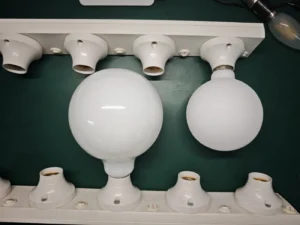
Globe bulbs are perfectly or near-perfectly spherical. The number indicates the diameter in millimetres. Common sizes in the LED filament category:
- G45 — 45 mm diameter. Small decorative globe, commonly used in chandelier arms, wall lights, and small pendant fittings with E14 bases.
- G80 — 80 mm diameter. Medium globe. Sits between decorative and statement sizes; works well in exposed table lamps and pendants.
- G95 — 95 mm diameter. The most popular decorative globe size in Europe. Large enough to make a visual statement in a pendant; small enough to fit most standard shade openings.
- G125 — 125 mm diameter. A bold statement globe. Common in industrial-style pendant clusters and bar lighting. Requires a fixture opening of at least 130 mm.
Globe bulbs produce the most even, omnidirectional light distribution of any filament shape. They are also the most visually prominent when exposed — the spherical glass envelope amplifies the filament display and reads well from multiple angles.
ST-Shape (Squirrel Tail / Teardrop)
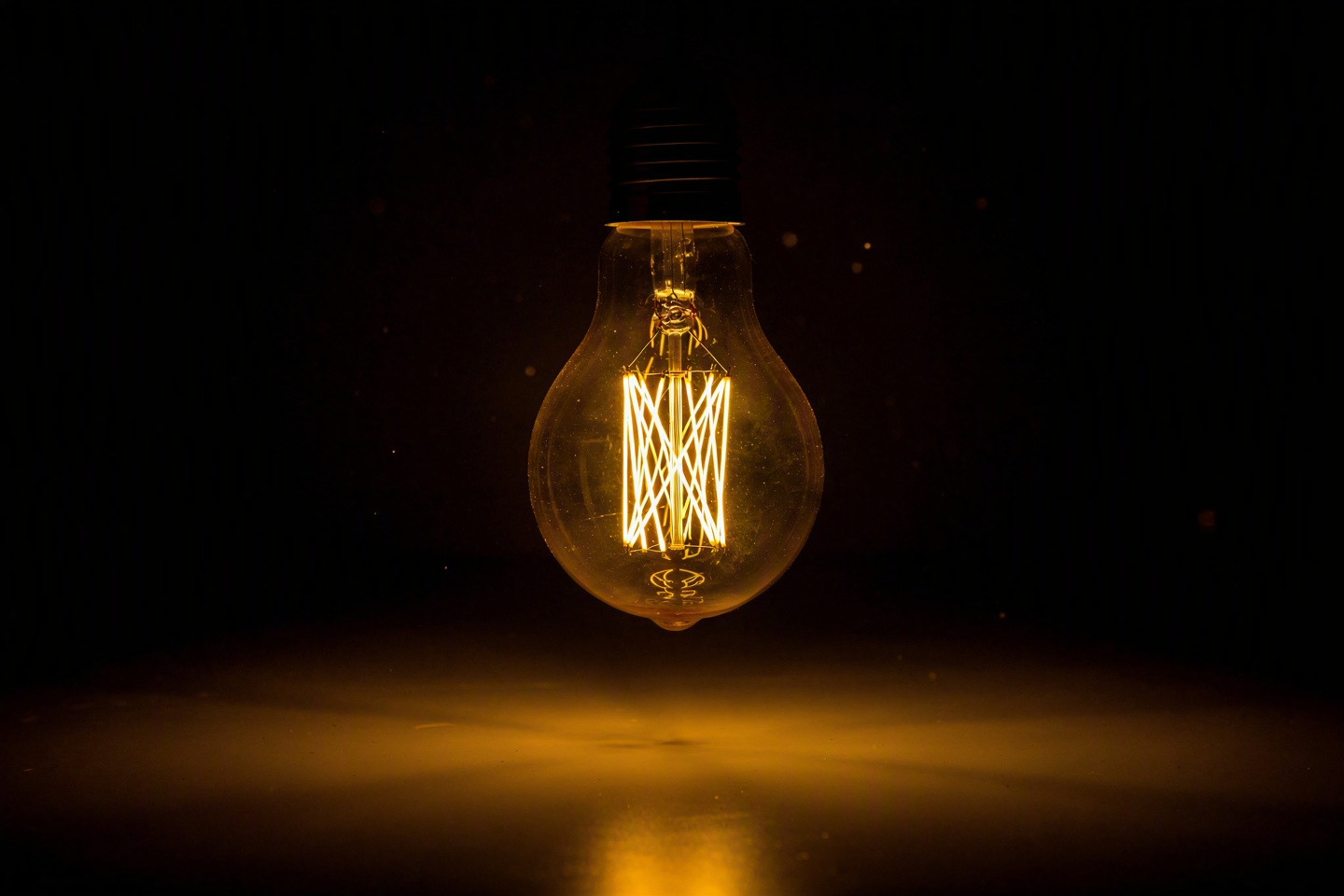
The ST shape — also called squirrel tail or Tischlampe (table lamp) in European markets — is a teardrop form that tapers more gradually than the A-shape, creating a distinctive elongated silhouette. ST58 (58 mm diameter) and ST64 (64 mm diameter) are the most specified variants. The ST64 in particular has become synonymous with "vintage Edison" aesthetics in European markets — it is the shape most associated with industrial-style restaurants, bars, and hotels.
The elongated body of the ST shape allows for longer, more elaborate filament arrangements — spiral, squirrel-cage, and multi-loop configurations are all common. The filament becomes part of the visual design of the fixture, not just a light source.
C-Shape (Candle)
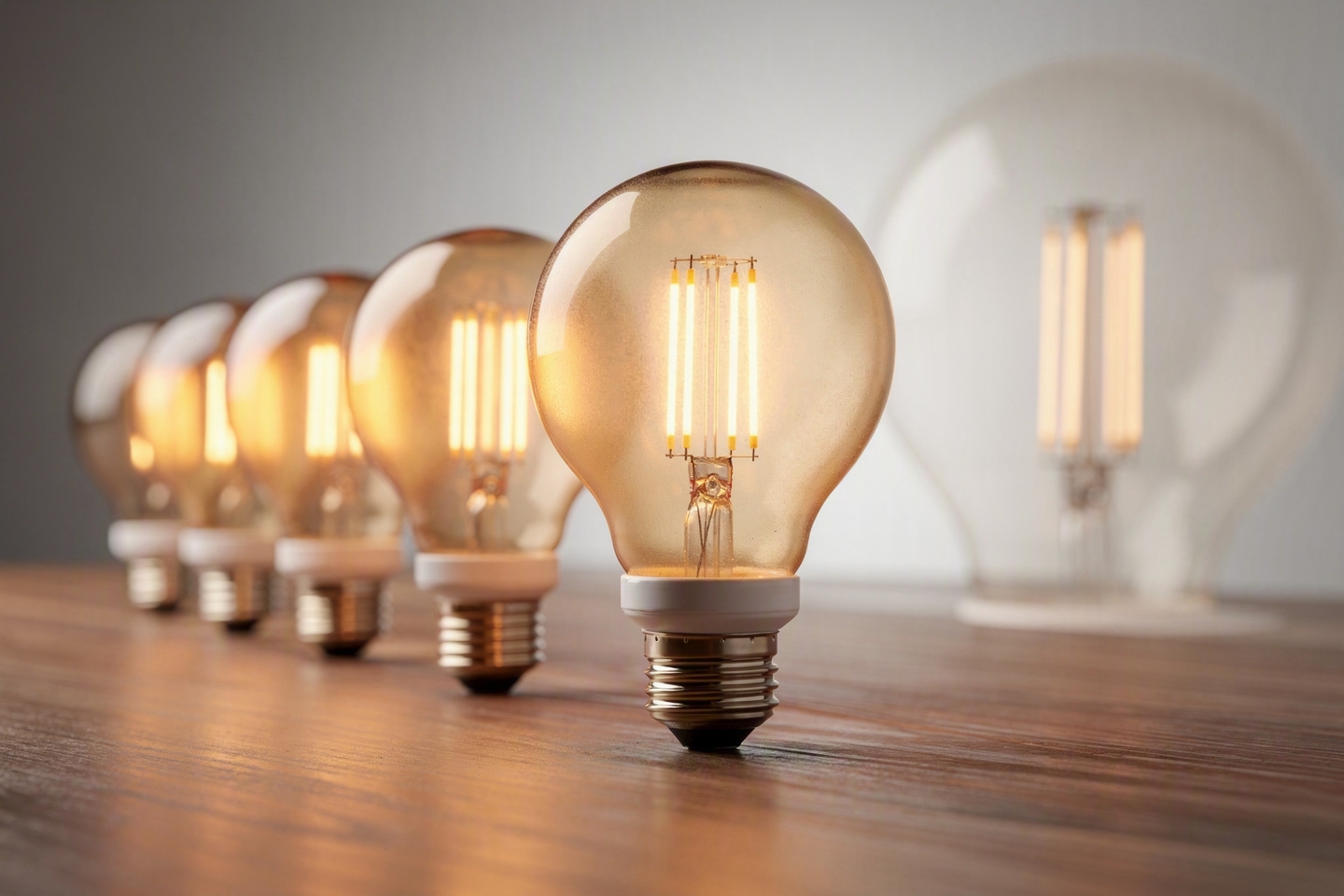
Candle-shaped bulbs are narrow and elongated, tapering to a point at the top. C35 (35 mm diameter) is the standard size, available with either a smooth tip (C35) or a bent/twisted tip (C35T) for a more dramatic flame effect. C35L designates a longer candle form — the same diameter but extended in height, producing a more slender, elegant profile preferred in contemporary chandelier designs.
Candle bulbs are overwhelmingly used with E14 bases in European markets (E12 in North America) and are designed for chandelier, wall sconce, and multi-arm fixture applications where multiple visible bulbs are used simultaneously. Colour consistency across units is particularly important for candle bulbs — a slight mismatch in colour temperature between chandelier arms is immediately noticeable.
T-Shape (Tubular)
Tubular bulbs are cylindrical, with consistent diameter from base to tip. T30 (30 mm diameter) and T45 (45 mm diameter) are the most common LED filament tubular sizes. They are used in linear pendant arrays, wall-mounted sconces designed to evoke vintage industrial pipe lighting, and in any fixture where a horizontal or angled lamp orientation is required.
Part 2: Base Types and Market Compatibility
Base type is non-negotiable — an incompatible base cannot be forced into a different socket, and mis-specifying the base type is the most common sourcing error in LED filament projects. The base must match both the socket type and the thread size precisely.
| Base Type | Standard Market | Thread Diameter | Typical Application |
|---|---|---|---|
| E27 | Europe / International | 27 mm | Standard lamps, pendants, floor lamps, table lamps |
| E14 | Europe / International | 14 mm | Chandelier, wall sconces, small decorative fittings |
| E26 | North America | 26 mm | Standard lamps (US/Canada equivalent of E27) |
| E12 | North America | 12 mm | Chandelier (US equivalent of E14) |
| B22 | UK / Australia / India | 22 mm bayonet | Standard lamps in bayonet markets |
E27 and E26 are not interchangeable despite being close in size — the thread pitch differs. In practice, an E27 bulb will physically fit an E26 socket in many cases, but this is outside specification and should never be recommended to customers.
Part 3: Wattage, Lumen Output, and Efficacy
The single most persistent confusion in the LED market is the continued use of wattage as a proxy for brightness. Watts measure power consumption, not light output. For LEDs, lumen output is the correct brightness metric.
| LED Wattage | Typical Lumen Output | Incandescent Equivalent | Best Application |
|---|---|---|---|
| 1–2 W | 40–150 lm | 15–25 W | Decorative accent, night light |
| 4 W | 300–440 lm | 35–40 W | Ambient/mood lighting, dimmed environments |
| 7 W | 600–900 lm | 60 W | General purpose, reading areas |
| 10–12 W | 1000–1500 lm | 75–100 W | Task lighting, high-output applications |
LED filament bulbs are inherently lower-efficacy than standard LED chips because the filament form factor (designed to mimic the look of incandescent wire) prioritises aesthetics over raw lumen-per-watt performance. Typical LED filament efficacy ranges from 80–120 lm/W, compared to 140–200 lm/W for high-efficiency flat LED panels. This is an acceptable trade-off in applications where the visual quality of the light source matters — which is precisely the market LED filament bulbs serve.
Part 4: Colour Temperature — Choosing the Right Warmth
Colour temperature is measured in Kelvin (K). Lower values are warmer (more amber/orange); higher values are cooler (more white/blue). LED filament bulbs operate almost exclusively in the warm-to-extra-warm range, which is where their aesthetic advantage over standard LEDs is most pronounced.
- 1800 K — Candlelight. Extremely amber, almost orange. Used in romantic settings, fire-themed bars, and Dim to Warm bulbs at their lowest setting. Not suitable as primary ambient lighting.
- 2200 K — Vintage warm. The characteristic colour of classic Edison incandescent bulbs. Strongly associated with vintage, industrial, and rustic aesthetics. Ideal for exposed-bulb pendant clusters in restaurants and bars.
- 2700 K — Warm white. The most versatile specification for residential and hospitality lighting. Warm enough to be comfortable and flattering, neutral enough for general use. The standard specification for most hotel room lighting.
- 3000 K — Soft white. Slightly cooler than 2700 K. Common in US market residential products and in retail environments where slightly more colour accuracy is needed without going to neutral white.
For projects where the lighting must change character from day to evening — restaurants, hotels, home living rooms — Dim to Warm technology (see our dedicated guide) offers an automatic CCT shift tied to the dimmer level, eliminating the need for separate scene controllers.
Part 5: Finish Options and Their Effects
The glass finish affects both the visual appearance of the bulb and the optical quality of the light it produces. Choosing the right finish is as important as choosing the right shape.
- Clear — Transparent glass. The filament is fully visible. Produces the classic Edison look with visible light-and-shadow effects from the filament. Maximum lumen output. Ideal for exposed pendant lighting where the filament display is part of the aesthetic.
- Gold tint — A subtle amber tinting in the glass that slightly warms the light and adds a faint gold hue to the bulb envelope. Filament remains visible. Popular in vintage-styled fixtures where the warm hue of the glass complements brass or antique copper hardware.
- Smoky / Grey — A dark tinted glass that partially obscures the filament. Reduces lumen output by 50–70% compared to clear. Produces a diffused, mysterious glow. Suited to applications where mood is more important than light output — bar counters, hotel headboards, decorative accent lighting.
- Porcelain / Matte White — Fully opaque white coating. Completely hides the filament. Produces a smooth, even luminance across the entire glass surface with no hotspot. Reduces lumen output by 80–90%. Best for applications requiring diffused, skin-flattering light — spa, beauty retail, photography studio practicals.
- Rose Gold / Copper — A warm metallic tint available on flexible filament models. Produces a distinctive warm amber-pink light. Popular in millennial-targeted interiors, boutique accommodation, and premium home retail.
Part 6: CRI — Why Colour Rendering Matters
Colour Rendering Index (CRI, expressed as Ra) measures how accurately a light source renders colours compared to a reference. The scale runs to 100. LED filament bulbs are available in Ra >80, Ra >90, and Ra >95 grades.
For most ambient residential applications, Ra >80 is adequate. For hospitality environments — restaurants, hotel rooms, retail — Ra >90 is strongly recommended. Food colours, skin tones, and merchandise look significantly better under Ra >90 lighting. The difference is visible to guests even if they cannot articulate why one space feels more inviting than another.
When reviewing CRI specifications, also check the R9 value. R9 measures saturated red rendering — a metric excluded from the standard Ra calculation but critical for food, skin, and warm-toned materials. Look for R9 >50 for restaurant and hospitality applications.
Part 7: Dimming Compatibility
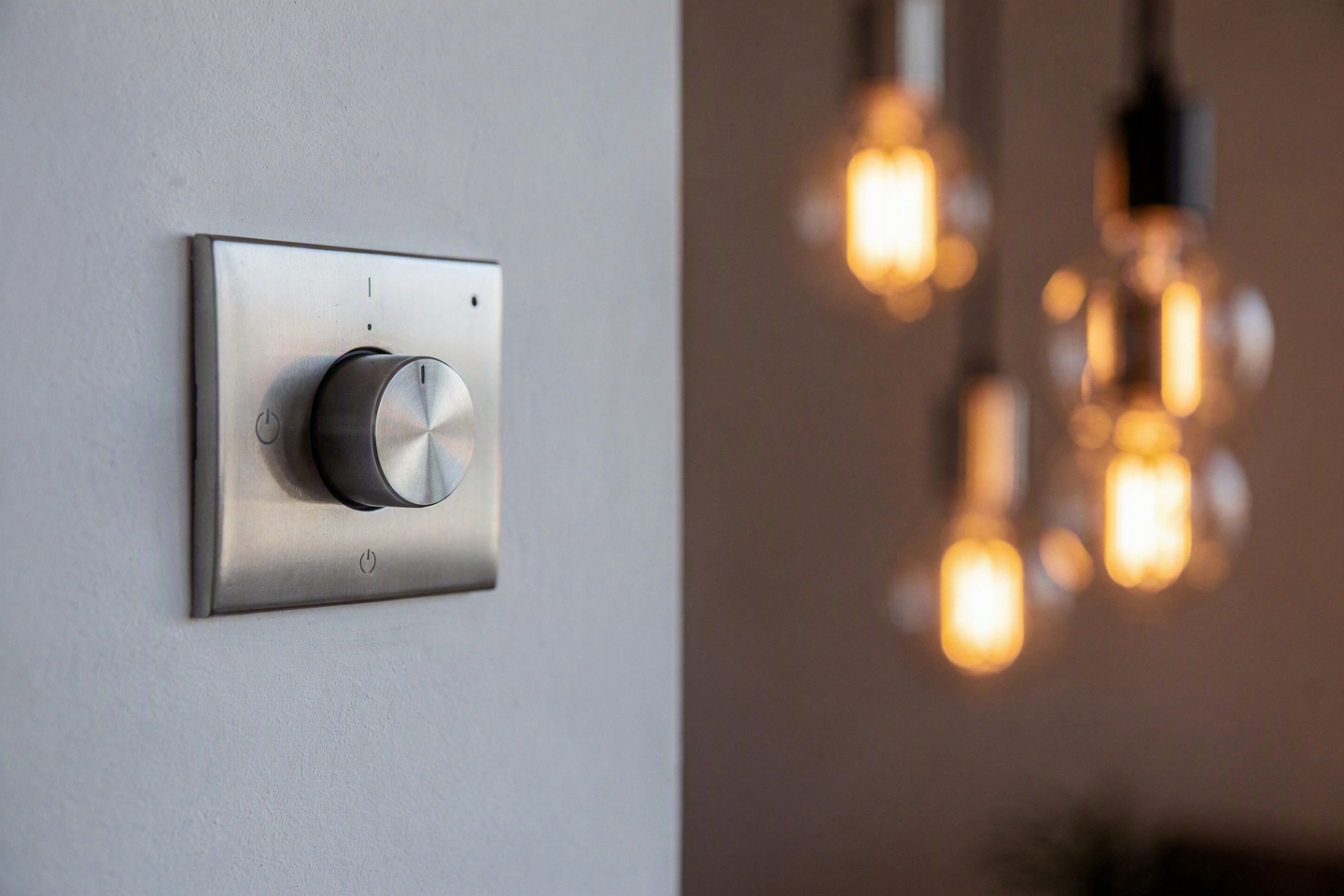
Not all LED filament bulbs are dimmable. The product specification must explicitly state "dimmable" — non-dimmable LEDs connected to a dimmer will either fail to dim, flicker, or sustain driver damage over time.
Dimmable LED filament bulbs work with TRIAC (phase-cut) dimmers, which are the most common dimmer type in residential and commercial installations globally. Most quality LED filament drivers support both leading-edge and trailing-edge TRIAC dimming, though trailing-edge dimmers typically produce smoother dimming curves and less audible buzzing.
When specifying dimmable LED filament bulbs for a large installation, always test the specific bulb and dimmer combination on-site before full deployment. Driver-dimmer compatibility varies by brand and the interaction is not always predictable from specifications alone.
Part 8: Certification Requirements by Market
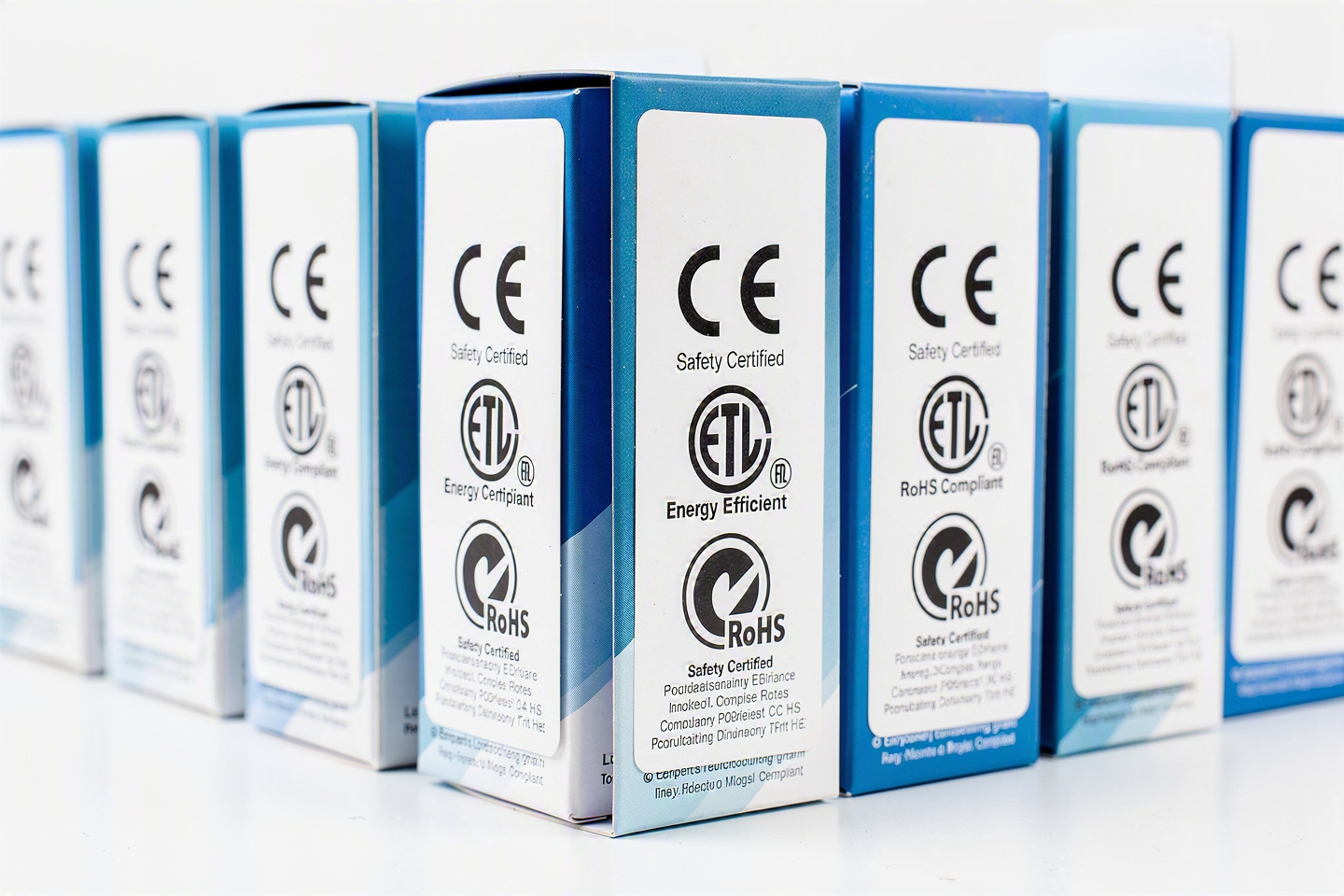
LED filament bulbs must carry the appropriate safety and compliance certification for the market in which they are sold. Selling non-certified products exposes both the seller and the importer to regulatory risk, product liability, and potential recall.
- European Union: CE marking (covering LVD, EMC, and ErP directives) plus RoHS compliance. BSCI factory audit increasingly required by retail buyers.
- United Kingdom: UKCA marking (post-Brexit equivalent of CE for GB market). CE still accepted in Northern Ireland.
- United States / Canada: ETL listing (Intertek) or UL listing plus FCC Part 15 certification. Energy Star certification provides additional advantage in certain retail and commercial channels.
- Australia / New Zealand: SAA/RCM certification.
Part 9: Building a Product Range — Practical Recommendations
For lighting distributors and retailers building their first LED filament range, the following configuration matrix provides a solid foundation that covers the majority of customer requirements without overstocking:
| Priority | Shape | Base | Wattage | CCT | Finish |
|---|---|---|---|---|---|
| Essential | A60 | E27 | 4 W + 7 W | 2700 K | Clear |
| Essential | C35 | E14 | 4 W | 2700 K | Clear |
| Essential | G45 | E14 | 4 W | 2200 K | Clear |
| Essential | ST64 | E27 | 4 W + 7 W | 2200 K | Clear |
| Important | G95 | E27 | 4 W + 7 W | 2200 K | Clear / Gold |
| Important | G125 | E27 | 4 W + 7 W | 2200 K | Clear / Smoky |
| Premium | G95 | E27 | 7 W | 2700 K | Porcelain |
| Premium | ST64 | E27 | 4 W | 1800–2700 K | Clear (Dim to Warm) |
This eight-line matrix in the essential and important tiers covers the overwhelming majority of residential and hospitality specifications. Adding the premium tier positions the range for higher-margin hotel and restaurant projects. Expanding beyond this matrix should be driven by demonstrated customer demand rather than catalogue completeness.
Related HongYu Bulb product pages
- LED Filament Bulb Product Range → — standard and decorative LED filament bulbs for wholesale and project sourcing.
- Custom Color Bulbs → — custom glass color, coating and printed finish options for private-label collections.
- Custom Logo Bulbs → — printed branding and private-label decorative bulb options.
- Big Decorative Bulbs → — oversized decorative filament bulbs for hospitality, retail and statement fixtures.
- Contact HongYu Bulb → — send specifications, target market, quantity and packaging requirements for quotation.
Conclusion
Choosing the right LED filament bulb is not complicated once you understand the specification language. Shape code tells you the form. Base type tells you the socket compatibility. Wattage and lumen output tell you the brightness. CCT tells you the warmth. Finish tells you the optical character. CRI tells you the colour quality. And certification tells you which markets the product can legally enter.
HongYu Bulb manufactures LED filament bulbs across the full range of shapes, bases, finishes, and certification levels — from standard A60-E27 in quantity to custom-specified G125 in Ra 95 for premium hospitality projects. Contact us for samples and wholesale pricing.