Placing a first wholesale LED bulb order from a Chinese manufacturer is a process that involves significantly more complexity than most buyers expect — and less risk than many fear, provided the process is followed correctly. This guide covers every stage of the first-order process, from initial supplier qualification through to payment, production monitoring, quality inspection, and final shipment, with specific attention to the decisions that most often cause problems for first-time buyers.
Stage 1: Defining Your Order Requirements Before Contacting Suppliers
The most common mistake first-time buyers make is contacting suppliers before they have clearly defined what they want to buy. Suppliers receive hundreds of enquiries per day; a vague enquiry ("I want some LED bulbs") receives a vague response and no priority. A specific, well-defined enquiry ("I need 2000 units of G95 E27 230V 4W 2700K Ra 90 dimmable LED filament bulbs with CE marking[4] and TÜV test report, shipped to Rotterdam by 15 August") receives a professional, detailed quotation and immediately establishes your credibility as a serious buyer.
Before making contact, define at minimum:
- Product specification: Shape, base, voltage (230V EU or 120V US), wattage, CCT (2200K/2400K/2700K/3000K), CRI grade → (Ra 80/90/95), dimmable or non-dimmable →, glass finish (clear/frosted/amber/porcelain/copper), filament style (standard/squirrel-cage/spiral).
- Compliance requirements: CE+RoHS → for EU; ETL+FCC → or cUL for North America; SAA for Australia. Specify exactly which certifications are required. "CE marking" can mean a self-declaration or a third-party tested certificate — clarify which you require.
- Quantity: Total quantity and breakdown by SKU. Be realistic — negotiating on 200 units is very different from negotiating on 5000 units.
- Packaging: Standard bulk (24 or 48 per master carton, no individual retail box) vs. individual retail packaging with your brand. If retail packaging, provide exact specifications.
- Delivery terms: Incoterms[1] (FOB factory, CIF destination, DAP delivered — each changes who bears cost and risk at what point), destination port, required delivery date.
- Payment terms: Have a position on payment terms before the first contact. A standard first order is 30% deposit on order confirmation, 70% balance before shipment. Wire transfer (T/T) is standard; PayPal is expensive and creates dispute risk for the supplier.
For a first order, supplier qualification is the highest-stakes activity. A bad product can sometimes be fixed; a bad supplier relationship wastes time, money, and credibility.
Where to Find Suppliers
The main channels for finding LED filament suppliers in China are Alibaba, Global Sources, Made-in-China.com, and trade fair attendance (Guangzhou International Lighting Exhibition, Hong Kong Electronics Fair). Alibaba is the most accessible starting point for new buyers. Search using specific product terms rather than general terms — "G95 LED filament bulb" returns more relevant results than "LED bulb".
Distinguishing manufacturers from trading companies on Alibaba requires active investigation. Trading companies sell products they do not manufacture, adding a margin layer that makes pricing less competitive and gives them less control over production quality. Manufacturers can usually be identified by: verified factory audit reports on their Alibaba profile, product images that include factory production photos rather than studio shots only, and the ability to answer specific technical questions about their production process and equipment. Request a video call and ask to see the production floor.
Qualification Checklist
| Qualification Area | What to Check | How to Verify |
|---|---|---|
| Legal registration | Business licence, legal entity name | Request scanned copy; verify on National Enterprise Credit Information System (qichacha.com) |
| Factory audit | ISO 9001, BSCI, or equivalent quality system | Request most recent audit report; check audit date and scope |
| Product certification | CE, ETL, cUL, SAA as applicable | Request test report; verify certificate number at issuing body (e.g., Intertek.com for ETL) |
| LM-79 test data | Photometric report from accredited lab | Request specific report for the product you are ordering; verify lab accreditation |
| Trade history | Export volume, buyer references | Request reference contacts; review Alibaba/Global Sources transaction history if available |
| Bank account | Company bank account in company name | Confirm payment details match legal entity name before wire transfer |
The Sample Request
Always order samples before committing to production. A professional supplier will provide samples within 3–7 business days for standard products. Request samples with the exact specifications of your intended production order — not a "standard" sample that may differ from your custom requirements. Expect to pay for samples (USD 5–30 per unit depending on product, plus express shipping) — suppliers who provide free samples to unqualified new enquiries are often subsidising the sample cost against the expectation of a large order they may not be able to fulfil.
When samples arrive, test them thoroughly: visual inspection, electrical safety check (hire a local electrician if needed), photometric measurement if you have access to a spectrophotometer, and dimming performance check with the dimmers your customers use. Do not place a production order until samples meet your specification. If samples are close but not perfect, send detailed written feedback and request a second sample round — this is normal and professional.
Stage 2: Quotation, Sample Approval, and Final Specification
After your requirements are clear, ask shortlisted suppliers for a written quotation and sample plan. Do not compare suppliers only by unit price. For LED filament bulbs, a useful quotation should include the exact product model, electrical parameters, certification status, packaging method, MOQ, lead time, payment terms, Incoterms, and validity period.
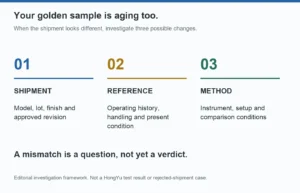
Samples should confirm more than appearance. Check color temperature, brightness, dimming behavior, glass finish, base quality, label information, packaging strength, and whether the sample matches the written specification. If you plan to order EU vintage LED filament bulbs →, porcelain filament bulbs →, or customized finishes, approve a final golden sample before mass production.
- Request the quotation in writing, not only through chat messages.
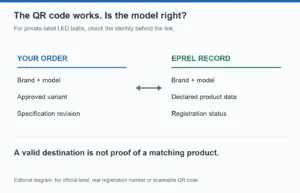
- Confirm whether certification documents apply to the exact model you are buying.
- Ask for sample photos, test data, and packaging photos before shipment.
- Keep one approved sample for comparison during pre-shipment inspection.
Stage 3: Purchase Order and Contract
Once samples are approved, issue a formal Purchase Order (PO) that specifies:
- Full product specification (every parameter from Stage 1)
- Quantity per SKU and total quantity
- Unit price, currency (USD, EUR, or RMB), and total PO value
- Packaging specification
- Delivery terms (Incoterms, destination, required shipment date)
- Payment terms (30/70 T/T, or agreed alternative)
- Quality acceptance criteria (AQL sampling plan[2], reject rate threshold)
- Pre-shipment inspection requirement (yes/no)
Chinese manufacturers routinely accept English-language purchase orders. The PO is a binding commercial document — ensure it is accurate and complete before signing. Any specification not on the PO can be denied or charged as an extra later. Keep a signed copy of the PO and all associated email correspondence permanently.
Stage 4: Deposit Payment and Production
The 30% deposit payment triggers production. Wire transfer (T/T) is the universal payment method — verify that the beneficiary name on the bank details exactly matches the legal entity name on the supplier's business licence before sending any funds. Discrepancies (even minor, such as "Ltd" vs "Limited") must be resolved before payment. Wire fraud[3] targeting importers through intercepted supplier email threads has cost first-time buyers substantial sums — always verify payment details by phone or video call before each transfer, not just at initial setup.
LED filament bulb production lead time is typically 20–35 calendar days for standard products in quantities of 1,000–10,000 units. Custom packaging adds 10–15 days. Complex orders with non-standard filament arrangements or special glass treatments may take 45–60 days. Confirm a production completion date and shipment date at the time of deposit payment, in writing.
Stage 5: Pre-Shipment Quality Inspection
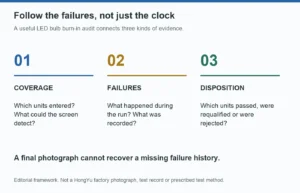
For a first order, a pre-shipment inspection is strongly recommended regardless of sample approval. Production runs can diverge from samples — component substitutions, process changes, or simple quality control failures can result in production that does not match approved samples. Discovering this before shipment allows the supplier to rework or replace the non-conforming goods at their cost; discovering it after receipt means bearing the shipping cost of a return and waiting for replacement production.
The most widely used sampling plan for consumer products is AQL (Acceptable Quality Limit) as defined in ISO 2859-1. Standard commercial inspection uses AQL 2.5 for major defects and AQL 4.0 for minor defects. For a 2,000-unit order, AQL 2.5 requires a sample of 200 units with a pass/fail threshold of no more than 10 major defects and 14 minor defects. If the sample fails, the lot is rejected and the supplier must rework or replace the full order.
Third-party inspection is available through companies such as Bureau Veritas, SGS, Intertek, and Qima. A standard pre-shipment inspection for a LED bulb order costs approximately USD 250–400 for a single man-day inspection at the factory, plus travel expenses if the factory is in a non-major city. For a USD 5,000–10,000 first order, this is a proportionate investment.
Stage 6: Balance Payment and Shipment
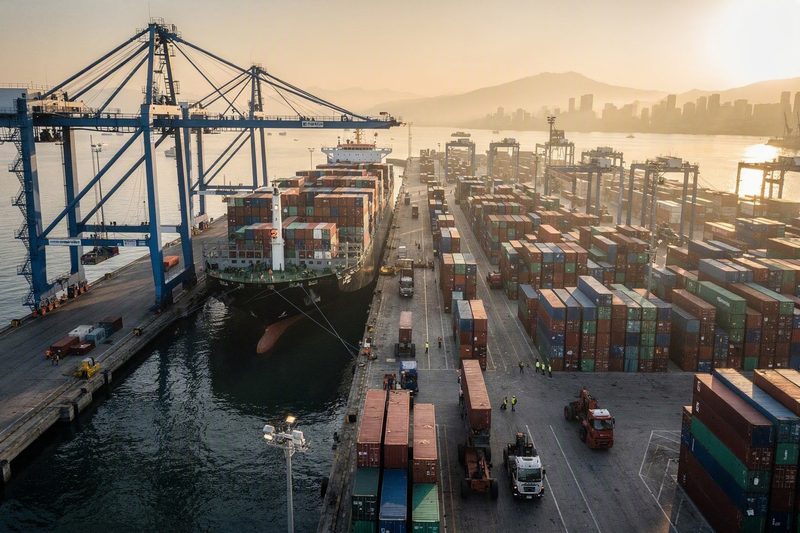
After inspection passes (or after you have accepted the goods on an inspection-waived basis), the 70% balance payment releases the goods for shipment. The supplier provides shipping documents — commercial invoice, packing list, and bill of lading (sea freight) or airway bill (air freight). Review these documents carefully before goods are released by the freight forwarder, as errors in commercial invoices cause customs clearance delays that are expensive to resolve.
Freight Options
| Freight Mode | Transit Time | Cost (20 kg carton) | Best For |
|---|---|---|---|
| Sea freight (FCL) | 25–35 days | Included in container rate | Orders ≥ 5 CBM (full container) |
| Sea freight (LCL) | 30–45 days | USD 40–80 per CBM | Orders 0.5–5 CBM |
| Air freight | 5–10 days | USD 4–8 per kg | Time-critical small orders |
| Express courier (DHL/FedEx) | 3–7 days | USD 8–15 per kg | Sample orders and small top-ups |
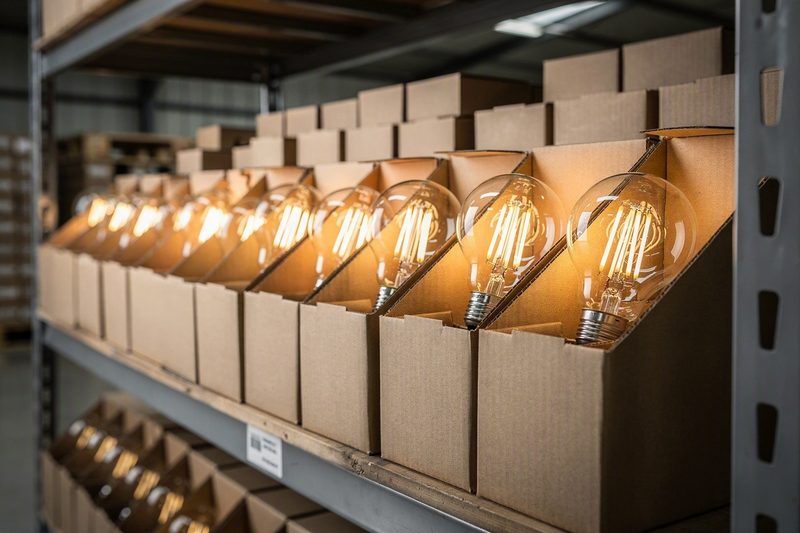
For a first order in the 1,000–3,000 unit range, LCL sea freight is typically the most economical option. LED filament bulbs are fragile — ensure the supplier has packed in double-wall corrugated cartons with inner packaging that prevents bulb-to-bulb contact. Request photos of packed cartons before shipment if shipping LCL or air, as rough handling during consolidation or transshipment is the main cause of transit breakage.
Stage 7: Customs Clearance and Receipt
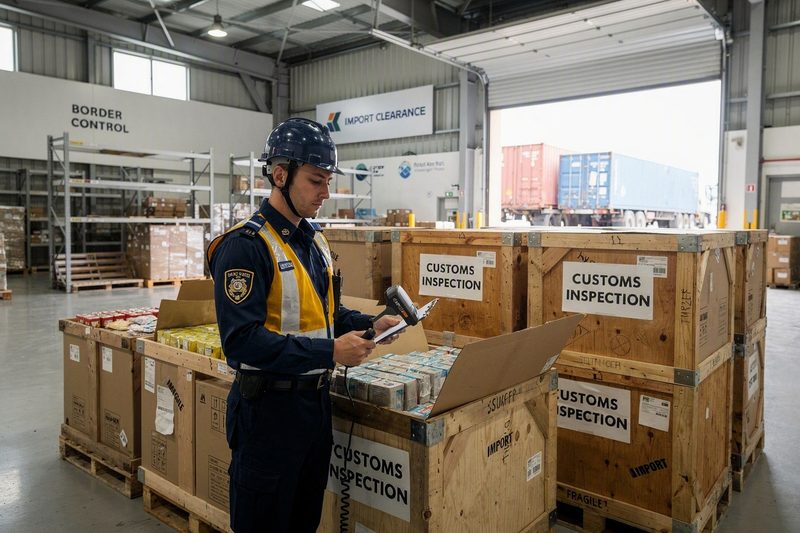
LED bulbs are classified under HS code 8539.52 (LED lamps) or 8543.70 for some configurations. Import duties vary by destination country and origin. Under EU-China trade terms, standard MFN duty on LED lamps is 1.5–2.7%. Under US Section 301 tariffs on Chinese goods, additional duties of 25% on the customs value apply on top of the base duty rate — a significant cost that first-time US buyers often underestimate. Obtain a duty and VAT estimate from your customs broker before finalising your landed cost calculation.
On receipt, perform a receiving inspection: count cartons against the packing list, photograph any externally damaged cartons before signing the delivery receipt, and open a sample of cartons to check for transit damage. Any damage not noted on the delivery receipt is difficult to claim against the carrier later.
Common First-Order Mistakes to Avoid
- Specifying too loosely: "Good quality" is not a specification. Every parameter that is not explicitly specified can be varied without notification.
- Skipping the sample stage: No production quality is guaranteed by brochure images or showroom samples. Always test samples of the actual production specification.
- Paying to an incorrect bank account: Verify beneficiary name against business licence before every wire transfer.
- Underestimating lead time: Build 2 weeks of buffer into every delivery timeline for first orders.
- Not accounting for import duties: US buyers especially must include Section 301 tariffs in landed cost calculations.
- Neglecting packaging specification: Fragile bulbs require proper inner packaging. Specify explicitly and check packing photos before air/express shipment.
- Overlooking CE self-declaration vs. third-party certification: Self-declared CE and third-party certified CE are very different in legal standing. Know which your market requires.
Related HongYu Bulb product and sourcing pages
- LED Filament Bulb Product Range → — standard and decorative bulbs for wholesale orders.
- Custom Color Bulbs → — useful when your order requires special glass finishes or private-label styling.
- US ETL Porcelain Filament Bulbs → — suitable for North American importers requiring ETL/FCC documentation.
- ETL, CE & RoHS Certification Guide → — helpful before confirming compliance requirements.
- Contact HongYu Bulb → — send your target specification, quantity, market, and packaging requirement for quotation.
Conclusion
A first wholesale order from a Chinese LED manufacturer is a manageable process when approached systematically. The suppliers who supply European and North American lighting distributors successfully are professional, export-experienced businesses who are used to working with international buyers and meeting compliance requirements. The risk in first orders comes almost entirely from inadequate specification, skipping qualification steps, and insufficient quality control — not from the inherent unreliability of Chinese manufacturing.
HongYu Bulb supplies wholesale LED filament bulbs to distributors in Europe, North America, and Australia. We provide full CE+RoHS certification for EU market, ETL+FCC for US market, and LM-79 test reports on request. MOQ from 200 units per SKU, standard lead time 25 days, FOB Guangzhou or DAP Europe available. Contact HongYu Bulb → to discuss your requirements.