Introduction: A bulb finish is not just a color
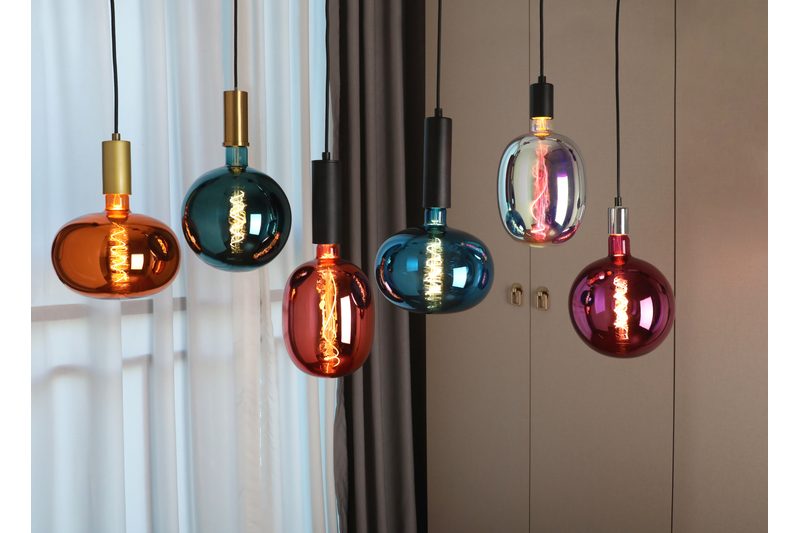
When lighting brands choose decorative bulbs, they often start with the visible shape: A60, G45, G80, G95, G125, ST64, T45, candle, tubular, oversized glass or special blown-glass forms. But in real product development, the finish of the bulb can be just as important as the shape.
A clear glass bulb shows the filament directly. An amber bulb makes the light feel warmer and more nostalgic. A smoky bulb gives the fixture a darker and more premium atmosphere. A frosted or opal bulb softens the direct view of the LED filament. A porcelain bulb turns the whole glass body into a calm glowing object. A mirror-top bulb reduces direct glare and redirects part of the light toward the lamp holder, wall or ceiling.
For lighting brands, importers, wholesalers and fixture manufacturers, bulb finish is not only an aesthetic choice. It affects:
- perceived brightness
- lumen output
- CCT shift
- glare comfort
- filament visibility
- fixture compatibility
- retail value
- production difficulty
- batch consistency
- long-term repeatability
This is why two bulbs with the same wattage and same nominal color temperature can look completely different once they are installed in a pendant, wall light or table lamp.
The decorative lighting market remains a significant global category. Grand View Research[1] estimated the global decorative lighting market at USD 42.9 billion in 2025, with continued growth projected through 2033. At the same time, LED has become the practical mainstream for replacement bulbs. A Lawrence Berkeley National Laboratory report[2] reported that LED A-line bulb shipment share grew from less than 0.1% in 2011 to 71% in 2020, while the U.S. Department of Energy[3] states that residential LEDs use at least 75% less energy and last up to 25 times longer than incandescent lighting.
So the question is no longer simply: Should we use LED?
For decorative lighting, the real question is:
How can an LED bulb look warm, emotional, comfortable and valuable inside the fixture?
That is where bulb finish becomes important.
At HongYu Bulb →, we manufacture decorative LED filament bulbs, custom color bulbs, porcelain bulbs, mirror-top bulbs and OEM bulb solutions for lighting brands, wholesalers and fixture manufacturers. This guide explains how different bulb finishes work from a manufacturer’s point of view.
Why does bulb finish matter in decorative lighting?
In functional lighting, buyers usually compare wattage, lumens, base type, voltage, dimming and certification. These parameters are still important. But decorative lighting has one additional requirement:
The bulb must look right even when the light is off.
A 2700K clear LED filament bulb, a 2700K amber bulb and a 2700K porcelain bulb may use similar LED technology, but they will not feel the same in a real room. The glass finish changes how the eye perceives brightness, warmth, glare and quality.
Consumer lighting guides also show why this matters. Home Depot describes soft white bulbs as typically around 2700K–3000K, while Better Homes & Gardens notes that warm white light below 2600K creates a cozy atmosphere and 2700K–3000K soft white is commonly suitable for living and dining rooms. Architectural Digest also emphasizes warm, layered lighting, often below 3000K, for comfortable mood lighting.
For a lighting brand, this creates a practical product-development question:
Should the bulb be transparent, warm, vintage, glare-free, sculptural, colorful, metallic or softly glowing?
The answer depends heavily on the finish.
A bulb finish can influence four key things:
How much light passes through the glass
Some finishes have very little lumen loss, while others can reduce output significantly.How warm the light feels
Amber, opal, porcelain and other coatings can make the perceived color temperature look warmer.How visible the filament is
Clear glass shows the filament clearly. Porcelain hides it almost completely.How comfortable the bulb is to look at
Mirror-top, opal, matte frosted and porcelain finishes can reduce direct glare.
This is why choosing a decorative bulb finish should not be treated as a final cosmetic decision. It should be part of the fixture design process from the beginning.
Clear glass: the baseline for all decorative bulb finishes
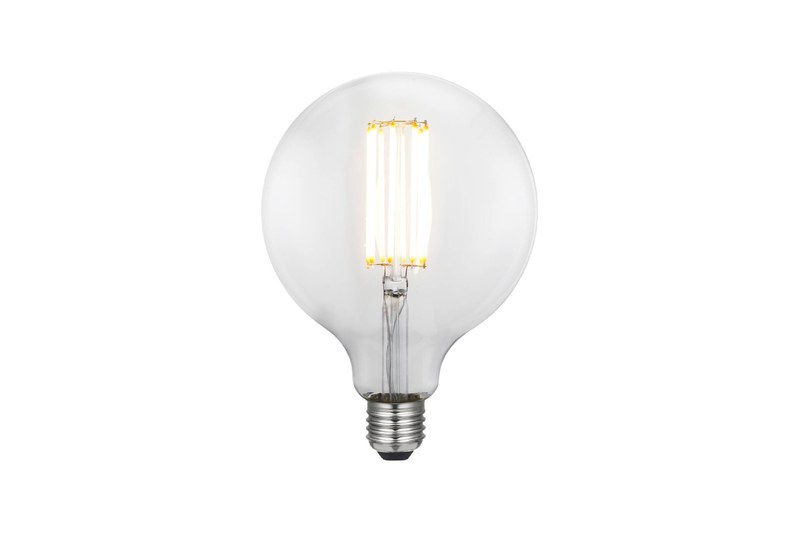
Clear glass is the most direct decorative bulb finish. It shows everything: the filament, glass stem, support wires and internal structure.
This is why clear glass works well when the LED filament itself is part of the design. Spiral filament, flexible filament, straight filament and special-shaped filament bulbs usually need clear or lightly tinted glass to show their structure.
Clear bulbs are commonly used in:
- open pendant lamps
- chandeliers
- wall sconces
- table lamps with visible bulbs
- industrial-style fixtures
- vintage decorative lighting
From a manufacturer’s perspective, clear glass is the baseline. It normally has no finish-related lumen loss and no finish-related CCT shift. But it also exposes every detail inside the lamp. If the filament position, stem, wires or glass cleanliness are not well controlled, the defect will be visible.
The advantage of clear glass is high light transmission and strong filament visibility. The disadvantage is glare. If the bulb is used at eye level or with high lumen output, clear glass may feel too direct.
For clear glass bulbs, the key is to control the balance between visible filament and visual comfort. Low-lumen decorative bulbs can remain clear. Higher-output bulbs may need dimming, frosting, opal coating or mirror-top treatment.
For standard decorative filament options, see HongYu Bulb LED Filament Bulbs →.
Amber / gold glass: the classic vintage finish
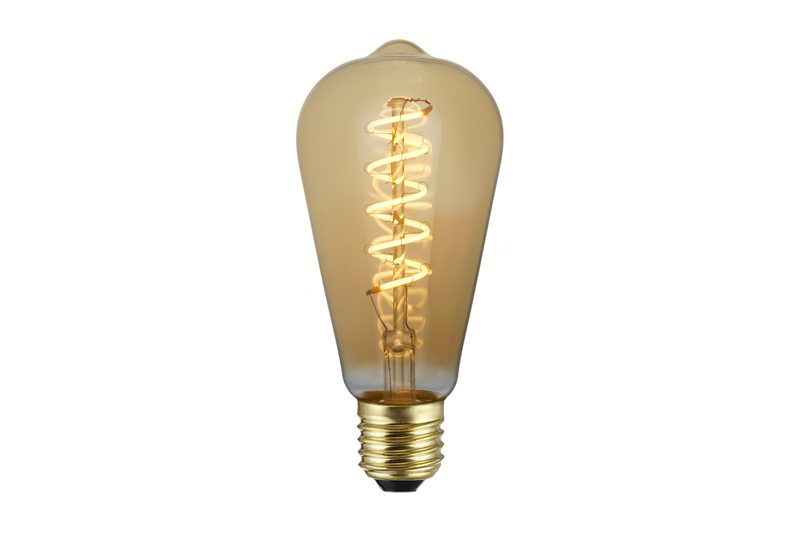
Amber, also called gold glass, is one of the most classic decorative bulb finishes. It is closely connected with vintage Edison bulbs because it makes the light look warmer, softer and more nostalgic.
In practical use, amber glass usually does three things.
First, it reduces the cold or technical feeling of LED.
Second, it makes the filament look warmer and more decorative.
Third, it matches well with brass, bronze, wood, leather and vintage-style fixtures.
Amber bulbs are widely used in:
- cafés
- restaurants
- hotels
- bars
- vintage pendant lamps
- decorative chandeliers
- hospitality lighting
From our production experience, amber or gold glass often creates around 10–15% lumen loss compared with clear glass, and the perceived color temperature may shift warmer by around 200K, depending on coating depth and glass tone.
One important detail is that amber / gold glass can be made by different processes. Some use electroplating-related processes, while others use coating or baking methods. The final color can vary from light champagne to deep orange-brown. This is why batch control matters.
A sample may look beautiful, but a lighting brand also needs the supplier to keep the same amber tone in repeat orders.
HongYu Bulb’s vintage straight filament series uses 2200K warm LED filament with gold-tinted glass for a stronger incandescent-style effect. You can view the related product range here: HongYu Bulb EU Vintage Straight Filament Bulbs →.
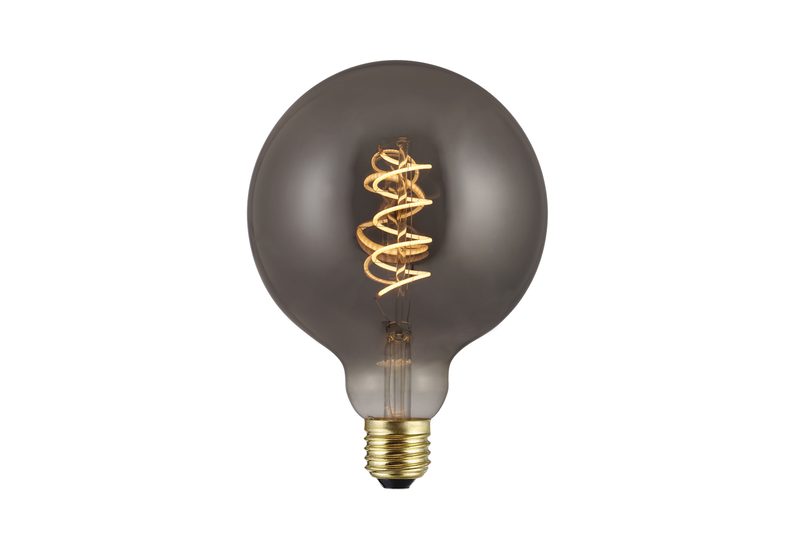
Smoky glass is another important finish in decorative lighting. Compared with amber, smoky glass feels darker, more modern and more premium.
It works especially well with:
- black metal fixtures
- chrome fixtures
- gunmetal finishes
- dark bronze hardware
- modern vintage interiors
- hotel and lounge lighting
Smoky bulbs reduce the sharpness of the filament and create a deeper atmosphere. The filament remains visible, but the glass adds a layer of visual depth.
From our production experience, smoky glass can create around 50–70% lumen loss compared with clear glass. The CCT shift is usually smaller than amber, often around 100K, but the perceived brightness becomes much lower because the glass absorbs more light.
The production difficulty is higher than standard amber glass. Smoky glass normally depends on electroplating-style processing. If the process is not mature, the neck area near the lamp cap can show uneven color, dark marks or a burnt-looking transition. This is especially obvious on large globe bulbs because the glass surface is bigger and any color difference becomes easier to see.
For buyers, smoky glass is a strong choice when the fixture needs a premium look, but it requires better coating control than standard clear or amber bulbs.
Frosted glass: simple diffusion with limited lumen loss
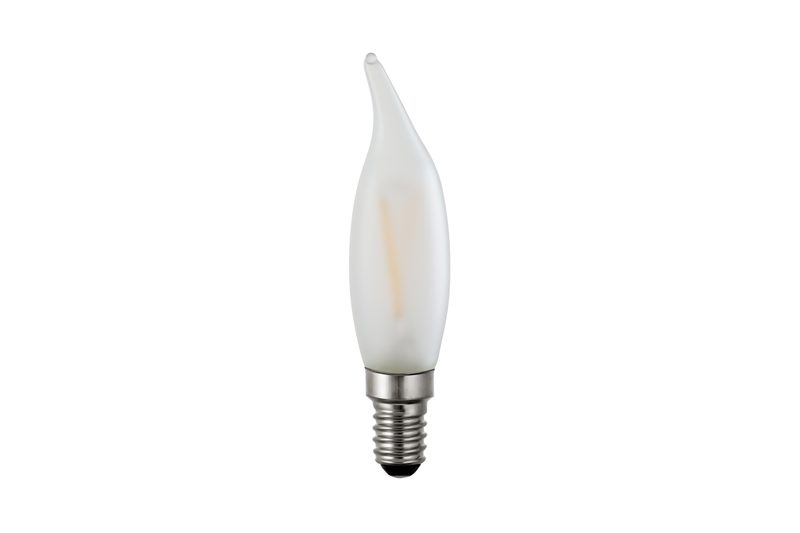
Frosted glass is one of the most common diffusion finishes. The process usually uses acid treatment to create an uneven surface on the glass, so light scatters instead of passing through directly.
The main benefit is reduced sharpness. The filament becomes less direct, and the bulb looks softer when switched on.
Frosted bulbs are used in:
- wall sconces
- table lamps
- bathroom lights
- bedroom lighting
- decorative fixtures requiring softer light
From our production experience, standard frosted glass usually has only 2–5% lumen loss, and the CCT shift is often close to 0K. This makes frosted glass a practical diffusion choice when the buyer wants a softer look but does not want to lose much brightness.
However, frosted glass has a limitation: the diffusion effect is not always strong enough. The light may still feel slightly sharp if the LED filament is bright. In other words, frosted glass improves comfort, but it is not the highest-level anti-glare solution.
So frosted glass is a balanced option: softer than clear glass, but still brighter and more filament-visible than opal or porcelain.
Opal white: stronger diffusion for cleaner light
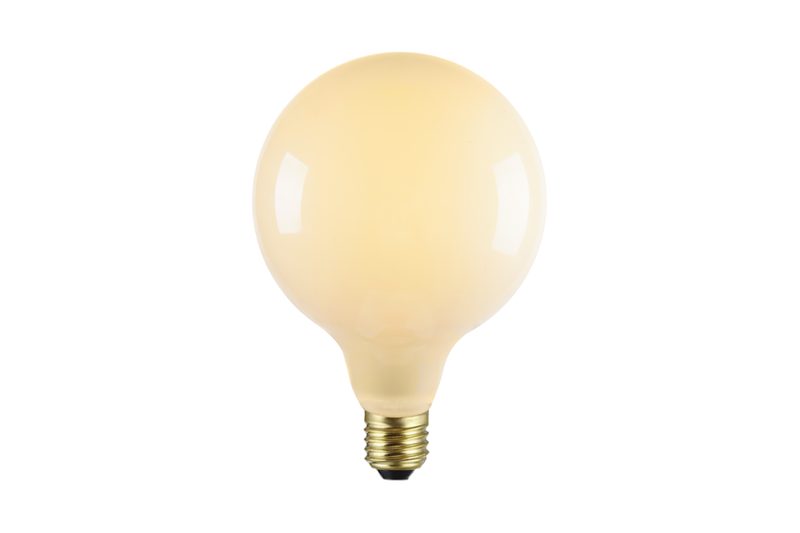
Opal white is a stronger diffusion finish than standard frosted glass. It usually creates a more even glowing surface.
From a production point of view, opal white is commonly made by applying a thick white water-based coating inside the bulb and then baking it. The result is a smoother and softer light output.
In our production experience, opal white usually causes around 15–20% lumen loss, depending on coating thickness, glass shape and LED structure. The perceived color temperature may also shift warmer by around 200K, because the light passes through a white diffusion layer.
Opal white is useful when the designer wants a clean, soft and modern bulb, but does not need a fully matte porcelain appearance.
Compared with frosted glass, opal white has a stronger diffusion effect. Compared with porcelain, it still keeps a smoother glossy outside surface.
Typical applications include:
- residential decorative lighting
- hospitality lighting
- wall lights
- table lamps
- soft pendant lighting
- lamps where the filament should not be too visible
Matte frosted: sanded appearance and very soft visual effect
Matte frosted bulbs are less common than standard frosted or opal white bulbs. The surface looks more sanded, greyish and soft.
Compared with clear glass, the filament becomes much less visible, and the light feels smoother and more comfortable.
In our production experience, matte frosted finishes typically create around 10% lumen loss. The CCT shift is usually limited, often around 50K, although this can vary by process.
Matte frosted bulbs are suitable for:
- ambiance lighting
- wall lights
- table lamps
- visible-bulb fixtures
- soft decorative applications
The main production risk is batch uniformity. Because the surface is matte and visually soft, inconsistent sanding or spraying can be visible when multiple bulbs are installed together.
This finish is useful when the buyer wants a visibly matte surface and softer light, but does not want the ceramic-like appearance of porcelain.
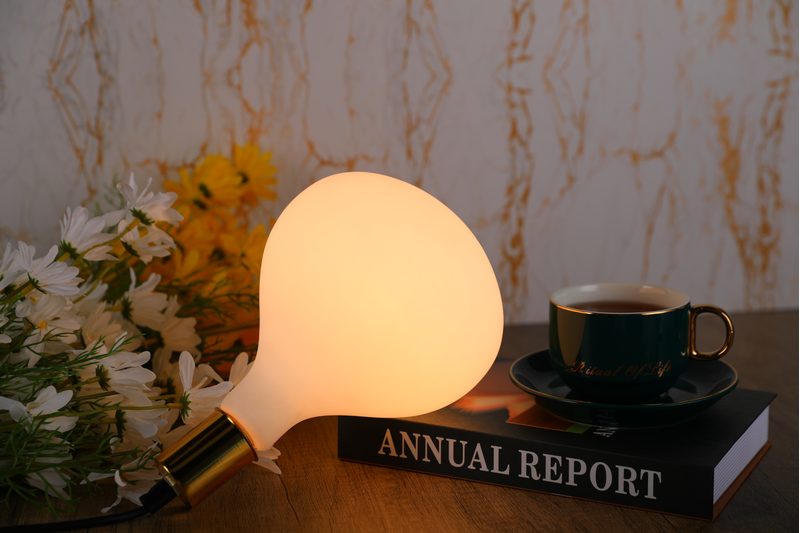
Porcelain finish gives the bulb a matte white, ceramic-like appearance. When switched on, the bulb becomes a warm glowing object rather than a visible filament lamp.
This finish is especially suitable for:
- high-end pendant lamps
- bedside lighting
- wall lights
- table lamps
- hotel rooms
- spas
- minimalist interiors
- soft decorative fixtures
From our production experience, Porcelain or matte-white finishes typically create around 15–25% lumen loss, depending on coating thickness, bulb shape and LED structure. The perceived color temperature often shifts warmer by around 100–200K.
The main benefit of porcelain is not maximum efficiency. The benefit is visual comfort. A good porcelain bulb can still be comfortable to look at even when the brightness is relatively high, because the light is diffused across the whole glass body.
The production difficulty is higher than normal frosted or opal finishes. Only a small number of professional coating suppliers can produce a stable porcelain surface with good uniformity. The finish must look clean both when the bulb is off and when it is switched on.
For U.S. projects, see HongYu Bulb US ETL Porcelain Filament Bulbs →. HongYu Bulb’s ETL + FCC listed porcelain range includes E26 and E12 options for the U.S. market.
Top mirror silver: glare control with a reflective design
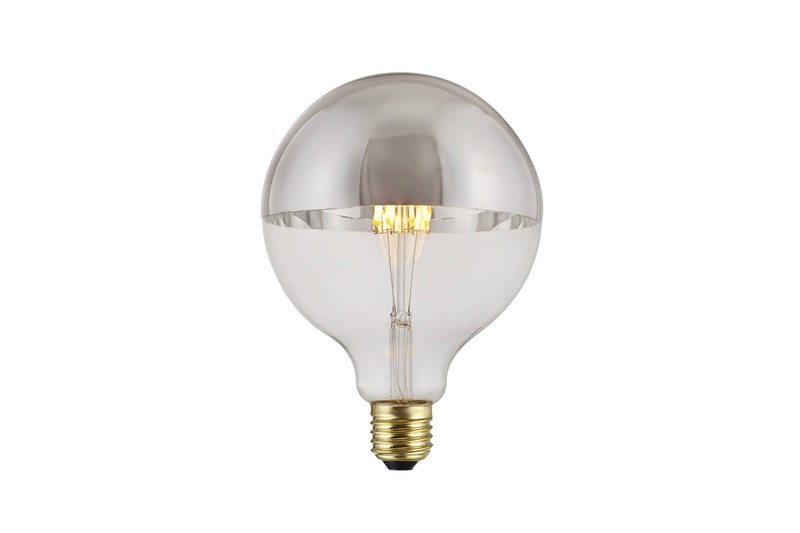
Top mirror bulbs were not designed only for decoration. Their original purpose is practical: to reduce direct glare and reflect light toward the lamp holder, wall, ceiling or reflector.
A top mirror bulb normally has a reflective coating on the top part of the glass. The coated area blocks direct light from the viewer’s eye, while the lower part remains clear or semi-clear.
Top mirror silver is the most classic version. It gives a clean, reflective and slightly technical appearance. It works well with chrome, nickel, silver, black and modern metal fixtures.
From our production experience, top mirror silver can create around 20–40% lumen loss, depending on the mirror coverage area and bulb shape. The CCT shift may be around 100–200K, because part of the light is reflected and redistributed instead of passing directly through the glass.
Typical applications include:
- open pendant lamps
- table lamps
- wall lights
- exposed bulb fixtures
- decorative fixtures where the bulb is visible at eye level
The key production risks are a dirty clear-glass area, an uneven mirror boundary line and small defects in the reflective coating. For mirror-top bulbs, the edge line is very important because it is visually obvious.
For related product options, see HongYu Bulb Top Mirror Bulbs →.
Top mirror gold: warmer reflection for brass and bronze fixtures
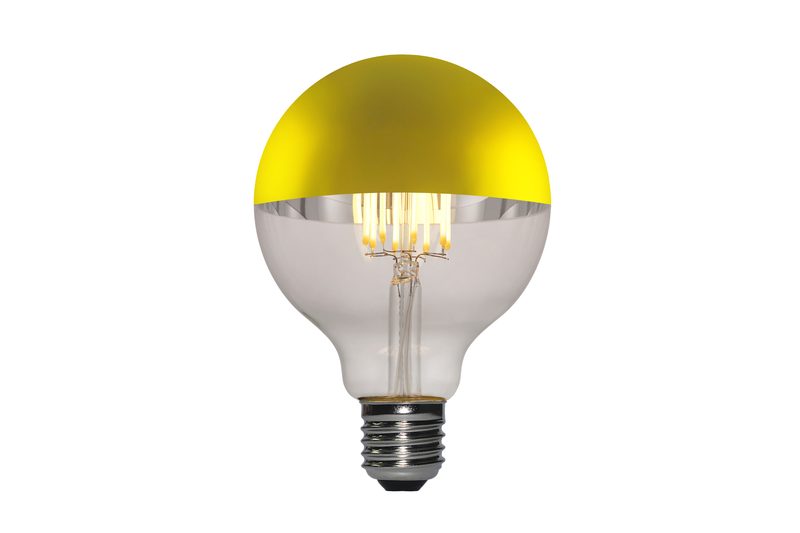
Top mirror gold is based on the same glare-control logic as top mirror silver, but the visual effect is warmer and more decorative.
A gold mirror finish works well with:
- brass fixtures
- bronze finishes
- warm interiors
- hospitality lighting
- decorative table lamps
- vintage-modern collections
From a design point of view, top mirror gold helps the bulb integrate with the fixture hardware. The bulb looks intentional instead of simply inserted into the lamp.
From our production experience, top mirror gold usually has around 20–40% lumen loss, similar to top mirror silver, but the perceived CCT shift can be stronger, often around 200–300K, depending on gold tone and reflection coverage.
The main production risks are similar to silver mirror: boundary-line neatness, glass cleanliness and coating uniformity. In addition, gold mirror has one more risk: batch-to-batch gold color consistency.
Top mirror black, white and custom printed colors
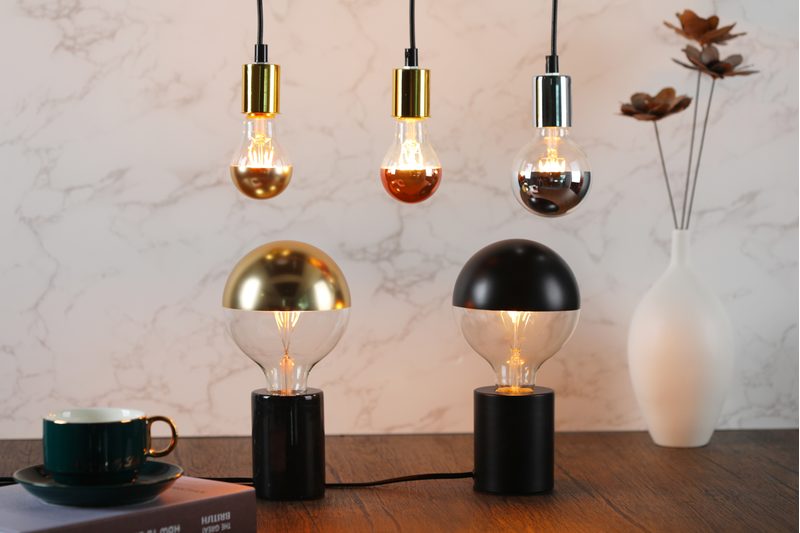
A mirror-top bulb does not have to be silver or gold. The reflective layer can be combined with outer printing to create matte black, matte white, yellow or other custom colors.
This is useful when the lighting brand wants the bulb top to match the fixture body, shade color or collection identity.
For example:
- matte black top for black pendant lamps
- matte white top for minimalist fixtures
- yellow top for playful decorative lamps
- custom color top for brand-specific collections
These finishes can turn a standard globe bulb into a design component.
The key point is that mirror-top color should not be selected separately from the fixture. It should match the metal holder, cable, shade, interior color and packaging direction.
Printed elegant colors: unlimited visual possibilities, but trend-sensitive
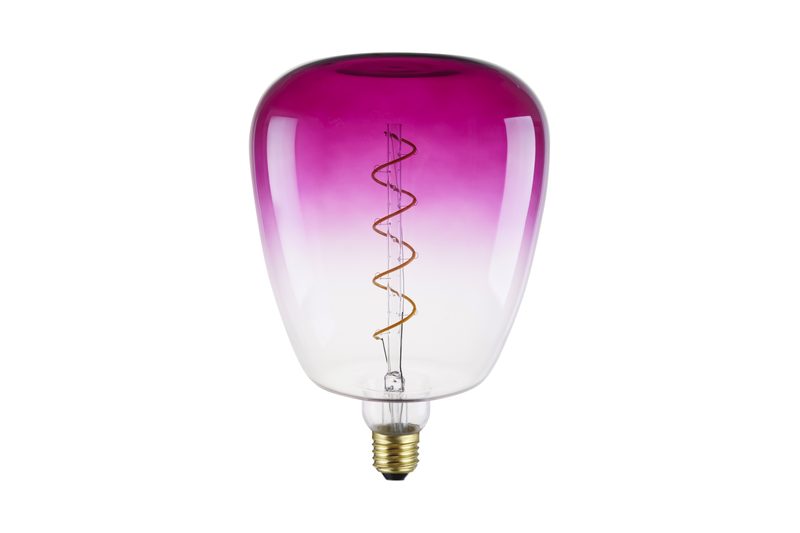
Printed colored bulbs can create many visual effects: fade blue, fade green, fade pink, fade grey and other gradient colors.
A few years ago, these finishes were very popular in decorative lighting. In recent years, demand has become more selective. The reason is not that the finish is bad. The reason is that the finish can create almost unlimited possibilities, and highly expressive products depend more strongly on fashion cycles.
For lighting brands, printed colored bulbs work best when they are developed as part of a complete collection, not as isolated bulbs.
They should match:
- fixture metal color
- cable color
- shade material
- retail packaging
- interior application
- brand story
If these elements are aligned, printed colored bulbs can look premium. If not, they may look too decorative or difficult to sell in volume.
From our production experience, printed colored bulbs can have very different lumen losses depending on color depth. A light gradient may only lose around 10%, while a darker finish can lose up to 50%. CCT shift also depends on the color.
Houzz[4] reported earthy finishes, moody metals and more expressive decorative lighting trends in 2025, which supports the idea that richer finishes still have value when used carefully in the right collection.
For custom coating, metallic colors and gradient-style decorative bulbs, see HongYu Bulb Custom Color Bulbs →.
Metallic finishes: luxury, semi-transparent and technically sensitive
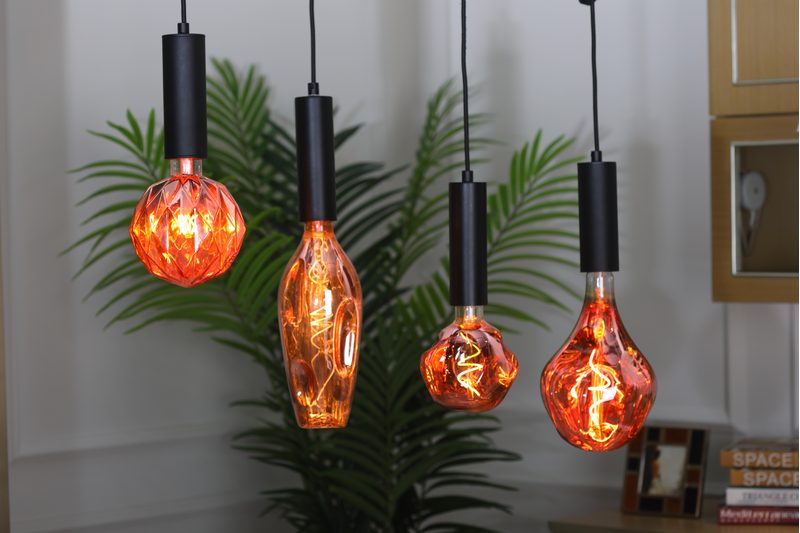
Metallic finishes can be applied as internal or external coatings.
Internal metallic coatings, such as copper tone, create a semi-transparent metal color effect. The filament remains visible, but the glass body looks warmer, deeper and more luxurious.
External metallic coatings can create stronger color effects, similar to automotive paint. These finishes are visually powerful and should be matched carefully with the fixture design. If the coating is too strong, it may dominate the lamp. If used well, it can make the whole lighting collection look distinctive.
From our production experience, metallic finishes can create around 50–80% lumen loss, depending on coating depth and color. The CCT shift depends heavily on the specific metallic tone.
Metallic finishes are suitable for:
- premium decorative lamps
- hotel lighting
- bar and restaurant lighting
- statement pendant collections
- custom brand-color projects
The main risk is oxidation or chemical reaction after shipment, especially for some internal metallic coatings. If the process is not stable, the inside of the glass may become darker over time.
HongYu Bulb’s custom color bulb series includes copper, silver, rose-gold, rainbow and other metallic coating options, with custom color matching available for specific projects. See HongYu Bulb Custom Color Bulbs →.
Printed alabaster: stone-like softness with long-term potential
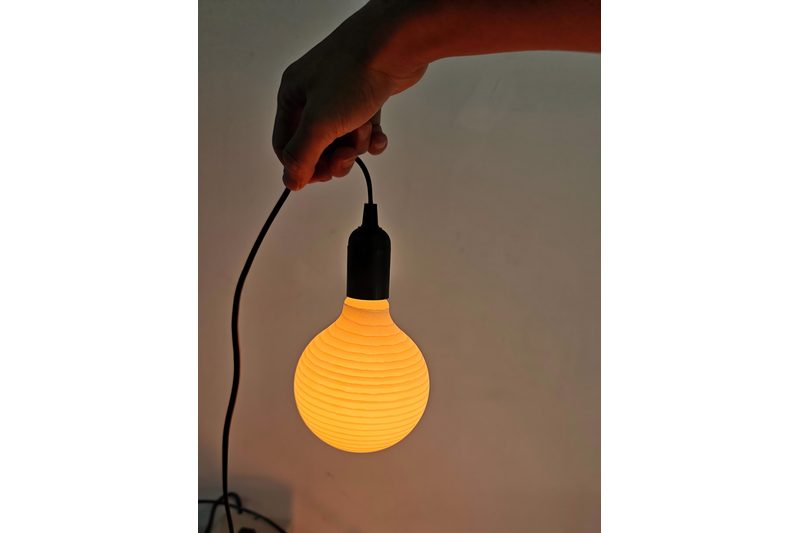
Printed alabaster finish imitates the natural texture of stone or marble. It gives the bulb a soft, premium and architectural feeling.
This finish is different from ordinary colored printing. It is not mainly about bright color. It is about texture, softness and material feeling.
Printed alabaster works well for:
- premium table lamps
- boutique hotel lighting
- warm minimalist interiors
- decorative pendants
- stone, brass or ceramic fixture collections
From our production experience, alabaster finish can create around 20–30% lumen loss, and the perceived CCT may shift warmer by around 200K. Glare control is strong, and filament visibility is low.
The key is subtlety. If the printed texture is too strong, it may look artificial. If controlled well, it can give the bulb a stone-like value.
This finish may have longer-term potential than some trend-driven gradient colors because stone-like materials and warm natural textures fit well with premium interior lighting.
The production difficulty is relatively high. Similar to porcelain, only a small number of professional spraying and printing suppliers can produce a stable and refined alabaster effect.
3D effect bulbs: strong visual impact, not general illumination
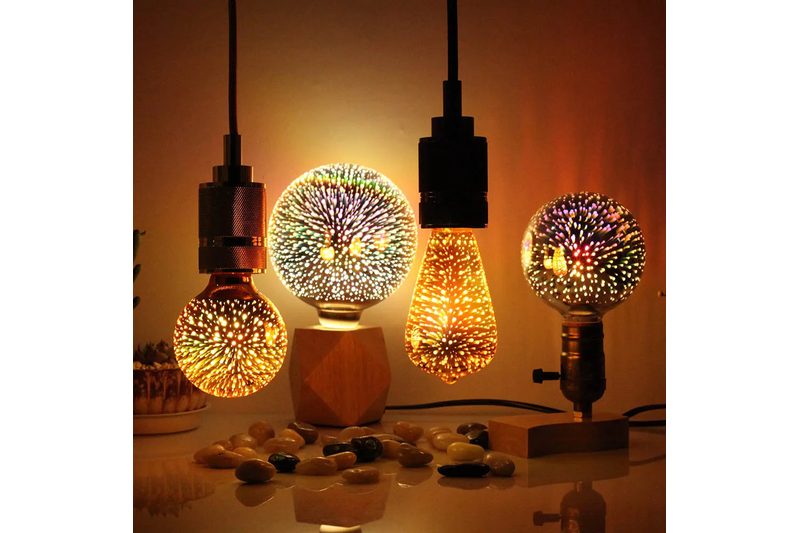
3D effect bulbs are among the most complex decorative bulb finishes.
The visual effect is dramatic. When switched on, the bulb creates a deep, sparkling, repeated light pattern. It is more like a visual object than a normal light source.
The process is much more complicated than a standard coating. Typically, the glass first needs full reflective coating, then surface treatment, and then laser processing to create many small light-transmission points. These points generate the 3D visual effect.
3D bulbs are suitable for:
- novelty lighting
- decorative displays
- gift products
- mood lighting
- retail feature areas
- special visual collections
From our production experience, 3D effect bulbs can have around 80–90% lumen loss, because most of the bulb surface is blocked by reflective treatment and only the small laser points transmit light. The CCT shift may be around 200K, depending on the LED source and internal reflection.
The main production risk is consistency of the laser pattern. If the hole size, density or position changes between batches, the 3D effect will look different.
3D bulbs should not be positioned as general illumination products. They are best used as visual-effect bulbs.
Image note: This image should be recreated or retouched separately because the 3D effect needs a stronger application-style visual.
Satin spun finish: historical, textured and niche today
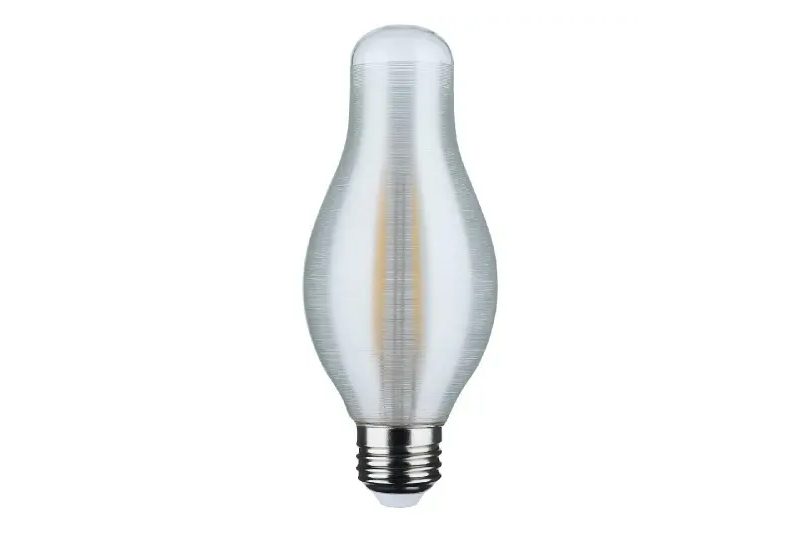
Satin spun is a historical decorative finish that appeared earlier in tungsten filament lamps. It creates a fine linear texture on the glass surface, giving the bulb a soft satin-like look.
Today, satin spun is not a mainstream high-volume finish, but it can still be interesting for retro, heritage or special design collections.
From our production experience, satin spun can create around 10–15% lumen loss, with a CCT shift of around 200–300K depending on texture depth and coating tone.
It works best when the fixture itself has a vintage or industrial reference. For modern mass-market decorative lighting, frosted, opal, amber, smoky or porcelain finishes are usually easier to sell.
The main production risk is uneven spun lines. If the line texture is not straight or consistent, the bulb may look defective rather than intentionally textured.
A manufacturer’s finish ranking: what sells more often?
Different markets have different preferences, but from a manufacturer’s point of view, finish demand usually follows a practical pattern.
Based on our experience with decorative LED bulb orders, a rough sales and application ranking is:
Clear glass > Frosted > Amber / Gold > Opal white > Smoky > Top mirror series > Porcelain > Printed elegant series > 3D > Satin spun > Printed alabaster
This does not mean clear glass is always better than porcelain, or that printed alabaster has no value. It simply means some finishes are more universal, while others are more collection-specific.
Clear glass, frosted, amber and opal white are easier to use across many fixtures. Smoky, mirror-top, porcelain and metallic finishes are more design-driven. Printed elegant, 3D, satin spun and alabaster finishes need a stronger product concept and clearer market positioning.
For lighting brands, the right question is not:
Which finish is the most popular?
The better question is:
Which finish supports this fixture, this customer and this retail position?
Practical decorative bulb finish comparison table
| Finish | Visual effect | Lumen loss vs clear | CCT shift | Glare control | Filament visibility | Typical applications | Production difficulty | Common risk |
|---|---|---|---|---|---|---|---|---|
| Clear | Clean, direct, classic | 0% | 0K | Low | Very high | Vintage pendants, chandeliers | Low | All internal details are visible |
| Amber / Gold | Warm, nostalgic | 10–15% | Around 200K warmer | Medium | High | Cafés, restaurants, vintage lamps | Medium | Batch color difference |
| Smoky | Premium, dark, modern vintage | 50–70% | Around 100K | Medium | Medium-high | Hotels, bars, black metal fixtures | Medium-high | Uneven coating; neck area may look burnt |
| Frosted | Soft, simple | 2–5% | 0K | Medium | Low-medium | Wall lights, table lamps | Medium | Diffusion effect may still be limited |
| Opal white | Even, soft, clean | 15–20% | Around 200K warmer | Medium-high | Low | Residential, hospitality | Medium | Coating thickness affects lumen and CCT |
| Matte frosted / Sand frosted | Sanded, very soft | Around 10% | Around 50K | High | Low | Ambiance lighting, wall lights | Medium-high | Batch uniformity |
| Porcelain | Ceramic-like, premium glow | 15–25% | 100–200K warmer | Very high | Very low | High-end lamps, soft pendants | High | Requires professional coating supplier |
| Mirror top silver | Reflective, glare-controlled | 20–40% | 100–200K | High | Medium | Pendants, table lamps | Medium-high | Dirty clear area; uneven mirror line |
| Mirror top gold | Warm reflective | 20–40% | 200–300K | High | Medium | Brass, bronze, vintage-modern fixtures | Medium-high | Mirror line and gold color consistency |
| Printed colored | Expressive, decorative | 10–50% | Depends on color | Varies | Medium | Statement collections | Medium-high | Batch color difference |
| Metallic | Luxury, semi-transparent | 50–80% | Depends on color | Varies | Medium | Premium decorative lamps | Medium-high | Possible oxidation or internal darkening |
| Printed alabaster | Stone-like, soft premium | 20–30% | Around 200K | High | Low | Boutique, architectural lighting | Medium-high | Texture must look natural |
| 3D effect | Sparkling, visual impact | 80–90% | Around 200K | High | Special effect | Novelty, display, mood lighting | Medium-high | Laser pattern consistency |
| Satin spun | Retro, textured | 10–15% | 200–300K | Medium | Low-medium | Heritage or industrial collections | Medium-high | Spun lines may be uneven |
How to choose the right finish by fixture type
For open pendant lamps
Open pendant lamps expose the bulb completely. This makes finish selection especially important.
Recommended finishes:
- clear glass for visible filament
- amber glass for warm vintage atmosphere
- smoky glass for premium modern-vintage design
- mirror top for glare control
- colored gradient for statement collections
- porcelain for soft minimalist pendants
If the pendant hangs above a dining table, bar counter or kitchen island, direct glare should be considered. Clear bulbs may look beautiful, but mirror-top, opal or porcelain finishes may be more comfortable in daily use.
Suggested HongYu Bulb product links:
- HongYu Bulb EU Vintage Straight Filament Bulbs →
- HongYu Bulb Custom Color Bulbs →
- HongYu Bulb full product range →
For wall lights
Wall lights are often close to the eye. If a clear bulb is too bright, the user may feel uncomfortable.
Recommended finishes:
- frosted
- opal
- porcelain
- smoky
- mirror top
For wall lights, the bulb should usually support atmosphere rather than dominate the fixture. A porcelain bulb can make the wall light feel soft and architectural. A smoky or amber bulb can create a warmer vintage effect. A mirror-top bulb can help redirect light toward the wall.
Suggested HongYu Bulb product link:
For table lamps
Table lamps are close to the user, so visual comfort is critical.
Recommended finishes:
- porcelain
- opal
- frosted
- top mirror
- low-lumen amber filament
A clear high-lumen filament bulb is often too direct for a table lamp unless there is a shade. If the bulb is exposed, diffusion or mirror control is usually better.
For hospitality lighting
Hotels, restaurants, bars and cafés often prefer warm, emotional light. Amber, smoky, porcelain, dim-to-warm and low-lumen filament bulbs are all useful here.
The lighting does not need to be extremely bright. It needs to create atmosphere, support the interior material palette and make people feel comfortable.
For hospitality applications, warm CCT and glare control are usually more important than maximum lumen output.
Suggested HongYu Bulb product links:
- HongYu Bulb EU Vintage Straight Filament Bulbs →
- HongYu Bulb US ETL Porcelain Filament Bulbs →
- HongYu Bulb Custom Color Bulbs →
For retail and display lighting
Retail lighting often needs more visual attraction. Colored finishes, metallic finishes, mirror-top bulbs and 3D effects can all be used to create eye-catching displays.
However, for retail lighting, consistency matters. If the same bulb finish is used across multiple stores or product batches, the supplier must control:
- color difference
- coating thickness
- glass transparency
- filament position
- surface marks
- batch-to-batch appearance
For brand-specific colors or metallic finishes, see HongYu Bulb Custom Color Bulbs →.
Finish does not only change appearance — it can change perceived light quality
A finish can change how people feel about the light, even when the technical LED source is the same.
For example:
- amber glass makes the light feel warmer and more vintage
- smoky glass reduces direct brightness and creates a darker atmosphere
- frosted glass softens the filament but still keeps relatively high brightness
- opal white makes the bulb look cleaner and more evenly diffused
- porcelain hides the filament and turns the whole glass body into a soft glowing object
- mirror-top coating changes the direction of visible light and reduces direct glare
For high-end decorative lighting, color rendering can also matter. Many buyers still use CRI, but more professional lighting projects may also consider TM-30. The Illuminating Engineering Society[5] describes TM-30 as a comprehensive method for evaluating light source color rendition, and U.S. DOE TM-30 guidance[6] explains that ANSI/IES TM-30 provides a framework beyond simple CRI comparison.
For most decorative bulb buyers, the practical lesson is simple:
Do not approve a finish only by looking at the bulb when it is off. Always check it when switched on, inside the real fixture, at the real viewing angle.
Manufacturer’s checklist before approving a decorative bulb finish
Before confirming a finish for production, a lighting brand should check more than color.
1. Check lumen output after finish
A finish can reduce lumen output from almost zero loss to more than 80% loss, depending on coating type. Clear and frosted finishes have low loss. Smoky, metallic and 3D finishes can reduce output significantly.
2. Check CCT after finish
Many coatings make light look warmer. Amber, opal, porcelain, mirror gold, alabaster and satin spun finishes can all shift the perceived CCT.
3. Check glare at the real viewing angle
A bulb may look fine in a sample box but uncomfortable inside a pendant or wall light. Test the bulb in the fixture position.
4. Check filament visibility
Some fixtures need visible filament. Others need a smooth glowing surface. The finish should match the design intention.
5. Check batch consistency
Color, coating thickness, mirror line, matte texture and printed patterns can vary between batches. For lighting brands, repeatability is often more important than one beautiful sample.
6. Check the bulb when off and on
Some finishes look good only when switched on. Some look good only when switched off. A successful decorative bulb should work in both conditions.
7. Check packaging and photography
Colored, metallic and mirror finishes are sensitive to photography. The final sales image should represent the real product honestly.
Can decorative bulb finishes be customized?
Yes. Most decorative bulb finishes can be customized, but the level of difficulty is different.
Simple customization may include:
- glass color
- bulb shape
- base type
- wattage
- lumen output
- CCT
- filament shape
- packaging
Advanced customization may include:
- gradient glass colors
- top mirror color matching
- metallic coatings
- porcelain finish
- printed alabaster effect
- 3D visual pattern
- dim-to-warm performance
- low-glare decorative output
- custom bulb and fixture matching
The most important point is that a decorative bulb should not be developed in isolation. It should be developed together with the fixture concept.
Before choosing a finish, a lighting brand should ask:
- Will the bulb be exposed or hidden?
- Is the bulb mainly functional or decorative?
- Is glare a concern?
- Should the filament be visible?
- What metal finish is used on the fixture?
- Is the target market vintage, modern, minimalist or luxury?
- Is the bulb for high-volume sales or a special collection?
- How much lumen loss is acceptable?
- Does the finish need stable repeat production?
- Is the product positioned for retail, hospitality or project lighting?
These questions help avoid one common mistake: choosing a beautiful sample that does not work well in the final fixture.
For custom development, visit:
- HongYu Bulb Custom Color Bulbs →
- HongYu Bulb full product range →
- HongYu Bulb About Page →
- Contact HongYu Bulb →
FAQ: Decorative bulb finishes
What is the best finish for exposed decorative bulbs?
For exposed decorative bulbs, clear glass, amber glass, smoky glass and mirror-top finishes are common choices. Clear glass works best when the filament should be visible. Amber glass creates a warm vintage atmosphere. Smoky glass gives a darker premium look. Mirror-top bulbs are useful when glare control is important.
Does frosted glass reduce lumen output?
Yes, but the loss is usually limited. In our production experience, standard frosted glass usually causes around 2–5% lumen loss, while opal white, matte frosted and porcelain finishes usually create stronger diffusion and higher lumen loss.
Which bulb finish is best for low-glare lighting?
Porcelain, opal white, matte frosted and mirror-top finishes are usually better choices for low-glare decorative lighting. Porcelain and opal diffuse the light across the glass body, while mirror-top bulbs block direct light from the top side and redirect it toward the fixture, wall or ceiling.
Why does smoky glass reduce brightness so much?
Smoky glass absorbs and filters more light than clear or amber glass. This creates a darker, more premium atmosphere, but it also reduces lumen output. In our production experience, smoky glass can create around 50–70% lumen loss, depending on coating depth and bulb shape.
Can LED bulb finishes be customized?
Yes. Glass color, coating, mirror-top color, metallic finish, printed pattern, porcelain coating, 3D effect and gradient finish can all be customized depending on technical feasibility, order quantity and sample approval.
Should I approve a bulb finish by looking at the sample only?
No. A bulb finish should be checked both when the bulb is off and when it is switched on. It should also be tested inside the real fixture, at the real viewing angle. A finish that looks beautiful in a sample box may not work well in a pendant lamp, wall light or table lamp.
Conclusion: the best bulb finish is the one that supports the fixture
There is no single best decorative bulb finish.
Clear glass is best when the filament should be visible.
Amber is best when the lighting should feel warm and vintage.
Smoky glass is best for premium modern-vintage fixtures.
Frosted glass is best when only light diffusion is needed.
Opal white is best when the light should look cleaner and softer.
Porcelain is best when the bulb should become a warm glowing object.
Mirror-top bulbs are best when glare control and reflection matter.
Metallic finishes are best when the bulb needs a luxury semi-transparent effect.
Printed elegant colors are best for strong visual identity.
Printed alabaster is best for stone-like premium collections.
3D effect bulbs are best for visual impact and mood lighting.
Satin spun is best for retro or heritage-style applications.
For lighting brands, the real goal is not to choose the most beautiful bulb in a sample box. The goal is to choose a finish that works with the fixture, the room, the customer and the production reality.
At HongYu Bulb →, we help lighting brands and fixture manufacturers develop decorative LED bulbs with different glass finishes, filament structures, dimming options and packaging solutions. Whether you are developing a vintage pendant, a soft porcelain wall light, a mirror-top table lamp or a special colored collection, the right bulb finish can make the whole fixture feel more complete.
Looking for a custom decorative bulb finish for your lighting collection?
Contact HongYu Bulb to discuss glass color, coating, filament design, dim-to-warm options and sample development:
References
- Grand View Research, Decorative Lighting Market Size & Trends. Source ↩
- Lawrence Berkeley National Laboratory, U.S. Lighting Market Characterization report. Source ↩
- ENERGY STAR, Learn About LED Lighting. Source ↩
- Houzz, Decorative Lighting Trends. Source ↩
- Illuminating Engineering Society, Color Metrics Position Statement. Source ↩
- U.S. Department of Energy, TM-30 Frequently Asked Questions. Source ↩