Dim to Warm is one of the most commercially significant innovations in LED lighting of the past decade — and one of the most underutilised in the wholesale market. Many distributors and retailers stock standard dimmable LED filament bulbs without realising that Dim to Warm technology offers a meaningfully better customer experience at a modest price premium. This guide covers the technology, the applications, the specification details, and the commercial case for adding DTW to your product range.
What Is Dim to Warm? A Technical Definition
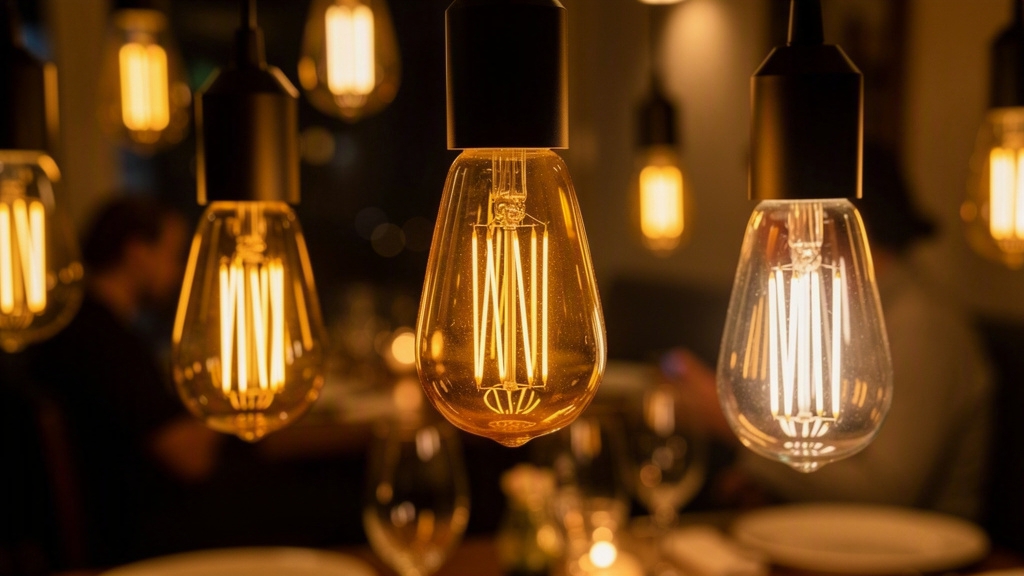
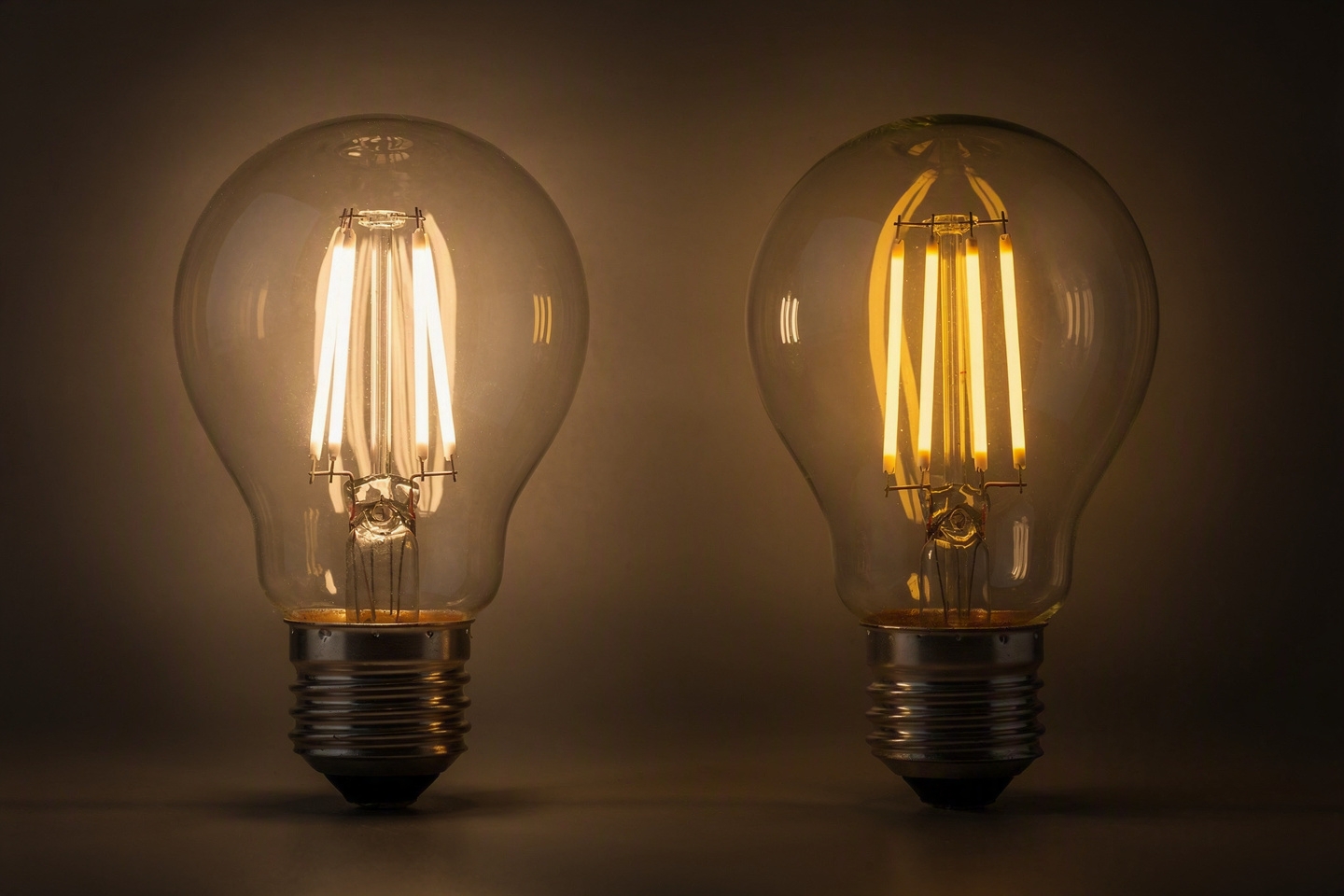
Dim to Warm (DTW) is a technology built into certain LED filament bulbs that automatically and continuously shifts the colour temperature of the emitted light as the dimmer level changes. At full output, the bulb emits light at approximately 2700 K — a warm white suitable for general ambient use. As the dimmer is reduced, the colour temperature drops progressively, reaching approximately 1800 K at the lowest usable dim level. This 1800 K output is a deep amber-candlelight colour, virtually indistinguishable from the glow of a real candle or a very low-wattage incandescent bulb.
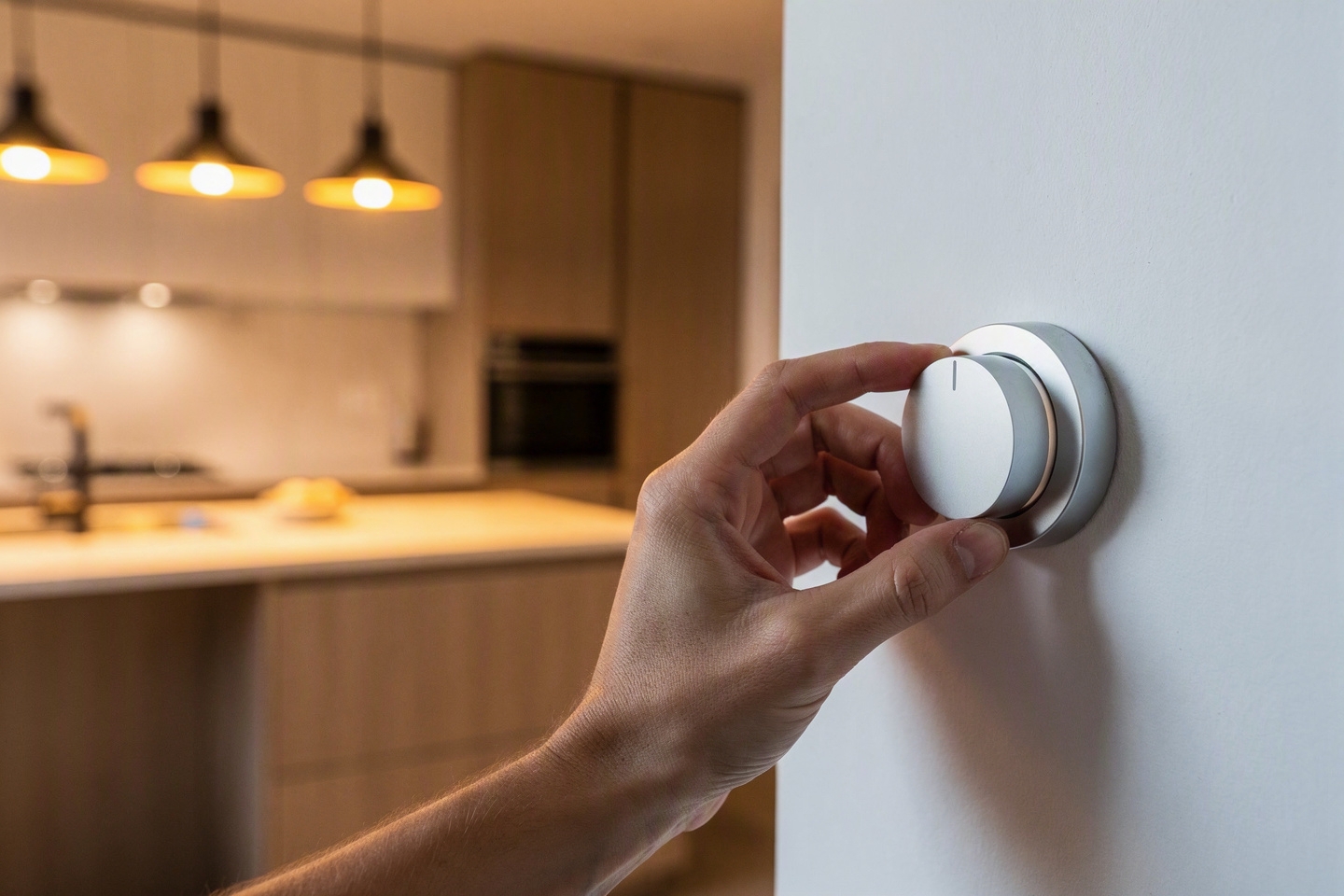
The key word is "automatically." The colour temperature shift requires no additional controller, no app, no smart home system, and no separate wiring. It happens in response to the same dimmer signal that controls the brightness — a standard TRIAC wall dimmer is all that is required. This makes Dim to Warm bulbs compatible with the vast majority of existing dimmer installations worldwide.

The Science Behind the Effect
Understanding how Dim to Warm works at a technical level helps buyers evaluate product quality and explain the technology's value to their customers.
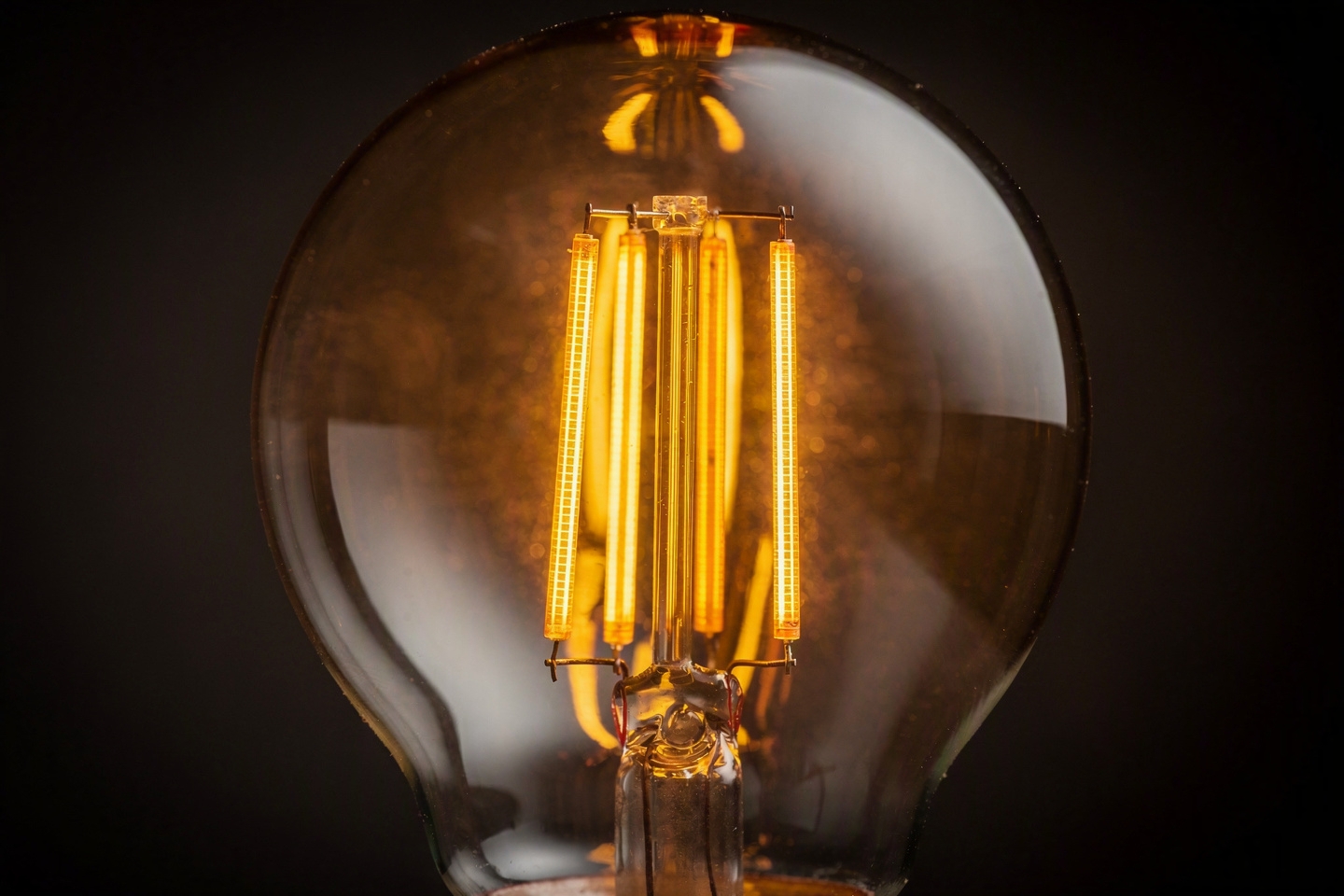
Inside a DTW LED filament bulb, the LED driver is engineered to interpret the reduced power input from a TRIAC dimmer not merely as a signal to reduce brightness, but as a CCT control signal. As the TRIAC phase angle increases (reducing power delivered), the driver responds by simultaneously reducing total LED current and shifting the balance of current between LED chips with different phosphor formulations — typically a warm-CCT chip set and an extra-warm chip set. The relative weighting between these two sets changes continuously as the dimmer is adjusted, producing the smooth, analogue colour shift that gives Dim to Warm its character.
The quality of this implementation varies significantly between manufacturers. A poorly designed DTW driver may produce a colour shift that feels abrupt or stepped rather than smooth; may exhibit flicker at low dim levels; or may not reach a true 1800 K at minimum — stopping at 2200 K instead. When evaluating DTW products, always test dimming across the full range from 100% to minimum, and verify the colour temperature at the lowest usable dim level with a spectrophotometer or colour meter.
How Dim to Warm Compares to Traditional Incandescent Dimming
Dimming behaviour is the fundamental reason many specifiers and end-users remain loyal to halogen or incandescent lamps despite their energy inefficiency. When an incandescent or halogen lamp is dimmed, two things happen simultaneously: the brightness decreases AND the colour temperature drops — the tungsten filament burns cooler and emits increasingly warm, amber light at lower power levels. This is a natural, analogue physical process, and humans are deeply attuned to it. We associate the amber warmth of low-level incandescent light with comfort, intimacy, and relaxation.
Standard dimmable LED bulbs replicate only half of this experience. They reduce brightness when dimmed, but maintain a fixed colour temperature. A 2700 K LED dimmed to 20% output is still emitting 2700 K light — just less of it. The result is a muted, dim version of the original light rather than the warm, intimate glow that incandescent users expect. For many specifiers this is an acceptable compromise; for premium hospitality and residential applications, it is not.
Dim to Warm closes this gap completely. A properly implemented DTW LED filament bulb, dimmed to 20% output, emits warm amber light at approximately 1800–2000 K — behaviorally identical to a dimmed incandescent. The sensory experience is preserved; only the energy consumption is different.
Key Applications
Restaurants and Bars
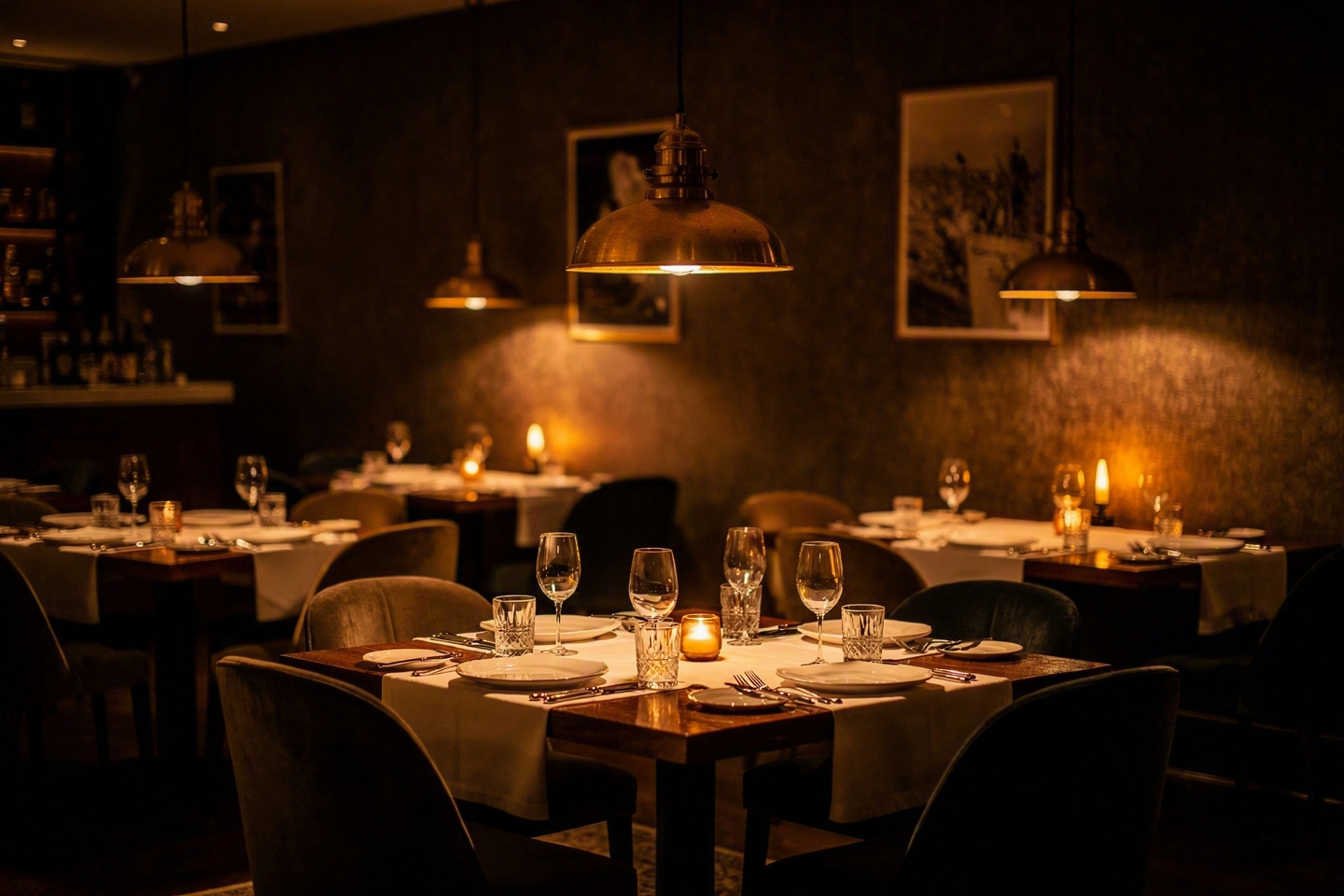
This is the primary market for Dim to Warm technology, and the application where its value is most immediately understood. A restaurant that opens at lunch with 100% output (2700 K — bright, inviting, appropriate for daytime dining) and transitions to evening service at 30–40% output (1800–2000 K — warm, intimate, romantic) achieves this transformation with a single wall dimmer. No scene controller, no smart system, no staff training beyond "turn the dimmer down at 6 PM."
The food presentation benefit is equally significant. At 1800 K with Ra >90, red and amber food tones are rendered with exceptional accuracy. Red meats, root vegetables, citrus garnishes, and berry-toned desserts appear vivid and appetising. This is the lighting condition under which the best restaurant photographers shoot, and it is achievable every evening with DTW filament bulbs on a standard dimmer circuit.
Hotel Guestrooms and Suites
Hotel guests increasingly control their own lighting environment via bedside or wall dimmers. Dim to Warm gives them an intuitive, satisfying dimming experience without requiring smart home technology or instruction. The guest dims the bedside light for reading, then dims it further for sleep — and the light naturally becomes warmer and more relaxing at each step. The guest does not need to understand Dim to Warm technology to appreciate the result; they simply find the room more comfortable and the lighting more pleasant.
For hotel operators, DTW simplifies the lamp specification across the property. A single Dim to Warm filament bulb in A60 or G95 form can serve all dimmed applications — bedside, desk, bathroom mirror, corridor accent — without the need for multiple CCT specifications.
Residential Living Spaces
The residential replacement market for incandescent and halogen dimmer lamps is the largest volume opportunity for Dim to Warm. Homeowners who have replaced incandescent bulbs with standard LED dimmer bulbs and been disappointed by the fixed colour temperature at low dim levels are the ideal customer for DTW. The upgrade from a standard dimmable LED to a DTW LED requires no fixture change, no rewiring, and no new dimmer — just a bulb swap.
Retail and Hospitality Environments
Boutique retail, premium food halls, and lifestyle stores benefit from the ability to transition from high-brightness daytime browsing light to atmospheric evening mode using existing dimmer infrastructure. Fashion and homeware retail particularly benefits from the warm-tone rendering at low dim levels — merchandise photographed under 1800 K light often appears warmer, richer, and more desirable than under standard cool-white retail lighting.
Dimmer Compatibility: What Buyers Must Know
Dim to Warm bulbs work with standard TRIAC dimmers — the most common type of wall dimmer in both European (230 V) and North American (120 V) markets. However, not all TRIAC dimmers perform equally with LED loads, and DTW adds an additional layer of complexity because the driver must interpret the TRIAC signal as both a brightness control and a CCT control simultaneously.
| Dimmer Type | DTW Compatibility | Notes |
|---|---|---|
| Leading Edge (LE) TRIAC | Good | Most common type. Works with DTW but may cause faint buzzing in some combinations. |
| Trailing Edge (TE) TRIAC | Excellent | Preferred for LED loads. Smoother dimming curve, less audible noise. |
| Universal / Adaptive | Excellent | Auto-detects load type. Best choice for new installations specifying DTW. |
| Non-dimmable (on/off only) | Not compatible | DTW bulbs can be used on non-dimmable circuits but will operate at full output (2700 K) only. |
| 0–10 V / DALI / DMX | Not compatible | DTW is TRIAC-only technology. For 0–10 V or DALI, use dedicated tunable white LED systems. |
Always verify the minimum load rating of the dimmer against the total LED load on the circuit. Many older dimmers have a minimum load of 40–60 W — a circuit of ten 4 W LED filament bulbs (40 W total) may sit right at or below this threshold, causing instability. Modern LED-rated dimmers specify minimum loads as low as 3–5 W and are strongly recommended for LED filament dimmer circuits.
Specification Checklist for DTW Buyers
When sourcing Dim to Warm LED filament bulbs at wholesale volume, verify the following specification points before committing to an order:
- CCT range: Confirm full range from 2700 K (100% output) to 1800 K (minimum output). Some products stop at 2200 K — acceptable for some applications but not a true DTW performance.
- CRI at minimum CCT: Ra >90 at 1800 K. Critical for food and skin rendering. Request test data, not just specification claims.
- Dimming smoothness: Test across the full range. Look for continuous, analogue colour shift — not stepped or abrupt transitions.
- Flicker performance: Request Percent Flicker and SVM data. Pstlm <1 and SVM <0.4 are the thresholds specified in current EU regulations.
- Minimum dim level: Confirm the bulb dims to at least 10% output without cut-out or flicker.
- Shape availability: A single DTW product that covers A60, G95, C35, and ST64 forms allows a complete project to be specified from one product family.
- Certification: CE+RoHS for EU; ETL+FCC for North America. Ensure certifications cover the DTW-specific operating modes, not just the full-output condition.
Dim to Warm vs. Smart Tunable White: Making the Right Choice
Dim to Warm is sometimes confused with — or positioned in competition with — smart tunable white LED systems (also called CCT-adjustable or RGBW systems). They serve different markets and should be evaluated on different criteria.
Dim to Warm is ideal when: The project has existing TRIAC dimmer infrastructure; the CCT shift from 2700 K to 1800 K covers all required scene settings; installation simplicity is important; and budget is a consideration. DTW bulbs cost 20–40% more than standard dimmable LED filament bulbs, but far less than smart tunable white systems including controller hardware.
Smart tunable white is appropriate when: The project requires CCT adjustment independent of dimming level (e.g., 3000 K at 50% output); a wider CCT range is required (e.g., 2700–6500 K for circadian lighting applications); or the project is already using DALI or Zigbee control systems for other reasons.
For the vast majority of hospitality and premium residential projects, Dim to Warm provides 80% of the functional benefit of smart tunable white at 20% of the system cost. It is the pragmatic choice, and increasingly the specification default for quality-conscious project designers who do not require the full flexibility of a connected lighting system.
Related HongYu Bulb product pages
- LED Filament Bulb Product Range → — standard and decorative LED filament bulbs for wholesale and project sourcing.
- EU Dim-to-Warm Bulbs → — warm dimming filament bulbs for hospitality and mood lighting.
- LED Dimming Guide → — technical guidance for TRIAC dimming, flicker and compatibility.
- Contact HongYu Bulb → — send specifications, target market, quantity and packaging requirements for quotation.
Conclusion
Dim to Warm technology resolves the single largest complaint about LED lighting — that it does not feel the same as the incandescent and halogen lamps it replaces when dimmed. By automatically shifting from warm white to candlelight amber as the brightness is reduced, DTW LED filament bulbs deliver an experience that is indistinguishable from incandescent dimming, with a fraction of the energy cost and a fraction of the maintenance burden.
HongYu Bulb's Dim to Warm range covers EU (230 V, CE+RoHS) and US ETL (120 V, ETL+FCC) versions in A60, G50, G95, G125, and C35 forms, with Ra 90/95 options and SDCM <5 colour consistency. Contact us for technical datasheets and sample orders.