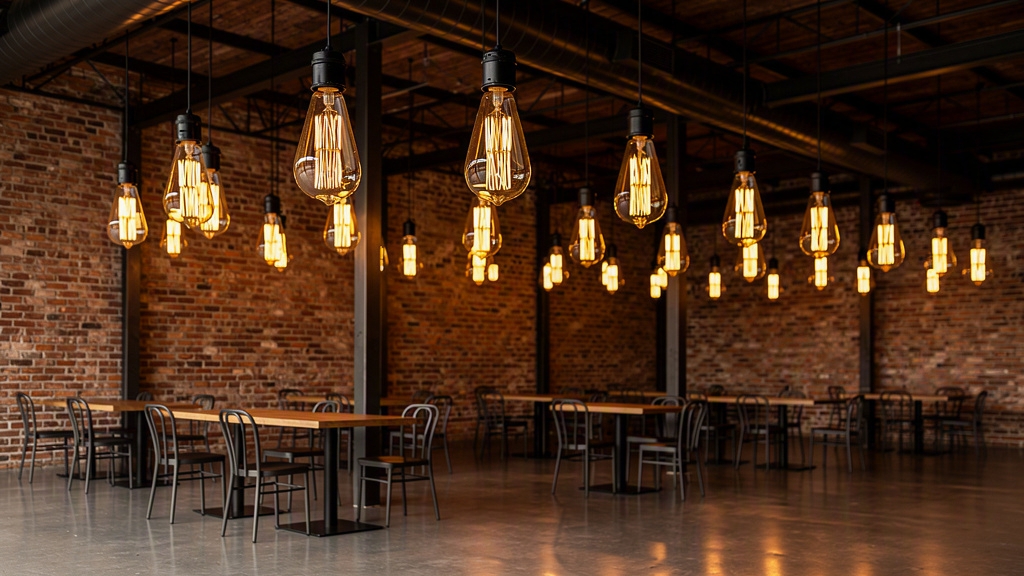
Oversized decorative filament bulbs occupy a unique position in the lighting market: they are simultaneously a light source and a sculptural object. Unlike standard filament bulbs, where the fixture is the design element and the bulb is the functional component, oversized filament bulbs reverse this hierarchy. The bulb itself becomes the centrepiece. This guide covers the materials, the available forms, the practical considerations, and the commercial opportunities that oversized decorative filament bulbs create for distributors, designers, and project buyers.
Defining "Oversized": Where the Standard Range Ends
In the LED filament bulb market, a bulb is generally considered "oversized" when its maximum diameter exceeds 100 mm or its total height exceeds 200 mm. Below these thresholds, you are in the standard decorative range (G95, G125 globes; A60 pear shapes). Above them, the bulb transitions from a lighting accessory into a statement object that can anchor the design of an entire room.
The oversized category encompasses several distinct form families, each with its own structural characteristics and design applications:
A165 (Giant Pear)
The A165 is the oversized version of the classic A-shape pear bulb — the silhouette that most people associate with the word "light bulb." At 165 mm maximum diameter and approximately 300 mm total height, the A165 is roughly the size of a large cantaloupe. It is large enough to be immediately read as intentionally oversized — not a standard bulb in an unusually large fitting, but a deliberate design choice. The A165 works best in high-ceiling spaces where the scale of the bulb is in proportion to the volume of the room.
G200 (200 mm Globe)
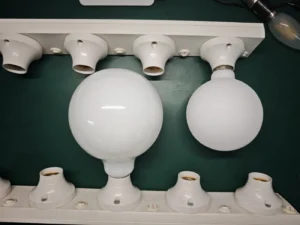
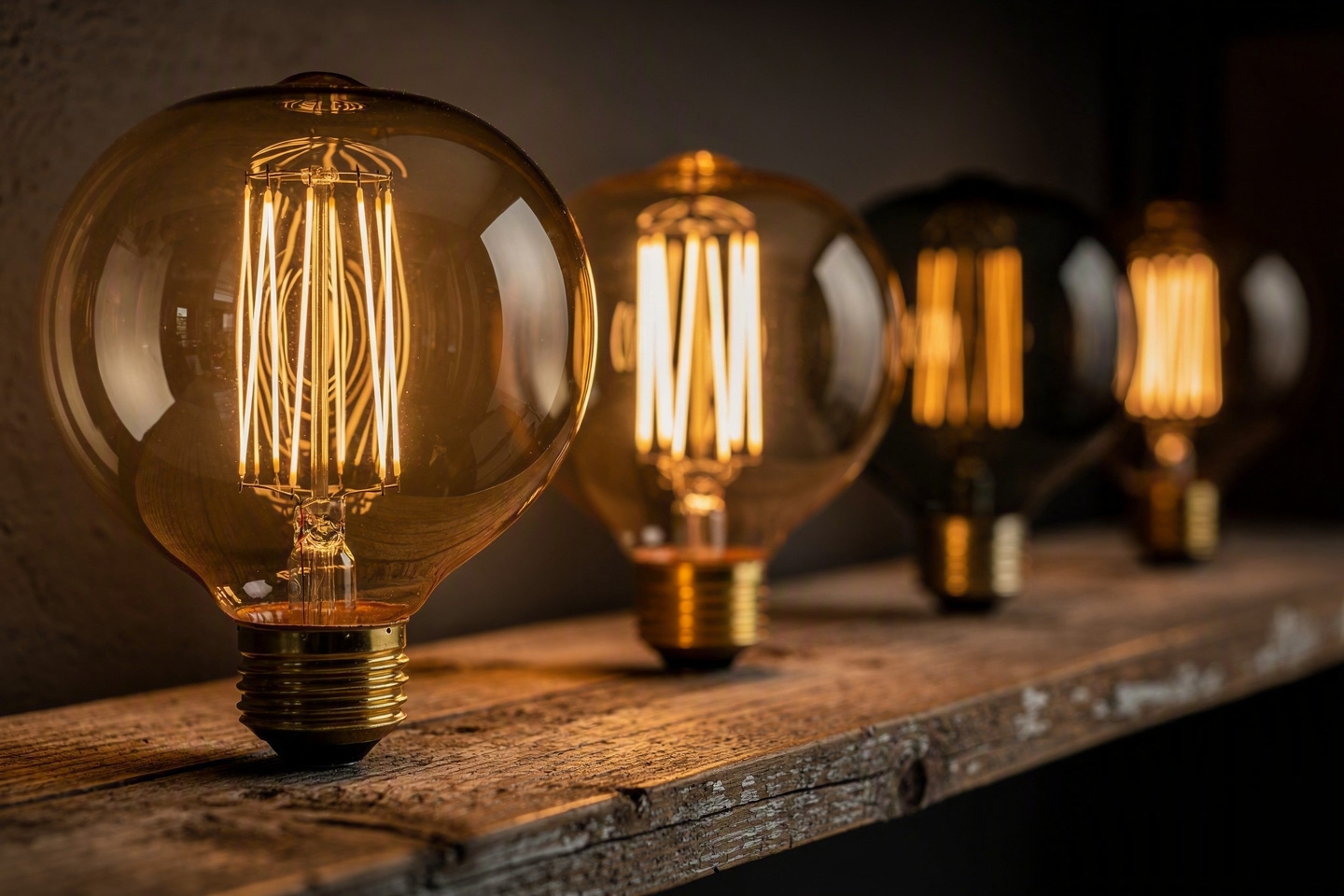
A perfect sphere of 200 mm diameter — larger than a standard basketball. The G200 is the most architecturally graphic of the oversized forms. Its perfect sphere is immediately legible as a designed object from a distance, and it photographs exceptionally well — the spherical form creates clean reflections and highlights that reproduce well in print and digital media. G200 globes are frequently chosen for installations that need to read in photography for press or social media purposes, including restaurant launches, hotel openings, and event spaces.
AL165 (Almond / Teardrop)
The AL165 is a teardrop-elongated form at 165 mm diameter and approximately 280 mm height — similar to the A165 but with a more tapered, almond-like profile. The elongated taper creates a more vertical visual emphasis and a slightly more refined appearance compared to the rounder A165. It suits contemporary and transitional design schemes where the A165 might feel too casual.

R250 and R220 (Giant Round / Reflector)
The R-series oversized bulbs are large, rounded forms with diameters of 250 mm and 220 mm respectively. They have a slightly flattened base compared to true globes, creating a form that reads somewhere between a sphere and a traditional reflector bulb. The R250 in particular is one of the largest production filament bulbs commercially available — at 250 mm diameter, it is the size of a large watermelon. These forms are almost exclusively specified as single-pendant statement pieces in very high-ceiling spaces.
BT180 (Bottle-Top)
The BT (Bottle-Top) form has a distinctive shouldered profile — a narrower neck above the base that widens into a broader upper body, creating a silhouette reminiscent of a vintage medicine bottle or carboy flask. At 180 mm diameter, the BT180 reads as both graphic and elegant from multiple viewing angles. Its vertical line — narrow below, broad above — creates a visual interest that spherical forms lack.

Materials: Why Borosilicate Glass Matters
All oversized decorative filament bulbs are made from borosilicate glass — the same material used in laboratory glassware, high-quality cookware, and precision optical instruments. This is not a coincidence; borosilicate is specifically suited to the demands of large, hand-blown decorative bulbs in ways that standard soda-lime glass is not.
Thermal shock resistance: Borosilicate has a coefficient of thermal expansion approximately one-third that of soda-lime glass. This means it can withstand rapid temperature changes — such as the initial thermal gradient when a cold bulb is turned on, or when a warm bulb is exposed to cool air from an open window — without cracking. For a large glass envelope where thermal gradients are more extreme, this property is essential for reliability.
Clarity and optical quality: Borosilicate glass has a slightly higher refractive index and lower iron content than standard glass, producing a cleaner, more water-clear transparency. This is visually apparent in side-by-side comparison — borosilicate oversized bulbs have a jewel-like clarity that standard glass cannot match, and the filament display inside appears sharper and more defined.
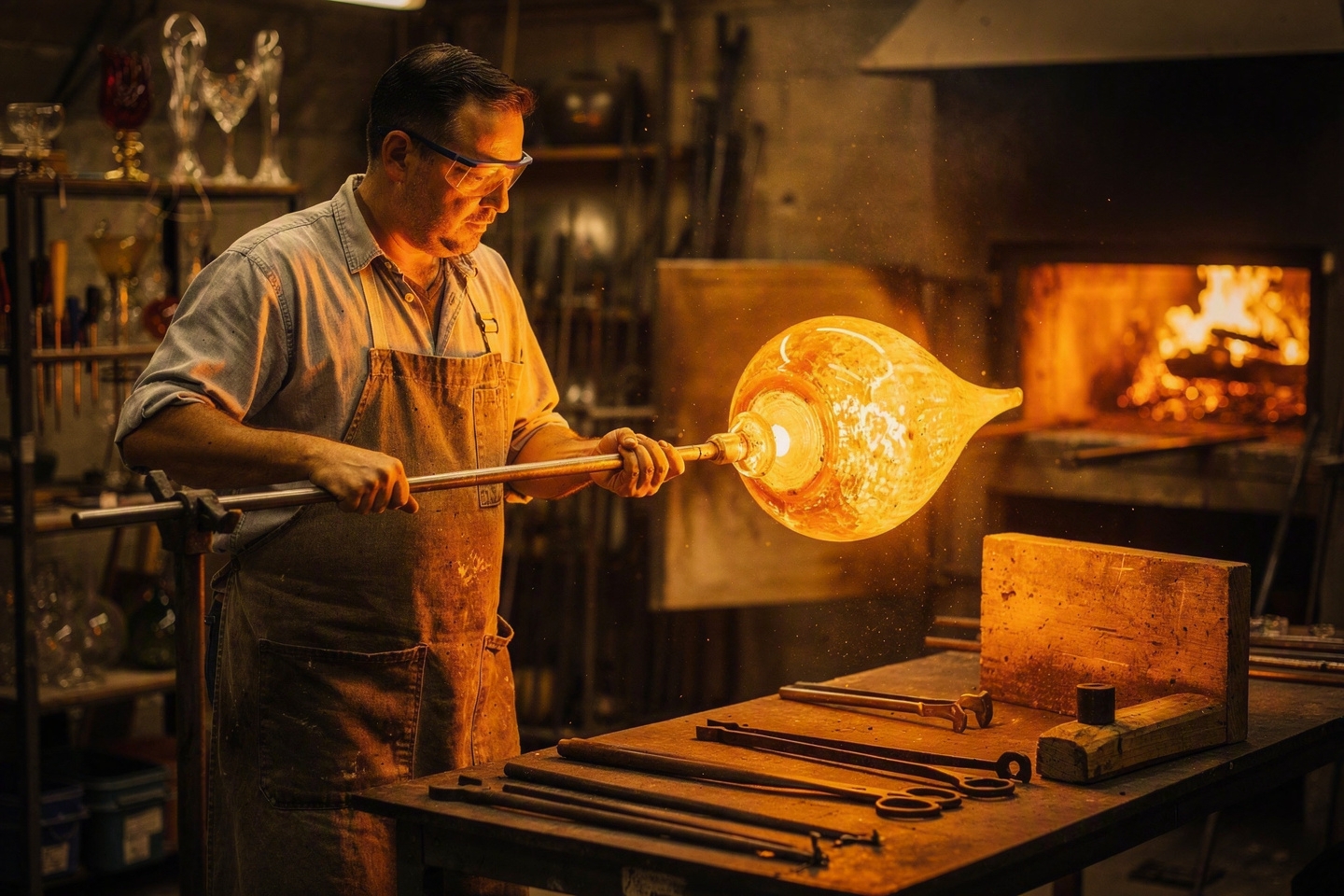
Hand-blown manufacturing: The large dimensions of oversized filament bulbs make machine forming impractical at commercial scales. All oversized filament bulbs are hand-blown by skilled glassblowers — a process that requires significant craft skill and cannot be fully automated. This manufacturing reality means that slight variations in form are inherent to the product; no two hand-blown bulbs are perfectly identical. For buyers, this is generally considered a feature rather than a defect — the subtle organic variation reinforces the handcrafted character of the product.
Finish Options
Oversized filament bulbs are typically available in two primary finish families:
Gold / Amber Tint
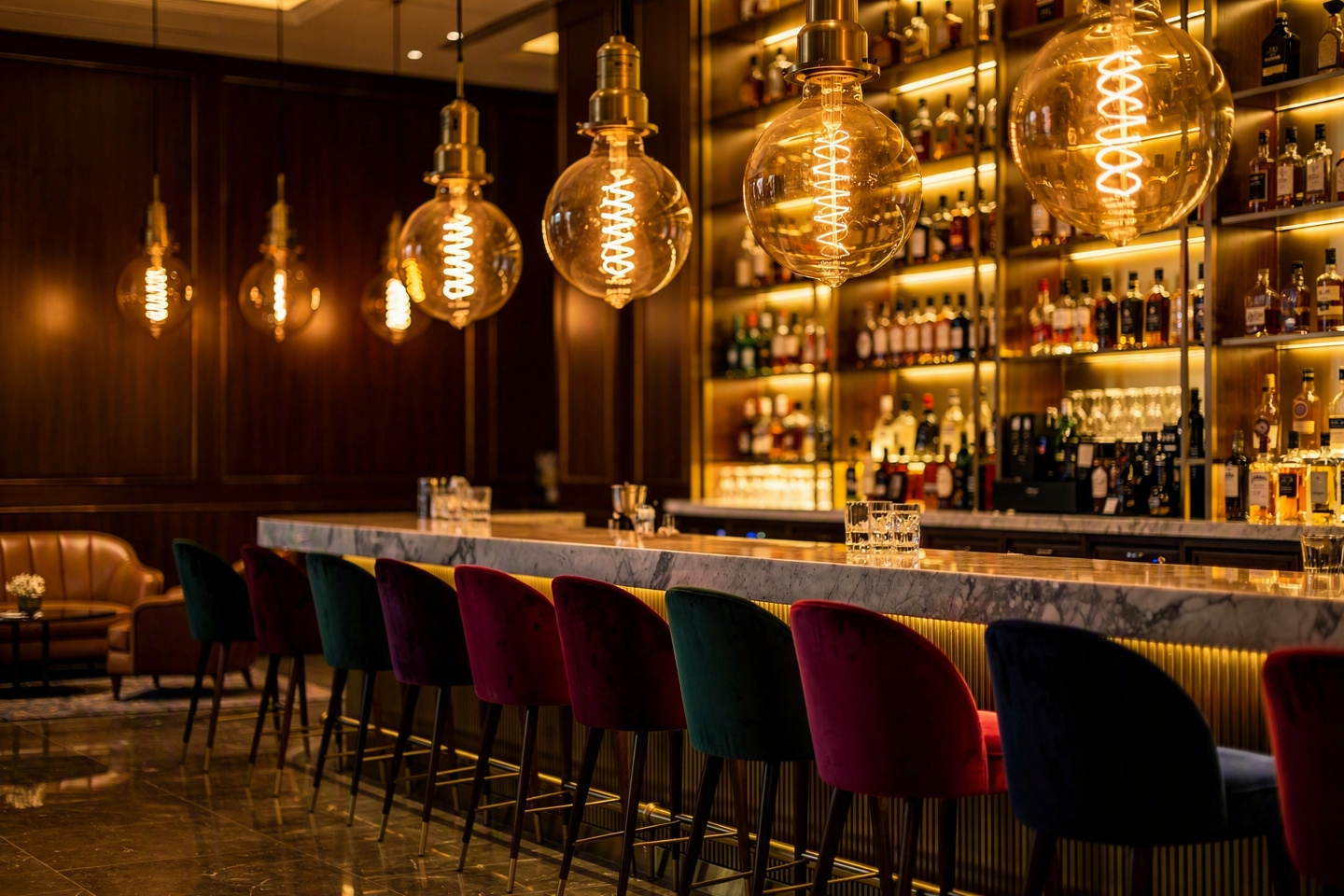
A warm amber tinting in the borosilicate glass that creates a golden hue in both the lit and unlit states. When lit, the amber glass shifts the emitted light spectrum toward orange-amber, producing an extremely warm colour temperature (effectively 1600–1800 K regardless of the underlying LED specification). When unlit, the amber glass creates a distinctive warm-toned decorative object. The gold finish is most popular in vintage, industrial, and hospitality applications where warm, organic tones are the design language.
Smoky / Grey Tint
A dark grey or smoked glass tinting that creates a mysterious, contemporary aesthetic. When lit, the smoky glass diffuses the filament display and produces a softer, more diffused light output — lumen output is reduced by 40–60% compared to the gold tint version. When unlit, the smoked glass creates a visually striking dark globe that reads as a bold graphic element even in daytime. The smoky finish suits contemporary, minimalist, and dark-interior design schemes. It is particularly effective in spaces with dark walls or high-contrast materials (concrete, blackened steel, dark timber).
Filament Arrangements: The Display Inside the Glass
In standard filament bulbs, the filament is a single or double loop — functional but not particularly elaborate. In oversized bulbs, the scale of the glass envelope allows for significantly more complex and decorative filament arrangements that become visible features at normal viewing distances.
Common oversized filament configurations include:
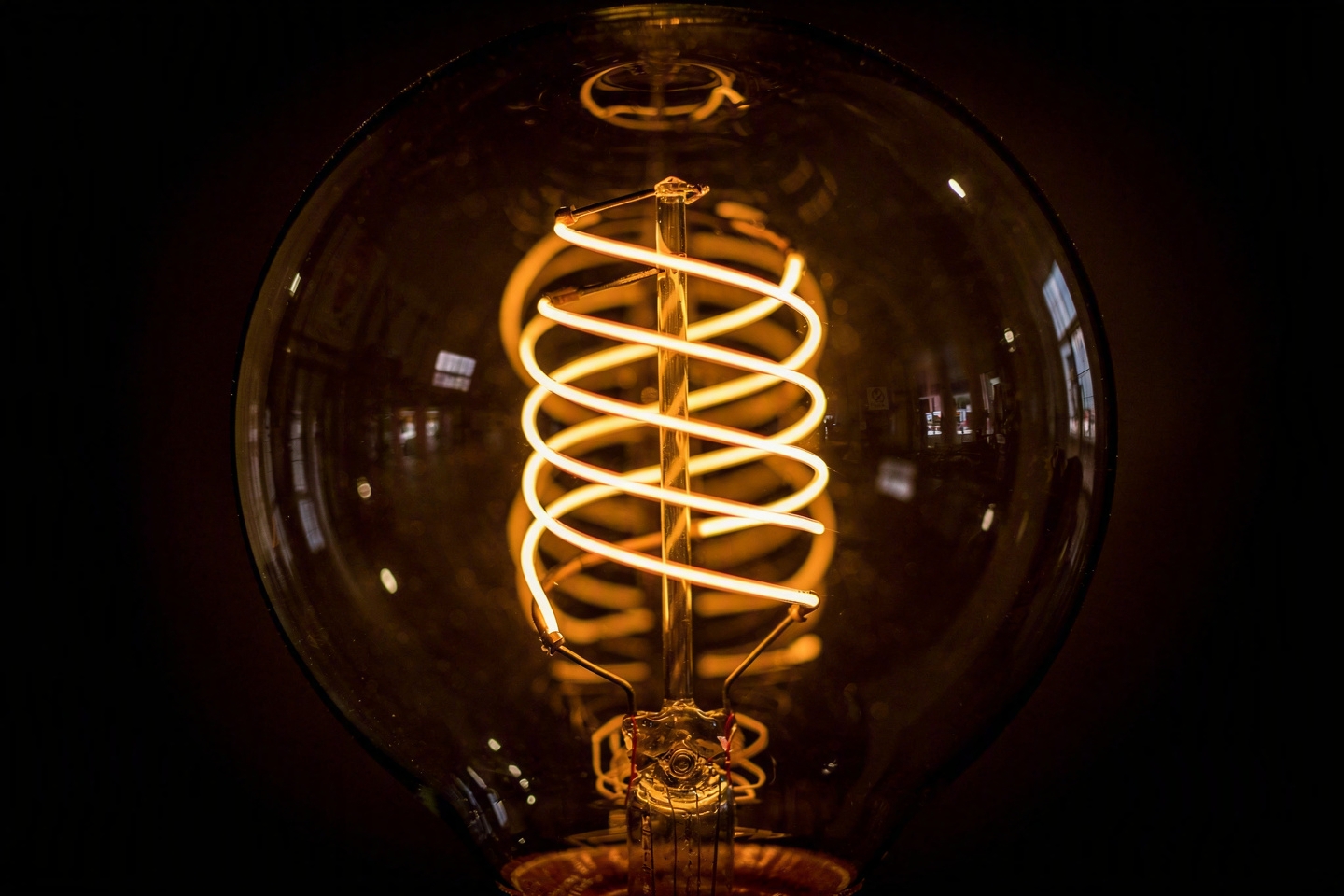
- Spiral / helix: Multiple filament loops arranged in a helical pattern around a central axis. Creates a sense of three-dimensional depth inside the glass envelope.
- Squirrel cage: Multiple straight filament segments arranged in parallel around a cylindrical cage structure — the classic "Edison" arrangement associated with vintage industrial lighting.
- Star / radial: Filament segments arranged in a star pattern from a central hub. Maximum visual impact; reads well at long distances in high-ceiling installations.
- Multi-loop: Several independent filament loops at different heights and orientations inside the envelope. Creates a complex, layered light display that changes character depending on viewing angle.
Practical Considerations for Specifiers
Weight and Fixture Loading
A 200 mm borosilicate glass bulb typically weighs between 350 and 550 g, depending on glass thickness and filament assembly weight. This is significantly heavier than a standard A60 (approximately 50–80 g). Pendant fixtures must be specified or confirmed to support this load. Cable strain-relief grips and canopy hooks must be rated accordingly. For installations with multiple oversized pendants, ceiling structure and electrical box loading must be verified with a structural engineer or approved electrician.
Heat Management
Oversized glass envelopes trap more heat than smaller bulbs. Although 4 W LED drivers generate minimal heat compared to their incandescent equivalents, the combination of a large glass sphere and a sealed or enclosed fitting can result in elevated internal temperatures that reduce driver lifespan. Specify open or semi-open pendant fittings for oversized filament bulbs. Avoid fully enclosed luminaires. If an enclosed fitting is required for outdoor use, ensure it is rated for the operating temperature of the LED driver (typically 50–65°C ambient maximum).
Dimming Performance
Most oversized filament bulbs support standard TRIAC dimming. Test with the site-specific dimmer brands before committing to a large order — driver-dimmer interaction can vary and is particularly critical for prestige hospitality projects where any visible flicker at low dim levels is unacceptable. Request flicker performance data (Pstlm, SVM) from the supplier. For the highest-specification installations, commission an independent flicker measurement using a calibrated spectrophotometer before sign-off.
Packaging, Transport, and Breakage
Oversized borosilicate glass bulbs require individual moulded-foam or thermoformed plastic packaging. Standard cardboard box packaging is inadequate for sizes above G125. The per-unit packaging cost is higher than for standard bulbs, which is reflected in the price. For international shipping orders, factor a 5–10% breakage allowance into order quantities — this is standard industry practice for hand-blown decorative glass of this size. Specify shipping on pallets rather than loose cartons wherever possible for orders above 50 units.
Commercial Applications and Design Case Studies
High-Volume Restaurant Groups
Restaurant groups seeking a consistent signature lighting element across multiple locations increasingly specify oversized filament bulbs as the identity anchor of their interior scheme. A cluster of three G200 gold-tint globes over each dining table, or a linear row of A165 pendants over a bar, becomes a visual identifier that is recognisable in photographs and memorable to guests. The oversized bulb becomes as much a part of the brand identity as the logo or menu design.
Boutique Hotels
Boutique and lifestyle hotels use oversized filament bulbs as bespoke elements in public spaces — lobbies, bars, restaurants, and roof terraces. A single BT180 or R250 pendant in the lobby or restaurant makes an immediate impression on arriving guests and generates social media content without any marketing effort. The handcrafted quality of the borosilicate glass communicates authenticity and craft, values that align closely with boutique hotel positioning.
Retail Flagships and Pop-Ups
Luxury retail brands use oversized filament bulb installations as theatrical elements in flagship stores and temporary pop-up spaces. A ceiling installation of 30–50 G200 globes at varying heights creates a dramatic, gallery-quality lighting moment that functions simultaneously as illumination, brand expression, and social media bait. The temporary nature of pop-up retail makes the reusability of the bulbs — as opposed to custom-built light art — commercially attractive.
Ordering and Lead Times
Oversized filament bulbs have longer production lead times than standard sizes due to the hand-blown manufacturing process. Allow 35–45 working days from deposit to production completion for standard configurations. Custom filament arrangements, non-standard sizes, or OEM packaging add a further 10–20 working days. Plan orders well in advance of project completion dates — particularly for hospitality projects with fixed opening dates.
Minimum order quantities for oversized filament bulbs typically start at 50–100 units per SKU, reflecting the labour intensity of hand-blown production. For project-specific quantities below MOQ, expect a premium unit price.
Related HongYu Bulb product pages
- LED Filament Bulb Product Range → — standard and decorative LED filament bulbs for wholesale and project sourcing.
- Custom Color Bulbs → — custom glass color, coating and printed finish options for private-label collections.
- Custom Logo Bulbs → — printed branding and private-label decorative bulb options.
- Big Decorative Bulbs → — oversized decorative filament bulbs for hospitality, retail and statement fixtures.
- Contact HongYu Bulb → — send specifications, target market, quantity and packaging requirements for quotation.
Conclusion
Oversized decorative filament bulbs are one of the most commercially distinctive product categories in the LED lighting market. They command significantly higher retail margins than standard filament bulbs, attract design-conscious buyers who are willing to pay for quality and aesthetic impact, and generate organic marketing exposure through social media and design press photography. For distributors and retailers serving the hospitality, luxury retail, and premium residential markets, a curated oversized bulb range is a high-margin differentiator worth investing in.
HongYu Bulb's Big Bulb range includes hand-blown borosilicate A165, G200, AL165, R250, R220, and BT180 forms in Gold and Smoky tints, with E27 bases and CE+RoHS certification for EU markets. Contact us for samples, technical specifications, and wholesale pricing.