The most useful customization is the one your customer can recognize and your sales team can explain. It might be a distinctive glass silhouette, a finish that matches the fixture, a logo visible inside the bulb or a coordinated retail presentation. A project does not have to change every component to create a clear product identity.
HongYu offers several starting points for an OEM collection. Choosing the right route early helps the brand focus its development budget and sample review on the feature that makes the product worth choosing.
1. Decide What Should Make the Product Recognizable
| Brand objective | Possible route | First approval question |
|---|---|---|
| A different silhouette | Existing specialty shape or new glass development | Does the form work in the intended fixture? |
| A coordinated material palette | Selected glass or surface finish | Does the physical finish match the design brief? |
| A visible brand message | Internal-logo or text design | Is the approved artwork clear at the viewing distance? |
| A branded retail collection | Model selection plus private-label packaging | Can a buyer identify the product and its benefit quickly? |
Choose one leading feature, then make the other decisions support it. A recognizable shape paired with appropriate output and packaging can be a stronger brief than an unfocused request for a new shape, new color, new filament and multiple control modes at once.
Development judgment 1: start with the reason a customer would choose the product, then decide what needs to be customized.
2. Use Existing Specialty Shapes as a Practical Starting Point
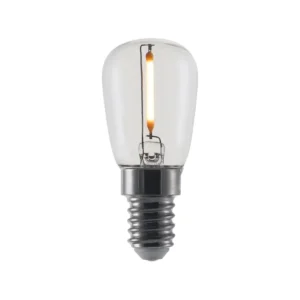
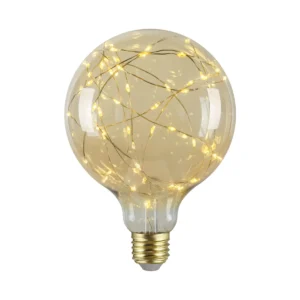
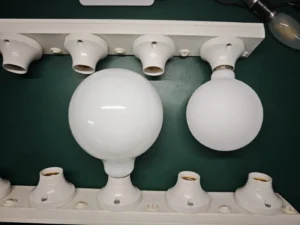
HongYu's custom-shape range includes catalogue forms such as SQ95, T125, GS150 and L125, with different silhouettes and selected glass finishes. Existing moulds let a brand explore a less familiar appearance without first commissioning a completely new glass shape.
For a genuinely new profile, send a dimensioned concept and intended fixture rather than a mood image alone. Ask HongYu to identify the development stages, sample scope, tooling requirements and production assumptions for that specific design. Stock-mould selection and new-mould development should be separate options in the proposal.
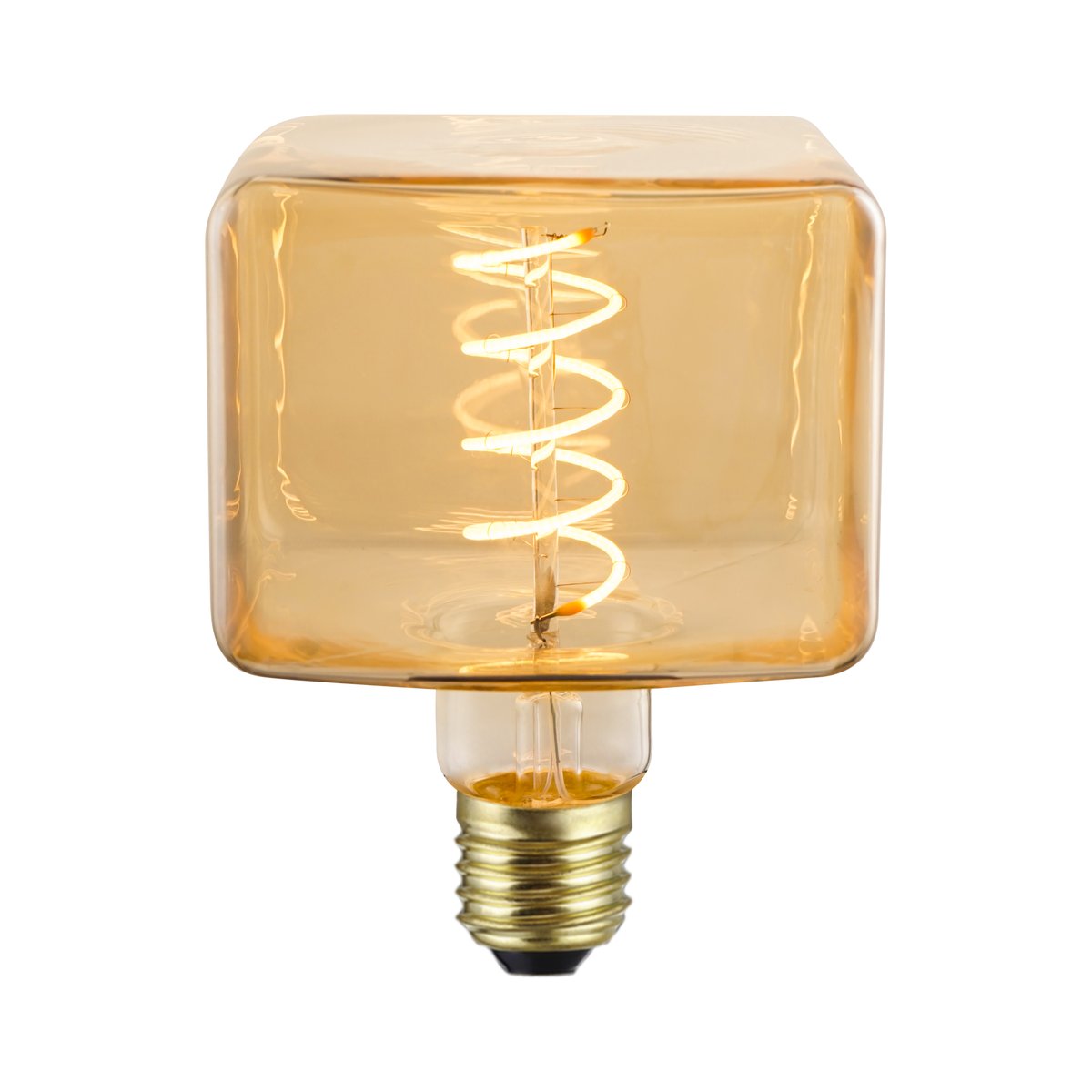
Tooling payment, ownership, storage and exclusive use should be agreed in writing; they are not interchangeable concepts. WIPO describes industrial designs as protection for ornamental aspects such as shape, patterns and color. That is a separate question from purchasing or storing a physical mould. Obtain appropriate advice for the rights your project needs. [1]
3. Use Finish to Connect the Bulb with the Brand Palette
A lighting collection often needs its bulb to sit naturally beside brass, copper, chrome, painted metal or colored glass. HongYu's custom-color bulb programme provides metallic and other finish directions on large globes and specialty forms, with custom matching available for project review.
Supply a physical reference where possible, together with the intended gloss, texture and viewing conditions. A digital color reference is useful for communication but cannot fully describe how a finish looks on curved glass when lit.
Keep the visual target and the finished light-output target separate. A chosen coating or tint can affect transmission and appearance; the final specification should describe the complete lamp rather than copy the figures of an uncoated version.
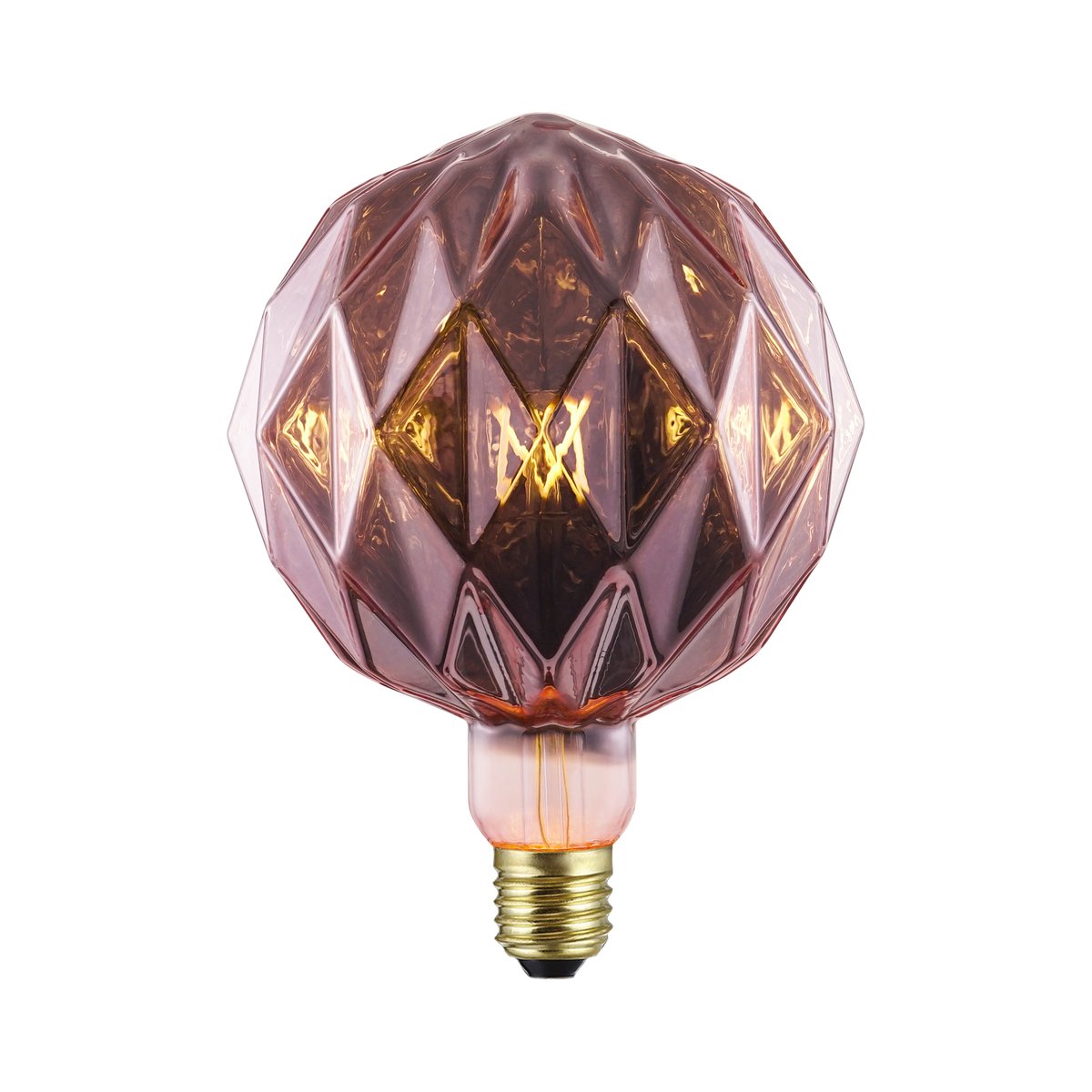
Development judgment 2: approve a physical finish sample in the intended setting, then record the accepted finish and model together.
4. Put the Brand Message Inside the Product
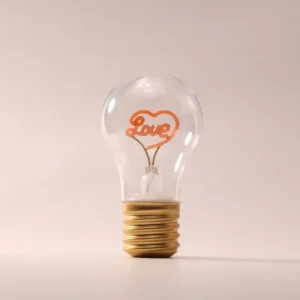
HongYu's custom-logo bulbs offer a route in which logo or text artwork is visible inside the glass in lit and unlit states. The current catalogue programme describes laser-etched artwork on an internal support in A60, G95 and G125 forms. This is different from printing a mark on the outer box or developing a luminous filament that itself traces a logo.
That distinction helps the buyer choose the right effect. An internal graphic can make the message part of the decorative object; a custom luminous-filament concept has a different construction brief. Provide a clear visual reference and ask for the proposed technique rather than using "logo bulb" as the entire specification.
The current internal-logo page lists projects from 300 pieces per design, subject to artwork and final-specification confirmation. Its listed 230V models are non-dimmable. These are starting conditions for that programme, not terms that automatically apply to a different logo construction, supply version or new glass design.
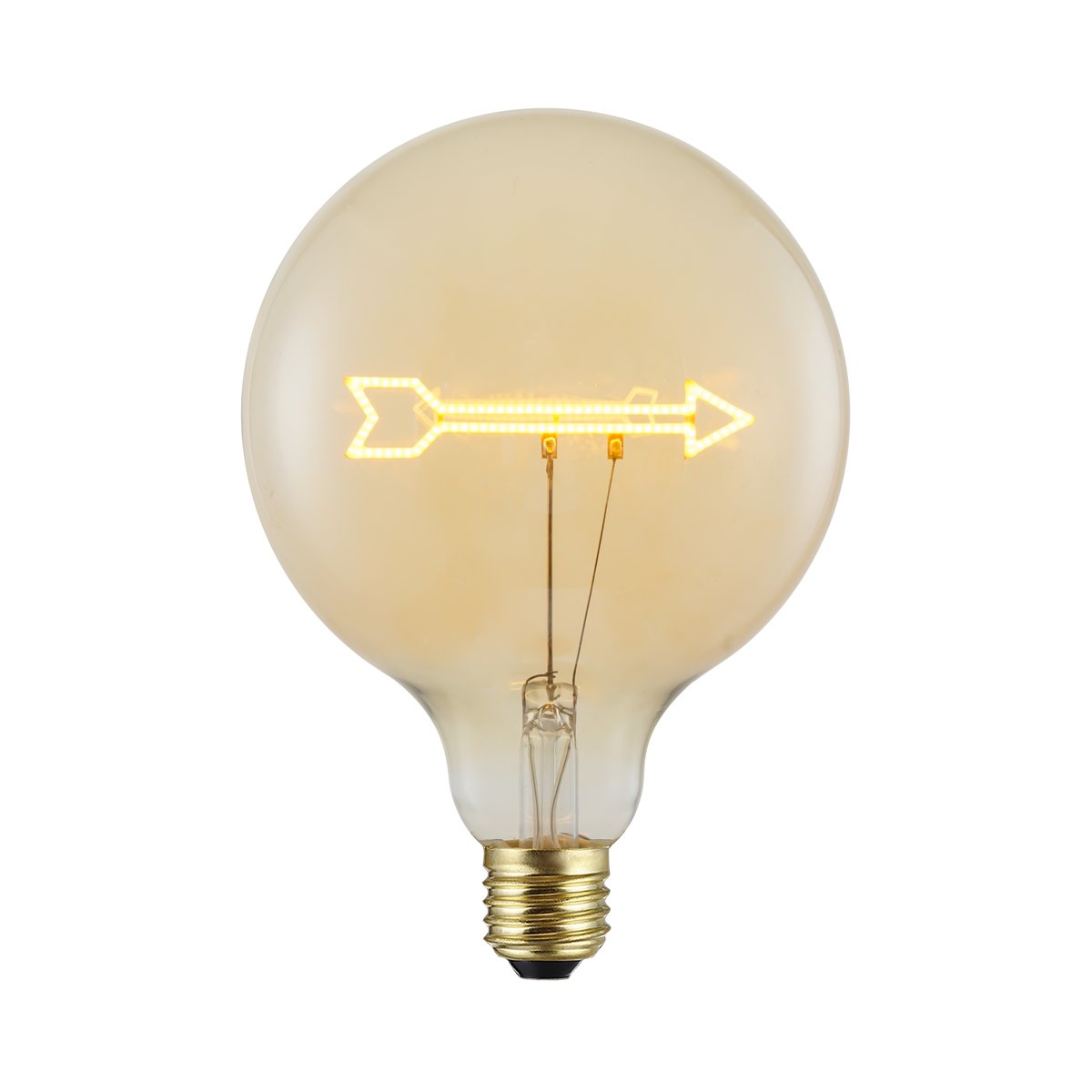
Vector artwork is preferred for review. Also provide the intended reading direction, viewing distance, fixture position and any secondary text. Ask to see the design lit and unlit before approving the final sample.
Development judgment 3: agree the actual logo construction and visual result before comparing quotations.
5. Use Private-Label Packaging to Complete the Offer
A standard or existing-mould lamp can still support a distinct brand collection when its product selection, model naming, photography and packaging are coherent. Packaging should explain the feature the customer is buying and identify the exact supplied version.
Provide the brand artwork, required languages, sales channel, pack quantity, barcode information and product labels. GS1 US guidance emphasizes barcode placement, proportions and clear space; checking the printed proof is part of making a retail package usable, not just attractive. [2]
Confirm the box structure and inner protection with the actual bulb. An unusual outline or coating may need a different packing arrangement from a familiar A60. Quote the product and packing together so the comparison reflects what will actually be supplied.
6. Turn the Concept into a Defined Development Proposal
A useful OEM inquiry contains the intended application, reference images or drawings, target market, preferred shape and finish, electrical and optical requirements, quantity by variant and launch window. For a logo project, include the authorized artwork. For a new shape, include the important dimensions and fixture constraints.
Ask HongYu to separate existing options from development work and identify the sample deliverables, setup or tooling costs, minimum quantities and schedule assumptions. Agree which dimensions, appearance, output and control behavior will be checked at approval. A presentation render, physical appearance sample and electrically functioning sample are different deliverables.
Keep the approved model, artwork revision, finish reference, packaging and required documentation connected through the quotation and order. For repeat production, identify any proposed change before treating the new version as equivalent.
Development judgment 4: use the sample stage to approve the feature that carries the brand value, alongside the specifications that make the product suitable.
Conclusion
OEM value comes from a product your customer can distinguish, not from changing the largest number of parts. HongYu's existing shapes, finish programmes, internal-logo options and private-label packaging give brands several practical routes, while new development can be scoped around a specific design objective.
Send HongYu your concept, target market and quantities. Request an option-based proposal that shows what can start from the catalogue, what needs development and which samples will establish the final product.
Body images are existing HongYu product or display references. Retained featured artwork is illustrative, not a record of a customer project or performance test.
References
- World Intellectual Property Organization: Industrial Designs. General overview of appearance-based design protection; project rights and contracts require separate review Back to text.
- GS1 US Barcode Placement and Printing Guidelines. Practical guidance for retail barcode artwork Back to text.