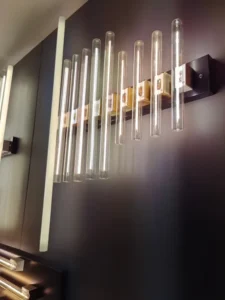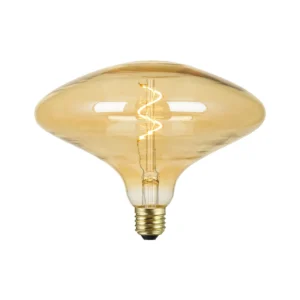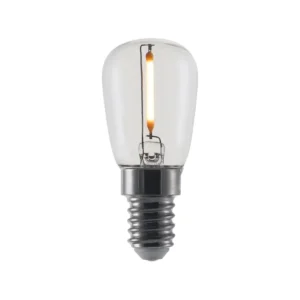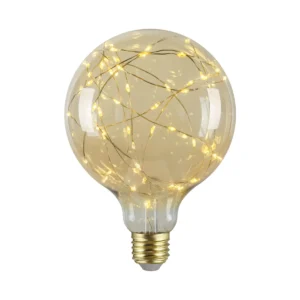
A compact decorative fitting should not have to lose its visible-filament character simply because a conventional candle or globe looks too large. Mini filament bulbs give fixture designers another route: keep the glass and illuminated lines as part of the design, but work with a smaller envelope.
The useful choice is not simply "the smallest bulb." HongYu's T20 and P26 catalogue models share a nominal 60 mm overall length, while their listed diameters are 20 mm and 26 mm. That difference can help a narrow fitting, but it does not solve a shortage of length. And once the lamp is installed, the holder can conceal part of the very filament the buyer wanted to show.
Our view: a mini decorative bulb should be selected for the visible result above the holder, not just for the dimensions of the loose lamp. Shape, filament arrangement and output are separate decisions, even when the product is only a few centimetres long.
HongYu's T20 and P26 mini LED filament range gives lighting brands concrete options for that decision: slim and fuller profiles, clear and gold examples, and listed power choices from 0.8W to 3W. The opportunity is to preserve a recognisable filament detail in a compact fixture, rather than letting an oversized lamp dominate the fitting.
T20 or P26? First Identify Which Dimension Is Restricted
For the models discussed here, T20 is the slimmer tubular option. P26 has a fuller, rounded outline. Both are listed at 60 mm overall length.
| Selection question | T20 mini models | P26 mini models |
|---|---|---|
| Nominal body diameter | 20 mm | 26 mm |
| Listed overall length | 60 mm | 60 mm |
| Visible design direction | A narrow vertical glass outline | A fuller glass outline around the filament |
| Most useful initial comparison | Does the slim body suit the opening and visual spacing? | Does the fuller body give the small fitting the intended presence? |
The nominal diameter difference is 6 mm. That is a comparison between catalogue envelopes, not a prescribed clearance allowance. Final fit still depends on the drawing, dimensional tolerances, holder and surrounding parts.
If the problem is insufficient width, T20 is a relevant candidate. If the problem is insufficient axial space, switching from these P26 models to these T20 models does not, on the listed dimensions, shorten the lamp. A different length or fixture arrangement needs to be considered.
Selection judgment 1: distinguish a narrow-space problem from a short-space problem. "Mini" does not tell the designer which problem has been solved.
The Installed Filament Position Matters More Than a Standalone Photo
A product photograph normally shows the whole lamp. A finished fixture may show only the section above a decorative sleeve, cup or shade opening. With a small lamp, that difference can determine whether the customer sees an illuminated filament or mostly the tip of the glass.
This is where a factory-facing brief becomes more useful than a request for "a smaller E14 bulb."
Ask the fixture designer to mark the top edge of the visible holder or sleeve on a side-view drawing. With the correct lamp fully seated, compare that edge with the lower and upper ends of the luminous section. Include the normal viewing angle: what is visible from above a table is not necessarily what is visible from below a wall light.
Do not calculate the exposed height by casually subtracting the outside height of a holder from the lamp's overall length. The base seats inside the holder; the relevant positions need a common reference in the assembled drawing or a physical mock-up.
This review is not only about avoiding concealment. It helps establish the intended proportion: a fine illuminated line emerging from a compact sleeve, or a fuller small glass form above a delicate arm. The bulb and holder should look designed together.
Selection judgment 2: approve the filament's position relative to the holder, not only the bulb's outline. For an exposed-source design, the visible luminous section is a design feature worth specifying.
One Shape Can Contain More Than One Filament Design
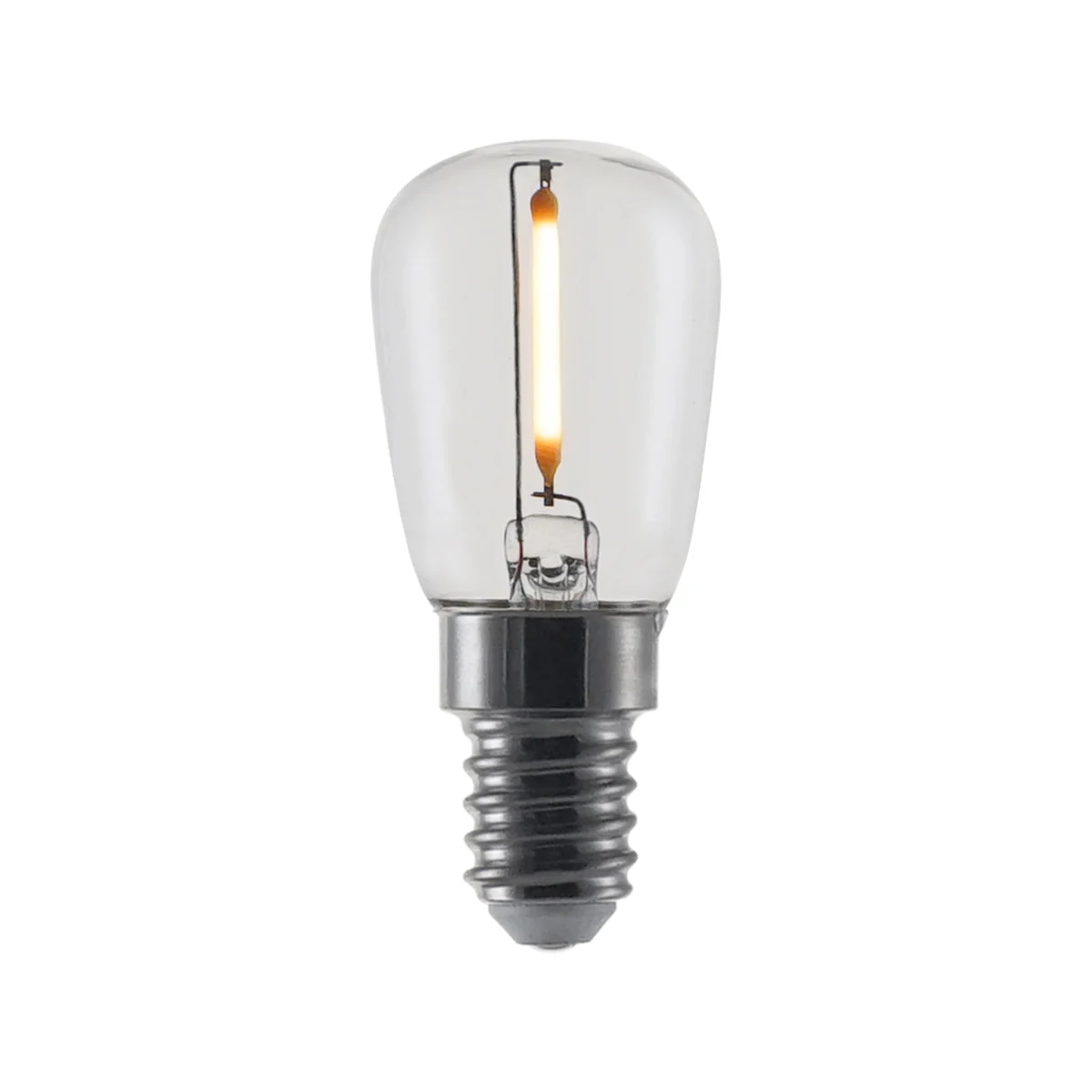
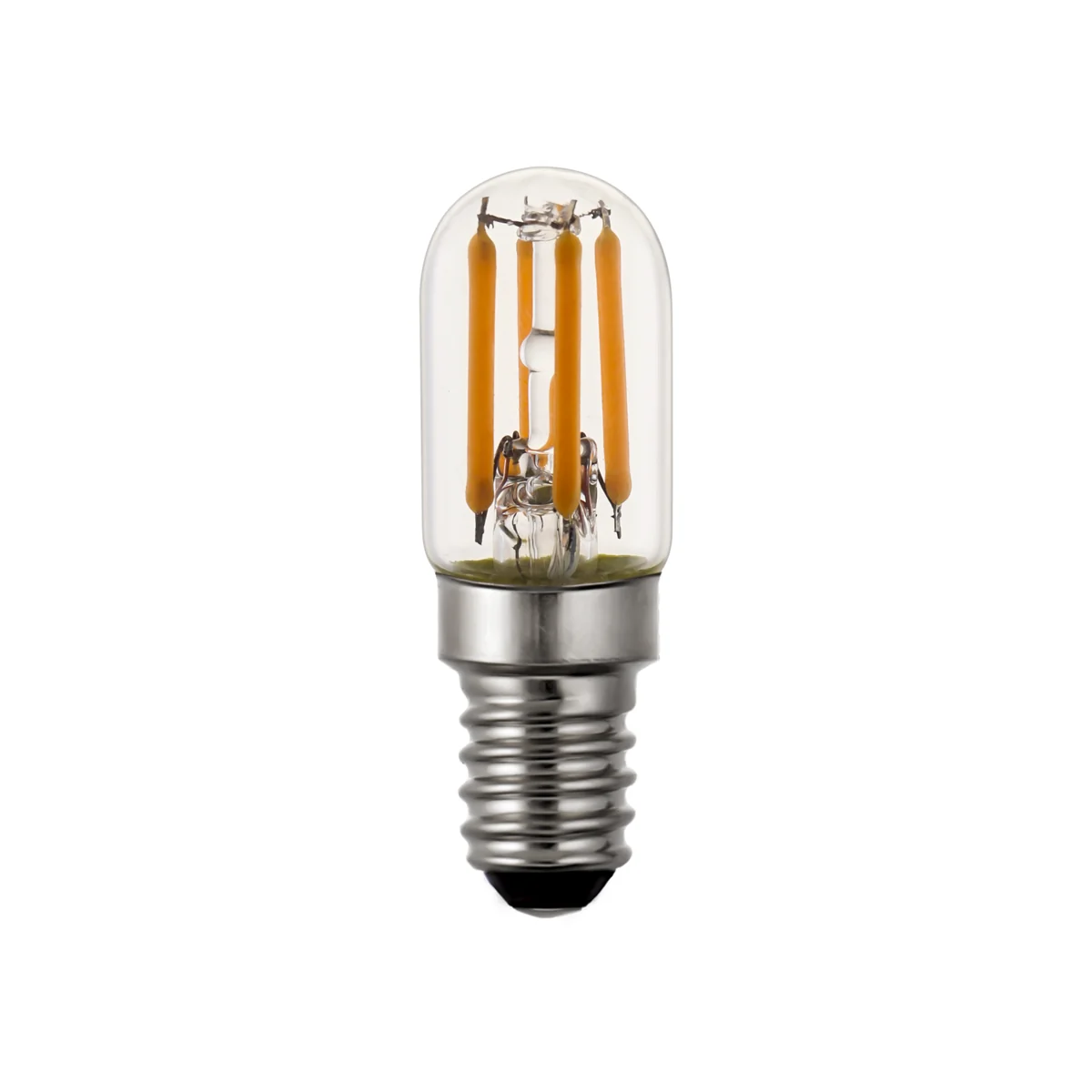
HongYu's P26-E14-0.8W-C and P26-E14-3W-C are both listed at 26 x 60 mm. Their supplied photographs, however, show different internal constructions: a single visible filament in the 0.8W reference and a multi-filament arrangement in the 3W reference.
That is a useful product-development insight. Choosing a different power version can change what the customer sees inside the glass, even when the nominal exterior dimensions stay the same. It should not be treated automatically as the same design with a different number printed on the box.
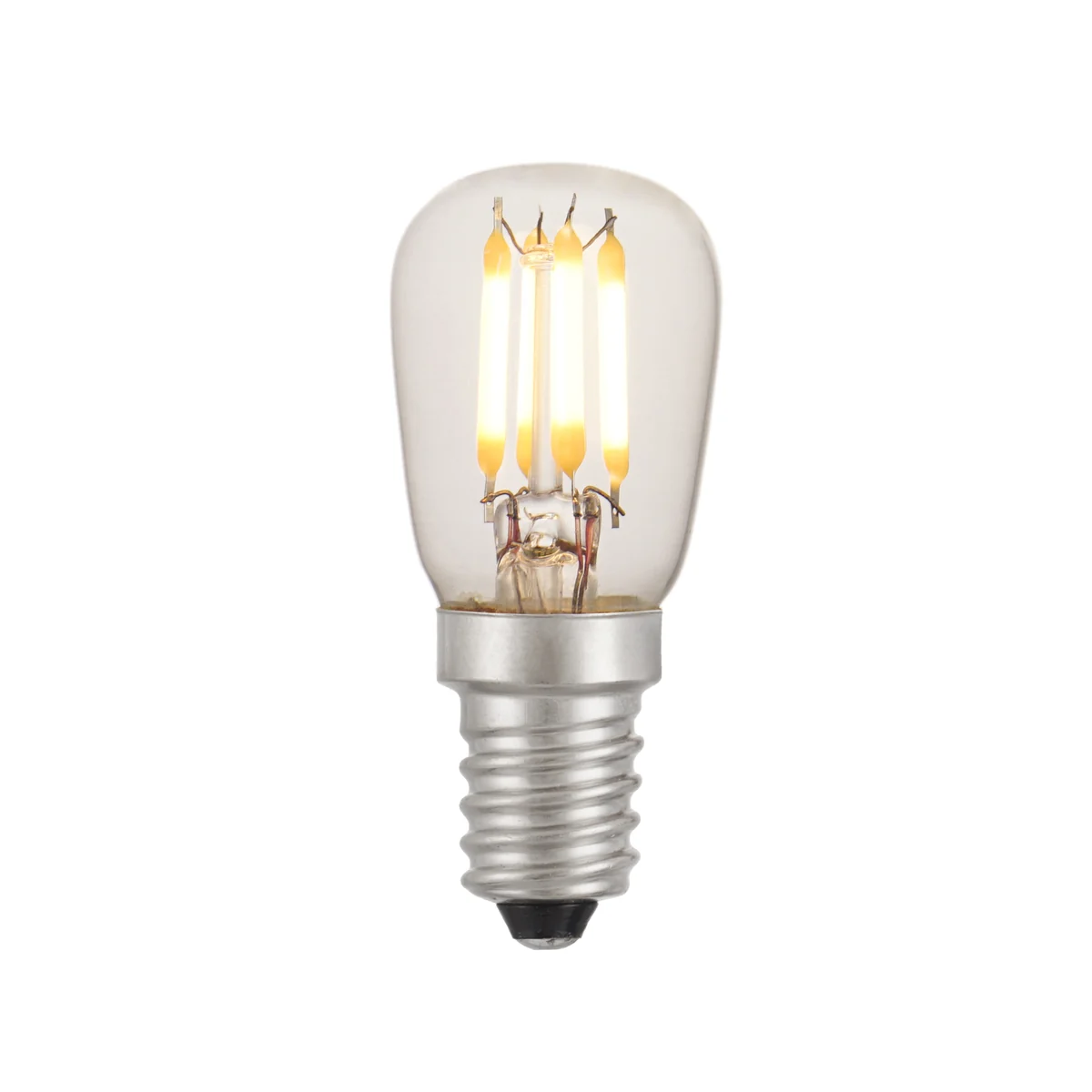
For a fixture brand, the two versions can support different visual briefs: a simpler internal line or a more populated filament arrangement. Neither is automatically the premium choice. Choose the one that gives the intended balance with the glass and metalwork, then specify the required finished light output separately.
FTC guidance distinguishes electrical watts from light output in lumens.[1] For procurement, request the finished lamp's lumen figure for the ordered colour temperature and glass finish. Photographic exposure and the number of visible filaments are not substitutes for that value.
Selection judgment 3: a power-version change deserves a visual review when the filament is exposed. Keep the approved model code and reference photograph together; "P26 clear" is not a complete appearance specification.
Build the Shortlist Around Actual Models
The following catalogue references show how the mini series separates shape, power, glass and cap. All six are listed as 230V versions; the model code identifies the cap as well as the nominal power and finish.
| Catalogue model | Diameter x overall length | Listed CCT | Glass finish |
|---|---|---|---|
| P26-E14-0.8W-C | 26 x 60 mm | 2700K | Clear |
| P26-B15-1.5W-C | 26 x 60 mm | 2700K | Clear |
| P26-E14-3W-C | 26 x 60 mm | 2700K | Clear |
| T20-E14-0.8W-G | 20 x 60 mm | 2200K | Gold |
| T20-E14-1.5W-C | 20 x 60 mm | 2700K | Clear |
| T20-E14-3W-C | 20 x 60 mm | 2700K | Clear |
These are catalogue specifications, not measured tolerances or approval for a particular luminaire. Request the current drawing and configuration for the order.
The B15 entry is especially important. It offers a bayonet-base direction within the P26 family, but it is not an E14 screw-base replacement. Nor does its presence mean every wattage is automatically available with every cap. Start with the exact model that matches the intended holder.
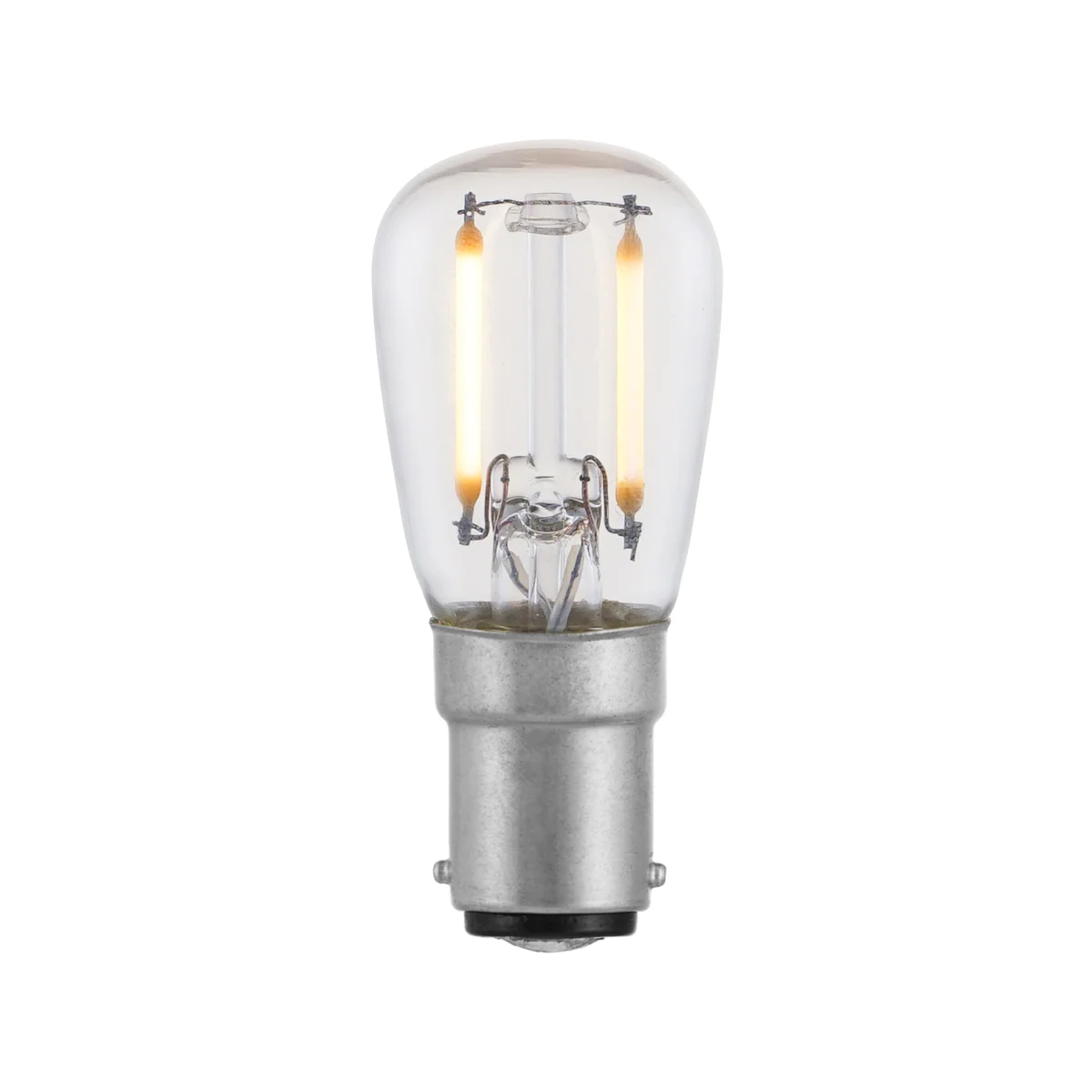
If the fixture is designed around a pin or loop-contact holder instead, HongYu's G4 and G9 lamp options provide a separate compact-source route. Select that family to match its holder and supply, not as an assumed drop-in substitute for a mini E14 or B15 lamp.
Selection judgment 4: choose a complete model, not a shape name plus an assumed cap. The right appearance and the right electrical interface must belong to the same ordered configuration.
Choose a Low-Output Scene or a Dimming Experience Deliberately
A 0.8W option gives a buyer a low-power starting point for a small decorative accent. A higher-output version with suitable dimming may serve a brief that needs several scenes. Those are different product choices, not interchangeable ways to label a lamp "ambient."
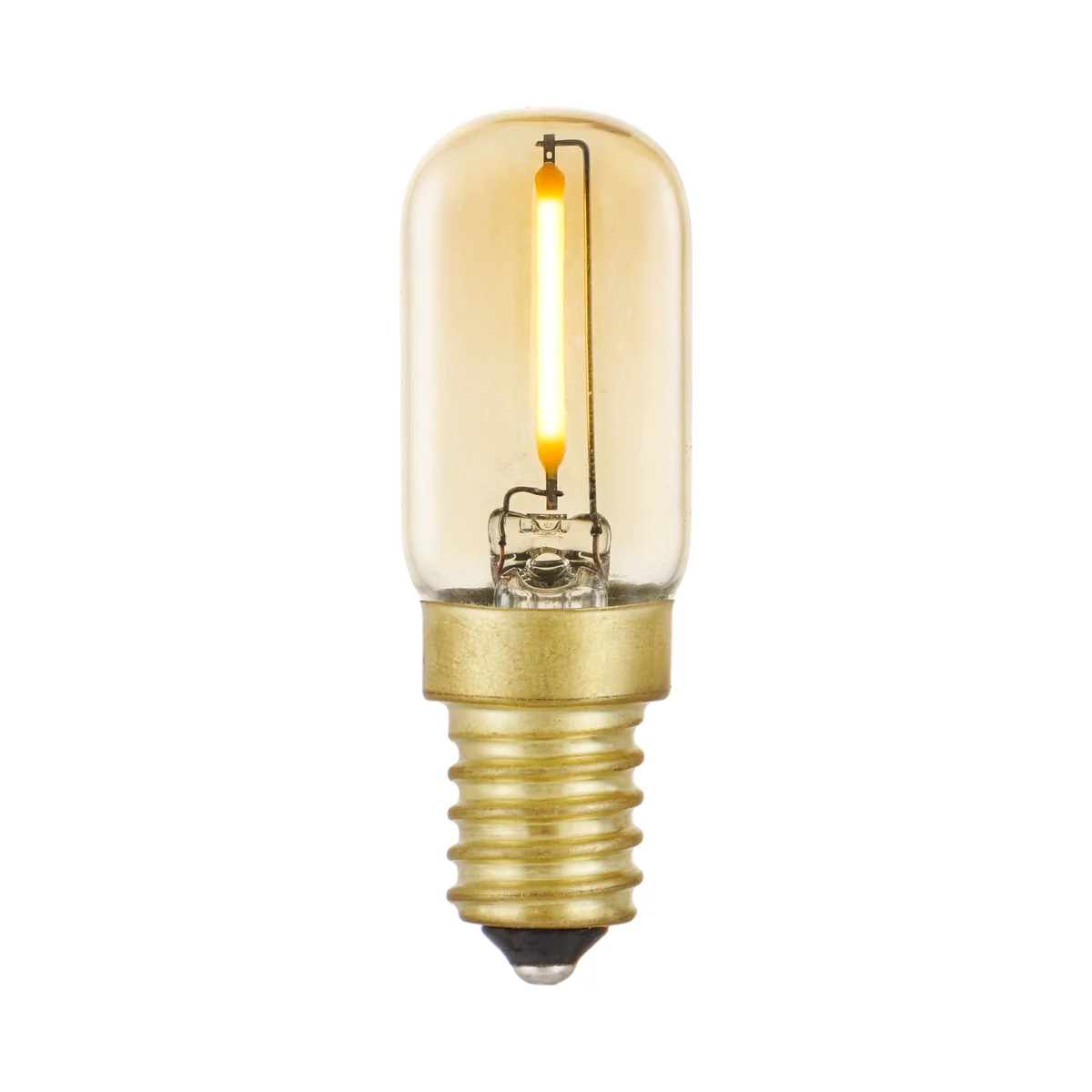
The listed gold T20 combines a 2200K colour-temperature specification with a tinted glass appearance. The clear P26 0.8W entry is listed at 2700K. Comparing those two photographs therefore changes shape, finish and specified colour temperature together; it cannot isolate the effect of gold glass alone.
Where dimming is required, confirm the dimmable version and assess it with the specified control and connected lamp count. Lutron's application guidance explains why LED minimum-load behaviour depends on the particular lamp and control combination.[2] A very small wattage is not a universal compatibility promise, and there is no single minimum-load number to apply to every 0.8W lamp installation.
Keep this part of the brief focused: the desired full-output scene, the required low scene and reliable startup at the agreed settings. The sample review should demonstrate the experience being sold.
Request Samples That Answer One Question at a Time
An effective sample set does not need every catalogue variant. It needs the models that resolve the design decision.
| Decision to resolve | Useful HongYu sample pairing | Keep the comparison focused on |
|---|---|---|
| Slim or fuller outline? | T20-E14-3W-C and P26-E14-3W-C | Same listed voltage, cap, wattage, CCT and finish; compare the envelope and installed appearance. Equal photometric performance is not assumed. |
| Simple or multi-filament interior? | P26-E14-0.8W-C and P26-E14-3W-C | Same listed exterior size, cap, CCT and finish; compare construction and obtain output data separately. |
| A gold, very warm decorative accent? | T20-E14-0.8W-G in the intended fitting | Approve this complete combination, rather than attributing its appearance to glass tint alone. |
Our recommended sample record is concise: model code, fixture and holder reference, approved visible filament position, desired output and colour, control arrangement if needed, and photographs of the installed result. For an enclosed fitting, include that condition in the technical review rather than inferring suitability from the small size.
Selection judgment 5: make each sample comparison answer a named design question. That is more useful than selecting several small bulbs and asking which one looks best on a desk.
For the retail offer, describe the product in terms the customer can recognise: a slim clear tube, a fuller mini glass form or a gold warm accent. Use the actual ordered model in the packaging image. HongYu's mini filament model selection provides the starting point for a coordinated range in which each SKU has a visible purpose, rather than simply another wattage.
Frequently Asked Questions
Is T20 shorter than P26?
Not for the six catalogue models compared here. All are listed at 60 mm overall length; T20 has the narrower listed diameter. Confirm the exact drawing rather than transferring these dimensions to every product with a similar shape code.
No. A visible glass-and-filament appearance is a reason to select this family. Review how much of that feature remains visible once the lamp is fully seated in the intended fitting.
Can I replace an E14 model with the P26 B15 version?
Not in the same holder. E14 and B15 are different interfaces. Select the version specified for the fixture, including its input rating.
Does changing from 0.8W to 3W preserve the same appearance?
Not automatically. The supplied P26 photographs show different filament arrangements within the same listed exterior dimensions. Approve the exact version that will be supplied.
Conclusion
Mini LED filament bulbs are not simply standard bulbs made smaller. Their value is preserving a deliberate glass-and-filament detail within a compact lighting design.
HongYu's T20 and P26 range lets a buyer choose the silhouette, internal appearance and operating brief separately. The strongest selection connects those choices: the lamp fits, the intended filament remains visible, and the ordered model delivers the agreed lighting role.
Send HongYu a fixture photo or drawing, holder specification, available dimensions, preferred appearance, target market, control requirements and order quantity. Ask for a focused T20/P26 sample proposal and quotation, then use the installed result to define the product your collection will sell.
References
- Federal Trade Commission: Shopping for Light Bulbs. General guidance on lumens and watts; not a HongYu product test or a statement about EU labelling requirements. Back to text.
- Lutron Application Note 487: Minimum and Maximum Loads for LED and CFL Lamps/Fixtures. Explains lamp-and-control-specific loading; does not establish compatibility for the HongYu models pictured here. Back to text.