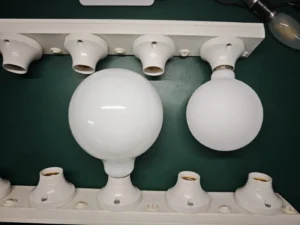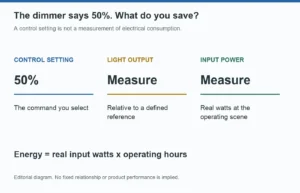
In a furniture showroom or boutique, lighting has two jobs: make the space inviting and help customers see the products they are choosing. The decorative bulb is part of that presentation, from the glass visible in the pendant to the colour it brings out in fabrics, finishes and merchandise.
HongYu's filament ranges offer a practical way to combine those decisions. Buyers can choose a visible-filament or porcelain appearance, discuss Ra 90 or Ra 95 options on the selected model, and define the light level and colour temperature around the display. Higher colour-rendering specifications become more useful when they are connected to the actual merchandise, not selected as an isolated number.
That is where illuminant metamerism matters. Two materials can match under one light source without having the same spectral reflectance, then stop matching when the illumination changes. For example, a sofa fabric and its piping might coordinate in one lighting scene and separate visually in another. This is an illustrative scenario, not a HongYu customer case.
For lighting importers, retail designers and private-label buyers, the opportunity is to build a stronger product brief: choose the decorative effect and colour-rendering option, then approve the lamp with the materials it must illuminate. The following review connects HongYu product choices to that real-world presentation.
First, Identify Which Kind of Color Problem You Have
Not every color complaint is metamerism. A row of lamps that looks uneven, a single fabric that changes appearance, and two fabrics that stop matching are different observations.
| Observation | What you are comparing | First question |
|---|---|---|
| Adjacent bulbs look different | The apparent color of the light sources | Are the ordered chromaticity specifications and operating conditions consistent? |
| One material looks different after changing the light | The same object in two viewing conditions | What changed in illumination, surroundings, angle or adaptation? |
| Two materials match under one source but diverge under another | A material pair across light sources | Is an illuminant-dependent mismatch involved? |
| A phone photograph looks wrong while the display looks acceptable in person | A captured image versus direct viewing | What are the camera, processing and display doing? |
CIE describes metameric specimens as having matching colorimetric values for a given illuminant and observer despite different spectral characteristics. Changing the illuminant or observer can break that match.[1]
This article focuses on a change of illuminant. It does not assume that every observer sees identically, or that all mismatches have one cause. Gloss, texture, viewing geometry and uneven illumination can complicate the diagnosis.
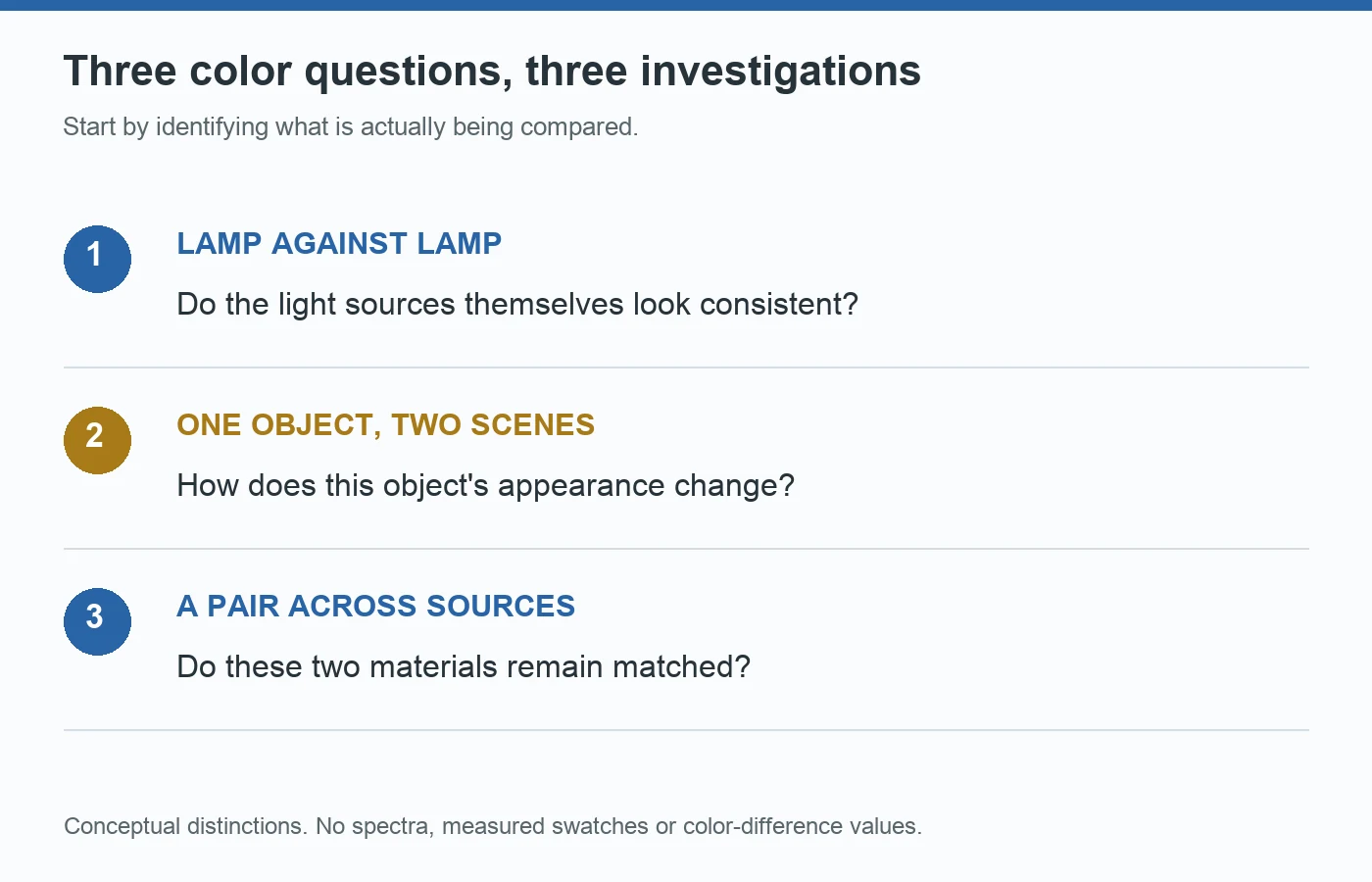
Buyer judgment 1: Diagnose the comparison before changing the specification. Tighter lamp-to-lamp color consistency does not by itself solve a material-pair mismatch.
Why the Same CCT and CRI Are Not the Same Spectrum
For an ordinary nonfluorescent surface, the light reaching the eye depends on both the incident spectrum and the material's wavelength-by-wavelength reflectance. Two materials may return similar-looking light under one source through different spectral combinations.
Changing the source can weight those differences differently. The materials have not necessarily faded or changed chemically; their relationship under the new illumination has changed.
Correlated color temperature summarizes a source's apparent white-light color, not its full spectral power distribution. CRI summarizes color rendition against reference conditions using prescribed samples. Neither number uniquely identifies the spectrum, nor measures the match between your actual upholstery and trim.
TM-30 adds useful information. DOE's explanation distinguishes the fidelity index Rf, gamut index Rg and graphics describing changes in different hue regions. The method uses a broader sample set than the general CRI average. But its summary metrics still characterize a light source using defined evaluation samples, not every material pair in your store.[2]
That does not make CRI or TM-30 unhelpful. Use them to screen and describe candidate lamps. Then check the specific merchandise for the appearance and matching requirements that matter commercially.
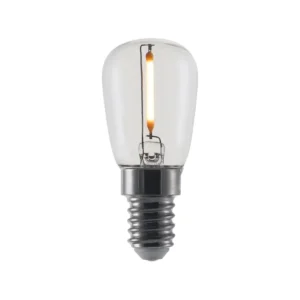
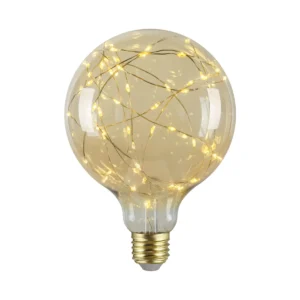
HongYu's EU standard filament bulbs combine familiar candle, ST and globe forms with Ra 80, 90 and 95 options across the range. This lets a brand develop a coordinated decorative collection while choosing the colour-rendering tier around its target application. Confirm availability and order conditions for the exact shape, then request data for that model, glass finish, colour specification and operating state. A report for a different variant is not a substitute for the selected lamp's evidence.
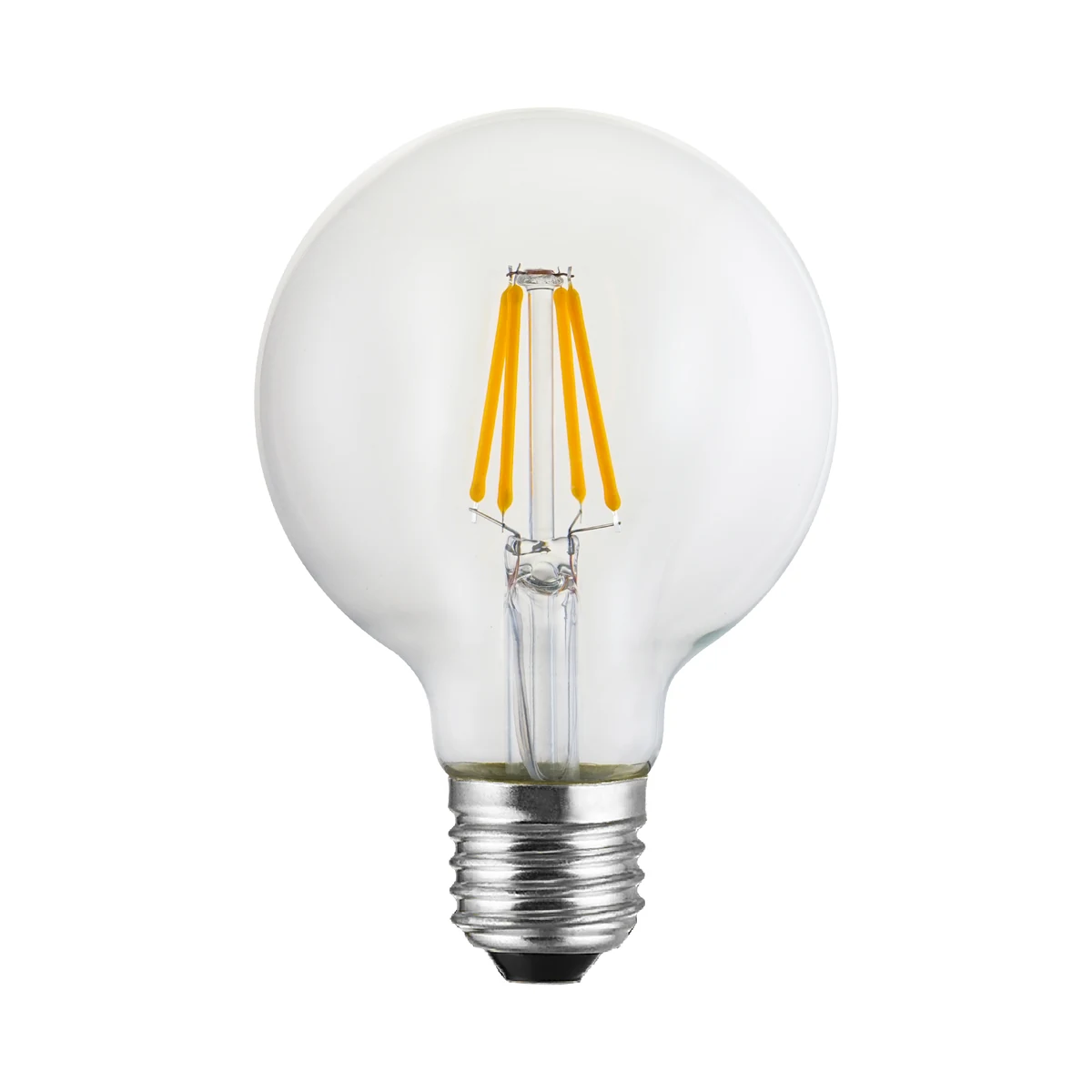
Buyer judgment 2: Use source metrics to select candidates, not to certify an untested material match. Even matching CCT and CRI values do not establish spectral equivalence.
Separate an Attractive Display from a Color-Approval Station
A warm decorative display can make a store inviting without being the right place to approve a demanding color match. These are two legitimate lighting tasks with different objectives.
The IES-hosted guidance on TM-30 separates preference, vividness and fidelity as design intents. A source selected to make colors look more vivid is not automatically the best choice for a fidelity-driven comparison.[3]
For a fabric or furniture retailer, a useful arrangement is to retain the desired lighting on the sales floor while providing a defined comparison area where customers and staff can examine critical material pairs. The comparison area should use agreed, controlled conditions. It should not simply be whatever light happens to reach the counter.
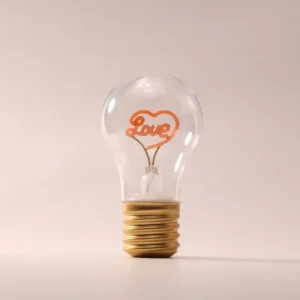
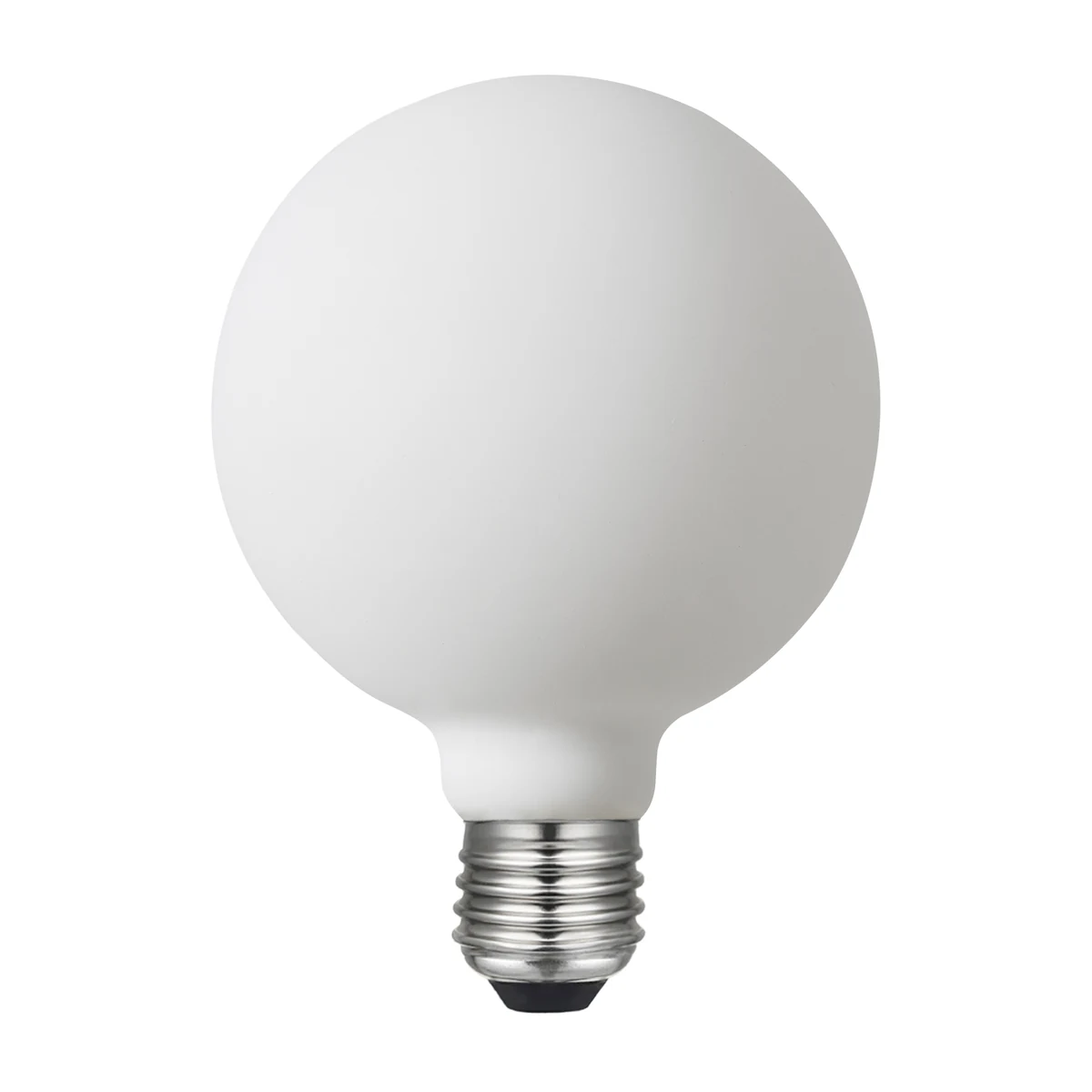
Where the fitting needs a clean white surface rather than an exposed filament graphic, HongYu's porcelain filament bulbs offer a different decorative character in candle, standard and globe forms. The range also lists colour-rendering options, so the visual finish and the light specification can be discussed together. Review the complete selected lamp with the merchandise; a diffusing exterior alone does not establish its spectrum or qualify it as a standardized colour-approval source.
Avoid promising that a display can make merchandise look exactly the same in every customer's home. The customer may use a different lamp, dimming state, daylight contribution and surroundings. A defensible service is to show the match under specified relevant conditions and explain the limits.
Buyer judgment 3: State the task. "Looks appealing on display" and "supports a defined material comparison" require different acceptance decisions.
Build a Material-Pair Review, Not a Bulb Beauty Contest
X-Rite's visual-evaluation guidance recommends checking assembled or related parts next to each other under relevant light sources, rather than relying on instrument readings alone. It also explains why a nominal color temperature provides limited guidance about the viewing spectrum.[4]
The following is a recommended purchasing workflow, not a claimed HongYu factory procedure or a replacement for a customer's prescribed color-control standard.
1. Choose the pairs that carry the risk
Use actual production-representative materials: fabric with sewing thread, upholstery with piping, a painted panel with a molded trim, or a product beside its approved physical master. Choose pairs that are expected to match, not a collection of attractive but unrelated colors.
Label each sample and retain its supplier, material and lot identity. A generic printed color chart can be useful for broader evaluation, but it cannot replace a customer's actual textile or coating when that specific match is the acceptance requirement.
2. Define the viewing conditions before judging
Agree on the reference condition and the additional use conditions that matter. A reference is not automatically "whatever daylight is available today." For controlled work, use the specified maintained viewing system and method. A lamp merely labeled 6500 K is not automatically a qualified D65 simulator.
Keep the pair adjacent, use a suitable neutral surround, and maintain the same sample orientation and viewing geometry. For a controlled comparison, measure and record illuminance at the sample plane and avoid accidental differences that turn a spectrum comparison into a brightness or shadow comparison. Afterward, check the intended installed scene, where light level and geometry are part of the real application.
Allow the lamp to stabilize under the agreed procedure and observers to adapt to each condition. Do not diagnose the result while uncontrolled daylight or another display lamp is also illuminating the samples.
3. Evaluate the operating states that customers will use
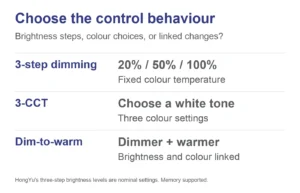
For a showroom that transitions from daytime presentation to a warmer evening atmosphere, HongYu's dim-to-warm LED bulbs provide a linked change in brightness and colour temperature. That gives the lighting collection an experience to demonstrate, not just a static specification. Include the intended dimmed scenes in the material review: a full-output approval does not establish the relationship after the spectrum changes. Identify the lamp, controller and actual scene settings, rather than recording only "dimmable."
The review can remain compact:
| Review condition | Keep fixed or record | Decision to make |
|---|---|---|
| Agreed reference condition | Physical master, sample pair and viewing method | Does the material pair meet its reference requirement? |
| Proposed retail lamp and fixture | Exact lamp variant, position, sample-plane illuminance and surroundings | Is the pair acceptable in the intended sales setting? |
| Intended dimmed scene | Controller, lamp count and operating setting | Does that scene remain acceptable for the assigned task? |
| Relevant secondary environment | Identified alternative source or controlled simulator | Does a mismatch appear that customers need to see or the project must address? |
This is a review template, not a set of test results. Passing these selected conditions does not prove matching under every possible illuminant.
4. Record a decision that another person can reproduce
Retain sample IDs, source IDs, conditions, observations and the person authorized to accept the result. Distinguish a material failure under its contractual reference from an additional mismatch observed in a secondary environment. The second observation does not automatically prove that either supplier breached the agreed specification.
Where instrumental tolerances are needed, a color specialist should define the measurement geometry, illuminant, observer, color-difference formula and limits appropriate to the material and use. CIE's metamerism-index entry explicitly requires stating the color-difference formula used.[5] A bare "Delta E below 1" instruction without its conditions is not a complete acceptance method.
Fluorescent, translucent, highly glossy or effect materials can require additional measurement controls. Do not apply the simple opaque, nonfluorescent surface model without checking that it fits the samples.
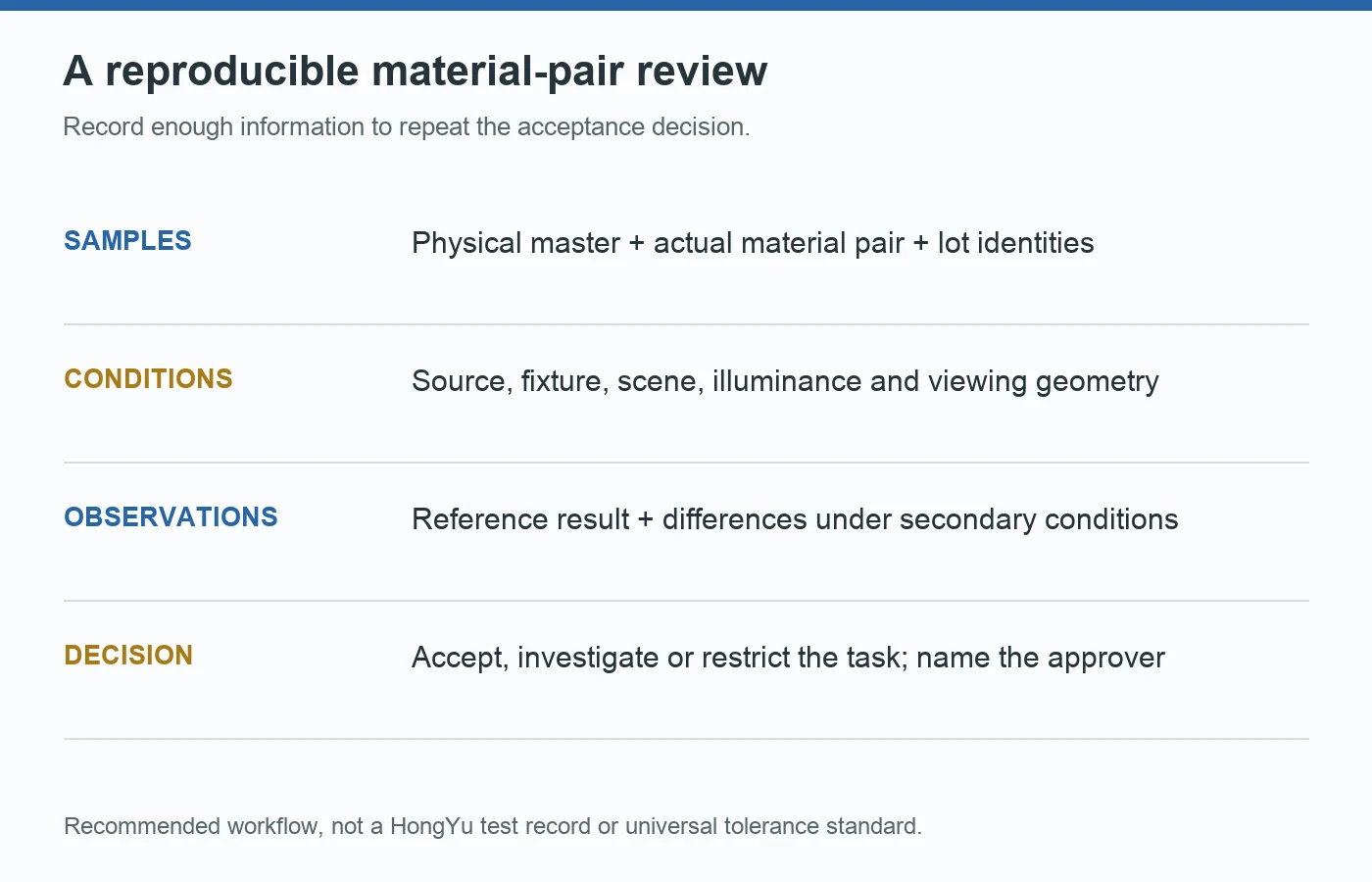
Buyer judgment 4: Approve a named material pair under named conditions. "CRI 95 approved" is not a reproducible material-acceptance record.
When a Pair Fails, Investigate Both Sides of the Interaction
Changing every lamp to a higher advertised CRI may be an expensive response to the wrong problem. Use the observations to decide where to investigate next.
| Observation after a controlled comparison | Useful next investigation | Do not conclude yet |
|---|---|---|
| A new material lot differs from the retained master under the agreed reference | Material formulation, process, lot and sample-condition records | The retail lamp caused the material change |
| The same pair matches under one source but diverges under another | Source spectra and material spectral differences | The second lamp is universally inferior |
| Rotating a sample changes the result substantially | Texture, gloss, pile direction and viewing geometry | Spectrum alone explains the complaint |
| The issue appears only in a mixed daylight/electric-light scene | Contributions and distribution of the combined illumination | Either electric lamp alone will reproduce it |
| A photo disagrees with direct observation | Capture settings, processing and display conditions | The photograph is a colorimetric measurement |
For a supply chain combining different materials or suppliers, reducing the material pair's spectral mismatch may offer a more durable solution than selecting one lamp that happens to hide it. That is a materials/color-engineering decision, not something a lighting salesperson can promise from a catalog photograph.
Phone images are useful for identifying the affected items and documenting the setup. Automatic exposure, white balance, processing and display differences make them unsuitable as the sole color-approval evidence. Keep the physical samples and direct observations available.
Finally, preserve the approved lamp identity and operating condition for reorders. Changing the lamp variant or the merchandise lot creates a reason to revisit the relevant comparison, not an automatic declaration that the old approval still applies.
Buyer judgment 5: Treat a mismatch as a source-material interaction to investigate. Do not automatically assign fault to the lamp, the fabric or the customer.
Conclusion
High-CRI decorative lighting is most valuable when the appearance of the lamp, the atmosphere of the room and the presentation of merchandise work together. HongYu's standard, porcelain and dim-to-warm ranges give buyers different ways to build that combination, with model-specific colour-rendering options to discuss during selection.
Use source data to choose candidates. Use actual material pairs, controlled comparisons and intended operating scenes to approve the application. Where atmosphere and precise color comparison have different needs, separate the tasks instead of asking one decorative lighting scene to guarantee both.
Planning a retail or hospitality lighting collection? Send HongYu the fixture style, target market, quantity, preferred glass finish and required CRI/CCT, together with the materials customers will view. Ask for a focused sample selection and the available data for those exact variants.
Use the samples to approve both the display effect and the relevant material pairs. The result is a product specification your purchasing team can order and your sales team can explain, rather than a higher CRI number without a defined purpose.
Featured image: Original editorial diagram. Not a measured color comparison or HongYu test record.
References
- CIE. Special Metamerism Index: Change in Observer. The public abstract distinguishes spectral differences, illuminant changes and observer changes. Back
- U.S. Department of Energy. TM-30 Basics. Background on fidelity, gamut and hue-specific information, not a report for any pictured lamp. Back
- Livingston, Royer and Esposito, IES FIRES. Using TM-30 to Improve Your Lighting Design. Design-intent guidance; not a universal material-matching tolerance. Back
- X-Rite. The Science of Visual Evaluation. Comparing related materials under relevant light sources and the limits of CCT alone. Back
- CIE e-ILV. Metamerism Index, Term 17-23-007. Definition and requirement to state the color-difference formula. Back