Why Glass Finish Affects Stocking Risk More Than Most Buyers Realize
Here is a mistake we see regularly: a buyer adds a Printed Elegant finish to their range after seeing it perform well at a trade show. They order a meaningful quantity, it moves in the first season, they reorder. By the third season, the trend has shifted. The finish sits in the warehouse. The buyer has locked up working capital in a finish that looked like momentum but was actually a cycle.
Glass finish is one of the most commonly mismanaged variables in decorative LED filament bulb sourcing — not because buyers ignore it, but because they treat it as an aesthetic decision when it is actually a stocking risk decision. The wrong finish mix creates slow-moving inventory on one end and backorder pressure on the other. Getting it right requires understanding not just which finishes exist, but which ones have structural demand, which ones are trend-dependent, and how to allocate across both without overexposing yourself to either.
This article presents our factory's real sales ranking across all eleven glass finishes we produce, the historical logic behind why some finishes have proven durable and others have not, and a practical allocation framework for building a finish mix that works across different market channels.

A Short History: Why Some Finishes Last and Others Disappear
The LED filament bulb category was born out of nostalgia. When manufacturers first produced LED bulbs that convincingly replicated the Edison incandescent look, clear glass was the only finish that made sense — the whole point was to show the filament. The category launched on the back of the vintage lighting revival that swept European hospitality design around 2010–2014, and clear glass was its vehicle.
Frosted glass followed quickly, driven by residential demand. Consumers who loved the warm color temperature of filament LEDs but wanted a softer, less glare-prone output drove enormous volume through home improvement retail channels. Frosted was not a trend — it was a functional upgrade that addressed a real objection, and it became a permanent fixture in the category.
Gold-tinted glass emerged as the vintage movement matured. Buyers discovered that amber glass enhanced the warm glow of the filament and made the bulb look more premium on shelf. European lighting chains and hospitality procurement departments drove consistent demand, and gold spray established itself as a durable mid-tier performer.
The subsequent wave of finishes — inner white, smoke gray, top silver — each arrived with a specific design rationale tied to interior trends of their era. Industrial chic drove smoke gray. Directed-light design effects made top silver appealing. Inner white found a home in residential retail as a softer alternative to frosted. All three proved durable enough to maintain consistent sales without ever threatening the top two.
Then came the trend-dependent finishes. Printed patterns, 3D effect glass, satin spun textures — these arrived as the category tried to push into premium decorative territory. Some found real niches. Others moved well for two seasons and then stalled as design trends shifted. The lesson the market taught buyers was consistent: novelty finishes require shorter buying cycles, lower MOQ commitments, and faster inventory turns. They cannot be managed the same way as clear or frosted.
Understanding this history matters because it tells you which finishes have structural demand — demand driven by function and broad aesthetic consensus — and which finishes have cyclical demand driven by trend. The practical implication: structural finishes can be bought on standard replenishment cycles with normal MOQ commitments. Cyclical finishes need shorter buy cycles, tighter inventory targets, and a clear channel home before you commit. The ranking below makes this distinction visible and actionable.

The Full Sales Ranking: From Evergreen to Niche
The following ranking is drawn from our factory's actual order volume across all glass finishes. It is not a qualitative assessment of which finishes are "better" — it is a direct read of market demand as expressed by buyers who have placed real orders over multiple years. Use it as a calibration tool, not a prescription.
| Finish | Sales Tier | Best Market Fit | Stocking Risk |
|---|---|---|---|
| Clear (清光) | Tier 1 — Evergreen | Global / Hospitality / All channels | Very Low |
| Frosted (磨砂) | Tier 1 — Evergreen | Global / Residential / Mass retail | Very Low |
| Gold Spray (喷金) | Tier 2 — Reliable Special | Europe / Hospitality / Vintage channels | Low |
| Inner White (内白) | Tier 2 — Reliable Special | Residential / Retail chains | Low |
| Smoke Gray (烟灰) | Tier 2 — Reliable Special | Industrial / Design-conscious retail | Low–Medium |
| Top Silver Series (顶银系列) | Tier 2 — Reliable Special | Design-oriented / Boutique retail | Medium |
| External Matte White (外喷亚光白) | Tier 3 — Niche Play | Scandinavian / Minimalist design retail | Medium |
| Printed Elegant Series | Tier 3 — Niche Play | Seasonal / Gift / Novelty retail | Medium–High |
| 3D Effect | Tier 3 — Niche Play | Premium decorative / Specialty distribution | High |
| Satin Spun | Tier 3 — Niche Play | Craft / Artisan / Small-run retail | High |
| Printed Alabaster | Tier 3 — Niche Play | Premium niche / Designer specification | High |
The gap between Tier 1 and Tier 3 is not incremental — it is structural. Clear and frosted combined account for the overwhelming majority of total filament bulb volume globally. IEA global lighting reports[1] confirm that functional and residential demand continues to anchor buying behavior in proven finishes. Buyers who mistake niche momentum for category momentum are the ones who end up with dead stock.

Tier 1 — The Safe Bets: Clear and Frosted
Clear glass is the original LED filament finish, and it remains the highest-volume seller globally without exception. The transparent glass puts the filament on full display — which is precisely the point. The decorative value of the filament is the product's core proposition, and clear glass delivers it without compromise. Every market, every channel, every application buys clear.
For importers building a core range, the A60 in clear glass → is the most commonly ordered SKU in the entire decorative filament category — and also the most commonly misspecified. Voltage range, base type, and CCT decisions compound on top of the finish decision.
Frosted glass is the functional counterpart to clear. The sandblasted or acid-etched surface diffuses light output, eliminating direct glare from the filament while preserving the warm CCT that buyers love. Frosted is particularly strong in residential channels where end users want the vintage look without the harshness of a bare filament at eye level. DOE research on LED adoption[2] consistently highlights glare reduction as a key driver of consumer preference in residential retrofit segments — frosted directly addresses this.
Stocking guidance: Clear and frosted should form the foundation of any decorative filament range. If you only stock two finishes, these are the two. If you stock ten, these two should still represent the majority of your volume allocation.
Tier 2 — The Reliable Specials: Gold, Inner White, Smoke Gray, Top Silver
Tier 2 finishes are not risks — they are calculated additions that serve specific channels and markets reliably. The mistake buyers make with Tier 2 is either ignoring them entirely (leaving channel opportunities unserved) or over-allocating to them at the expense of Tier 1 volume.
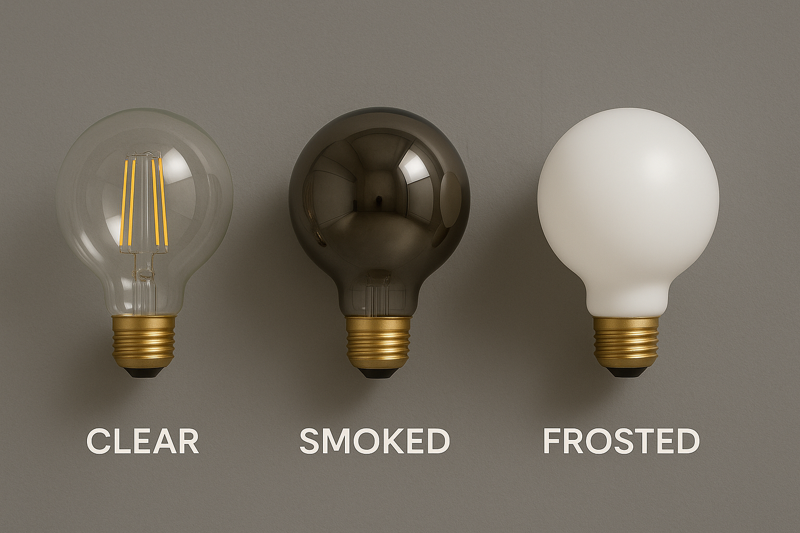
Gold Spray (喷金): The amber-tinted exterior creates a warmer, more premium appearance than clear glass. The filament glow through gold glass reads as richer and more vintage. This finish has durable demand in European hospitality procurement, vintage lighting retail, and premium home décor channels. For buyers serving these markets, gold is a near-essential SKU.
Inner White (内白): A white coating applied to the interior of the glass produces a softer, more diffused output than frosted while maintaining a clean exterior appearance. It performs well in residential retail chains and mass-market channels where buyers want a refined look without committing to the more distinctive aesthetic of frosted.
Smoke Gray (烟灰): Gray-tinted glass appeals to the industrial and urban interior trend that has maintained consistent influence across retail and hospitality design. It is not a mainstream seller, but it is stable — buyers who serve design-conscious or urban retail segments will find consistent demand for smoke gray across their range. The Global Lighting Association[3] has noted sustained growth in design-led decorative lamp segments, which is the primary territory for smoke gray.
Top Silver Series (顶银系列): A silver-coated cap on the bulb creates a directional light effect — the silver reflects light downward rather than emitting omnidirectionally. This finish suits buyers serving pendant fixture applications, restaurant table lighting, or boutique retail where directed beam quality matters as much as aesthetic. It is more design-specific than the other Tier 2 finishes and requires a buyer who understands the application.
For globe shapes like the G40 globe →, Tier 2 finishes — especially gold and smoke gray — often perform disproportionately well compared to their share in the A60 category, because globe buyers skew toward design-conscious applications where finish differentiation matters more.
Tier 3 — The Niche Plays: Matte White, Printed Elegant, 3D, Satin Spun, Printed Alabaster
Tier 3 finishes require a different buying logic. They are not safe volume plays — they are margin and differentiation opportunities for buyers who understand their specific distribution context.
External Matte White Spray (外喷亚光白): The cleanest of the Tier 3 finishes from a demand durability standpoint. The matte white exterior appeals to Scandinavian-influenced and minimalist interior aesthetics that have proven more durable than most design trends. The common buyer mistake here is treating it as a mainstream alternative to frosted — it is not. It has a specific channel home in Northern European retail, lifestyle boutiques, and Japandi-aesthetic accounts. Outside those channels, it moves slowly.
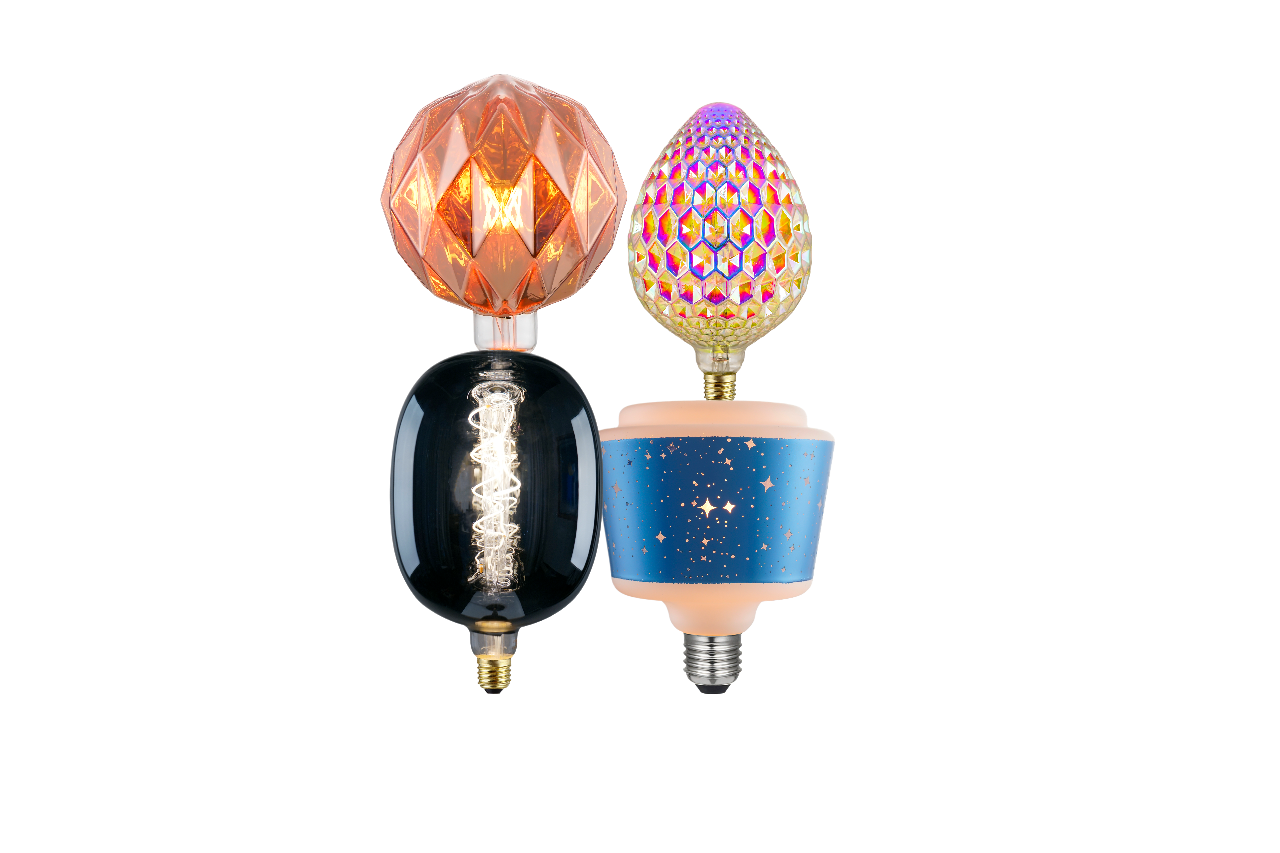
Printed Elegant Series: Decorative printed patterns on the glass surface create high visual impact at retail and photograph exceptionally well for e-commerce. The mistake buyers make is reading early sell-through as a signal to reorder at scale. A pattern that moves quickly in season one is often a trend indicator, not a category staple. We consistently see buyers who double down on Printed Elegant after a strong first season and then spend the following year managing clearance. Treat this finish as a short-cycle, confirmed-channel buy — not a replenishment SKU.
3D Effect: Three-dimensional visual depth created through filament arrangement or glass texture is the most premium of the specialty finishes. It commands a real price premium and has genuine appeal in high-end decorative accounts. The buyer mistake here is stocking it without a confirmed distribution path. This finish does not sell itself at retail — it requires a buyer who can position it, explain it, and reach accounts where premium differentiation is expected. Without that, it sits.
Satin Spun: A spun satin-like glass texture that feels and looks handcrafted. This finish has found a home in artisan retail, craft fair supply, and premium gifting contexts. It is genuinely distinctive and difficult to replicate cheaply, which gives it defensible margin — but the total addressable market is small.
Printed Alabaster: An alabaster-effect finish that creates a warm, stone-like visual when unlit and a glowing premium look when illuminated. This is the most niche of all eleven finishes, with specific applications in premium specification and designer-led projects. For buyers with direct access to interior designers or premium specification channels, it offers genuine value. For general importers, it is likely an excess inventory risk.
Multi-filament and squirrel cage designs, which are discussed in detail in our multi-filament stocking guide →, often pair well with Tier 2 and Tier 3 finishes — the premium filament structure and the distinctive finish reinforce each other for buyers targeting the design-conscious segment.

How to Build Your Finish Mix (Practical Buyer Guide)
The ranking tells you what the market prefers on aggregate. Your finish mix should be built from the ranking down, but weighted by your specific channel access.
A Baseline Approach
For a buyer with general market access and no highly specific channel focus, a reasonable starting allocation looks like this:
- 60–70% of SKU count and volume: Tier 1 (clear and frosted in your core shapes)
- 20–30%: Tier 2 (gold, inner white, and one of smoke gray or top silver based on your market)
- 5–10%: Tier 3 (one or two specialty finishes with short buy cycles and confirmed channel demand)
Channel-Specific Adjustments
- European hospitality / vintage lighting: Increase gold spray allocation; add smoke gray; reduce inner white
- Residential mass retail: Maximize frosted; keep clear strong; inner white as supplementary
- Scandinavian / minimalist boutique: Add external matte white; consider frosted over clear as primary
- Premium decorative / design trade: Add top silver, 3D effect, and satin spun; maintain clear as foundation
- Seasonal / gift retail: Include Printed Elegant series on short-cycle buys
The Common Mistake
The most common finish mix error we see from importers at all experience levels is over-diversifying at the wrong tier. A buyer who stocks four Tier 3 finishes at meaningful quantities while underweighting their Tier 1 core has built a range that looks interesting in a catalog and performs poorly in distribution. Finish diversity should always be built on top of volume certainty — not instead of it.
The second most common mistake: treating all Tier 2 finishes as equally safe. Gold spray in a market with no hospitality or vintage channel performs the same as a Tier 3 finish. Inner white in a market that never developed a residential soft-diffusion preference does the same. Tier 2 reliability is channel-conditional. Verify the channel fit before you build the inventory position.
The Illuminating Engineering Society[4] and industry bodies consistently emphasize that decorative lamp specification should start from application requirements, not aesthetic preference. The same logic applies to wholesale buying: understand your channel's functional needs first, then layer in the aesthetic differentiation that your specific distribution can support.
Glass finish is one of the last decisions many buyers make and one of the first they regret getting wrong. Treat it like the stocking variable it is, allocate deliberately by tier, and calibrate your Tier 3 exposure to what your channel can actually sell through.
Final Thoughts
Glass finish is the variable that separates buyers who build a product range from buyers who build a warehouse problem. The eleven finishes in this ranking are not equally risky, equally profitable, or equally suited to every channel — and treating them as interchangeable is the most common and most avoidable mistake in decorative filament bulb sourcing.
Start with Tier 1. Build depth in clear and frosted before you diversify. Add Tier 2 finishes only when you have confirmed channel fit — gold for hospitality and vintage retail, inner white for residential chains, smoke gray for design-conscious accounts. Approach Tier 3 with short buy cycles, realistic sell-through expectations, and a specific distribution home before you commit.
The buyers who manage finish mix well are not the ones who stock the most variety — they are the ones who allocate deliberately, review performance by finish and channel, and adjust their mix based on what actually moves rather than what looked good at the trade show. That discipline is what separates a healthy decorative lighting range from a slow-moving one.
If you are evaluating your finish mix or planning a new product range, we are happy to share more specific data on how different finishes perform across different markets. Contact us → with your target channel and current range, and we can give you a more tailored view.
References
- International Energy Agency — Global Lighting Market Reports
- U.S. Department of Energy — LED Lighting and Consumer Adoption Research
- Global Lighting Association — Decorative and Design-Led Lamp Segment Trends
- Illuminating Engineering Society — Decorative Lamp Application Guidelines
- NEMA — Decorative Lamp Standards and Market Data
Related HongYu Bulb product pages
- LED Filament Bulb Product Range → — standard and decorative LED filament bulbs for wholesale and project sourcing.
- Custom Color Bulbs → — custom glass color, coating and printed finish options for private-label collections.
- Custom Logo Bulbs → — printed branding and private-label decorative bulb options.
- Big Decorative Bulbs → — oversized decorative filament bulbs for hospitality, retail and statement fixtures.
- Contact HongYu Bulb → — send specifications, target market, quantity and packaging requirements for quotation.