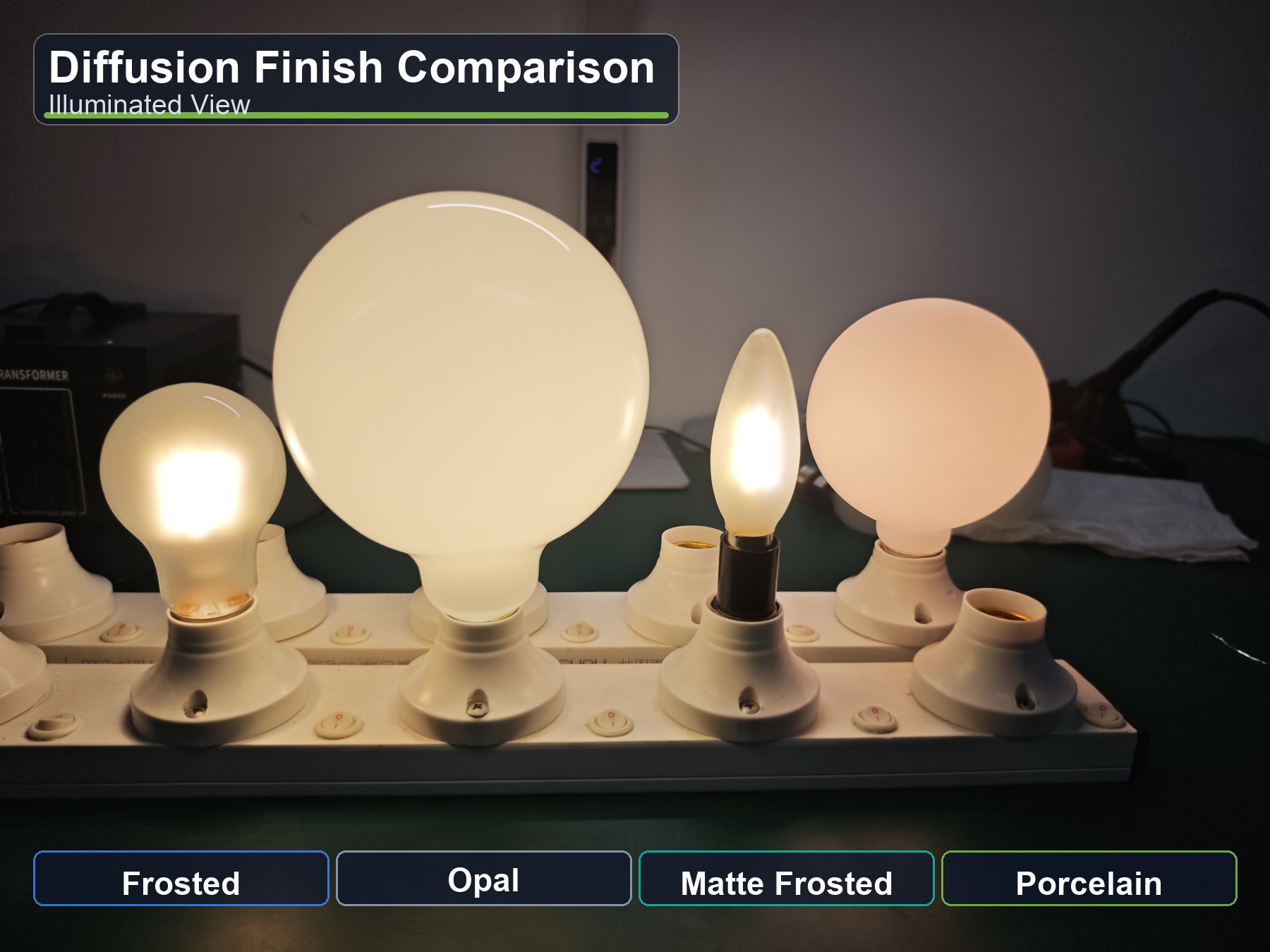
Frosted, opal, matte-frosted and porcelain LED bulbs are often grouped together because they all soften the direct view of the LED filament. In reality, they are four different finishes with clearly different colors, surfaces, production processes and illuminated effects.
They do not all look white when switched off.
- Inside-frosted bulbs normally appear translucent grey and retain a smooth outer surface.
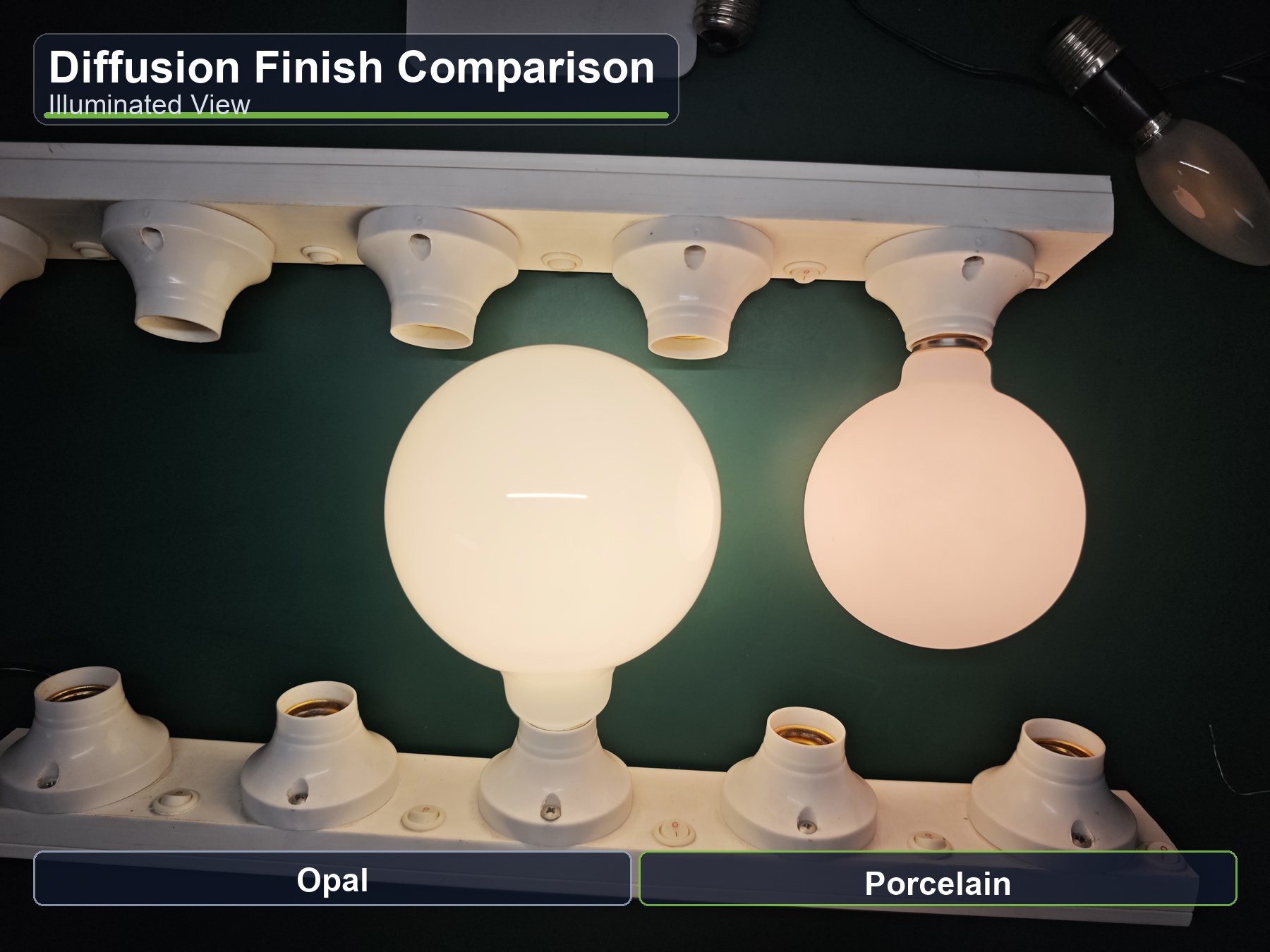
- Opal or milk-white bulbs have a glossy milk-white appearance.
- Matte-frosted bulbs appear grey, misty and sanded.
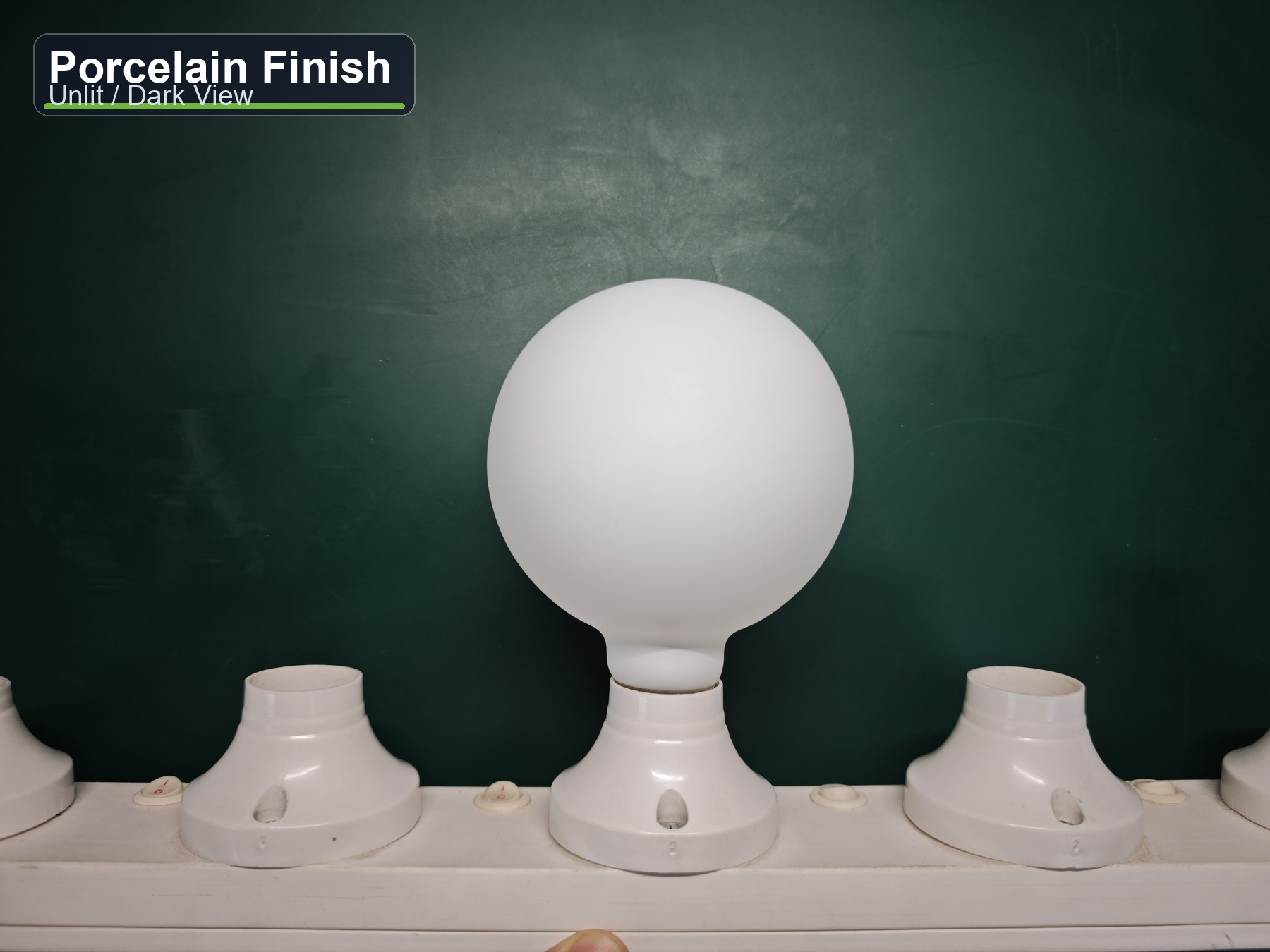
- Porcelain bulbs have a matte ceramic-white appearance.
The difference is also visible after the bulbs are switched on. Inside frosting softens the filament but normally leaves a central light shadow. Opal hides the filament behind a glossy white surface. Matte frosting creates a misty decorative glow. Porcelain makes the glass envelope appear more like one complete luminous object.
The right finish should therefore be selected according to the intended appearance, finished lumen output, bulb size, fixture design and viewing position.
For a broader overview of clear, amber, smoky, mirror-top, metallic and other decorative finishes, read our complete decorative bulb finish guide.
Quick Comparison
| Finish | Appearance when switched off | Outer surface | Production method | Internal light shadow | Reference lumen loss | Best suited to |
|---|---|---|---|---|---|---|
| Inside frosted | Translucent grey | Smooth | Inner glass wall is acid-etched | Visible but softened | 2–5% | Functional and general lighting |
| Opal / milk white | Milk white | Smooth and glossy | White diffusion material is applied inside and furnace-cured | Almost completely hidden | 15–20% | Soft general lighting |
| Matte / sand frosted | Misty grey | Matte and sanded | Diffusion finish is applied outside | Softly visible; effect can be adjusted | Approximately 10% | Decorative and atmospheric lighting |
| Porcelain | Ceramic white | Matte and porcelain-like | Proprietary external porcelain coating formula | Almost completely hidden | 15–25% | Premium exposed decorative lighting |
These percentages are useful for understanding the relative optical effect of each finish. They should not be used by the buyer to calculate the final product specification.
For an actual order, the important values are the final rated wattage, lumen output, CCT, CRI and dimming performance of the finished bulb.
For a general optical explanation of surface diffusion and opal diffusion, see Edmund Optics: What Is the Difference Between Ground Glass and Opal Glass Diffusers?[1].
What Is an Inside-Frosted LED Bulb?
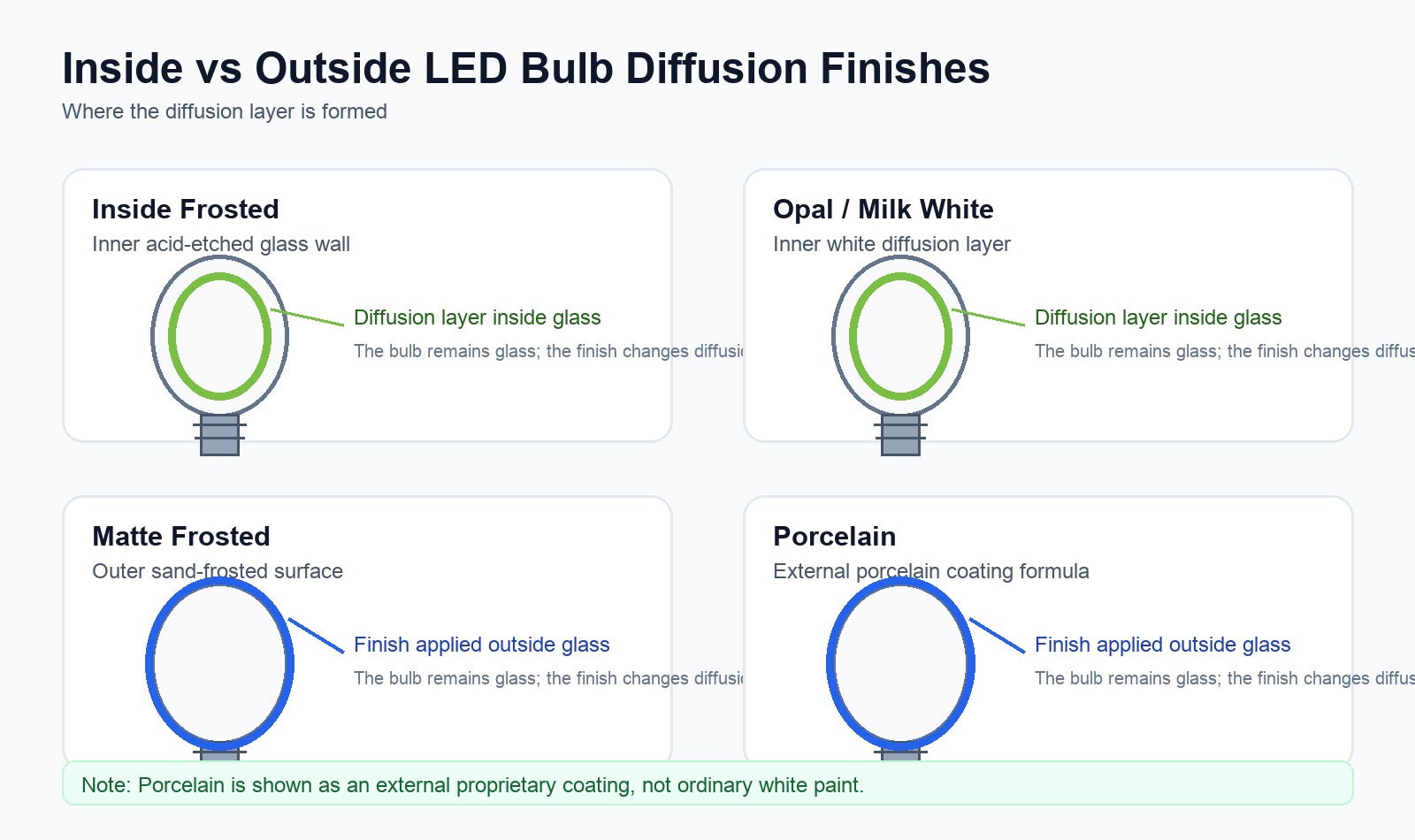
An inside-frosted LED bulb is produced by acid-etching the inner wall of the glass envelope. The acid-treated surface scatters the light while the outside of the bulb remains smooth.
When switched off, the bulb normally appears translucent grey rather than white. When illuminated, the filament is no longer seen clearly, but the brighter central area and the approximate position of the internal light source usually remain visible.
Inside frosting therefore softens the filament without turning the whole bulb into a completely uniform glowing surface.
Its main advantage is relatively high light transmission. Based on our production experience, inside frosting normally causes only around 2–5% lumen loss compared with clear glass.
It is commonly used for:
- A60 household bulbs
- G45 globe bulbs
- C35 candle bulbs
- lamps with an additional shade
- general lighting where useful lumen output remains important
Based on our practical production experience, we normally recommend inside-frosted glass for bulb sizes up to approximately G95.
This is not a strict technical limit. It is a practical recommendation based on our experience with glass stability, acid-etched appearance and repeatable production quality.
Choose inside frosted when brightness remains important and a slight central light shadow is acceptable.
For buyers using inside frosting as a practical general-lighting option, HongYu Bulb’s standard LED filament bulb range includes common A60, globe, candle and ST-style shapes that can be specified around the required final lumen output.
What Is an Opal or Milk-White LED Bulb?
In the decorative bulb market, the terms opal, milk white and sometimes milk glass are often used for bulbs with a glossy white diffused appearance.
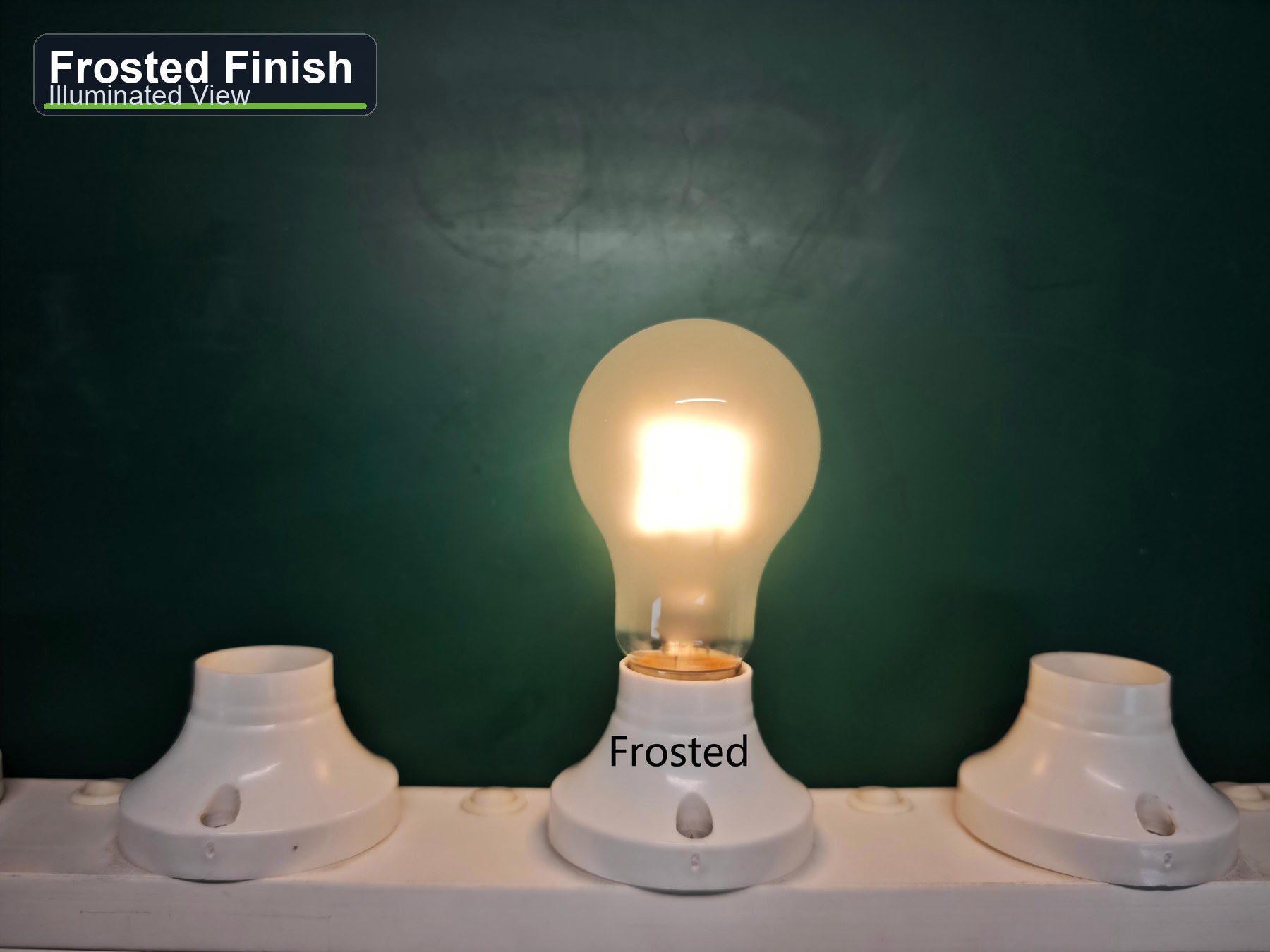
In HongYu Bulb’s process, white diffusion material is applied to the inner wall of the glass. The bulb is then cured in a furnace with a set temperature of approximately 600°C.
The 600°C figure refers to the furnace setting. It does not mean that the finished glass itself has been measured at exactly 600°C.
Because the diffusion material is inside the bulb, the outer glass remains smooth and glossy.
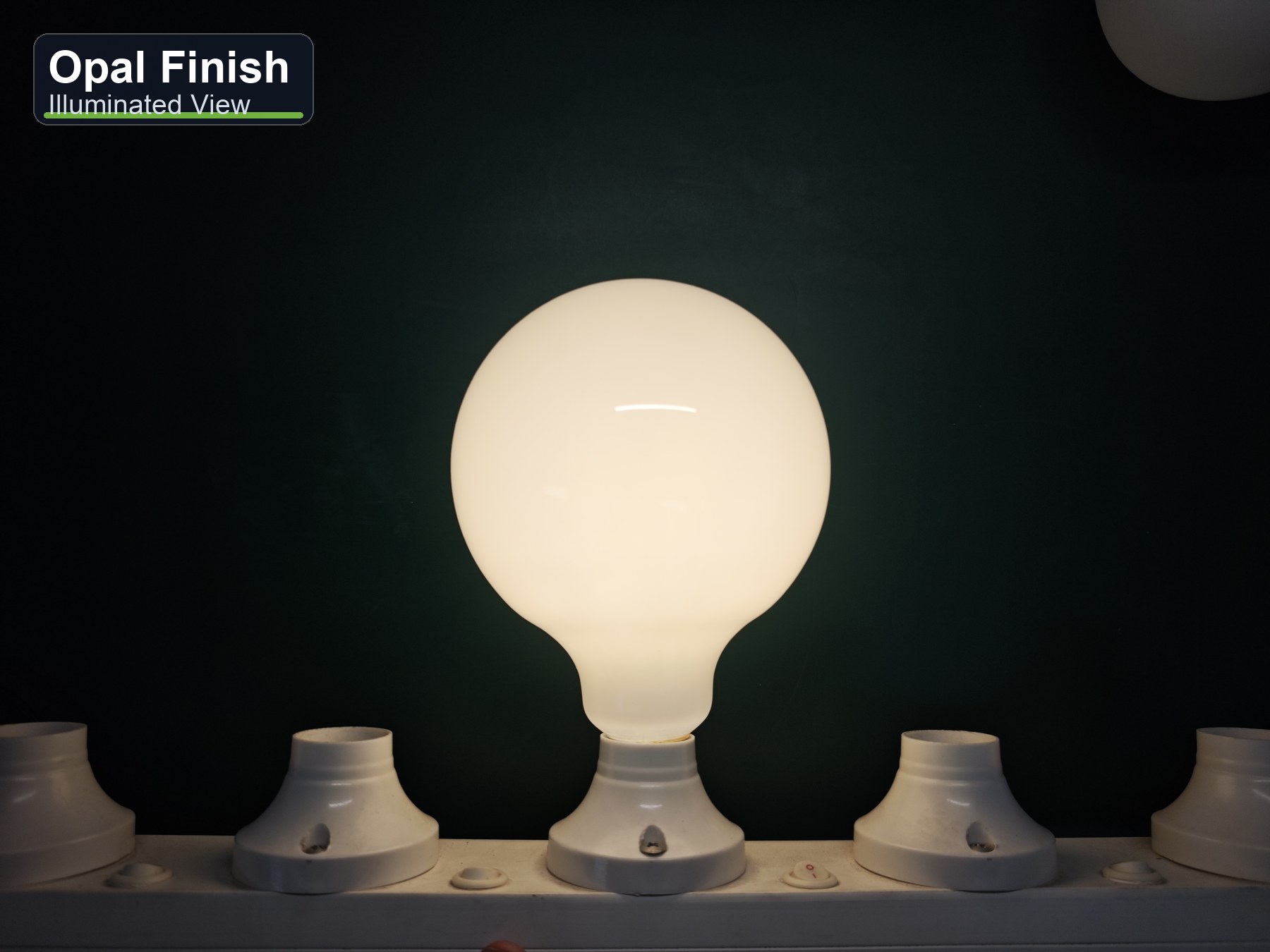
When switched off, the bulb appears milk white. When illuminated, the filament and most of its shadow disappear. The viewer sees a broadly glowing white surface instead of a clearly visible internal light source.
Compared with inside frosting, opal provides stronger diffusion. Our production reference is approximately 15–20% lumen loss.
One practical difference between opal and porcelain is external reflection. Opal hides the internal filament effectively, but its glossy surface can still reflect nearby windows, lamps or other bright objects.
For the cleanest and most consistent appearance, we normally recommend opal or milk-white finishes for bulb sizes up to approximately G125.
This is not a strict coating-size limit.
Bulbs larger than G125 are commonly made from hand-blown borosilicate glass. The hand-blowing process may leave visible striations in the original glass envelope. After the internal opal material is applied, these underlying glass lines can become more noticeable, especially when the bulb is illuminated.
Opal can still be applied to larger bulbs, but the original glass quality must be inspected carefully.
Choose opal when the design requires:
- a glossy milk-white surface
- strong filament concealment
- soft general lighting
- a familiar white-bulb appearance
What Is a Matte-Frosted LED Bulb?
A matte-frosted bulb is also called a sand-frosted or outside-frosted bulb.
Unlike inside frosting, the finish is applied to the outer surface of the glass. This gives the bulb a matte, sanded and misty texture.
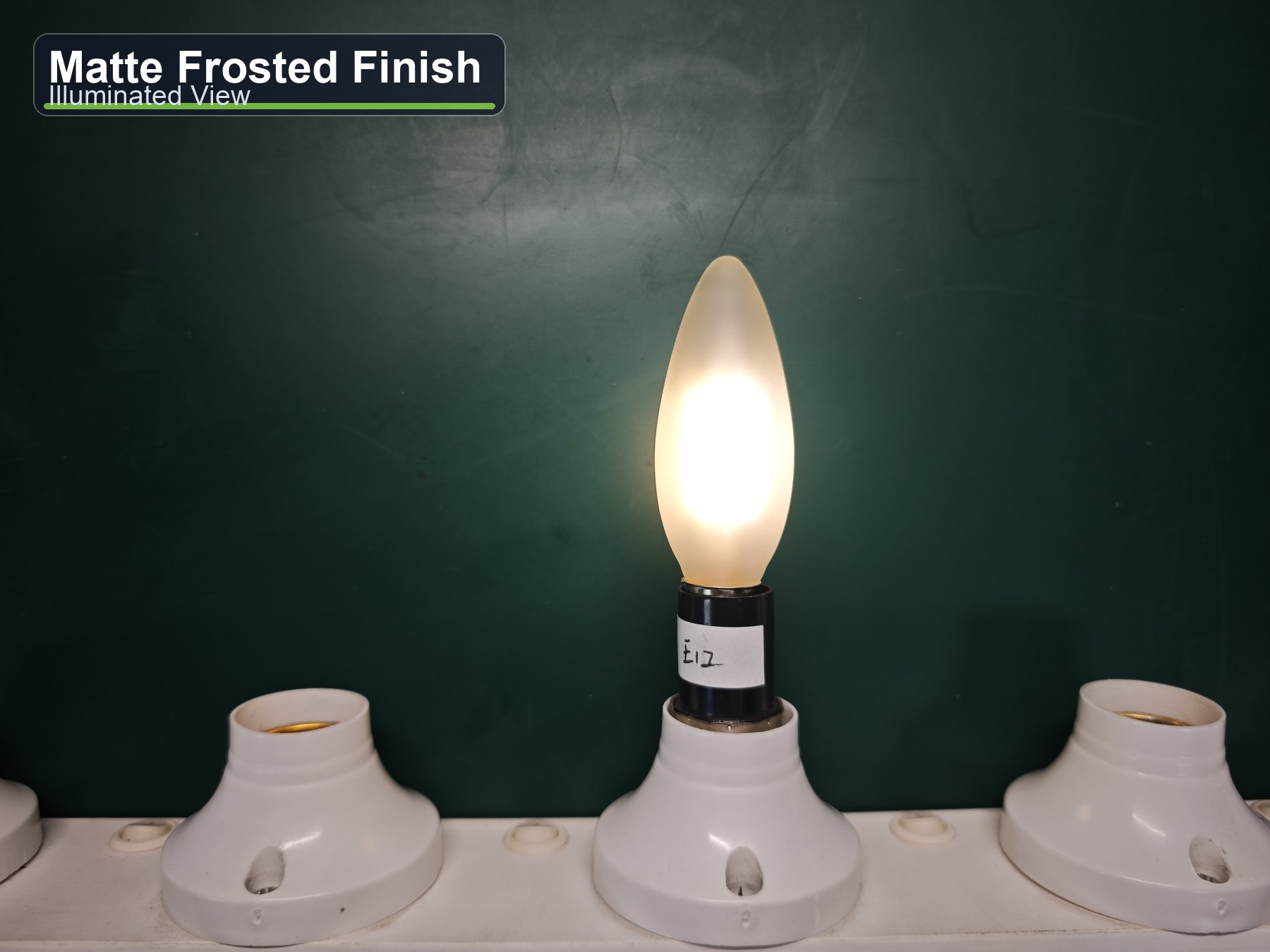
When switched off, matte-frosted glass normally appears grey rather than white. When switched on, the filament is softened, but a blurred impression of the internal light source may remain.
The appearance can be adjusted through the finish formulation and application thickness. A lighter finish allows more internal structure to remain visible. A heavier finish creates a denser and more diffused result.
Matte frosting is therefore not only a functional diffuser. It is also a decorative surface treatment.
Our standard production reference is approximately 10% lumen loss.
Matte-frosted bulbs are suitable for:
- exposed pendant lamps
- decorative wall lights
- table lamps
- artistic lighting collections
- oversized decorative bulbs
- special glass shapes
The process has no significant practical size limitation. It can be used on conventional bulb shapes, oversized globes and custom hand-blown envelopes.
For a large bulb, the main challenge is not whether the finish can be applied. The challenge is maintaining consistent texture, opacity, spraying thickness, grey appearance and illuminated effect across the complete surface.
Choose matte frosted when the designer wants a misty grey bulb and a more atmospheric decorative effect.
What Is a Porcelain LED Bulb?
A porcelain LED bulb is not made from ceramic.
It is a glass bulb finished with HongYu Bulb’s proprietary external porcelain coating formula, developed to create a matte ceramic-like surface and an evenly diffused illuminated appearance.
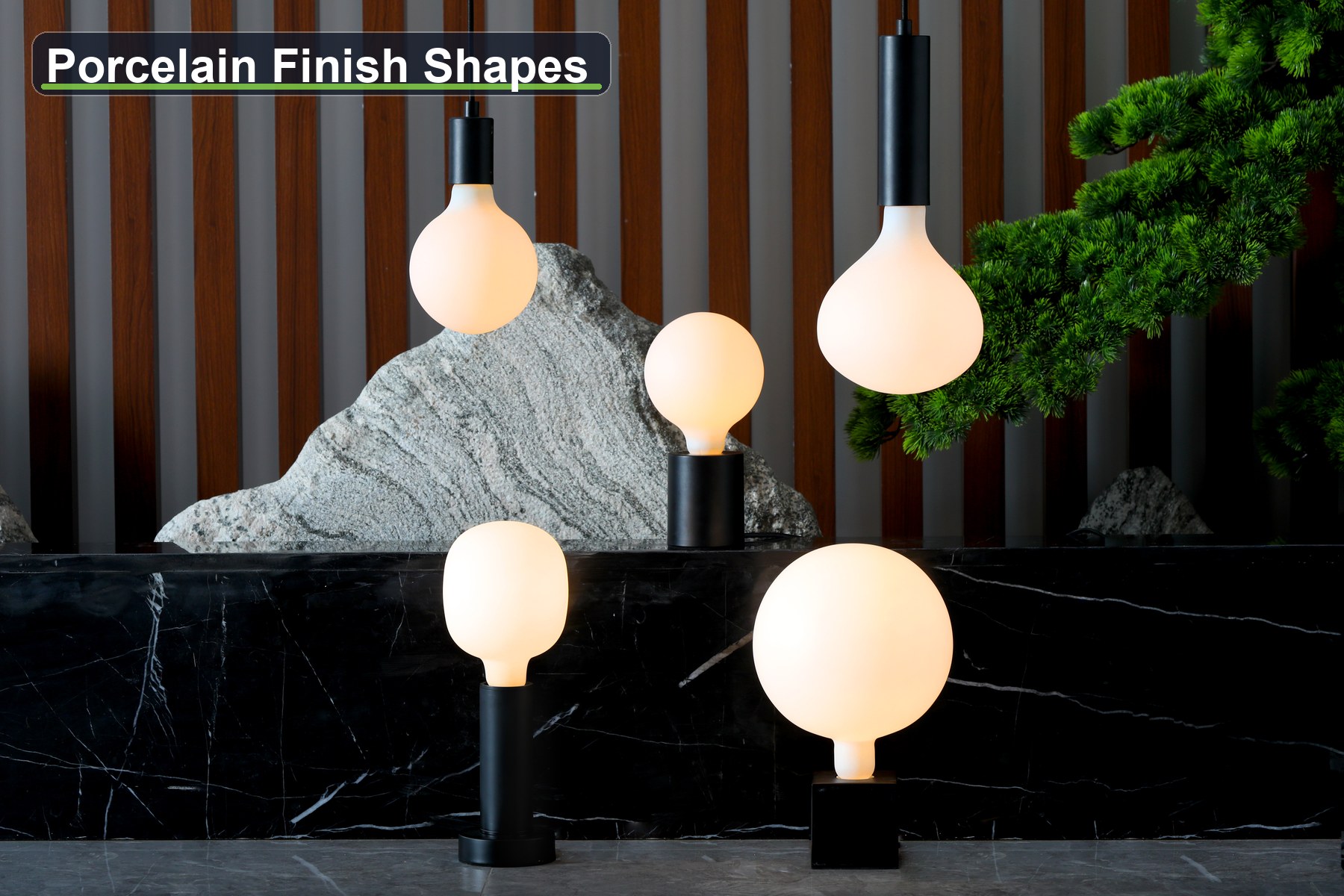
When switched off, a porcelain bulb appears ceramic white rather than translucent grey. When switched on, the filament and central light shadow are almost completely hidden, allowing the complete glass envelope to appear as one luminous object.
This makes porcelain particularly suitable when the bulb remains exposed and close to the viewer.
The main value of porcelain is not maximum light transmission. Its value lies in:
- a refined matte appearance
- strong filament concealment
- a more uniform luminous surface
- less visible concentration around the LED filament
- consistent design language across different bulb shapes
Based on our production experience, porcelain normally causes approximately 15–25% lumen loss.
The finished bulb should therefore be engineered and rated according to the customer’s required final wattage, lumen output and CCT. The customer should not need to calculate the final output from a clear-glass bulb.
Porcelain is commonly selected for:
- premium wall lights
- exposed pendant lamps
- shade-free table lamps
- bedside lighting
- hotel guest rooms
- spas
- minimalist interiors
- decorative bulb families using several shapes and sizes
The porcelain finishing process has no significant practical size limitation. We have produced porcelain-finish bulbs larger than G200, as well as small candle, globe, tubular and standard bulb shapes.
For oversized porcelain bulbs, the main challenge is maintaining uniform surface color, texture and illuminated appearance across the complete envelope.
For projects that need this ceramic-white surface, HongYu Bulb supplies EU porcelain LED filament bulbs and US ETL porcelain LED filament bulbs for different market requirements.
Frosted vs Matte Frosted
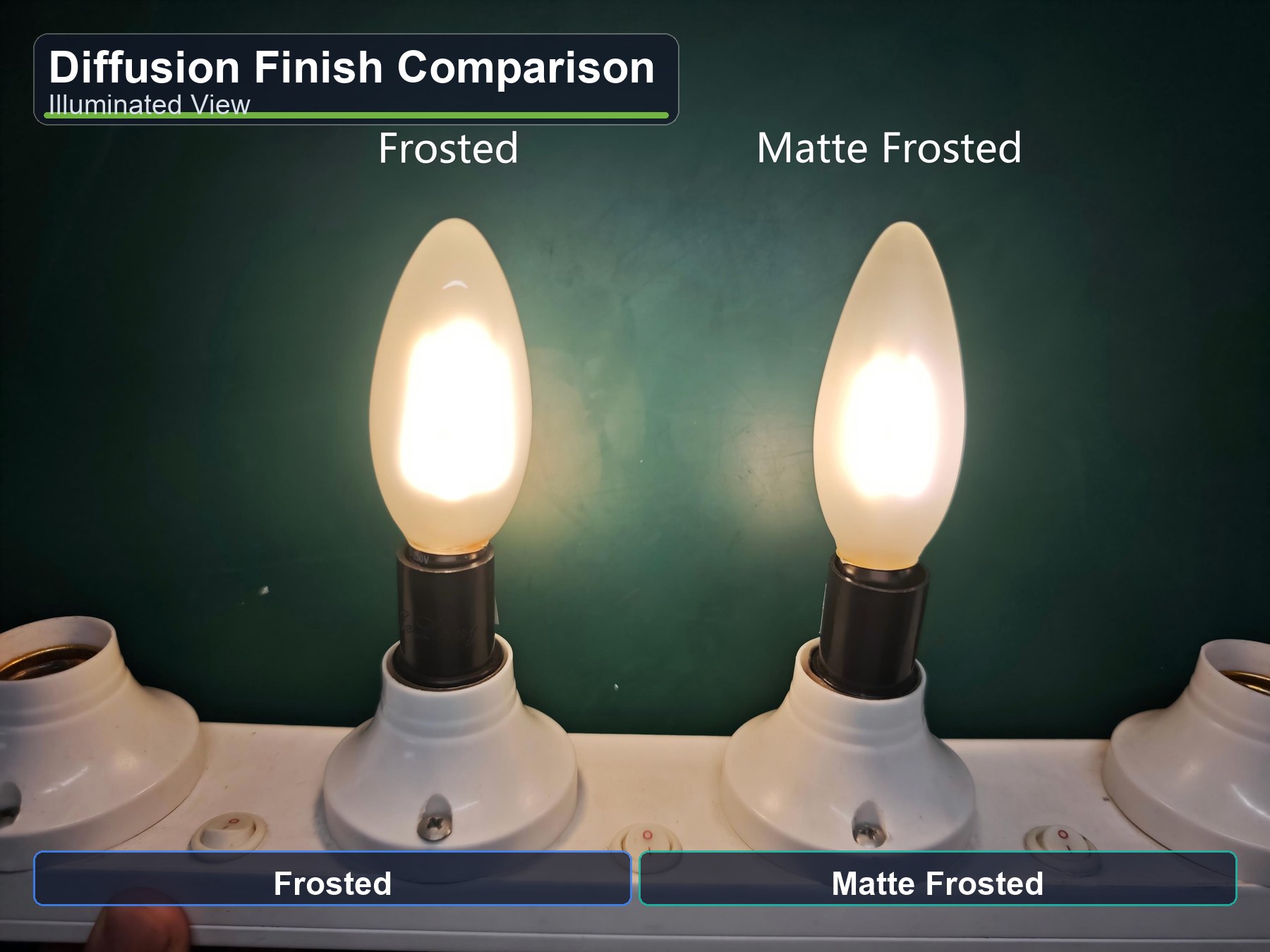
The similar names often create sourcing mistakes, but the two finishes are physically different.
| Feature | Inside frosted | Matte / sand frosted |
|---|---|---|
| Appearance when switched off | Translucent grey | Misty grey |
| Treated surface | Inner glass wall | Outer glass surface |
| Process | Acid etching | Applied exterior finish |
| Outer surface | Smooth | Matte and sanded |
| Internal light shadow | More apparent | Softer and adjustable |
| Reference lumen loss | 2–5% | Approximately 10% |
| Main purpose | Functional diffusion | Decorative atmosphere |
| Practical size guidance | Normally recommended up to G95 | No significant size limitation |
A buyer should therefore not specify only a “frosted bulb.”
A useful purchasing specification should clarify:
- inside frosted or outside frosted
- smooth or sanded external surface
- desired grey appearance
- acceptable internal light-shadow visibility
- final rated lumen output
- bulb shape and dimensions
Opal vs Porcelain
Opal and porcelain are often confused because both can hide the filament and create a broadly glowing white bulb.
The main difference is their surface character.
| Feature | Opal / milk white | Porcelain |
|---|---|---|
| Appearance when switched off | Milk white | Ceramic white |
| Outer surface | Smooth and glossy | Matte and porcelain-like |
| Filament concealment | Strong | Strong |
| Surface reflection | Clearer and more defined | Softer and more diffused |
| Reference lumen loss | 15–20% | 15–25% |
| Practical size guidance | Normally recommended up to G125 for the cleanest appearance | No significant size limitation |
| Design positioning | Familiar soft white bulb | Premium decorative design element |
An opal bulb still looks like a conventional glossy white lamp.
A porcelain bulb is more likely to look like part of the fixture’s material design, even when it is switched off.
Neither finish is universally better.
Choose opal when the project requires a glossy milk-white appearance. Choose porcelain when the bulb is exposed and a quiet, matte, ceramic-like surface is part of the product design.
Practical Size Guidance
| Finish | HongYu Bulb production guidance | Main reason |
|---|---|---|
| Inside frosted | Normally recommended up to approximately G95 | Practical experience with stable glass and consistent acid-etched appearance |
| Opal / milk white | Normally recommended up to approximately G125 for the cleanest appearance | Larger bulbs commonly use hand-blown borosilicate glass, where original glass striations may become visible |
| Matte / sand frosted | No significant practical size limitation | Main challenge is finish uniformity across larger surfaces |
| Porcelain | No significant practical size limitation; sizes above G200 have been produced | Main challenge is consistent surface and illuminated appearance |
These are production recommendations rather than absolute physical limits.
A large opal bulb is technically possible. The concern is whether the hand-blown glass beneath the finish is visually clean enough for the intended product.
Matte-frosted and porcelain finishes can be applied to oversized glass, but larger surfaces require stronger process control.
Handling Matte-Frosted and Porcelain Bulbs
Matte-frosted and porcelain finishes are located on the outside of the bulb, so they require more careful handling than clear or inside-frosted glass.
Porcelain surfaces can retain fingerprints and oily marks. These marks may be difficult to remove completely.
We therefore recommend handling porcelain bulbs with clean gloves during:
- production inspection
- photography
- sample presentation
- installation
- repacking
Alcohol should not be used to clean matte-frosted or porcelain bulbs because it may affect the surface appearance.
A clean, dry and soft cloth is safer, although heavy oily marks on porcelain may still be difficult to remove.
Like all decorative glass bulbs, these finishes can be scratched through sharp contact or rough handling. This does not mean that the finishes are unusually fragile; the glass and finished surface should simply be protected during handling and installation.
Under normal protective packaging and transportation conditions, we have not observed visible marks caused by packaging friction.
We have also not observed yellowing or discoloration after high-temperature aging.
HongYu Bulb does not currently use tape-pull or cross-cut adhesion testing as the standard approval method for these finishes. The statements above are based on our production, packaging and aging experience rather than a formal coating-adhesion certification.
Which Finish Should You Choose?
| Lighting application | Recommended finish | Main reason |
|---|---|---|
| High-output general bulb | Inside frosted | Lowest finish-related lumen loss |
| Household bulb with a lampshade | Inside frosted or opal | The fixture provides additional diffusion |
| Glossy white replacement bulb | Opal / milk white | Familiar appearance with strong filament concealment |
| Artistic exposed pendant | Matte frosted | Misty grey decorative surface |
| Wall light near eye level | Opal or porcelain | Internal filament is less apparent |
| Shade-free table lamp | Porcelain | Matte surface and uniform luminous appearance |
| Oversized decorative globe | Matte frosted or porcelain | No significant practical size limitation |
| Premium fixture collection | Porcelain | Consistent ceramic-like finish across different shapes |
| Fixture where maximum brightness matters | Inside frosted | Better light transmission |
| Design requiring a soft grey bulb when off | Matte frosted | Grey sanded surface remains part of the design |
The finish should be selected for the required visual effect.
The manufacturer should then engineer the finished bulb to meet the project’s required final:
- wattage
- lumen output
- CCT
- CRI
- dimming performance
A customer ordering a 500-lumen porcelain bulb needs the completed porcelain lamp to deliver the agreed final specification. The customer should not need to calculate the output by subtracting a percentage from a clear-glass version.
What Should Buyers Check Before Approving Samples?
A finish should not be approved from one unlit sample.
1. Final product parameters
Confirm the finished bulb’s:
- wattage
- lumen output
- CCT
- CRI
- dimming performance
2. Switched-off appearance
Check:
- grey or white color
- glossy or matte surface
- texture consistency
- glass lines
- fingerprints
- visible marks
3. Switched-on appearance
Look for:
- filament visibility
- central light shadow
- bright spots
- uneven diffusion
- finish differences
- glass striations
4. Real-fixture performance
Install the bulb in the actual pendant, wall light or table lamp.
A bulb that looks good in a test holder may produce a different result once it is surrounded by metal, glass, fabric or reflective fixture parts.
5. Normal viewing position
Evaluate the lamp from the height and distance at which the end user will actually see it.
6. Several samples together
Compare multiple bulbs from the same sample batch, especially when they will be used in:
- pendant clusters
- chandeliers
- vanity lights
- multi-arm wall fixtures
7. Low-level dimming
Some internal shadows become easier to see when the bulb is dimmed.
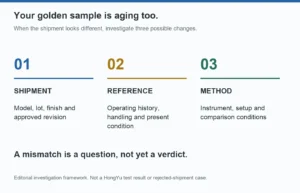
8. Golden-sample control
Keep one approved physical sample as the visual reference for mass production.
Frequently Asked Questions
Is a frosted LED bulb the same as a milk-white bulb?
No.
Under the manufacturing definitions used in this article, an inside-frosted bulb has an acid-etched inner glass surface. A milk-white or opal bulb uses white diffusion material inside the glass.
Inside frosting retains more light but leaves more of the central light shadow visible. Opal provides stronger filament concealment and has a glossy milk-white appearance.
Is milk white the same as opal?
The two terms are often used interchangeably in the bulb market, but suppliers may use different manufacturing processes.
Buyers should confirm:
- where the diffusion material is located
- whether the external surface is glossy or matte
- how the bulb appears when switched off
- how much internal shadow remains when switched on
Is a porcelain LED bulb made from porcelain?
No.
It is a glass bulb finished using a proprietary external porcelain coating formula that creates a ceramic-like matte appearance.
Is matte frosted white or grey?
Matte-frosted glass normally appears grey, misty or sanded when switched off. It should not be described as the same white finish as opal or porcelain.
Which finish loses the least light?
Inside frosting normally has the lowest finish-related loss. HongYu Bulb’s current production reference is approximately 2–5%.
However, buyers should approve the final rated lumen output of the completed bulb rather than selecting a finish only by its reference transmission loss.
Which finish is best for a large decorative bulb?
Matte frosted and porcelain are generally the most practical choices for oversized decorative bulbs because their finishing processes have no significant practical size limitation.
Opal can also be used, but hand-blown borosilicate glass above approximately G125 may contain visible striations.
Which finish hides the filament best?
Opal and porcelain both provide strong filament concealment.
Opal produces a glossy milk-white surface. Porcelain produces a matte ceramic-white surface and is often preferred when the bulb itself is a visible part of a premium fixture.
Can porcelain bulbs be touched by hand?
They can be handled, but clean gloves are recommended.
Porcelain surfaces can retain fingerprints and oily marks, which may be difficult to remove completely.
Can porcelain or matte-frosted bulbs be cleaned with alcohol?
Alcohol is not recommended because it may affect the appearance of the finish.
Use clean gloves to prevent marks and, where necessary, use a clean, dry and soft cloth.
Will porcelain turn yellow after long-term operation?
We have not observed yellowing or discoloration after high-temperature aging in our production experience.
This statement is based on manufacturing and aging observations rather than a separate third-party coating certification.
References
Conclusion
Inside frosted, opal, matte frosted and porcelain are four different diffusion finishes—not four versions of the same white bulb.
- Inside frosted is translucent grey, externally smooth and suitable when useful light output remains important.
- Opal or milk white is glossy white and suitable when strong filament concealment is required.
- Matte frosted is misty grey and gives the bulb a decorative sanded appearance.
- Porcelain is ceramic white, matte and designed to make the complete bulb surface appear as one luminous object.
The best finish depends on what the fixture needs to achieve.
A functional bulb inside a shade may benefit from inside frosting. A glossy replacement lamp may suit opal. An artistic pendant may require matte frosting. A premium exposed wall light or table lamp may be completed by porcelain.
The finish should define the visual effect. The manufacturer should then deliver the required final wattage, lumen output, CCT and dimming performance.
At HongYu Bulb, we develop LED filament bulbs for lighting brands, importers, wholesalers and fixture manufacturers. If you are still comparing decorative surface options beyond diffusion finishes, our complete decorative bulb finish guide gives broader context for clear, amber, smoky, mirror-top and metallic effects.
If your project is mainly about transparent vintage styles rather than white diffusion finishes, the amber vs clear glass Edison bulb guide may be a better starting point.
To move from finish selection to sourcing, review HongYu Bulb’s LED filament bulb product range or contact HongYu Bulb with the fixture image, bulb shape, final lumen requirement, CCT, voltage, dimming requirement and preferred surface appearance. We can compare the available finishes and prepare finished samples for real-fixture evaluation.