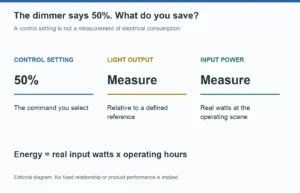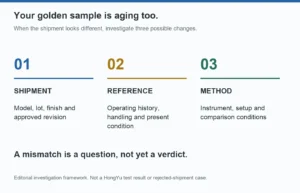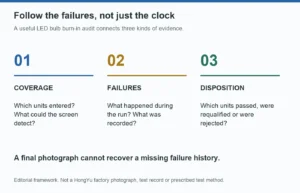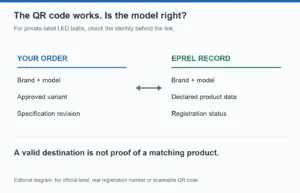
Featured image: Original editorial illustration. Two years is a review scenario, not a universal LED bulb shelf-life limit.
A delayed hotel project restarts. The distributor has the right decorative bulbs in stock, still boxed and never installed. They were manufactured two years ago. Can the warehouse ship them as usual?
Age alone cannot answer that question. Release depends on the exact product, the manufacturer's storage requirements, the stock's history and its verified condition.
Unused stock is not automatically defective. It is also not automatically unchanged. The practical task is to distinguish serviceable inventory from stock that needs investigation, without scrapping good lamps or sending unresolved problems to a customer.
Operating Life Is Not a Shelf-Life Specification
A claim such as "25,000 hours" describes operation under defined assumptions. It is not a promise that a lamp can wait indefinitely in any warehouse and then deliver those hours.
DOE's LED reliability guidance treats the lamp as a system: electronics, optics, connections and other components can affect performance, not just the LED emitters.[1] A storage assessment must similarly consider the finished product, rather than relying only on the filament's operating-life figure.
Keep three records separate:
| Record | What it tells the buyer | What it does not establish |
|---|---|---|
| Manufacturing and storage history | Calendar age, locations and recorded exposure | Remaining operating life by subtraction |
| Operating history | Factory checks, demonstrations or actual service where recorded | Whether storage conditions were acceptable |
| Approved product revision | Which design and specification the stock represents | Whether it still matches a changed customer order |
Do not subtract two calendar years from a 25,000-hour rating. Do not reset manufacturing age when stock moves to another warehouse or receives a replacement carton. Also distinguish genuinely uninstalled inventory from display samples and customer returns; "zero hours" should not conceal an unknown service history.
Buyer judgment 1: Request the finished lamp's storage requirements and any review interval. Never derive a universal shelf life from its rated operating hours.
What Can Change While a Bulb Is Unpowered?
One relevant mechanism exists in aluminum electrolytic capacitors, where they are used in a driver. Nippon Chemi-Con explains that storage conditions can affect characteristics, including leakage current, and that elevated temperature can accelerate deterioration.[2]
This is a reason to ask the lamp manufacturer about its design. It is not evidence that every LED filament bulb contains the same capacitor, nor that a particular HongYu model has deteriorated. Component construction, prior storage and the assembled circuit all matter.
There is a separate packaging question. The protection qualified when a carton was new may not describe a carton after moisture exposure, crushing or repeated handling. ISTA includes atmospheric conditioning in packaging evaluation and explains that such conditioning investigates package performance under the chosen conditions.[3] A damaged carton should therefore trigger examination of the affected stock and its protection, not just a cosmetic reboxing exercise.
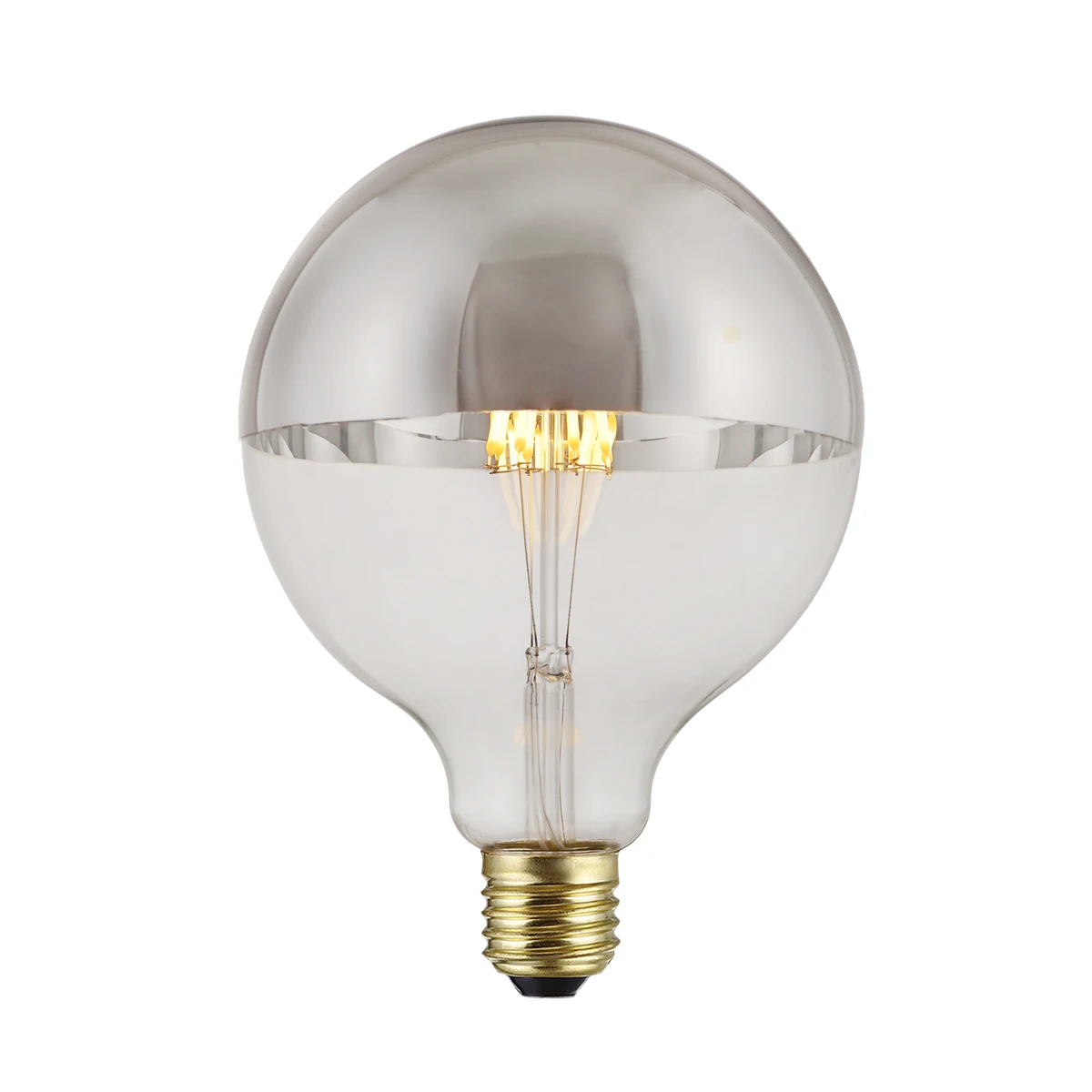
For decorative lamps, appearance is part of acceptance. When inspecting top-mirror LED bulbs, examine the mirror surface, glass, cap and points of contact with the insert. Record scratches, discoloration, corrosion or looseness against the agreed criteria. Do not assume an observed defect was caused by storage without investigating its history.
Buyer judgment 2: Treat missing exposure history or visible damage as a reason to investigate. Neither a clean box nor a successful first switch-on establishes the condition of the whole lot.
Compare the History, Not Just the Date
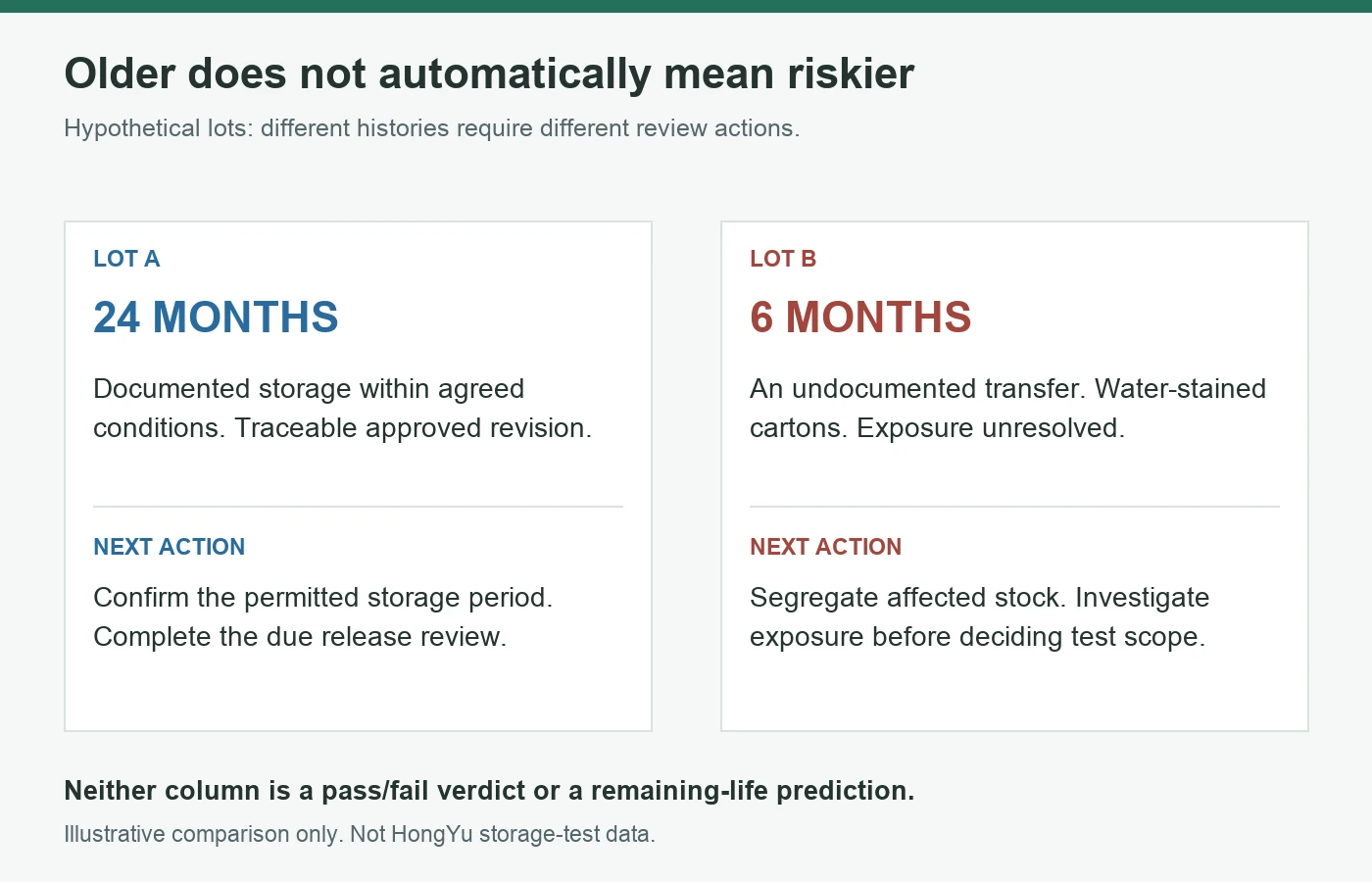
Consider two hypothetical lots of the same catalog item:
| Review point | Lot A | Lot B |
|---|---|---|
| Time since manufacture | 24 months | 6 months |
| Storage record | Documented conditions within the agreed requirements | A transfer is undocumented; some cartons show water staining |
| Product identity | Traceable lot and approved revision | Lot identity available, affected quantity unresolved |
| Next action | Check the permitted storage period and complete the due release review | Segregate affected stock and investigate exposure before deciding the test scope |
The table does not prove that Lot A is good or Lot B is bad. It shows why sending the newer lot first is not a substitute for review. Lot A still needs confirmation that its storage period is permitted. Lot B's shorter age does not resolve the exposure concern.
Separate stock by manufacturing lot, product revision and exposure group. Do not mix cartons from a suspect pallet with clean stock and then sample the combined inventory as though it had one uniform history. Keep the affected group visible through inspection, any corrective work and final disposition.
If there is suspected water entry, corrosion, cracked glass or a loose cap, do not energize the lamp to see whether it works. Segregate it and obtain qualified assessment and the manufacturer's disposition. Electrical tests belong with competent personnel using an appropriate controlled setup.
A Practical Release Review for Stored LED Bulbs
The following is a procurement workflow, not a claim about an existing HongYu test program. Agree the sampling, test conditions and acceptance criteria for the actual product and risk.
| Stage | What to check | Record needed |
|---|---|---|
| Identify | Item, voltage, finish, dimming option, lot and revision | Link to purchase specification and previous approval |
| Review history | Manufacture date, receipt dates, locations, incidents and storage limits | Known facts and unresolved gaps, kept separate |
| Inspect without power | Cartons, inserts, labels, glass, finish, cap and visible damage | Sample IDs, photographs and affected quantities |
| Verify function and performance | Agreed electrical, startup and optical checks on suitable samples | Conditions, individual results and failures |
| Decide and release | Accept, hold, investigate, repackage where justified, or reject | Authorized disposition and traceable stock status |
Use the exact approved item from the EU standard filament bulb range as the comparison basis. A current catalog page is not sufficient if the stored lot uses an older design. Compare measured power, light output and color against its applicable specification, not an assumed match to today's sample.
For stored dim-to-warm LED bulbs, include the intended controller and operating points where compatibility is part of the order. Confirm the expected startup and color response at those settings. A full-output light-up check does not answer the customer's low-end dimming question.
A passing retest can support the specified release decision. It cannot, by itself, calculate a new remaining lifetime or erase an unexplained exposure incident.
Buyer judgment 3: Keep each affected group identifiable until its disposition is complete. Let the history determine the investigation, rather than applying one convenient light-up check to every carton.
Do Not Invent a Warehouse "Rejuvenation" Procedure
Component guidance sometimes discusses voltage treatment after extended storage. Nichicon, for example, explains this in its aluminum electrolytic capacitor application guidance.[4]
That is not permission to open a sealed mains-powered bulb, apply an improvised voltage sequence or leave questionable inventory powered overnight. A component procedure must not be transferred to a finished lamp without the lamp manufacturer's engineering approval. Nor does ordinary burn-in reverse every possible form of deterioration.
Ask the manufacturer for a written assessment identifying the applicable model, lot history, required checks and disposition. If it specifies conditioning or rework, that work should be performed by qualified personnel under an approved procedure, with records and subsequent acceptance testing.
Buyer judgment 4: A retest checks condition; it does not reset age. Any proposed conditioning or rework needs model-specific authorization, not a generic internet instruction.
Make Stock Rotation Follow Release Status
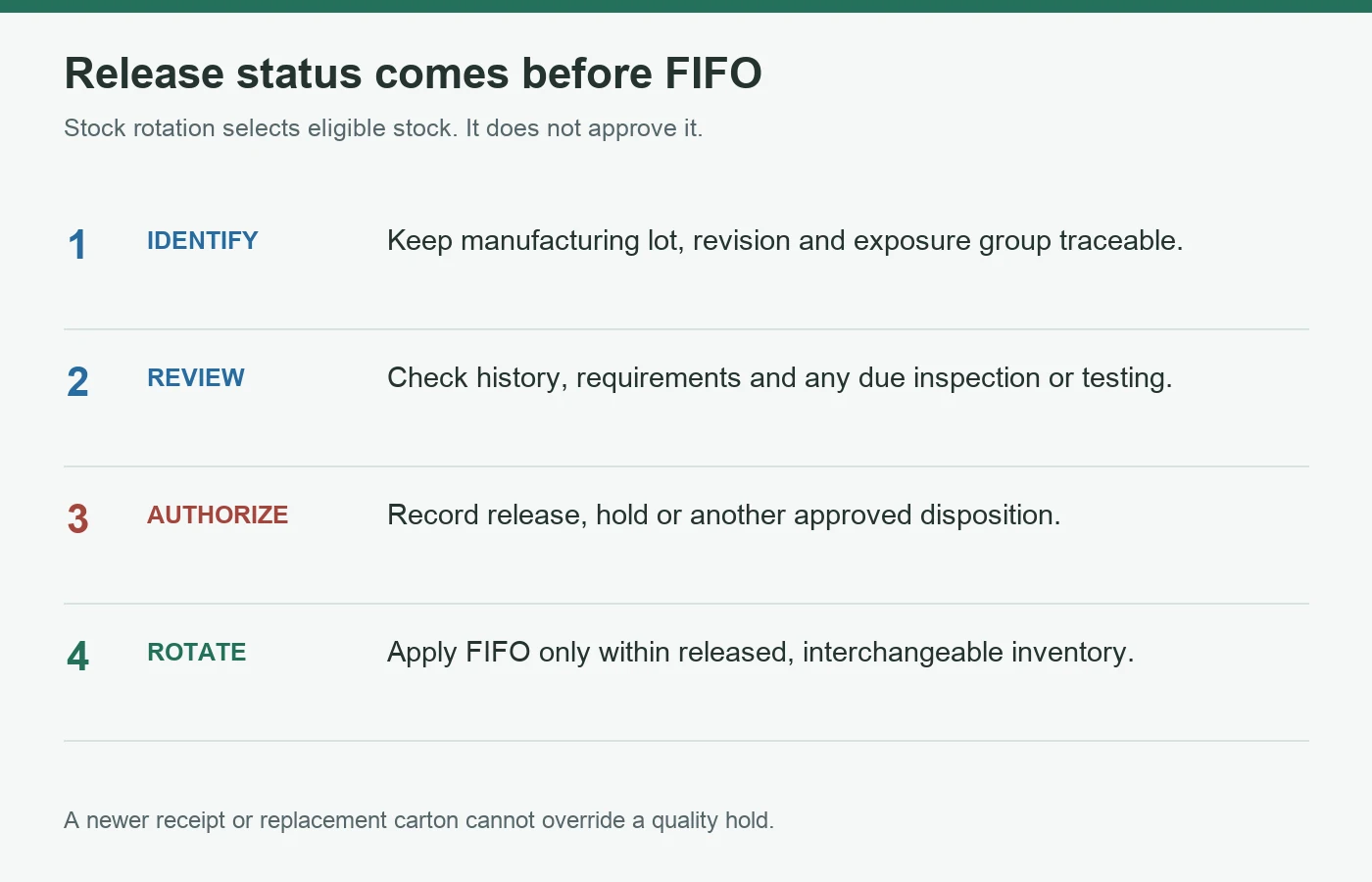
First-in, first-out helps prevent inventory from being forgotten. But receipt order can differ from manufacturing order, and neither date overrules a quality hold.
Use FIFO within released, interchangeable stock. Where the manufacturer or your quality agreement defines a review date, make it visible to warehouse staff. Call it a review date unless it is genuinely an expiry date; reaching it should trigger the agreed action, not an invented universal disposal rule.
GS1's traceability standard distinguishes product or lot identity from events such as shipment and receipt, with the associated dates and parties.[5] A practical stock record should likewise preserve both manufacturing identity and movement history.
For a delayed project, reconfirm the order as well as the lamps: voltage, controller, finish, labels and destination may have changed. Clarify the warranty start date and remaining commercial coverage in writing; do not assume that repacking or later installation restarts it.
Buyer judgment 5: Release status comes before stock rotation. A recent receipt, replacement carton or successful spot check must not override a documented hold.
Add These Terms Before the Next Bulk Order
| Purchase-order topic | Agreement to obtain |
|---|---|
| Storage envelope | Finished-product temperature, humidity, condensation and handling restrictions |
| Age and review | Date-code meaning, permitted storage period if specified, and review triggers |
| Delayed delivery | Who tracks conditions while the factory or distributor holds stock |
| Incident handling | Segregation, notification, investigation and authorization responsibilities |
| Release checks | Applicable revision, sampling, test conditions, limits and records |
| Commercial coverage | Warranty start, delay arrangements and responsibility for inspection or rework costs |
Request the manufacturer's requirements before selecting warehouse limits. Do not borrow a capacitor datasheet's numbers and present them as the storage specification for every finished bulb.
Conclusion
Two years in a warehouse is a question to investigate, not an automatic pass or expiry date. Confirm the model-specific requirements, reconstruct the lot's history, inspect and test where justified, and document the release decision.
The most useful distinction is not simply old versus new. It is released stock with traceable evidence versus stock with unresolved conditions. That distinction protects both the customer's installation and the value of usable inventory.
References
- U.S. Department of Energy. Lifetime and Reliability: Solid-State Lighting Technology Fact Sheet. Back
- Nippon Chemi-Con. Aluminum Electrolytic Capacitor Storage Conditions and Shelf Life. Component guidance, not a finished-lamp shelf-life declaration. Back
- ISTA. Atmospheric Preconditioning and Atmospheric Conditioning. Back
- Nichicon. Application Guidelines for Aluminum Electrolytic Capacitors, storage discussion. Component-level context only; not a warehouse procedure for LED bulbs. Back
- GS1. Global Traceability Standard. Back