Amber and smoky glass are two of the most popular tinted finishes used on decorative LED filament bulbs. Both create atmosphere, but they do not produce the same type of light or serve the same product purpose.
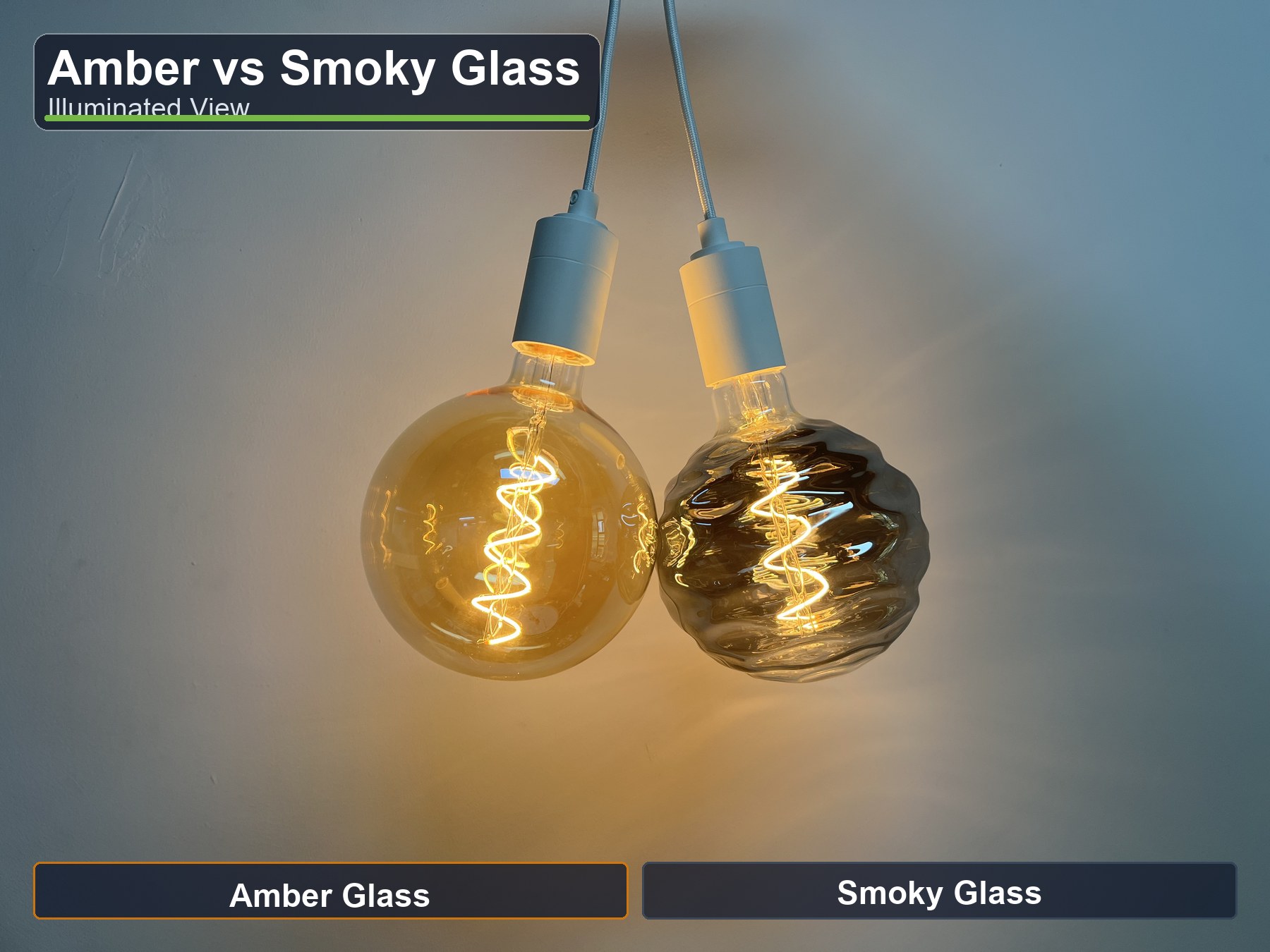
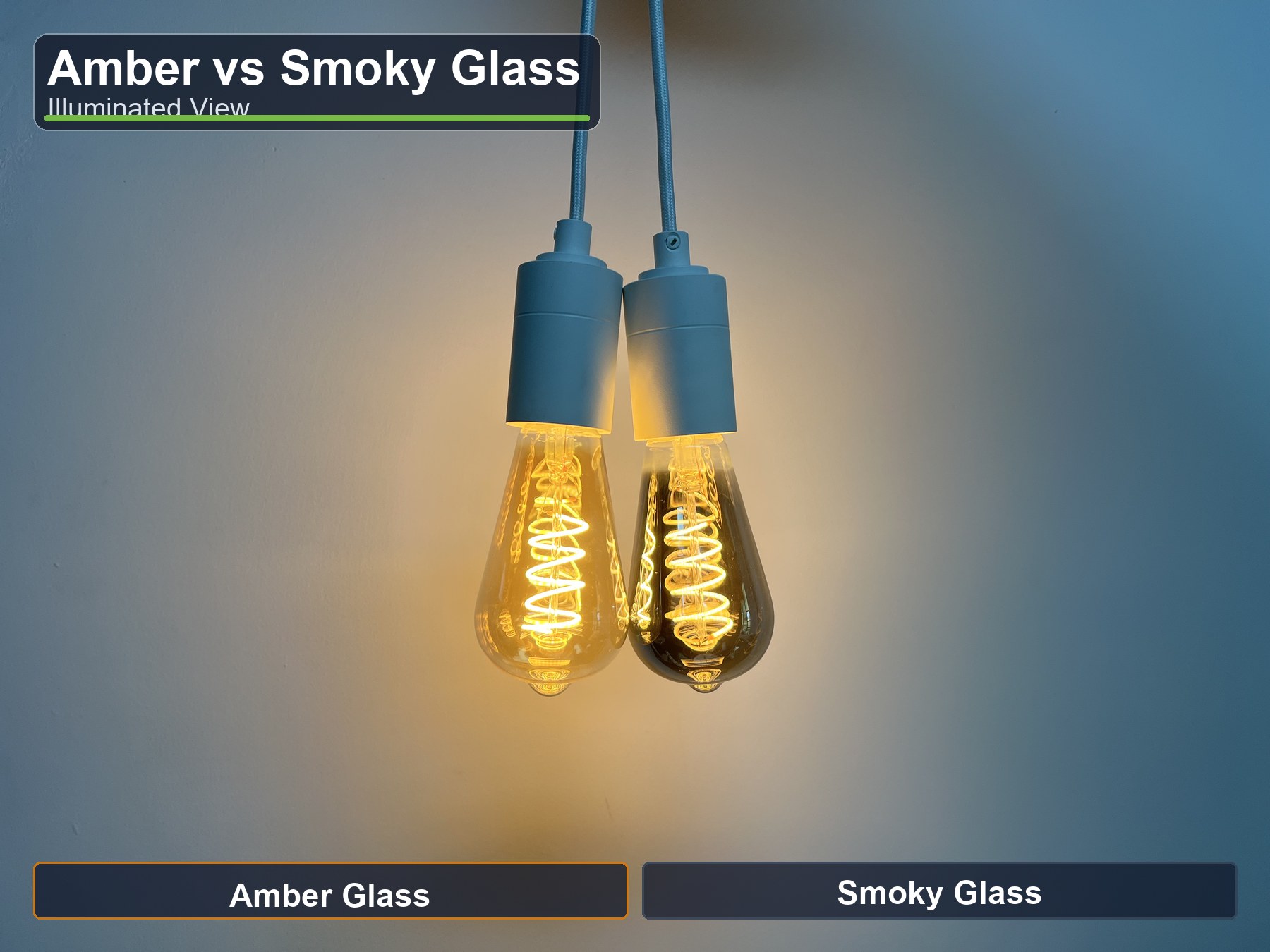
Amber glass is warmer, brighter and more versatile. It preserves most of the useful light and keeps the filament clearly visible, even when the bulb is switched off.
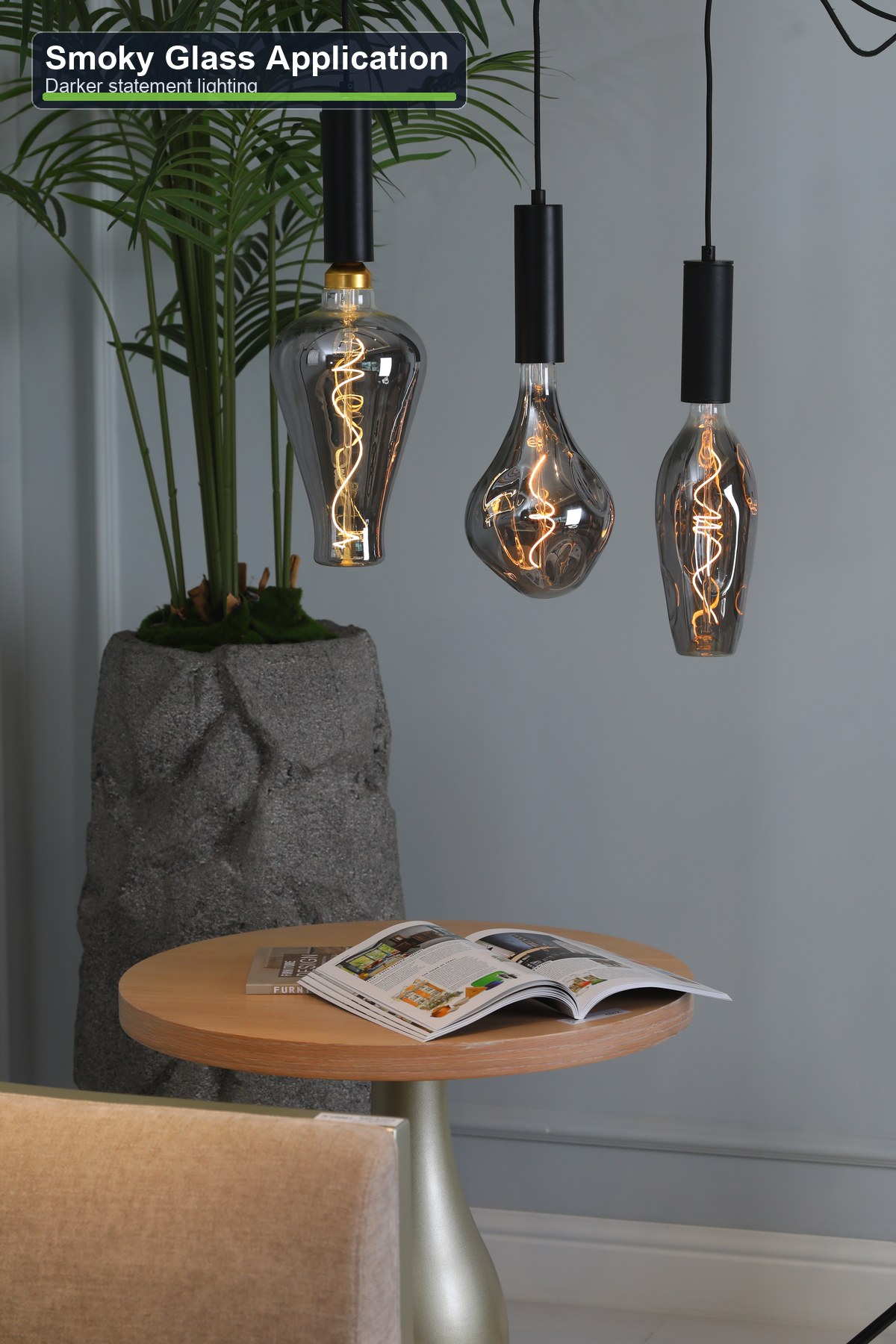
Smoky glass is darker and more dramatic. Its grey electroplated surface blocks much more light and partially conceals the filament when unlit, but reveals an attractive glowing outline after the bulb is switched on.
The practical selection rule is simple:
- Choose amber when the bulb must provide warm decorative light and still contribute useful illumination.
- Choose smoky when the bulb itself is the visual object and a lower-light, more mysterious effect is acceptable.
For a wider comparison of decorative bulb surfaces, see our complete decorative bulb finish guide.
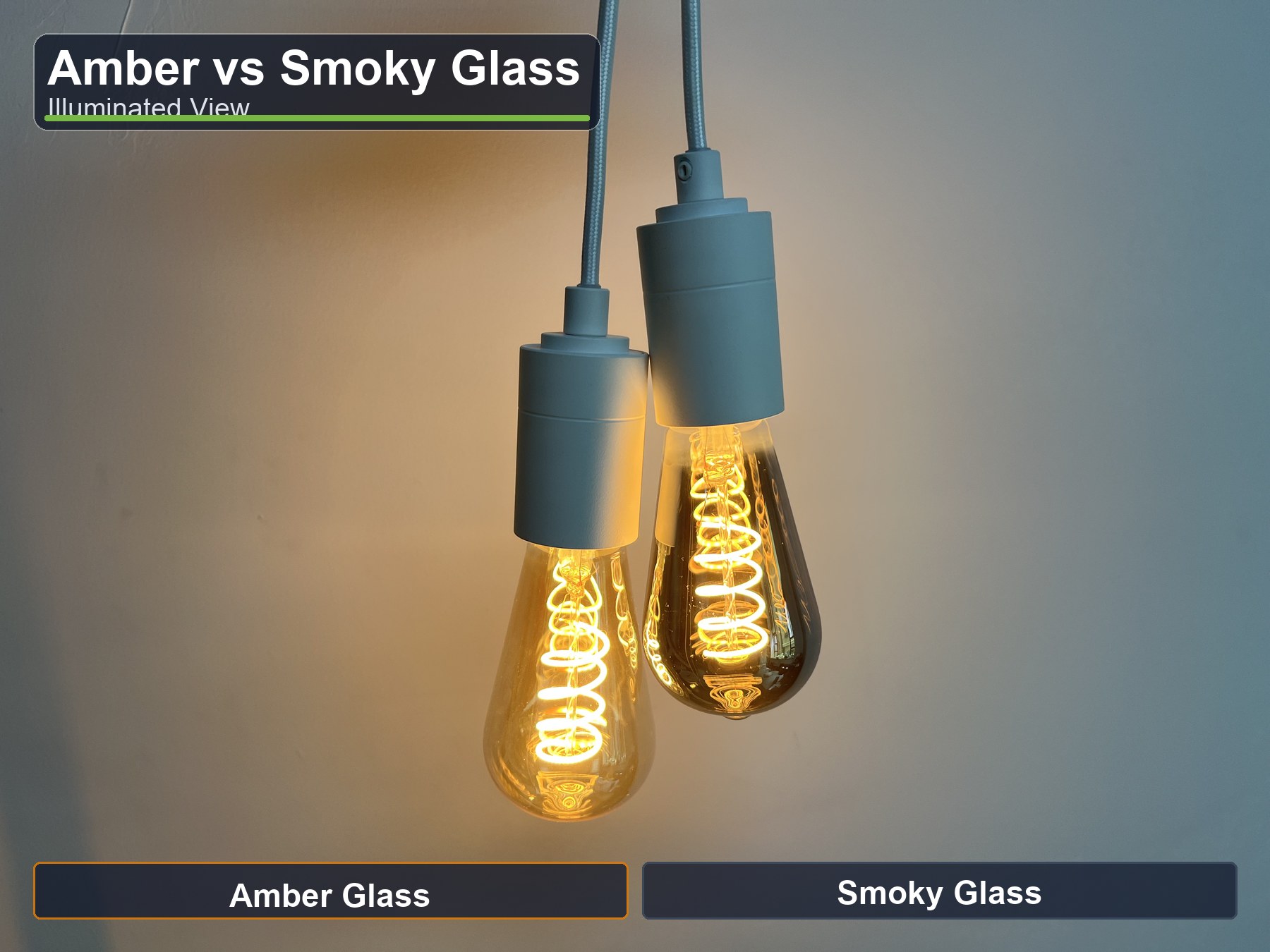
Amber vs Smoky Glass: Quick Comparison
| Feature | Amber / gold glass | Smoky / smoked glass |
|---|---|---|
| Finish location | Outside of the glass | Outside of the glass |
| Main production process | Sprayed exterior color coating followed by heat curing, or electroplating | Electroplating |
| Appearance when switched off | Warm amber-brown and relatively transparent | Dark smoke grey and less transparent |
| Filament visibility when switched off | Clear | Reduced |
| Illuminated impression | Warm, bright and vintage | Darker, layered and atmospheric |
| Typical lumen loss | 10–15% | 50–70% |
| Typical CCT shift | Approximately 200K warmer | Approximately 100K warmer |
| Common commercial pairing | Straight filament and higher output | Flexible filament and lower output |
| Practical size restriction | No significant finish-related limitation | No significant finish-related limitation |
| Market position | Broad global demand | Stronger demand in continental Europe; less common in the US |
| Best role | Decorative lighting with usable output | Low-lumen mood and statement lighting |
The lumen-loss figures explain the optical behavior of the two finishes. They should not be used by the buyer to calculate the specification of an actual product.
For purchasing and sample approval, the important values are the final wattage, lumen output, CCT, CRI and dimming performance of the completed bulb.
What the HongYu ST64 Test Reports Show
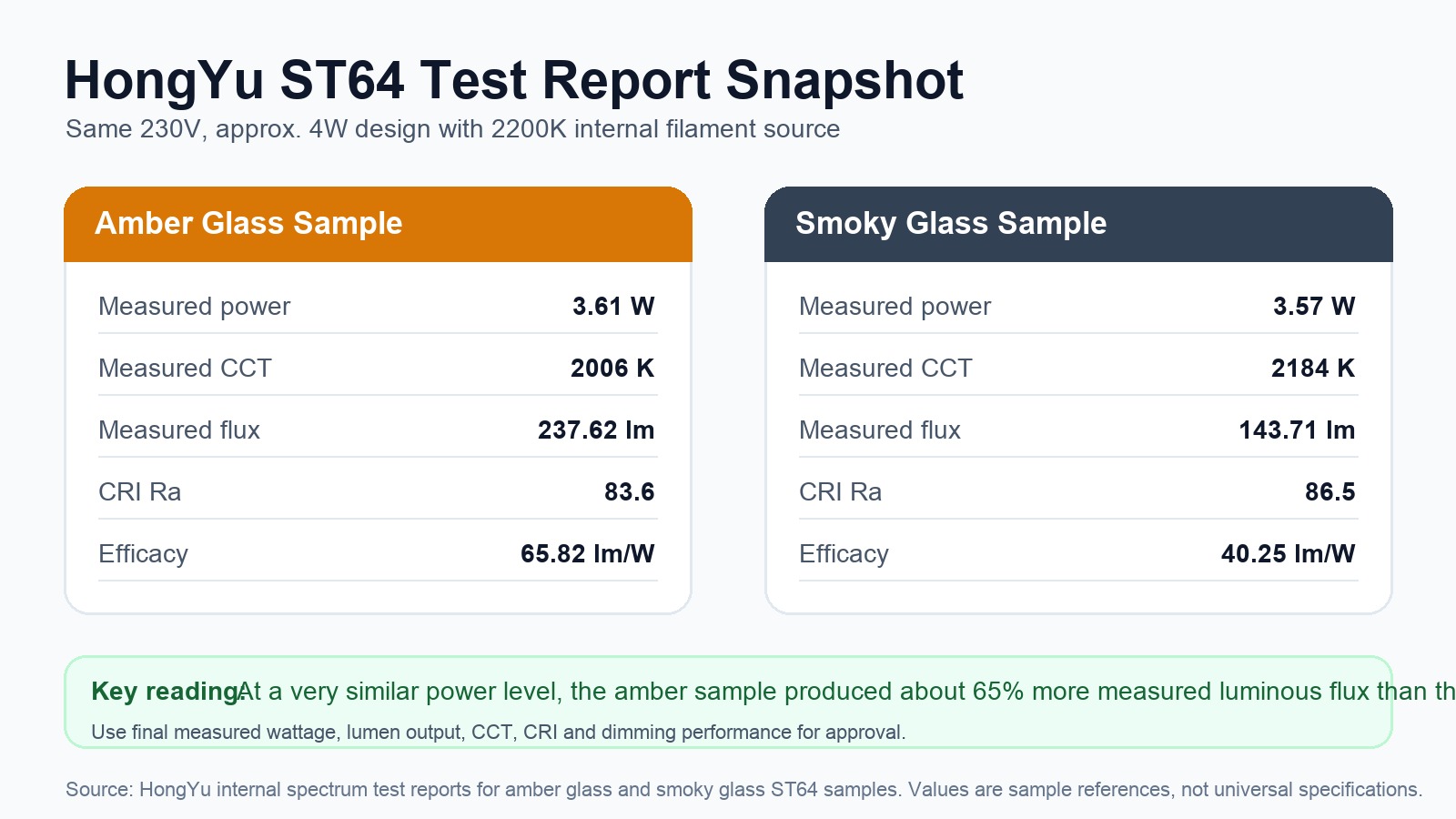
To make the comparison more concrete, HongYu tested amber and smoky ST64 samples using a 230V, approximately 4W design with a 2200K internal filament source. The two samples were not identical finished products for sale, but they show the direction clearly: amber kept much more usable light, while smoky created a darker decorative result.
| Sample | Power | Measured CCT | Measured flux | Ra | Efficacy | Power factor |
|---|---|---|---|---|---|---|
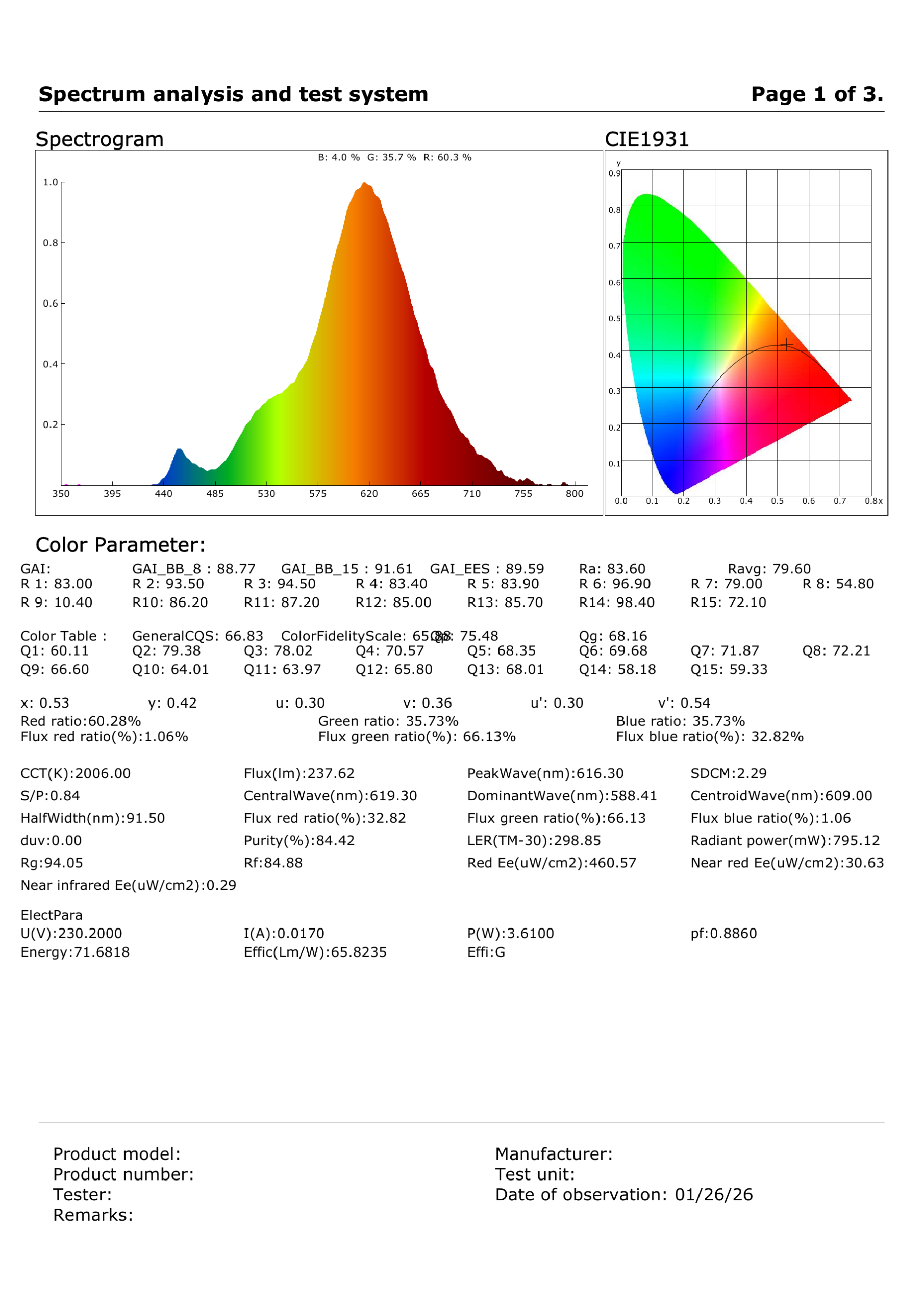
| Amber glass with 2200K filament | 3.61W | 2006K | 237.62 lm | 83.6 | 65.82 lm/W | 0.886 |
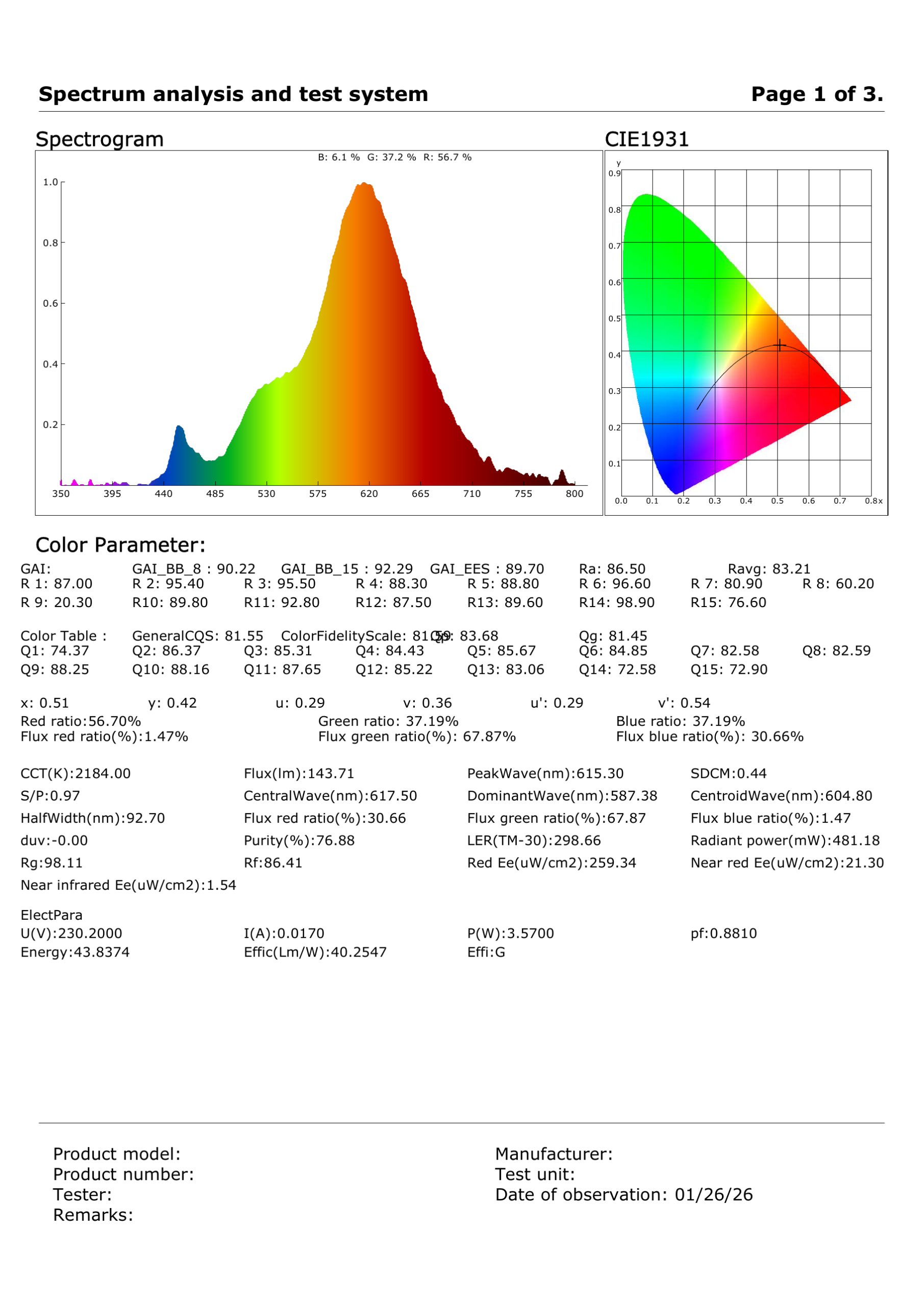
| Smoky glass ST64 with 2200K filament | 3.57W | 2184K | 143.71 lm | 86.5 | 40.25 lm/W | 0.881 |
The amber sample produced about 65% more measured luminous flux than the smoky sample at a very similar power level. This does not replace full product approval for a buyer's final model, but it supports the practical sourcing rule: amber is usually easier to use when useful illumination still matters, while smoky glass should be treated as a darker decorative finish.
Original Test Report Screenshots
For buyers who want to check the source evidence directly, the original first-page report screenshots are shown below. The key comparison is not only the glass color, but how much luminous flux remains after the same warm filament light passes through each finish.
What Is an Amber Glass LED Bulb?
Amber and gold are two common market names for the same general finish category.
At HongYu, amber can be produced in two ways:
- an exterior color coating is sprayed onto the glass and then heat-cured;
- the exterior glass is electroplated to create the required amber or gold tone.
Both processes create a finish on the outside of the glass.
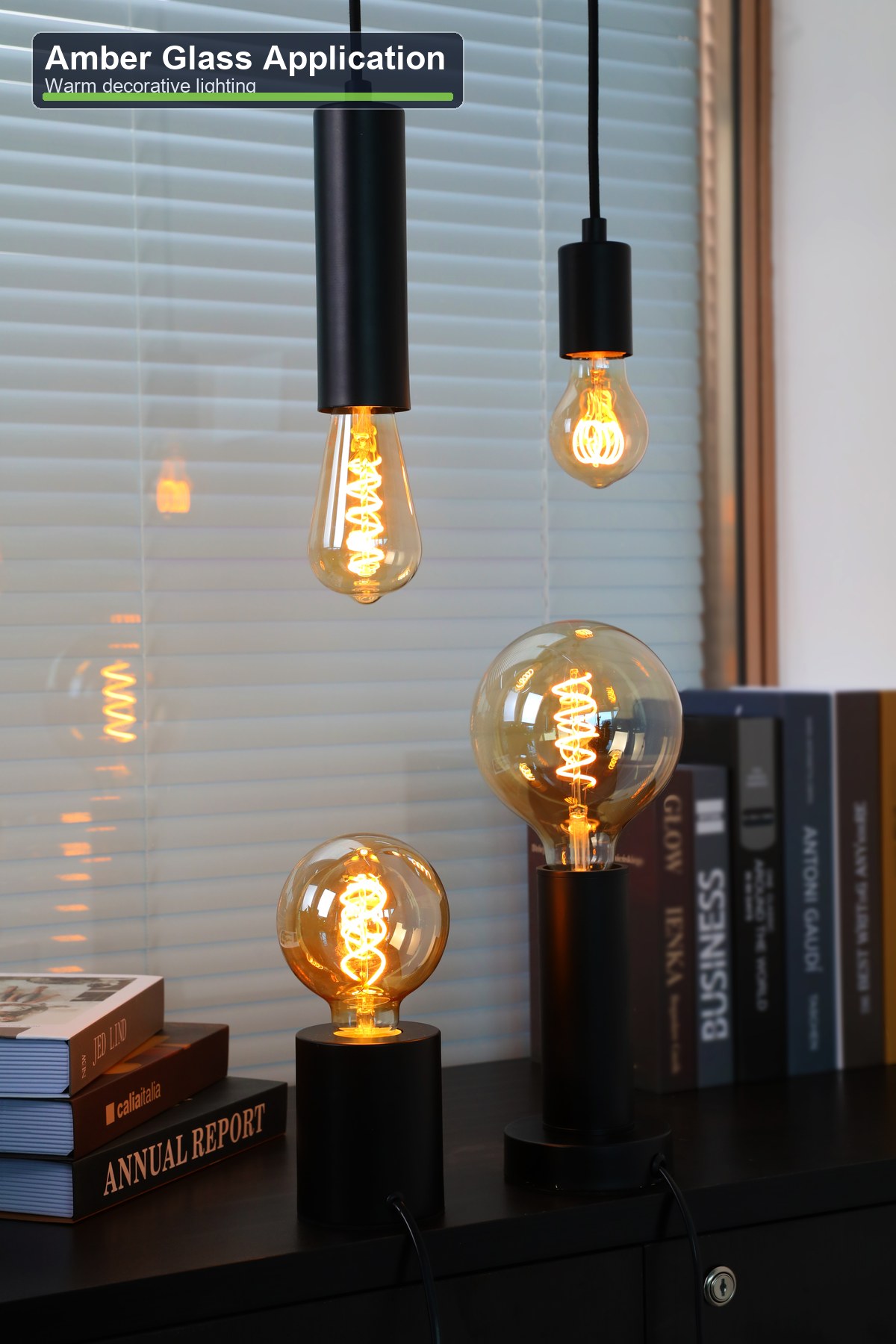
When the bulb is switched off, amber glass remains transparent enough for the filament structure to be seen clearly. When illuminated, the glass makes the light appear warmer and gives the bulb the familiar character associated with traditional Edison lighting.
Based on our production experience:
- typical lumen loss is approximately 10–15%
- the finished CCT may appear approximately 200K warmer
- amber can be applied to almost any standard or oversized bulb shape
- it can support both low-lumen decorative bulbs and substantially brighter products
Amber is therefore not limited to dim mood lighting.
A high-output amber bulb can still provide practical illumination when the LED system, driver and thermal design are developed around the required final lumen output. Calex, for example, currently lists a gold-finish decorative bulb with 1100 lumens at 2100K[1], showing that tinted amber glass can be used for both atmosphere and useful light.
Amber is often paired with straight filaments in brighter vintage designs because the filament remains clearly visible through the glass. Flexible, spiral, twisted and other decorative filament structures can also be used.
Related HongYu ranges:
- EU Vintage Straight LED Filament Bulbs
- EU Vintage Flexible Filament Bulbs
- Amber vs Clear Glass Edison Bulbs
What Is a Smoky Glass LED Bulb?
Smoky glass is also described in the market as:
- smoked glass
- smoke grey
- smoky grey
- smoked grey glass
These names usually refer to the same general dark-grey finish category, although the actual depth and reflectivity can vary between suppliers.
At HongYu, smoky glass is produced through electroplating on the outside of the glass.
When switched off, the dark grey surface makes the filament less visible than it is through amber glass. When switched on, the illuminated filament appears through the electroplated layer, creating a layered and more mysterious effect.
Smoky glass should not simply be described as a warmer version of amber glass. Its main visual effect is to make the bulb darker.
Based on our production experience:
- typical lumen loss is approximately 50–70%
- the final CCT may shift approximately 100K warmer
- there is no significant finish-related size limitation
- it can be used with straight, vertical, spiral, twisted or flexible filaments
- the market normally pairs it with lower lumen output
The high optical loss makes smoky glass difficult to position as a bright replacement bulb. Even when the internal LED source is efficient, much of the light is absorbed or reflected by the dark finish.
This is visible in current decorative products. Calex lists one 4W, 1800K series in which the gold version provides up to 190 lumens while the smoky version provides 70 lumens[2]. The exact values are specific to that product, but the comparison illustrates the broader market positioning: amber is brighter, while smoky is designed for subtler ambience.
View HongYu’s amber and smoky flexible-filament range.
Which Finish Looks Warmer?
Amber looks warmer.
The amber finish changes the visible color of the glass and the light passing through it. It works naturally with:
- brass
- bronze
- wood
- leather
- antique finishes
- traditional hospitality interiors
Tala describes its tinted filament glass as producing a warm amber glow that adds atmosphere[3], while its clear version provides brighter output for functional spaces.
Smoky glass can still be combined with very warm LEDs such as 1800K or 1900K, but the grey finish itself mainly reduces transmission and adds visual depth.
A smoky bulb may therefore have a lower labelled CCT than an amber bulb while still looking visually darker rather than more amber.
Which Finish Is Brighter?
Amber is substantially brighter when the internal light source is comparable.
A typical 10–15% amber loss leaves most of the useful light available. A 50–70% smoky loss changes the product into a much more decorative, lower-output lamp.
This creates a clear product-development rule:
| Requirement | Better choice |
|---|---|
| Warm vintage appearance | Amber |
| Useful decorative illumination | Amber |
| Filament clearly visible when switched off | Amber |
| High-lumen decorative bulb | Amber |
| Dark grey premium appearance | Smoky |
| Flexible filament visible mainly when illuminated | Smoky |
| Low-lumen statement lighting | Smoky |
The buyer should still specify the required final output.
A smoky bulb should not be approved only because it looks attractive in a sample holder. It should be installed in the actual fixture and tested under realistic room conditions.
Where Does Each Finish Work Best?
Choose amber for warm and versatile decorative lighting
Amber is generally the safer choice for:
- restaurants and cafés
- hotel guest rooms
- residential pendants
- brass, bronze and wood fixtures
- vintage and industrial collections
- chandeliers with visible filaments
- decorative products that still need useful output
Amber has been established for longer, has greater global sales volume and is easier to use across different lighting categories.
It is also easier for buyers to understand. Customers normally expect amber glass to look warm, transparent and vintage.
Choose smoky for darker, design-led lighting
Smoky glass is especially suitable for:
- boutique hotels
- bars and lounges
- graphite, black and dark-metal fixtures
- statement pendants
- low-lumen table lamps
- decorative clusters
- designs where a flexible filament should glow through a dark glass layer
Smoky glass is particularly popular in continental Europe. In our export experience, it is less common in the US, where buyers more often expect a decorative bulb to provide greater useful output.
A small smoky candle bulb is not automatically too dark, and a large smoky globe does not automatically create a better result.
Bulb shape should match the proportions of the fixture. Finish selection should be based on the required brightness and visual character.
Does Bulb Size Limit Amber or Smoky Glass?
Neither finish has a significant practical size limitation.
Amber and smoky finishes can be applied to:
- candle bulbs
- standard A-shape bulbs
- ST vintage bulbs
- tubular bulbs
- G80, G95 and G125 globes
- oversized decorative glass shapes
Large bulbs are not automatically more suitable for smoky glass.
The larger surface may make the finish visually impressive, but it also makes color control more demanding. In our production experience, large smoky bulbs are generally harder to control than small bulbs.
Does Filament Type Affect the Choice?
There is no technical rule that amber must use straight filaments or smoky glass must use flexible filaments.
Both finishes can be combined with:
- straight filaments
- vertical filaments
- spiral filaments
- twisted filaments
- flexible filaments
The difference is mainly commercial positioning.
Amber transmits more light and keeps the internal structure visible when switched off. It is therefore often used with straight filaments and higher-output vintage designs.
Smoky glass partially hides the filament when off but makes an illuminated flexible filament look dramatic through the grey layer. It is therefore often used for lower-output decorative products.
For a crystal-clear filament display—particularly at CCTs above 4000K—clear glass is normally more appropriate than amber or smoky glass.
Manufacturing Risk: Amber Color Consistency
Amber is easier to produce than smoky glass, but the color still requires process control.
Both electroplated and heat-cured sprayed amber finishes can show differences in depth or tone if production conditions are unstable.
Based on our production experience:
- color variation can occur with either amber process
- different bulb shapes in the same controlled batch do not inherently need to show different colors
- normal glass-thickness differences are not the main cause of color variation
- the bulb neck does not normally become significantly darker or lighter
- qualified suppliers can match the approved amber color
- no long-term fading has been observed during normal operation
- amber does not present an unusual scratch problem under normal handling
- alcohol can be used for cleaning the amber surface when necessary
A physical golden sample remains the most reliable reference for repeat production.
Manufacturing Risk: The Dark Smoky Neck
Smoky glass is more difficult to control because its electroplated layer is darker and relatively thick.
During bulb sealing, the flame may reach the glass neck. Heat interacting with the electroplated finish can cause a chemical reaction, leaving the neck darker and more ash-grey.
In stronger cases, the area can look burned.
This can occur on any bulb shape, although larger bulbs are generally more difficult to control.
The issue should not be confused with random black spots or generally uneven smoky color. Under a stable process, smoky bulbs can remain visually consistent across a group.
For sample approval, compare:
- the neck area under normal room light
- the overall smoke-grey depth
- several bulbs installed together
- final lumen output using the same internal light source
- the approved physical reference sample
When the internal light source is the same, significant differences in smoky color depth are often also reflected in the finished lumen output.
A Compliance Note for EU Buyers
The 50–70% optical loss of smoky glass can make energy efficiency difficult, and many decorative smoky products are positioned at low lumen levels.
Very-low CCTs such as 1800K and 1900K are also common in this category. However, it is not accurate to treat every very-warm decorative bulb as automatically exempt from EU ecodesign or energy-labelling requirements.
Under Commission Regulation (EU) 2019/2020[4], the definition of a light source includes measured chromaticity coordinates and useful luminous flux.
The compliance conclusion should therefore be based on the finished model’s measured data, not only on the marketed CCT or the word “decorative.”
How Should Buyers Approve Amber and Smoky Samples?
A glass color should not be approved from one unlit bulb.
1. Confirm the final product parameters
Approve the completed bulb’s:
- wattage
- lumen output
- CCT
- CRI
- dimming range
- flicker performance
2. Check the switched-off appearance
Compare:
- amber or smoky depth
- filament visibility
- neck color
- surface cleanliness
- consistency across several bulbs
3. Check the switched-on appearance
Look for:
- filament outline
- surrounding illumination
- color tone
- dark zones
- visible differences between samples
4. Test the bulb in the real fixture
An amber bulb may become too yellow inside an amber shade.
A smoky bulb that looks attractive by itself may become too dark inside tinted or reflective fixture glass.
5. Compare several bulbs together
This is particularly important for:
- pendant clusters
- chandeliers
- vanity lights
- multi-arm wall fixtures
- retail displays
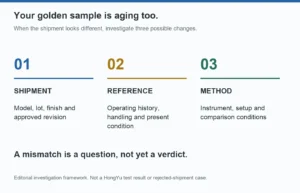
6. Keep a golden sample
Finish names are not precise enough for repeat production. Retain one approved physical sample for future color and lumen comparison.
Frequently Asked Questions
Is smoky glass the same as smoked glass?
In the decorative bulb market, smoky glass, smoked glass, smoky grey and smoke-grey glass are commonly used for the same general dark-grey finish category.
Because naming is not standardized, buyers should still approve the actual glass depth, reflectivity and final lumen output.
Is smoky glass warmer than amber glass?
No.
Amber normally creates the warmer visible glass tone. Smoky glass mainly reduces transmission and adds a dark grey layer.
Which finish loses more light?
Smoky glass.
Typical loss is approximately 50–70%, compared with approximately 10–15% for amber.
Can smoky glass be used for high-lumen bulbs?
The internal output can be increased, but the high optical loss makes smoky glass inefficient for bright replacement lamps.
It is normally more suitable for lower-output decorative products.
Can amber glass provide functional light?
Yes.
Amber is widely used for low-lumen decorative bulbs, but it can also support much higher finished lumen levels when the LED system and thermal design are developed accordingly.
Is smoky glass only suitable for large globes?
No.
It can be applied to candle bulbs, standard shapes, tubular bulbs and oversized globes. Large size does not automatically improve the smoky effect.
Does smoky glass always have uneven color?
No.
Under a stable electroplating process, smoky bulbs can remain visually consistent. The more specific production risk is the neck area, where sealing heat may react with the finish.
Can the same filament be used in amber and smoky bulbs?
Yes.
There is no inherent filament restriction. The final choice should be based on filament visibility, finished lumen output and the intended product style.
Which finish is more popular?
Amber has the larger global market and has been established for longer.
Smoky glass also has strong consumer appeal, particularly in design-led collections and continental Europe.
Conclusion
Amber and smoky glass are not simply two shades of the same vintage bulb.
Amber is warmer, brighter and more versatile. It keeps the filament visible, loses only around 10–15% of the light and can be developed for both low-output ambience and useful decorative illumination.
Smoky glass is darker and more dramatic. Its 50–70% lumen loss makes it better suited to low-output statement bulbs, where the glowing filament is viewed through a sophisticated grey electroplated surface.
Choose amber when the fixture needs warmth and useful light.
Choose smoky when the bulb itself is the visual focus and a darker atmosphere is part of the design.
At HongYu Bulb, we develop amber, smoky, clear, frosted, opal, porcelain and custom-finish LED filament bulbs for lighting brands, fixture manufacturers, importers and wholesalers. If you are still comparing finish families beyond amber and smoky glass, our decorative bulb finish guide gives broader context for clear, frosted, opal, porcelain, mirror-top and custom color effects.
For buyers focused on transparent vintage looks, the amber vs clear glass Edison bulb guide explains when amber adds value over clear glass. If your collection needs visible straight filaments or more flexible decorative shapes, compare HongYu's EU vintage straight LED filament bulbs and EU vintage flexible filament bulbs before confirming the finish.
To move from finish choice to sourcing, review the HongYu LED filament bulb range or contact HongYu Bulb with the fixture image, bulb shape, final wattage, lumen requirement, CCT, voltage, dimming requirement and preferred glass depth. We can compare amber and smoky options and prepare finished samples for evaluation in the real fixture.