A decorative LED bulb is judged before it is switched on.
This is the detail many buyers miss. They compare wattage, lumens, CCT, CRI and price, then assume the product will look premium if the light output is correct. But in retail stores, hotel rooms, restaurants, showrooms and online product photos, a decorative bulb often spends a lot of time off. During that time, the customer still sees the glass, filament structure, base finish, proportions and packaging.
That first visual judgment affects perceived value.
Two bulbs can use similar LEDs and similar drivers, but one looks like a premium decorative product while the other looks like a cheap utility lamp with a vintage shape. The difference is rarely one single parameter. It is the way several physical details work together.
For importers, lighting brands and fixture companies, this matters because a premium-looking bulb can support better retail pricing, stronger fixture photography and fewer "looks cheap" complaints from customers.
This article explains what makes a decorative LED bulb look expensive before it turns on, and how buyers can evaluate that quality before placing a bulk order.
Premium Starts With the Off-State Silhouette
The first thing a customer notices is not the lumen output. It is the silhouette.
The bulb shape needs to look intentional in the fixture. An ST64 bulb, a G95 globe, a G125 globe, a tubular T45 and a small candle bulb all communicate different value. The wrong shape can make a good filament look awkward.
Buyers should check four silhouette details:
- Does the glass shape match the fixture scale?
- Is the neck transition clean or visually heavy?
- Does the bulb look balanced from the front and side?
- Is the filament centered inside the glass envelope?
A bulb that looks premium when off usually has a calm proportion. The glass does not look too thin, the neck does not look squeezed, and the filament does not float in a random position.
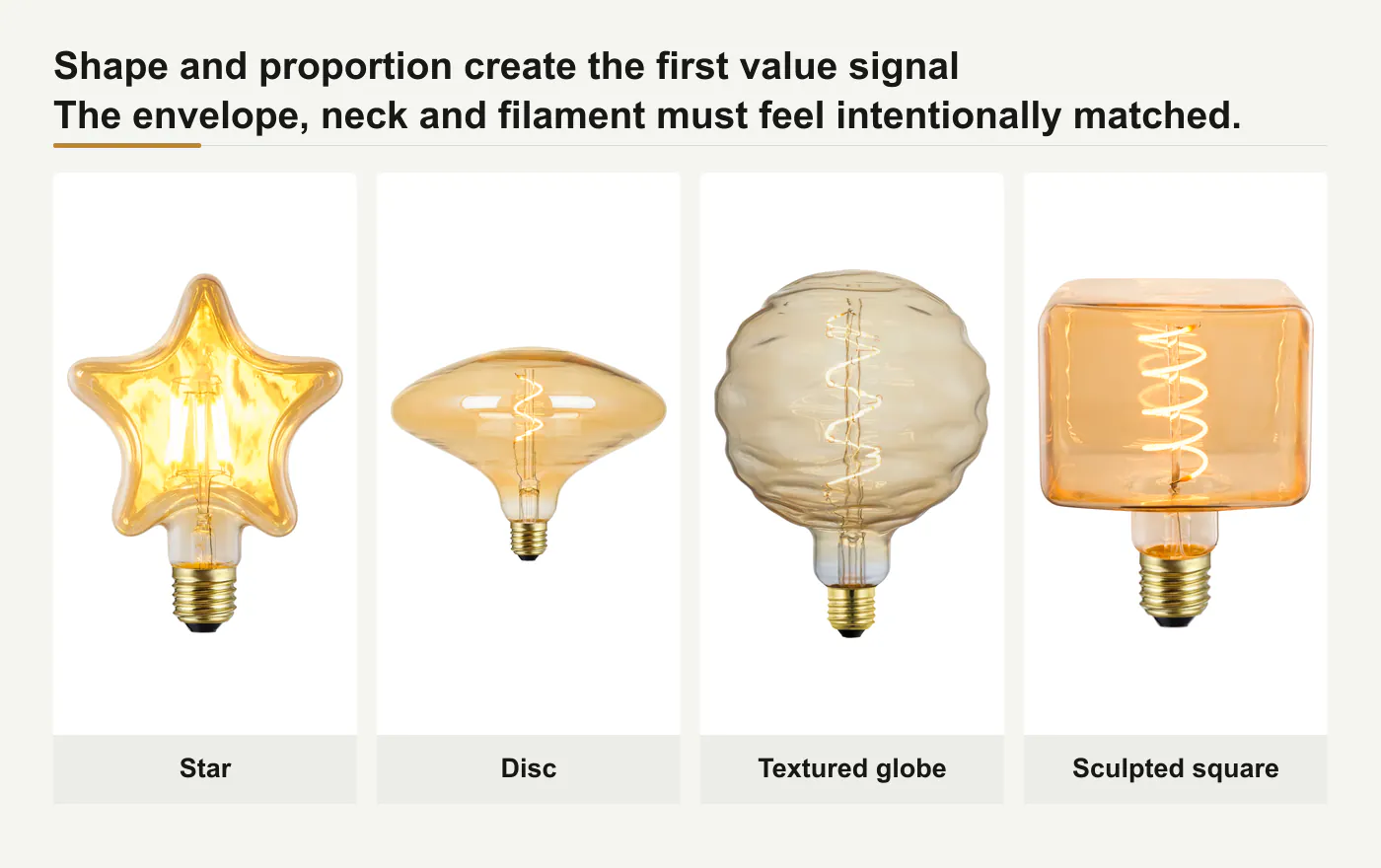
This is especially important for exposed-bulb fixtures. In a shaded lamp, the bulb may be hidden. In a pendant, wall sconce, vanity mirror or chandelier, the bulb itself becomes part of the design.
If buyers are building a shape range, HongYu's guide to LED filament bulb types and shapes is a useful reference for matching bulb form to fixture style.
Glass Finish Is a Value Signal, Not Only a Light Filter
Glass finish affects brightness, color and glare, but it also affects perceived price.
A clear glass bulb looks honest and technical. It exposes the filament and gives the customer confidence that the product is a real decorative filament bulb. But clear glass also reveals every internal detail, including filament alignment, support wires and any uneven assembly.
Amber glass looks warmer and more nostalgic. It can make the bulb feel more decorative even before it turns on. But if the amber tone is too orange, too thin or inconsistent across the batch, the product can look cheap quickly.
Smoky glass feels darker and more design-led. It can make a bulb look premium in modern interiors, especially when paired with black, bronze or smoked metal fixtures. But if the smoky coating is too dark near the neck, the bulb can look uneven or dirty.
Opal, frosted and porcelain finishes create softness. They hide internal structure and reduce the sharpness of the filament, which can make the bulb feel more refined for hospitality and decorative interiors. But the finish must look deliberate. Uneven milkiness, patchy coating or a gray cast can reduce the perceived value.
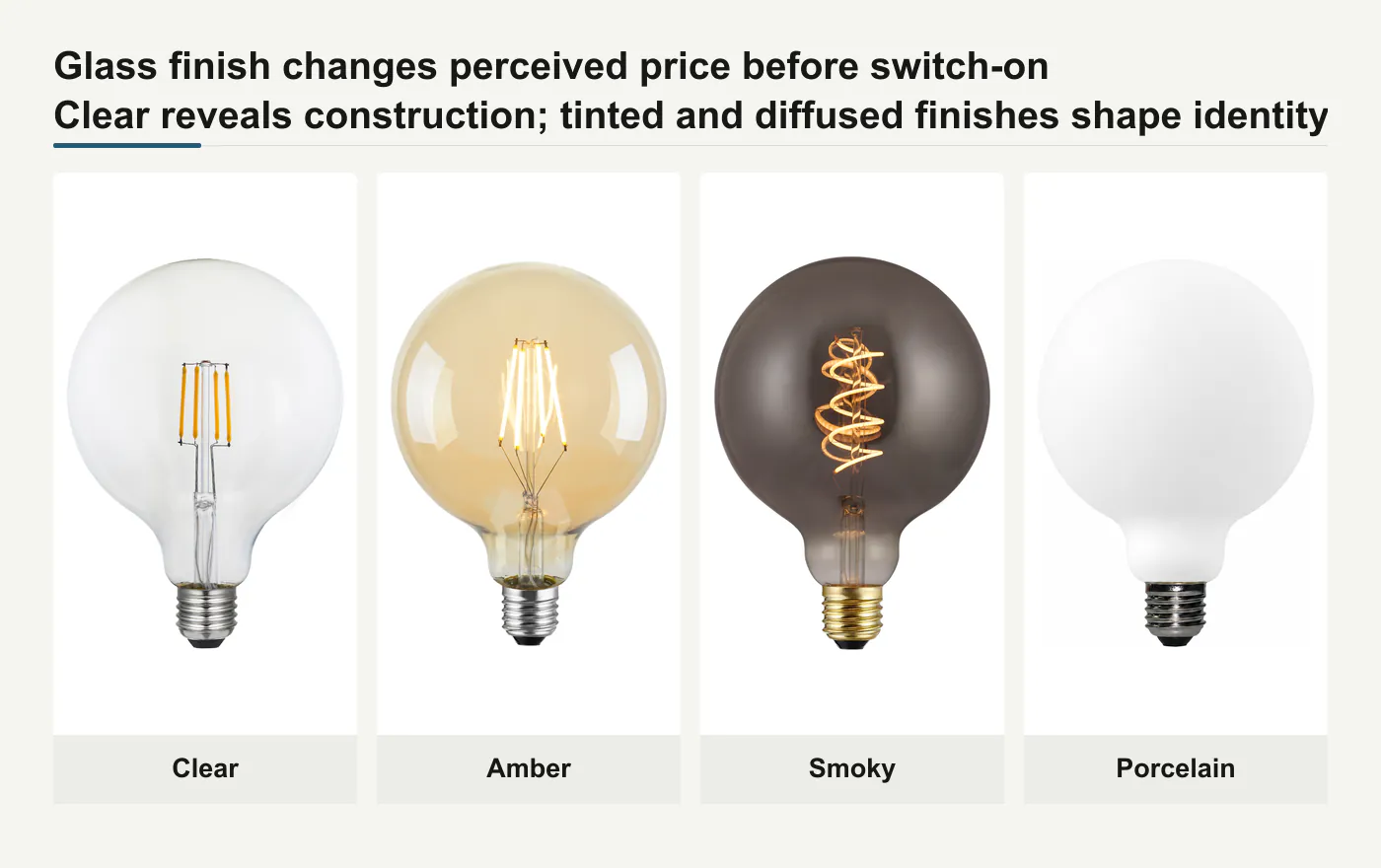
This is why buyers should not approve a glass finish only by a supplier's catalog image. They should compare real samples in natural daylight, under store lighting and in the final fixture. HongYu's guide to decorative bulb finishes explains the wider finish options, while the comparison of amber vs smoky glass LED bulbs shows how finish choice can change both appearance and measured light output.
The Filament Layout Must Look Designed
The filament is not only a light source. In a decorative bulb, it is the visual center.
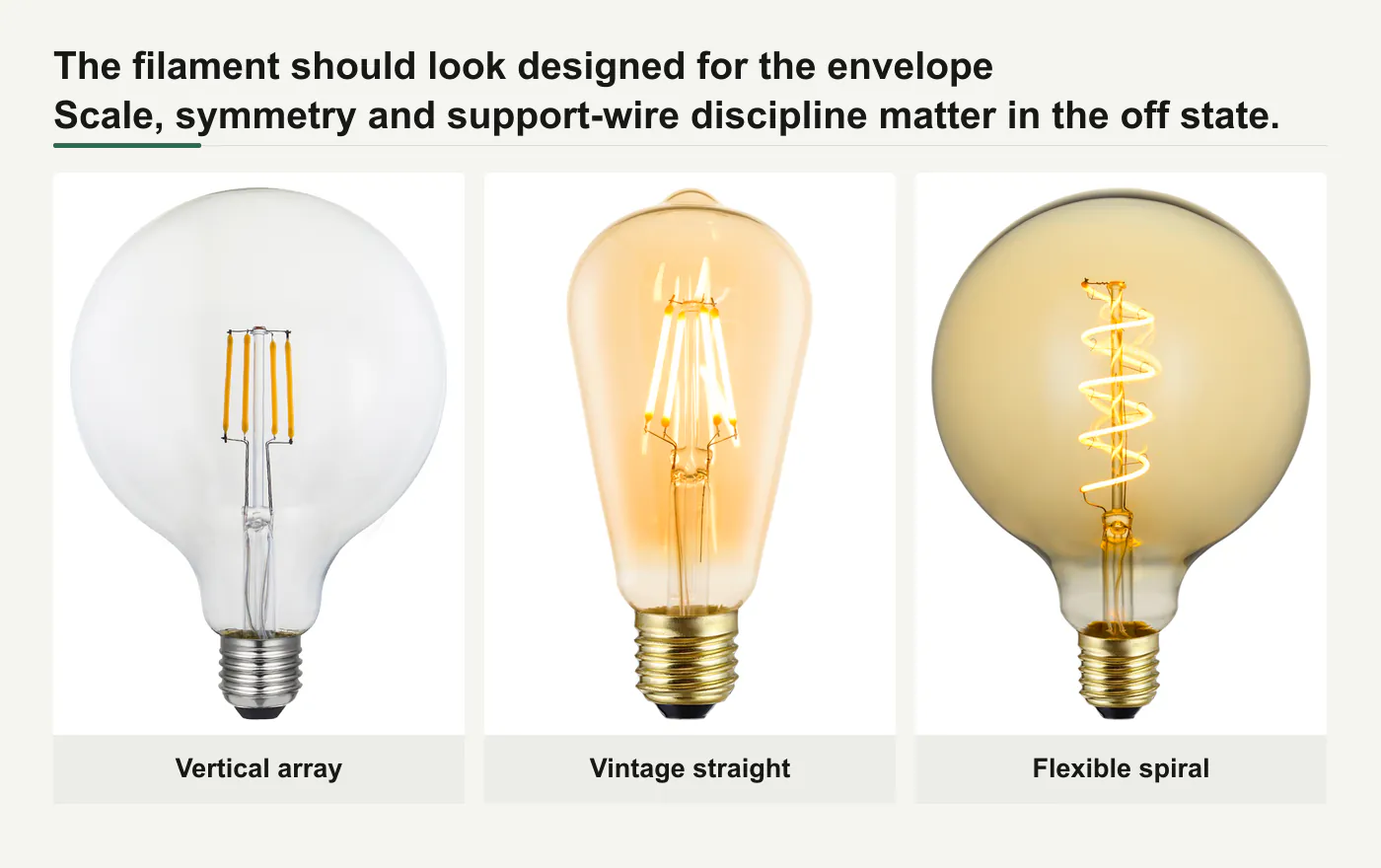
Premium-looking bulbs usually have a filament layout that feels symmetrical, stable and appropriate for the glass shape. Cheap-looking bulbs often fail here. The filament may be too small for the bulb, too close to one side, visually crooked or poorly matched to the shape.
Buyers should ask these questions before approving a sample:
- Does the filament fill the glass in a balanced way?
- Does the layout match the bulb shape?
- Are support wires neat and minimal?
- Does the filament sit straight when viewed from multiple angles?
- Does the filament style support the product story?
A spiral filament can look decorative and playful. A straight filament can look cleaner and more vintage. A vertical filament can work well in tubular and ST shapes. A flexible filament can create a softer graphic effect.
There is no single best layout. The mistake is choosing a filament only because it is available.
The filament should look like it belongs inside that specific glass envelope.
Base Finish Can Make or Break the Premium Impression
Many buyers focus on the glass and forget the base.
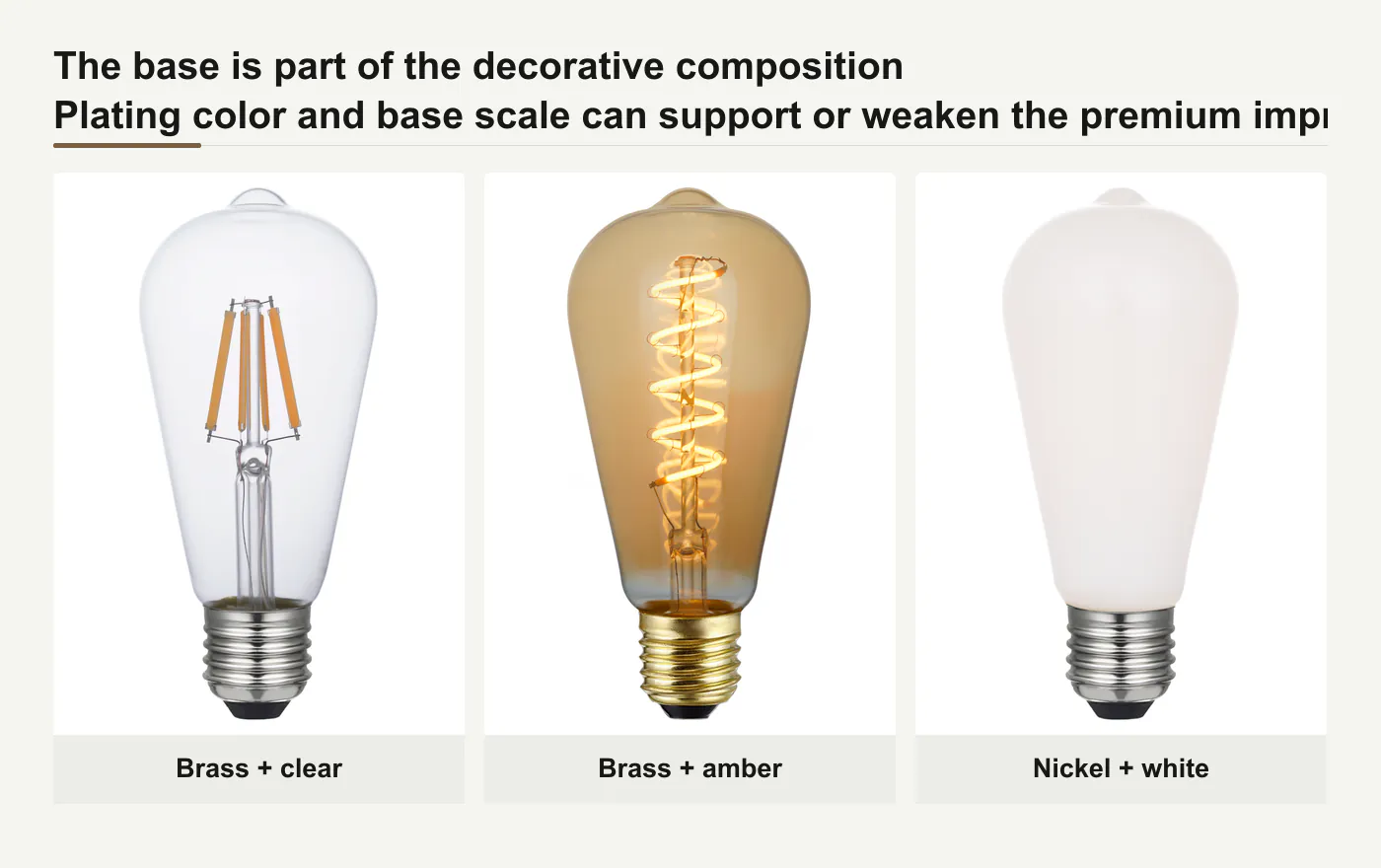
That is risky because the base is often visible in decorative fixtures. A poor base finish can make the whole bulb look lower grade, even when the glass and filament are good.
For premium decorative bulbs, the base should be checked for:
- Plating color
- Surface scratches
- Thread quality
- Printing alignment
- Color match with the fixture
- Consistency across the order
Brass-tone bases can support warm vintage products. Nickel or silver bases can look cleaner in modern fixtures. Black or special-color bases can work for design-led collections, but they need consistent coating and clean edges.
The buyer should also consider regional base requirements. E26, E27, E12, E14, B22 and other base types affect not only compatibility but also the product's visible proportions. HongYu's article on bulb base types explains why socket and base choices are commercial decisions, not just technical details.
Light Quality Still Matters, But It Is Not the Whole Story
The article is about how bulbs look before they turn on, but performance still matters.
A premium decorative bulb cannot rely only on glass and shape. Once switched on, the light must support the same value impression. If the bulb looks beautiful off but produces harsh glare, wrong color, poor dimming or inconsistent brightness, the premium effect disappears.
The U.S. Department of Energy notes that LED light quality includes both color appearance and how light affects the color appearance of objects, and that CRI is only one way to evaluate color fidelity.[1]
For buyers, the practical point is simple: a premium product should align off-state appearance and on-state performance.
A 2200K amber bulb should not look greenish when lit. A porcelain bulb should not look dull or gray. A smoky bulb should not become so dim that the customer thinks it is defective. A high-CRI bulb should still make sense for the application and price level.
For projects where color rendering matters, HongYu's guide to CRI 80, CRI 90 and CRI 95 gives a practical buyer framework.
Packaging Decides Whether the Product Feels Retail-Ready
The bulb does not start its sales story in the socket. It starts in the box.
A premium decorative bulb should arrive in packaging that protects the glass and supports the brand image. If the color box is weak, the insert is loose or the printing looks generic, the customer may judge the product as low value before seeing the bulb.
Packaging affects perceived value in five ways:
- It protects fragile glass during shipping.
- It communicates technical information clearly.
- It supports retail shelf presentation.
- It reduces returns caused by damaged boxes.
- It makes the buyer's brand look more professional.
The FTC notes that Lighting Facts labels help shoppers compare information such as brightness, energy cost, expected life, light appearance and wattage.[2] For a lighting brand, that means packaging is not only decoration. It is part of buyer confidence.
For wholesale orders, especially fragile decorative glass bulbs, packaging should be approved as part of the product, not after production. HongYu's LED bulb packaging guide explains how packaging choices affect breakage, freight waste and retail returns.
What Factory Buyers Should Inspect Before Approving a Premium Bulb
Factory buyers should not inspect only whether the bulb works. They should inspect whether the bulb looks like the price level they want to sell.
Here is a practical checklist.
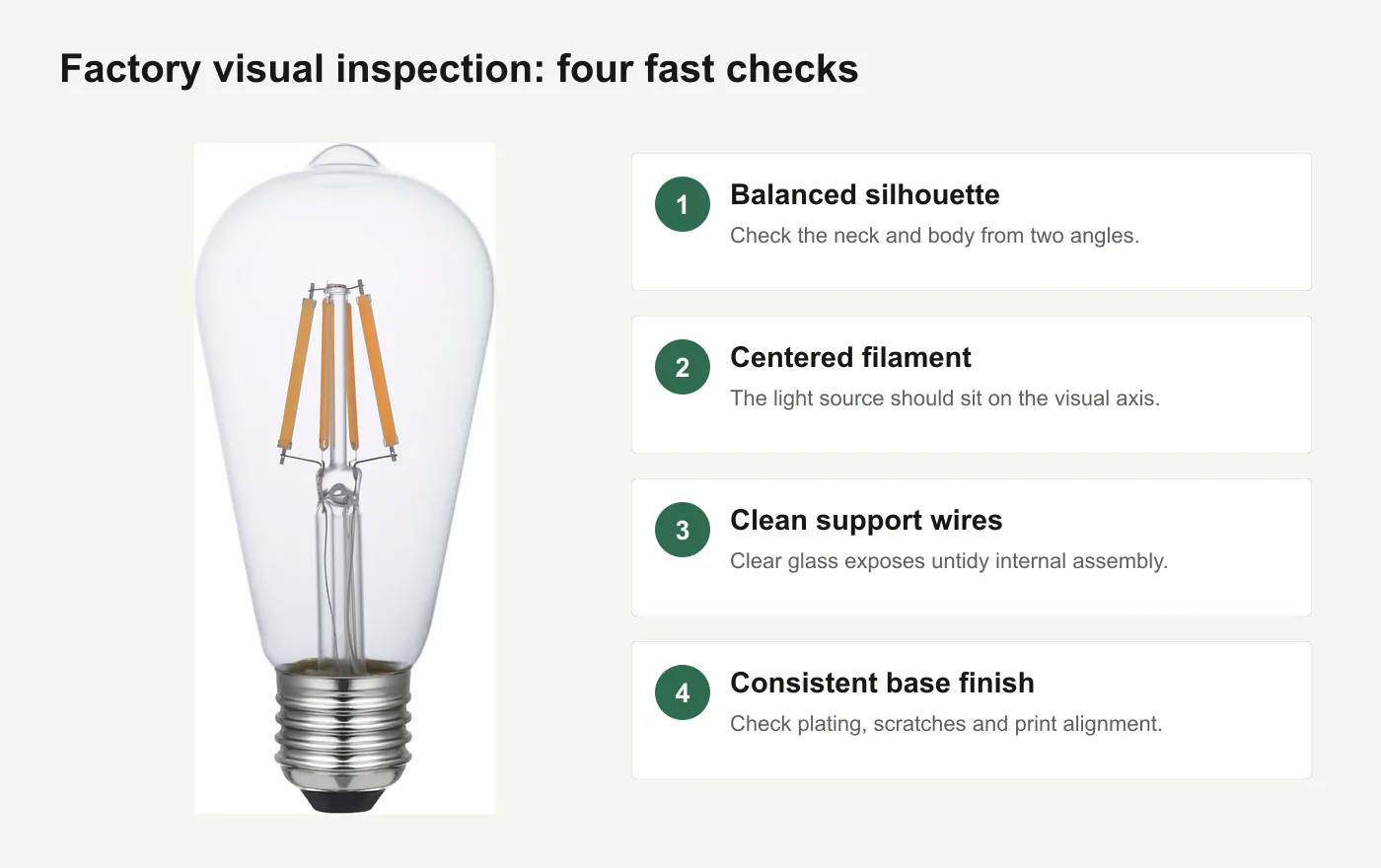
1. Check the bulb switched off in daylight
Daylight reveals glass tint, coating uniformity, base finish and internal alignment. A bulb that only looks good in a dim factory room may not look good in retail photos.
2. Check the bulb in the real fixture
The same bulb can look premium in one fixture and awkward in another. The fixture scale, socket depth, shade opening and viewing angle all change the result.
3. Compare several samples side by side
Do not approve only one good sample. Put several bulbs together. This reveals glass color variation, filament centering problems and base finish inconsistency.
4. Check the off-state and on-state together
A bulb should not have two different product identities. If it looks premium off but uncomfortable on, the product story is broken.
5. Inspect the packaging next to the bulb
For retail and brand buyers, the bulb and box should feel like one product. A premium bulb in a weak box sends a confused signal.
Common Mistakes That Make Decorative Bulbs Look Cheaper
Many problems are small, but together they reduce perceived value.
The most common mistakes include:
- Choosing a bulb shape that is too small for the fixture
- Using amber glass that looks too orange or inconsistent
- Using smoky glass that becomes too dark near the neck
- Choosing a filament layout that does not fill the bulb shape
- Allowing visible crooked filaments in clear glass bulbs
- Using a base finish that clashes with the fixture
- Printing technical markings in an unattractive position
- Using a generic box for a product sold as premium
- Approving samples by photo only
- Ignoring how the bulb looks when switched off
These mistakes are not only aesthetic. They affect commercial results. In online retail, the off-state product photo often appears before the lighting effect. In fixture showrooms, customers may inspect the bulb before asking about technical details. In hospitality projects, the bulb must support the design even during daytime.
How to Build a Premium Decorative Bulb Range
A premium range should not be a random collection of shapes and finishes.
Buyers should define a clear logic:
- Which bulbs are for warm vintage atmosphere?
- Which bulbs are for modern smoky or dark interiors?
- Which bulbs are for soft diffused hospitality lighting?
- Which bulbs are for retail shelf impact?
- Which bulbs are for fixture manufacturers who need stable repeat orders?
Then each product should be checked against that role.
For example, clear glass ST64 bulbs may work well as an accessible vintage option. Amber ST64 or G95 bulbs may target warmer restaurants and home decor. Smoky G125 bulbs may support design-led interiors. Porcelain or opal bulbs may suit softer hospitality spaces. Dim-to-warm products may support premium scenes where the customer expects both function and atmosphere.
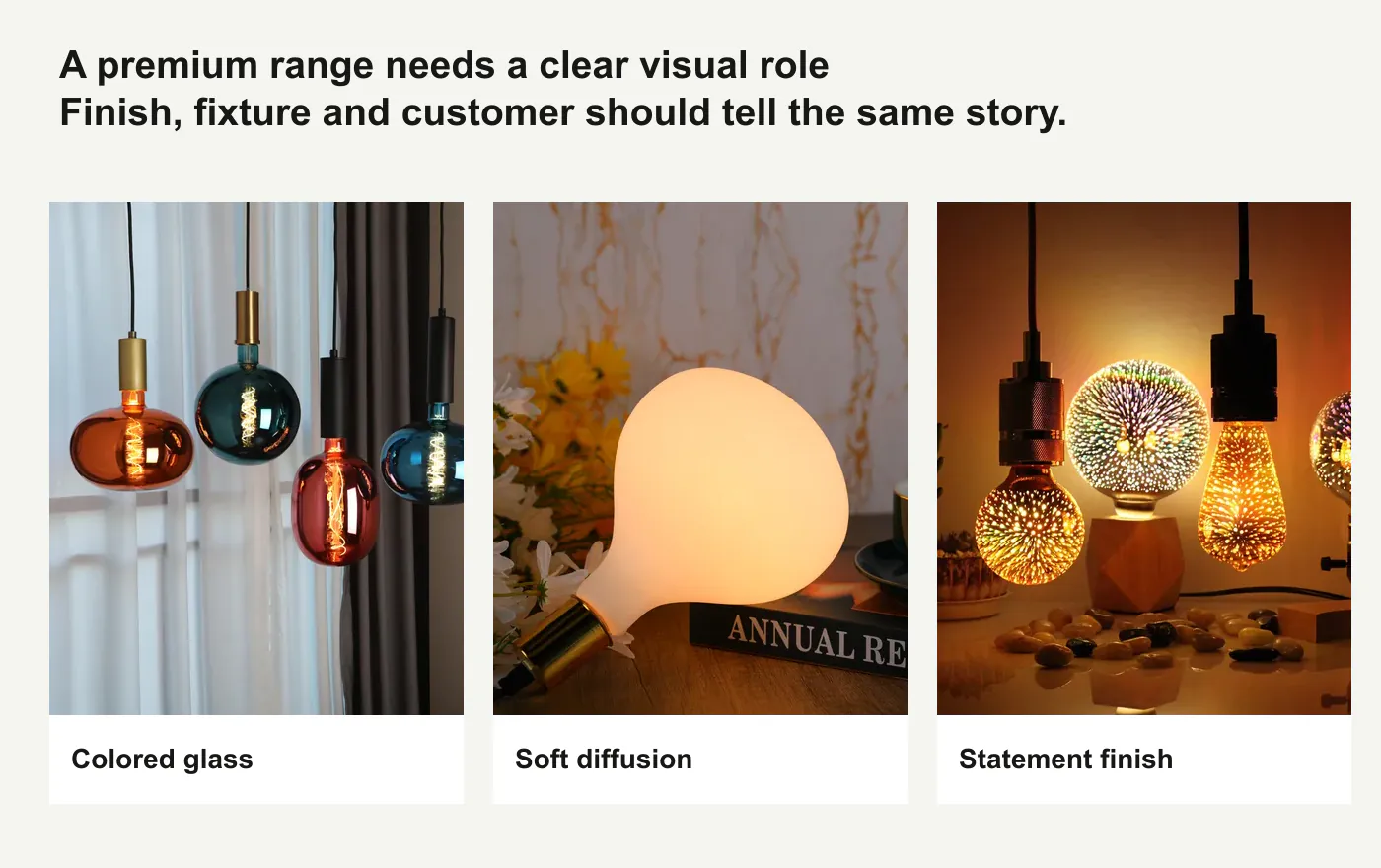
HongYu's dim-to-warm guide is useful when the premium effect depends on changing warmth at lower dimming levels.
The Manufacturer's View: Premium Is Repeatability
From a factory point of view, a premium bulb is not only a beautiful sample.
It is a product that can be repeated.
That means the factory needs to control glass finish, filament sourcing, assembly alignment, base plating, test parameters, packaging and final inspection. A single excellent sample does not create a premium product if bulk production cannot match it.
This is where many buyers should raise their standard. The right question is not only:
"Can you make this bulb look premium?"
The better question is:
"Can you repeat this premium appearance across the full order and the next reorder?"
That is the difference between a good-looking sample and a reliable product line.
Conclusion
Decorative LED bulbs do not become premium only because they have warm light or a vintage filament.
They look premium when the off-state product, the on-state light, the fixture fit and the packaging all tell the same story. Glass finish, filament layout, base finish, proportions, light quality and packaging must work together.
For buyers, this means approval should not stop at technical parameters. Lumens, wattage, CCT and CRI matter, but they do not fully explain why one bulb looks expensive and another looks ordinary.
The strongest decorative bulb collections are built with both engineering discipline and visual judgment.
Before placing a bulk order, inspect the bulb switched off. That quiet moment often reveals whether the product is truly premium.